
The Sogginess Solution: How to Master Zucchini Noodles (Without Making Zucchini Soup)
Let’s not pretend. When zucchini noodles (or “zoodles,” if you’re trying to save syllables) first hit the scene, they were hailed as a low-carb savior. But then reality hit: a bowl of watery, lukewarm vegetable sludge, and suddenly that beautiful, green promise felt like a scam. We’ve all made zucchini soup by accident, haven’t we? It’s okay. The truth is, zucchini noodles are basically 95% water and 5% vegetable, and you need a strategy to fight the flood. I’m here to give you the ultimate, no-fail method for perfectly firm, al dente zoodles that actually hold sauce and don’t require 17 different paper towel changes. You’ll master these low-carb heroes and never eat a soggy spiral again.
Why This Recipe Is Awesome (It’s Pure, Undiluted Health)

You need to make this because it’s a guilt-free way to eat what feels like a giant bowl of pasta.
- Low-Carb, High-Volume: This is the ultimate keto/paleo/gluten-free swap. You get a massive, satisfying serving of vegetables for a fraction of the calories and carbs of regular pasta. Talk about cheating the system!
- Flavor Sponges: Zucchini has a mild, polite flavor, meaning it eagerly soaks up whatever magnificent sauce you throw at it. They are a vehicle for flavor, not the star.
- Speed Demon: Unlike boiling pasta, cooking zoodles takes literally 60-90 seconds. The longest part of this recipe is prepping the zucchini, and even that is fun if you like spinning kitchen gadgets.
Ingredients: The Green Goods and the Salt Secret
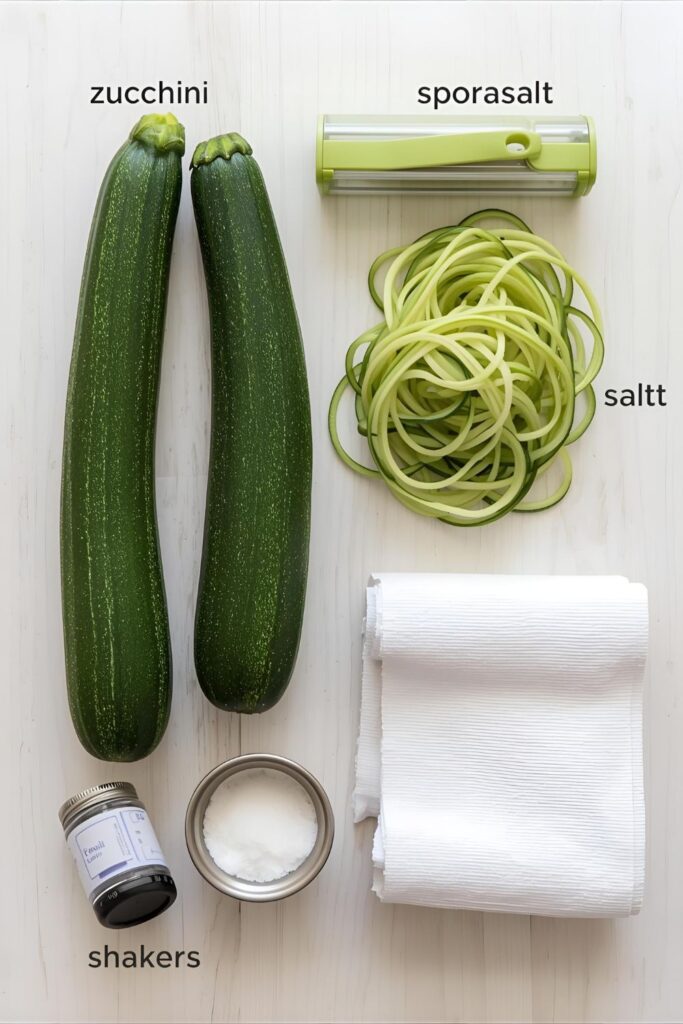
You’ll notice one ingredient here that is essential for the whole no-soggy-zoodle endeavor. Pay attention!
- 2 Medium Zucchinis (Firm, straight, and about 6-8 inches long): The star of the show. Avoid giant, watery, seedy zucchinis.
- 1 teaspoon Salt (Fine Sea Salt): The secret to drawing out the water. Don’t worry, we wash most of it off!
- 1 tablespoon Olive Oil or Avocado Oil: For a quick, high-heat sauté (if desired).
- Optional Finish: Freshly cracked black pepper and a sprinkle of Parmesan cheese.
Key Substitutions:
- Zucchini: Yellow squash spirals identically and is an easy substitute. Cucumber works too, but serve it raw, as it releases even more water when heated.
- Salt: You can use any fine salt, but do not use coarse Kosher salt as it won’t dissolve as fast or draw out the water as evenly.
- Olive Oil: Any neutral, high-heat oil works fine for the quick sauté.
Tools & Kitchen Gadgets Used: Embrace the Spiral
If you’re going to make zoodles regularly, invest in a decent spiralizer. Your life will be so much easier.
- Spiralizer or Julienne Peeler: MANDATORY. You can’t make proper zoodles without one. A counter-top spiralizer makes the longest, most fun strands.
- Large Bowl and Colander: For the salting and draining process.
- Paper Towels or Clean Kitchen Towel: CRITICAL for the final squeeze.
- Large Skillet or Wok: For the optional quick sauté (if serving hot).
- Tongs: Best for gently tossing and serving the delicate noodles.
Step-by-Step Instructions: Conquering the Water Beast
This is a two-part process. You must defeat the water before you cook the zoodles.
Step 1: Spiralize and Salt (5 Minutes + 20 Minutes Wait)
- Wash and trim the ends of your zucchinis. Using your spiralizer or julienne peeler, turn the zucchini into long strands. Discard the seedy center core (it’s the most watery part!).
- Place the zoodles in a colander set over a large bowl.
- Sprinkle the zoodles generously with the salt. Toss them well to ensure the salt is evenly distributed.
- Let the zoodles sit for 20 minutes. This step is non-negotiable! The salt draws out the water through osmosis. You’ll see a puddle of liquid forming in the bowl. This is the water you are fighting!
Step 2: Rinse and Squeeze (3 Minutes)
- Rinse the zoodles quickly under cold water. This washes away the excess salt, so your final dish isn’t a salty disaster.
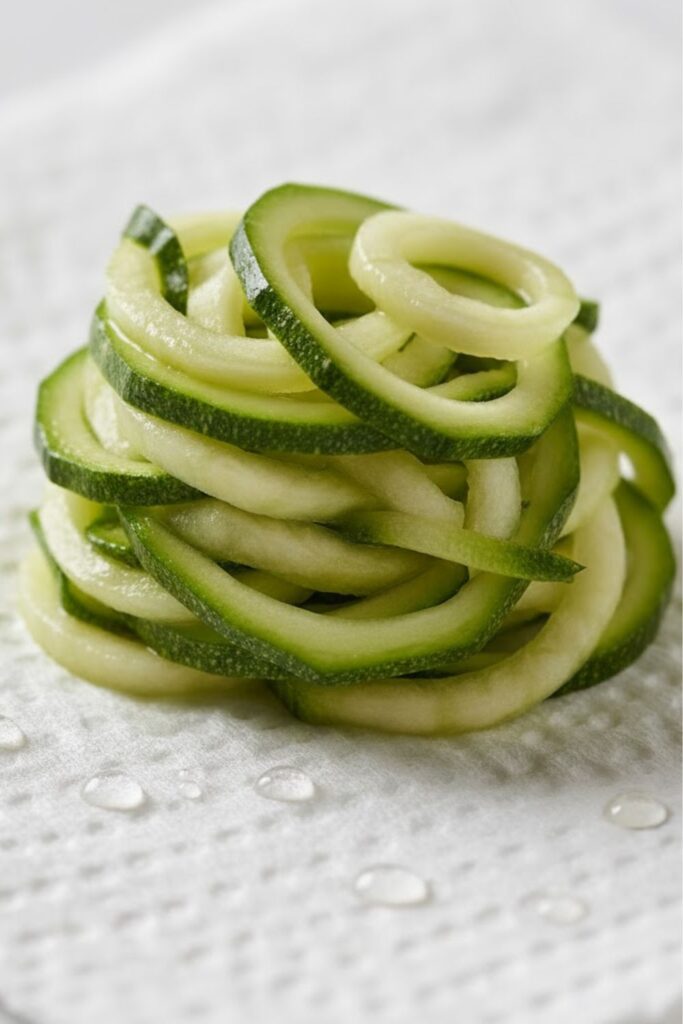
- Spread the rinsed zoodles out on a double layer of paper towels or a clean kitchen towel.
- Roll them up and SQUEEZE FIRMLY to extract the remaining moisture. You will be surprised by how much water comes out. Don’t be gentle; this is a war!
Step 3: The Quick Heat (2 Minutes)
- Heat the olive oil in your skillet or wok over medium-high heat.
- Add the squeezed zoodles to the pan.
- Sauté for 60-90 seconds, MAX. The goal is to simply warm them and give them a slight tenderness while maintaining their al dente bite. Do not overcook them, or they will release more water and turn mushy.
- Remove the zoodles immediately from the heat and toss them with your sauce. Serve immediately!
Calories & Nutritional Info: The Clean Plate Club (Estimated)
Prepare to feel fantastic about this incredibly low-carb choice.
- Calories per serving (1 large cup/portion, uncooked): ~20-30 calories
- Net Carbs: ~2-3g (Zucchini is incredibly low-carb!)
- Protein: ~2g
- Fiber: ~1g
- Vitamin Note: Zucchini is a great source of Vitamin C and Vitamin B6. Eating the skin (don’t peel it!) ensures you get extra fiber and nutrients.
Common Mistakes to Avoid: The Soggy Seven
Avoid these sins of zoodle-making, or face the wrath of the mushy center.
- Skipping the Salt: If you skip the salting (Step 1), you basically guarantee that your sauce will turn into a watery mess. Sweat those zoodles!
- Overcooking the Zoodles: The absolute most common error! Zoodles only need to be heated, not cooked. 90 seconds is the limit if you use a sauté pan.
- Using a Mandoline Without a Guard: Mandolines are razor sharp. You need to slice a vegetable, not your finger. Always use the guard or a cut-resistant glove!
- Adding Sauce While Hot: Zoodles will continue to release water into a hot sauce. Toss them gently with a warm, reduced sauce, and serve immediately to avoid water pooling.
- Using Oversized Zucchini: Huge zucchinis are old, seedy, and watery. They make mushy zoodles. Choose medium, firm zucchinis—they have a better skin-to-flesh ratio.
- Forgetting to Squeeze: Rinsing helps, but the final paper towel squeeze is crucial to physically remove the moisture the salt has drawn out.
Variations & Customizations: Zoodle Remix
Once you get the technique right, the zoodles are a blank canvas for flavor.
- Cold Peanut Zoodles (No Cook): Skip the sauté. Toss the squeezed zoodles with a dressing made of peanut butter, soy sauce, rice vinegar, a splash of water, and Sriracha. Top with chopped peanuts and cilantro.
- Garlic Parmesan (Hot): Sauté the zoodles in butter instead of olive oil. Add minced garlic for 30 seconds before tossing in the zoodles. Finish with a generous amount of Parmesan cheese and black pepper.
- Keto Bolognese: Cook a hearty, thickened meat sauce (Bolognese). Serve the sauce hot over raw, room-temperature zoodles. The heat from the sauce will soften the zoodles just enough without turning them into water.
FAQ Section: Your Zoodle Knowledge Base
You’ve got questions about this green phenomenon. We have answers.
Q1: What is the best way to make zoodles if I don’t have a spiralizer?
A: Use a julienne peeler or a regular vegetable peeler to create wide, thin ribbons (like fettuccine). They won’t be curly, but they are still low-carb noodles!
Q2: Can I eat zucchini noodles raw?
A: Yes! Eating them raw is the absolute safest way to avoid sogginess. Just toss them with your cold sauce, and they keep their crisp, crunchy texture.
Q3: Why did my sauce become watery after adding the zoodles?
A: You skipped the salting and squeezing step, or you overcooked them. Even squeezed zoodles still have some water, so use a very thick, reduced sauce and serve immediately!
Q4: Are zucchini noodles safe to freeze?
A: Not really. Freezing and thawing destroys the cell walls of the zucchini, turning them into a mushy puddle of water when they thaw. It’s best to make them fresh and store them raw in the fridge for up to 3 days.
Q5: Can I make zoodles ahead of time?
A: Yes! Spiralize, salt, and squeeze them (Steps 1 & 2). Store the fully squeezed zoodles in an airtight container lined with paper towels in the fridge for 2-3 days.
Q6: How many net carbs are in zucchini noodles?
A: One cup of zoodles contains roughly 3.5g total carbs, but about 1.1g of fiber, making the net carbs approximately 2.4g—incredibly low!
Q7: Should I peel the zucchini before making zoodles?
A: No! The skin gives the noodles color and provides extra fiber and nutrients. The skin is thin enough that it doesn’t affect the final texture.
Final Thoughts: Soggy Zoodles Are Canceled
You just mastered the single most important technique for Zucchini Noodles: moisture control. Go ahead and toss that pasta strainer into the back of your cupboard. You are officially a low-carb, high-flavor genius who makes beautiful, crisp zoodles every time. Now go enjoy a massive bowl of guilt-free “pasta” that’s better than you expected.

