
The Ultimate Guide to Perfect Yakitori: Grilled Skewers at Home
We have all been there. You are at a fancy izakaya, ordering tiny, overpriced skewers of chicken, and silently wondering why something so small tastes so incredibly good. You think, “I could never make that at home.” You’re wrong. Today, we are cracking the code on yakitori, the Japanese grilled chicken skewers that are deceptively simple and ridiculously delicious.
Think achieving that perfect crispy skin and juicy interior requires a specialized charcoal grill flown in from Tokyo? Nah. I once tried to grill chicken skewers with basic BBQ sauce, and let’s just say it was more “burnt sugar disaster” than savory delight. TBH, once you master the art of the glaze, your friends will start asking if you secretly opened a Japanese street food stall. Ready to impress everyone with minimal effort and maximum flavor?
Why This Recipe is Awesome
Why should you bother making your own yakitori when you can just order it? Because homemade tastes better, costs way less, and you can control exactly what goes on those skewers. Plus, the smell of that sweet and savory tare sauce caramelizing on the grill? It’s basically aromatherapy for foodies.
This recipe is incredibly versatile. You can use almost any part of the chicken (thigh is king, though!) and even throw in some vegetables for good measure. It’s the ultimate party food, finger food, or even a solo “I deserve this” kind of dinner. Each bite is a perfect explosion of smoky, sweet, and umami flavors.
It also works on almost any grill setup. No fancy equipment required! A basic gas grill or even a good cast-iron grill pan will get the job done. IMO, it’s one of the most rewarding grilling experiences you can have without spending all day over hot coals. 🙂
Ingredients
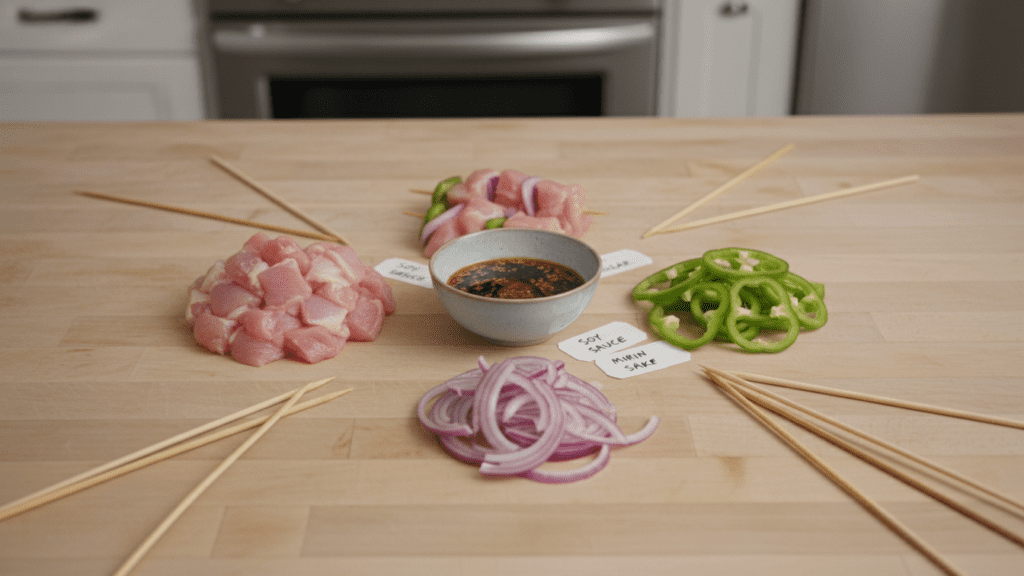
Gather your supplies. You probably have most of these lurking in your pantry already. The magic is in the sauce, so don’t skimp on those key Japanese condiments.
For the Yakitori
- 1.5 lbs Boneless, Skin-On Chicken Thighs (This is the best cut for juicy results; cut into 1-inch pieces)
- 1 Green Bell Pepper (Cut into 1-inch pieces)
- 1/2 Red Onion (Cut into 1-inch pieces)
- Long Wooden or Metal Skewers (Soak wooden ones for 30 minutes to prevent burning)
For the Tare Sauce (The Soul of Yakitori)
- 1/2 cup Soy Sauce (Japanese soy sauce for authenticity)
- 1/2 cup Mirin (Japanese sweet cooking wine)
- 1/4 cup Sake (Dry cooking sake)
- 2 tablespoons Granulated Sugar
- 1 clove Garlic, minced (optional, but adds depth)
- 1-inch piece Fresh Ginger, grated (optional, for a little zing)
For Garnish (Optional but Recommended)
- Toasted Sesame Seeds
- Shichimi Togarashi (Japanese seven-spice blend, for a little kick)
- Scallions, thinly sliced
Tools & Kitchen Gadgets Used
You don’t need a professional yakitori grill, but a few specific tools will make the process smoother and your skewers perfectly cooked.
- Grill (Gas, Charcoal, or Electric) or a Heavy-Duty Cast Iron Grill Pan – The heat source for that smoky char.
- Small Saucepan – For simmering that glorious tare sauce.
- Pastry Brush or Basting Brush – For applying the tare sauce evenly.
- Large Mixing Bowl – For marinating the chicken.
- Sharp Chef’s Knife – For perfectly cubing the chicken and veggies.
- Tongs – For flipping the skewers without burning your fingers.
Step-by-Step Instructions
Alright, let’s get those skewers ready for their close-up. Precision and patience are key for that perfect char.
Step 1: Craft the Tare Sauce
Combine the soy sauce, mirin, sake, sugar, minced garlic (if using), and grated ginger (if using) in your small saucepan. Bring the mixture to a gentle simmer over medium heat. Stir until the sugar completely dissolves. Let it simmer for about 5-7 minutes, until it slightly thickens and becomes glossy. Remove it from the heat and set aside. This is your liquid gold.
Step 2: Prep the Chicken and Veggies
Cut your boneless, skin-on chicken thighs into uniform 1-inch pieces. Why skin-on? Because that skin renders down and gets crispy, adding unbelievable flavor. Cut the green bell pepper and red onion into similar 1-inch pieces. Ensure they are roughly the same size so they cook evenly.
Step 3: Skewer Up!
Thread the chicken and vegetables onto your skewers. Alternate between chicken and veggies for a beautiful presentation and balanced flavor in each bite. Don’t pack them too tightly; leave a little space between each piece to ensure even cooking and better charring. If you are using wooden skewers, make sure you soaked them for at least 30 minutes!
Step 4: The First Grill
Preheat your grill to medium-high heat. If using a grill pan, heat it until it’s smoking slightly. Place the skewers on the hot grill. Cook for about 3-4 minutes per side, turning occasionally, until the chicken is lightly browned and cooked about halfway through. We are building flavor here!
Step 5: The Glaze Dance
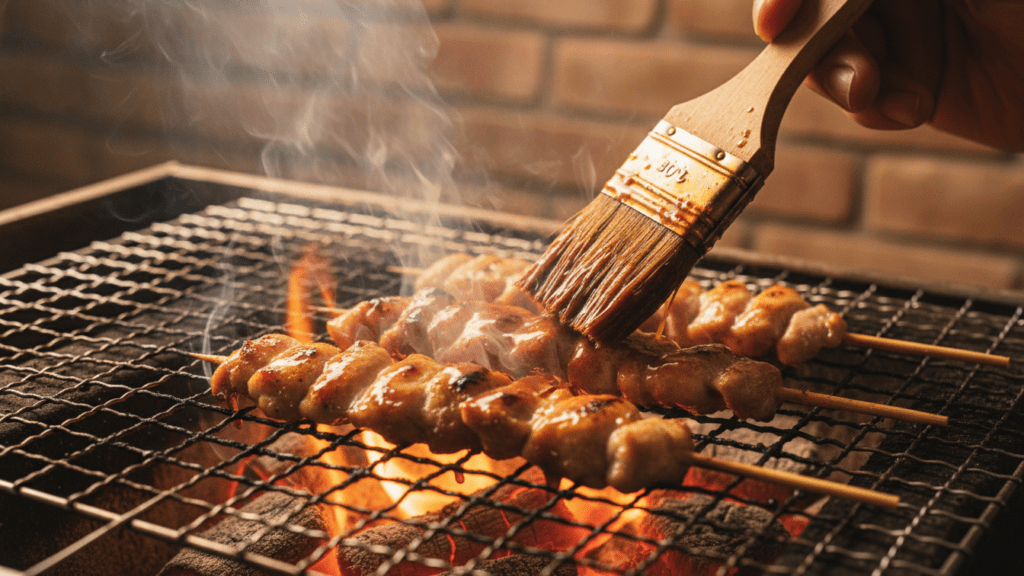
Now for the fun part! Start brushing the skewers generously with your prepared tare sauce. Continue grilling, turning and brushing every 1-2 minutes, for another 6-8 minutes. The sauce should caramelize and cling to the chicken, creating a beautiful, glossy finish. Watch carefully to avoid burning due to the sugar content in the sauce.
Step 6: Serve and Garnish
Once the chicken is cooked through and the sauce is beautifully caramelized (internal temperature of 165°F / 74°C), remove the skewers from the grill. Arrange them on a platter. Sprinkle with toasted sesame seeds, a dash of shichimi togarashi, and thinly sliced scallions for that authentic izakaya feel. Serve immediately and enjoy the applause.
Calories & Nutritional Info
For the folks who like to track their fuel, here is the estimated breakdown per serving (about 2-3 skewers, depending on size):
- Calories: ~300-350 kcal per serving.
- Protein: 25-30g (Chicken thighs are packed with protein).
- Fats: 15-20g (Mostly from the delicious chicken skin and tare sauce).
- Carbohydrates: 10-15g (From the sugar in the tare and the veggies).
- Sodium: High (Thanks, soy sauce! Balance it with water).
- Note: This is a fantastic source of protein and some vitamins from the vegetables. FYI, using chicken thigh ensures maximum juiciness, which is a big win.
Common Mistakes to Avoid
Don’t let your yakitori dreams go up in smoke! Avoid these common pitfalls.
- Not Soaking Wooden Skewers: If you skip this, they will literally catch fire. Nobody wants charred sticks, just charred chicken.
- Overcooking the Chicken: Dry chicken is a crime. Cook to temperature, not just by time. The thigh meat is more forgiving than breast, but still, be mindful.
- Too Much Sauce, Too Soon: If you baste too early, the sugar in the tare will burn before the chicken cooks. Start basting halfway through.
- Crowding the Grill: If you cram too many skewers on the grill, the temperature drops, and you steam the chicken instead of grilling it. Give them space.
- Skipping the Mirin/Sake: These are crucial for that authentic Japanese flavor. Don’t substitute with wine vinegar or other random liquids.
Variations & Customizations
Once you master the classic chicken thigh, the world of yakitori is your oyster… or, well, your mushroom.
- Negima (Chicken & Scallion): Alternate chicken thigh pieces with thick slices of green onion (scallion). The charred scallions are incredibly sweet.
- Tsukune (Chicken Meatballs): Mix ground chicken with finely minced scallions, ginger, and a little tare sauce. Form into small meatballs and grill. This is a crowd-pleaser!
- Vegetable Skewers: Go meatless with cherry tomatoes, bell peppers, zucchini, or even thick slices of shiitake mushrooms. They soak up the tare sauce beautifully.
FAQ Section
What is tare sauce made of?Tare sauce for yakitori is typically a mixture of soy sauce, mirin, sake, and sugar. Sometimes it includes garlic or ginger for added flavor.
Can I make yakitori without a grill? Yes! You can use a cast-iron grill pan on your stovetop or even broil them in the oven. Just be sure to get a good char.
What kind of chicken is best for yakitori?Boneless, skin-on chicken thighs are the best choice. They stay juicy and flavorful even when grilled.
How do I prevent wooden skewers from burning?Soak them in water for at least 30 minutes before threading the chicken. This prevents them from catching fire on the grill.
Can I marinate the chicken in tare sauce?You can, but traditional yakitori involves grilling the chicken first and then basting with the tare sauce. Marinating can cause the sugar in the sauce to burn too quickly.
What do you eat with yakitori? It’s often served with rice, shredded cabbage, or pickled ginger. It is also excellent with a cold Japanese beer.
How long does homemade tare sauce last? You can store homemade tare sauce in an airtight container in the fridge for up to 2-3 weeks. It is perfect for future grilling adventures!
Final Thoughts
There you have it—the yakitori recipe that will officially make you a grilling guru. It’s savory, it’s sweet, and it’s a lot easier than you thought. Once you taste that perfectly charred chicken with the glossy tare glaze, you will realize that store-bought skewers are an absolute rip-off.
Go ahead, fire up that grill and enjoy the smug satisfaction of a restaurant-quality meal. Just try not to get too upset when your friends start showing up at your house with bags of chicken and empty stomachs. Ready to become the ultimate backyard izakaya chef? Happy grilling!