
The Ultimate Creamy Vegetable Korma: A Royal Hug in a Bowl
Let’s be brutally honest for a second: we’ve all been there. You walk into a mid-tier Indian buffet, eyes locked on the dream of a silky, golden gravy, only to ladle out a watery yellow substance that tastes like unseasoned coconut milk and sad, frozen peas. It’s a culinary betrayal of the highest order. But what if I told you that a vegetable korma actually exists that is so thick, so rich, and so unapologetically elite that even your meat-loving friends will try to steal a spoonful?
I first mastered this recipe for a friend who claimed that “vegetables are just side characters in the drama of dinner.” One bite of this cashew-infused, spice-kissed masterpiece later, and he was literally scraping the bottom of the pot, questioning his entire identity as a carnivore. This isn’t just a “safe option” for the meat-free crowd; it is objectively elite comfort food. If you want to shut down the skeptics and reclaim your kitchen dignity, you’re in the right place. Ready to ruin standard takeout for yourself forever? Let’s get to the blending.
Why This Korma is the Absolute GOAT of Curries
Why should you bother soaking cashews for a vegetable korma when you could just order a soggy container from the place down the street? Because your taste buds deserve a party, not a funeral. First off, the flavor profile is a masterpiece of balance—think the earthy depth of toasted coriander playing tag with the bright zing of fresh ginger and the velvety hug of full-fat coconut milk. It isn’t just “good for being healthy”; it is a vibrant, complex masterpiece that makes you feel like a Michelin-star chef in your own pajamas.

Secondly, it is ridiculously easy to master. If you can boil water and press a button on a blender without needing medical intervention, you’ve already won. It’s a low-effort, high-reward project that makes you look sophisticated while the blender does 90% of the heavy lifting. Plus, it impresses guests every single time—nothing says “I have my life together” like a perfectly emulsified, pale-gold sauce. TBH, it’s the most empowering thing you can do with a handful of nuts. 🙂
The Grocery List: No Science Lab Required
Don’t overcomplicate your life by searching for rare starches harvested under a blue moon. We are using powerhouse staples that actually play well together.
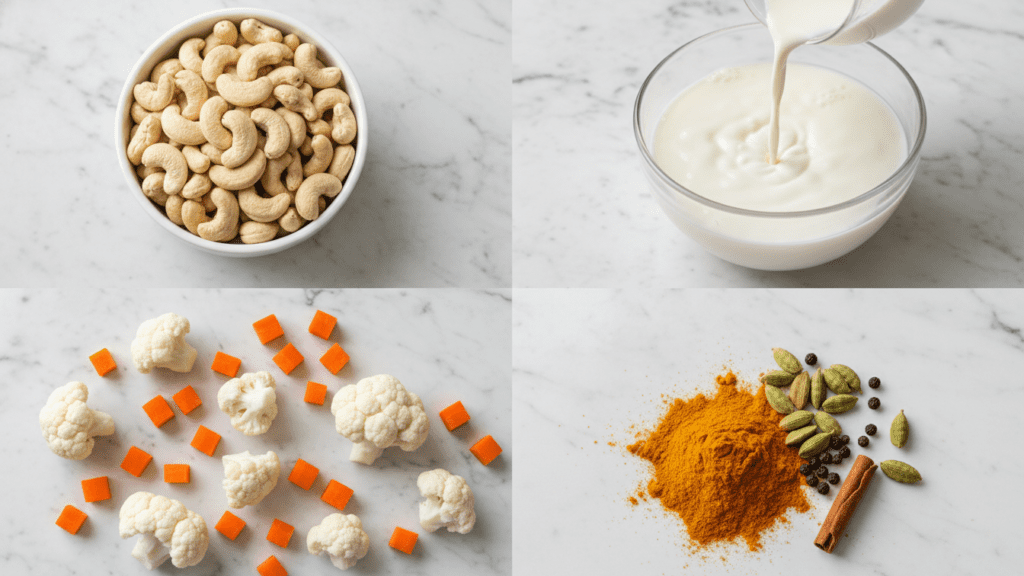
- The Veggie Squad: 2 large potatoes (cubed), 1 cup of cauliflower florets, 1/2 cup of peas, and 2 large carrots.
- The Cream Foundation: 1/2 cup raw cashews (soaked in hot water) and 1 cup of full-fat coconut milk.
- The Aromatics: 1 large white onion, 3 cloves of garlic, and a 1-inch knob of fresh ginger.
- The Spice Cabinet: Whole cardamom pods, cloves, a cinnamon stick, and powdered turmeric, coriander, and garam masala.
- The Fat: 2 tablespoons of ghee or neutral oil.
- The Finisher: A handful of fresh cilantro and a squeeze of lime juice.
Tools & Kitchen Gadgets You’ll Actually Use
To make this the smoothest cooking experience of your life, snag these basics. I’ve linked my favorites so you can treat your kitchen to the upgrades it deserves!
- High-Speed Blender: Essential for turning those cashews into liquid silk. Check out this Vitamix on Amazon.
- Large Enameled Dutch Oven: For even heat distribution that won’t burn your delicate sauce. Grab this Lodge classic.
- Stainless Steel Whisk: Perfect for ensuring your spices and cream are one. Try this ergonomic whisk.
- Sharp Chef’s Knife: Because jagged vegetables lead to jagged emotions. Get this Victorinox blade.
- Silicone Spatula: The only way to get every drop of that golden sauce out of the blender. Grab a set here.
Step-by-step Instructions: The Path to Silky Glory
Follow these steps precisely. IMO, the order of operations is the difference between a gourmet feast and a starchy swamp.
1. The Cashew Secret
Soak your raw cashews in boiling water for at least 15 minutes. Drain them and toss them into your high-speed blender with 1/2 cup of fresh water. Blitz until it looks like heavy cream. If you see a single lump, keep blending—we have standards here.
2. The Sauté Ritual
Heat your ghee in the Dutch oven. Toss in the whole spices (cardamom, cloves, cinnamon). Once they start dancing and smelling like an Indian spice market, add your finely diced onion. Sauté until translucent, not brown; korma is a pale princess, and we don’t want a dark gravy.
3. The Spice Bloom
Add the ginger-garlic paste and your powdered spices. Stir vigorously for 60 seconds. We are “blooming” the spices here, which is just a fancy way of saying we’re waking them up from their pantry slumber.
4. The Big Veggie Drop
Add your potatoes, carrots, and cauliflower. Stir them until they are glowing orange from the turmeric. Pour in enough water to just cover them, bring to a simmer, and cover the pot. Let them cook for 10-12 minutes until they are fork-tender.
5. The Creamy Marriage
Lower the heat to a whisper. Stir in that cashew cream and the coconut milk. Add the peas now so they stay bright green instead of turning into army-surplus mush. Let everything simmer uncovered for another 5 minutes until the sauce thickens into velvet.
6. The Final Flex
Remove the whole spices if you don’t want your guests to bite into a clove (spoiler: they don’t). Add the garam masala, lime juice, and fresh cilantro. Taste it. Does it need salt? Probably. Add it now and prepare for the standing ovation.
Calories & Nutritional Info

For those of you who track your stats like a part-time job, here is the lowdown per serving (approx. 4 large servings):
- Calories: ~380 kcal
- Net Carbs: ~32g (Energy for your soul!)
- Protein: ~8g (Plant power from the cashews).
- Fat: ~24g (Mostly heart-healthy cashew and coconut fats).
- Fiber: ~7g (Veggies for the win!).
Common Mistakes to Avoid: Don’t Be That Person
Even a recipe this simple can go sideways if you get cocky. Avoid these blunders to keep your kitchen dignity.
- Using Roasted Cashews: I’ll say it again: use raw. Roasted nuts will turn your korma into a peanut butter soup. No thanks.
- Browning the Onions: If the onions caramelize, the korma turns brown and bitter. Keep them pale.
- Boiling the Sauce on High: Cashew cream and coconut milk can separate if you treat them like a volcano. Low heat only.
- Skipping the Lime: The acid cuts through the heavy creaminess. Don’t skip it.
- Buying Pre-Cut Veggies: They are often dry and sad. Chop them yourself for maximum freshness. 🙂
Variations & Customizations
Feeling adventurous? Here are three ways to flip the script on this vegetable korma:
The Spicy Siren
Add two chopped Thai bird’s eye chilies to the sauté stage. It creates a “sweet heat” vibe that clears the sinuses and warms the heart.
The Keto-Friendly Hack
Ditch the potatoes and peas! Use cauliflower, green beans, and bell peppers. Replace the water with extra coconut milk. You’re now a low-carb wizard.
The Vegetarian Protein Punch
Add 200g of cubed paneer or firm tofu during the final simmer. It turns a light side dish into a heavy-duty meal that stays with you until Tuesday.
FAQ Section: You Asked, I Answered
Is vegetable korma actually healthy? In the context of comfort food, yes! You’re getting a massive dose of fiber and vitamins from the veggies, plus healthy fats from the nuts. Just don’t eat an entire loaf of naan with it.
Can I make this nut-free? Sure! Swap the cashew cream for sunflower seed butter or extra heavy cream (if you’re okay with dairy). It won’t be as “buttery,” but it still slaps.
How do I store leftovers? Keep them in an airtight container in the fridge for up to 3 days. FYI: korma actually tastes better on day two once the spices have had time to get to know each other.
Can I freeze vegetable korma? Heck yes. It freezes beautifully for up to 3 months. Just thaw it overnight in the fridge and add a splash of water when reheating to bring back the silkiness.
What is the best rice to serve with this? Extra-long grain Basmati is the only correct answer. It’s light, fragrant, and doesn’t get in the way of the sauce.
Why is my korma watery? You either used “lite” coconut milk or didn’t let it simmer long enough. Simmer uncovered for 10 minutes to reduce and thicken.
Can I use frozen vegetables? You can, but fresh is elite. If you go frozen, don’t overcook them, or you’ll end up with vegetable porridge. :/
Final Thoughts
There you have it. A vegetable korma recipe that actually respects your time and your taste buds. It’s smoky, it’s fresh, and it’s the only meal that makes me feel like I’m winning at adulthood on a random Tuesday night. Once you master this pot, you’ll realize that store-bought jars are just a sad, salty lie. Go forth, blend some nuts, and enjoy the glow. Just don’t be surprised when your meat-loving friends start raiding your fridge. 🙂
Would you like me to find a great garlic naan recipe to pair with this?