The Ultimate Copycat: How to Master Vegan Olive Garden Minestrone Soup at Home
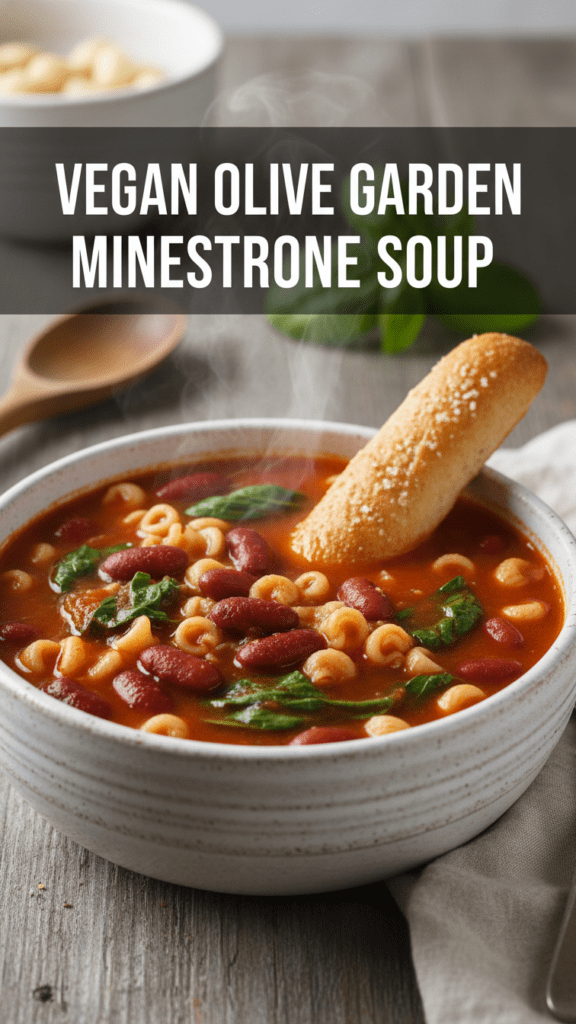
Let’s be brutally honest for a second: we’ve all had those days where the only thing that can save our sanity is a never-ending bowl of soup and enough breadsticks to build a small fort. You walk into that Italian-ish chain restaurant, smell the garlic in the air, and immediately feel a sense of peace. But then you realize you’re wearing pajamas, it’s raining, and the thought of interacting with a human waiter makes you want to hide under the covers. What if I told you that this vegan olive garden minestrone soup is so authentic, so hearty, and so unapologetically bold that you can skip the trek to the strip mall entirely?
I first whipped this up for a friend who practically bleeds marinara sauce. She claimed that “restaurant soup” has a secret magic you can’t replicate in a standard kitchen. One bowl of this plant-based wizardry later, and she was asking if I’d bribed a line cook for the blueprints. Whether you’re a lifelong vegan or just someone who appreciates a bowl of liquid gold that doesn’t cost fifteen dollars plus tip, you’re in the right place. Ready to ruin the restaurant experience for yourself forever? Let’s get into it.
Why This Soup Is the Main Character of Your Kitchen
Why should you bother making this vegan olive garden minestrone soup when you could just buy a dusty can of vegetable broth? Because your taste buds actually have standards, and “okay” isn’t a flavor profile. This soup is a masterpiece of texture—think tender beans, perfectly al dente pasta, and a medley of veggies that haven’t been processed into oblivion.
Secondly, it is ridiculously easy. If you can chop a carrot and open a can without needing a bandage, you’ve already won. It’s a one-pot wonder that makes you look like a Michelin-star chef while the stove does 90% of the heavy lifting. Plus, it impresses guests every single time. There is something profoundly satisfying about serving a meal that is naturally healthy but tastes like a total indulgence. Ready to become the neighborhood soup champion?
The Grocery List: Clean, Simple, and Impactful
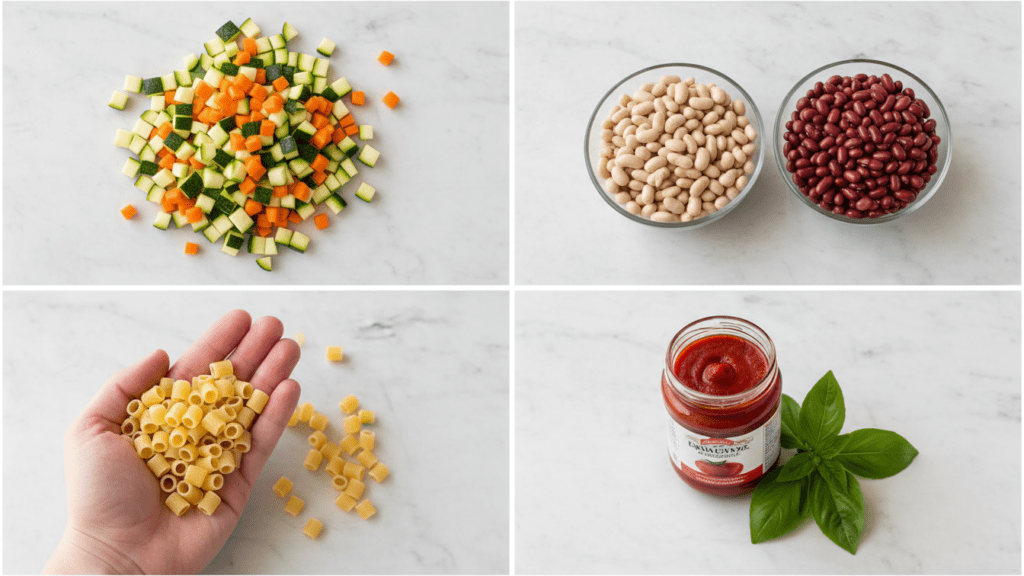
Don’t overcomplicate your life by searching for rare herbs harvested under a blood moon. We are using powerhouse pantry staples that play incredibly well together.
- The Veggie Trinity: One yellow onion, two large carrots, and two celery stalks. This is the foundation of your flavor empire.
- The Greens: Fresh zucchini and a few handfuls of fresh baby spinach.
- The Bean Power: One can of Kidney Beans and one can of Northern (White) Beans. Rinse them well unless you enjoy the taste of metallic bean water.
- The Tomato Base: One can of diced tomatoes and a generous squeeze of tomato paste.
- Liquid Gold: 6 cups of high-quality vegetable broth.
- The Pasta: Half a cup of small shell pasta or ditalini.
- The Flavor Boosters: Dried oregano, dried basil, and a pinch of red pepper flakes for those who like to live dangerously.
- Secret Weapon: A splash of fresh lemon juice at the end to wake the whole pot up.
Tools & Kitchen Gadgets You Need
To make this the smoothest cooking experience of your life, snag these basics. I’ve linked my favorites so you can treat your kitchen to some upgrades (and help a friend out with an affiliate click)!
- A Heavy-Bottomed Dutch Oven: This is the MVP. You want heavy-duty heat retention. Check out this Lodge Enameled Cast Iron pot on Amazon.
- Sharp Chef’s Knife: Dull knives are for people who enjoy frustration. Grab this ergonomic Victorinox knife here.
- Small Pasta Strainer: For rinsing those beans until they’re squeaky clean. Try this stainless steel set.
- Wooden Scraping Spoon: Perfect for getting those flavorful browned bits off the bottom. Get a sturdy bamboo set.
- Digital Kitchen Scale: Because “one medium onion” is an existential crisis. Get a reliable scale here.
Step-by-Step Instructions: The Path to Soup Glory
Follow these steps precisely, and please, for the love of all things savory, don’t skip the “sauté” phase. FYI: browning is where the soul of the dish lives!
1. Sweat the Aromatics
Heat a splash of olive oil in your Dutch oven over medium heat. Add your diced onion, carrots, and celery. Sauté them for about 6-8 minutes until the onions are translucent and starting to look golden. If your kitchen doesn’t smell like a 5-star Italian villa right now, check your stove.
2. The Tomato Bloom
Stir in your minced garlic and the tomato paste. Cook for just 2 minutes. You want the paste to turn a dark brick red; this “caramelizes” the sugars and removes that raw tinny taste. TBH, this is the step that separates the amateurs from the legends.
3. The Big Vegetable Dump
Add the diced zucchini, the canned diced tomatoes (with the juice!), and your vegetable broth. Stir in the dried oregano and basil. Bring the whole beautiful mess to a rolling boil, then immediately turn the heat down to a low simmer.
4. The Protein and Pasta Party
Add the kidney beans and white beans. Now, throw in your dry pasta. Some people cook pasta separately, but we want the starch to naturally thicken our soup. Let it simmer for about 10-12 minutes, or until the pasta is al dente.
5. The Green Finish
Turn off the heat. Stir in your fresh spinach. It will look like a lot, but it will wilt down to almost nothing in about 60 seconds. Add the fresh lemon juice and taste it. Does it need more salt? Probably. Adjust and serve!
Calories & Nutritional Info
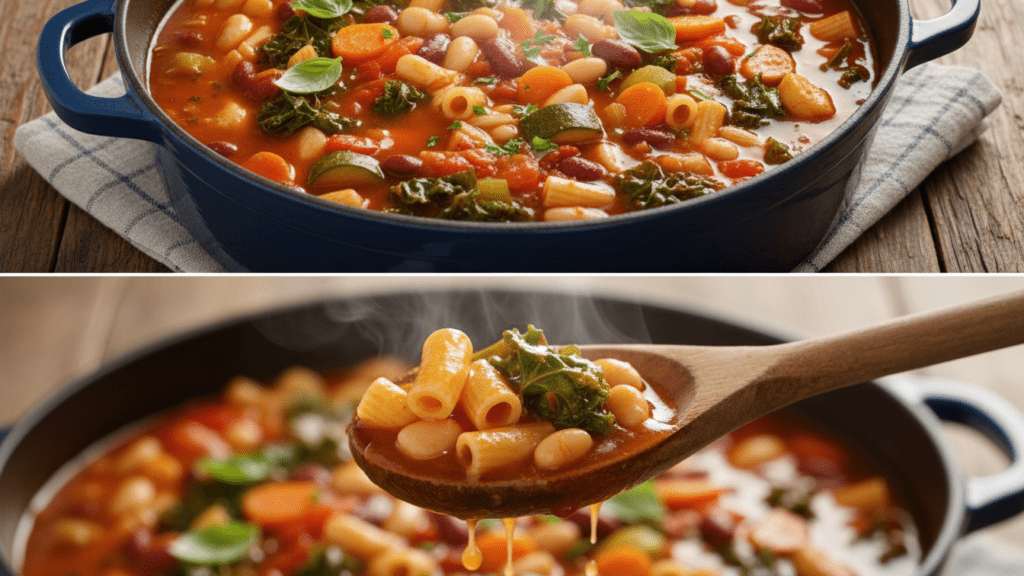
For those of you who track your stats like a part-time job, here is the lowdown per serving (approx. 6 servings):
- Calories: ~210 kcal (The perfect excuse for three breadsticks).
- Fiber: ~12g (Your digestive system will send you a thank-you note).
- Protein: ~9g (Plant-based gains, baby!).
- Fat: ~2g (Mostly from the heart-healthy olive oil).
- Vitamin C: Packed with it from the tomatoes and spinach.
Common Mistakes to Avoid: Don’t Be That Person
Even a recipe this simple can go sideways if you get cocky. Avoid these blunders to keep your dignity.
- Overcooking the Pasta: If you simmer the pasta for 30 minutes, you’ll be eating mushy ditalini porridge. Watch the timer.
- Skipping the Tomato Paste: Without the paste, your soup will look like watery tea. Don’t skip the depth.
- Using Canned Veggies: Canned carrots are a crime. Use fresh vegetables for that authentic crunch.
- Ignoring the Salt: Beans and pasta absorb a massive amount of salt. Season at the beginning AND the end.
- Forgetting to Rinse the Beans: That liquid in the can is full of sodium and starch you don’t want. Rinse them thoroughly.
Variations & Customizations
Feeling adventurous? Here are three ways to flip the script on this vegan olive garden minestrone soup:
The Keto-Ish Swap
Ditch the pasta and the beans. Increase the zucchini and add some chopped cauliflower. It won’t be exactly like the original, but you’ll be a low-carb wizard.
The Spicy Siren
Love the burn? Add a teaspoon of red pepper flakes and a dollop of Calabrian chili paste during the aromatic step. Keep a glass of water nearby.
The Vegetarian Cheese Bomb
If you aren’t strictly vegan, top this with a mountain of freshly grated Parmesan cheese. It adds a salty richness that pairs perfectly with the tomato broth. 🙂
FAQ Section: You Asked, I Answered
Is Olive Garden Minestrone actually vegan? Yes! IMO, it’s the best thing on their menu for plant-based eaters. This copycat recipe ensures you get that exact same flavor profile without the dairy or eggs.
Can I make this in a slow cooker? You can, but I wouldn’t. Pasta and zucchini get very mushy in a crockpot. If you must, cook the base for 6 hours, then add the pasta and greens in the last 20 minutes.
How do I make the soup thicker? If it’s too thin for your liking, take a half-cup of the white beans and mash them into a paste before stirring them back in. It’s a natural thickener!
Can I freeze vegan minestrone soup? Heck yes. It freezes beautifully for up to 3 months. Just freeze it without the pasta and add fresh noodles when you reheat it to avoid the mush-factor.
What pasta works best? Ditalini is the classic choice, but small shells or elbow macaroni work perfectly too. Anything small enough to fit on a spoon is a winner.
Do I have to use two types of beans? You don’t have to, but the mix of kidney and white beans provides the iconic texture and color of the original. If you’re in a pinch, just use more of one.
How long does this last in the fridge? It stays peak delicious for about 4 days. In fact, it usually tastes better on day two once the flavors have had a chance to get to know each other.
Final Thoughts
There you have it. A vegan olive garden minestrone soup that actually respects your time and your taste buds. It’s smoky, it’s thick, and it’s the only meal that makes me feel like I’m winning at adulthood on a random Tuesday. Once you make this, you’ll realize that the store-bought stuff in the plastic tub is just a sad lie. Go forth, sauté some onions, and enjoy the beans. Just don’t be surprised when your meat-loving friends start raiding your leftovers. 🙂