The Ultimate Crispy Guide: How to Master Authentic Tempura at Home
We have all been there. You sit down at a high-end Japanese restaurant, pay twenty dollars for a plate of vegetables, and wonder how on earth they made a piece of broccoli taste like a shatteringly crisp cloud. You go home, try to replicate it, and end up with a soggy, oily mess that looks more like a corn dog’s sad cousin. Why does deep-frying have to be so hurtful? Today, we are ending that cycle of heartbreak with a tempura recipe that actually works, provided you follow the rules of the cold.
Think you need a culinary degree and a specialized vat of oil to get that perfect lace-like crunch? Think again. I once saw a guy try to make this with warm tap water and a whisk—let’s just say it was a tragedy in three acts. TBH, once you learn the “lumpy batter” secret, you will realize that your local takeout place has been overcharging you for years. Ready to turn your kitchen into a high-stakes fry station without the oily disaster?
Why This Recipe is Awesome
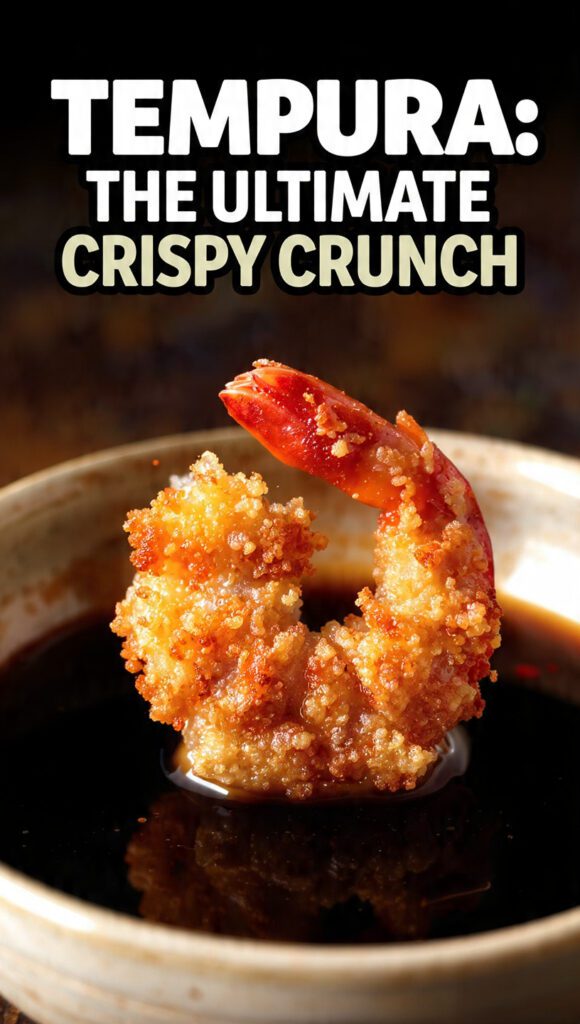
Why should you bother making your own tempura when you can just buy the frozen stuff? Because frozen shrimp are essentially rubber bands wrapped in sadness. This recipe gives you that authentic, golden, airy texture that highlights the food instead of burying it under a mountain of breading. It is the ultimate flex for your next dinner party.
The versatility here is unmatched. Do you have a random sweet potato and three green beans in the back of your fridge? They are now gourmet appetizers. It is the most delicious way to clean out your produce drawer. Plus, the dipping sauce—Tentsuyu—is a savory, umami-packed dream that beats plain soy sauce any day of the week.
Best of all, this is a “fast” slow food. While the prep takes a minute, the actual frying happens in seconds. It’s exciting, it’s crunchy, and it makes you look like a kitchen wizard. IMO, there is no more satisfying sound in the world than the crunch of a perfectly fried shrimp. 🙂
Ingredients
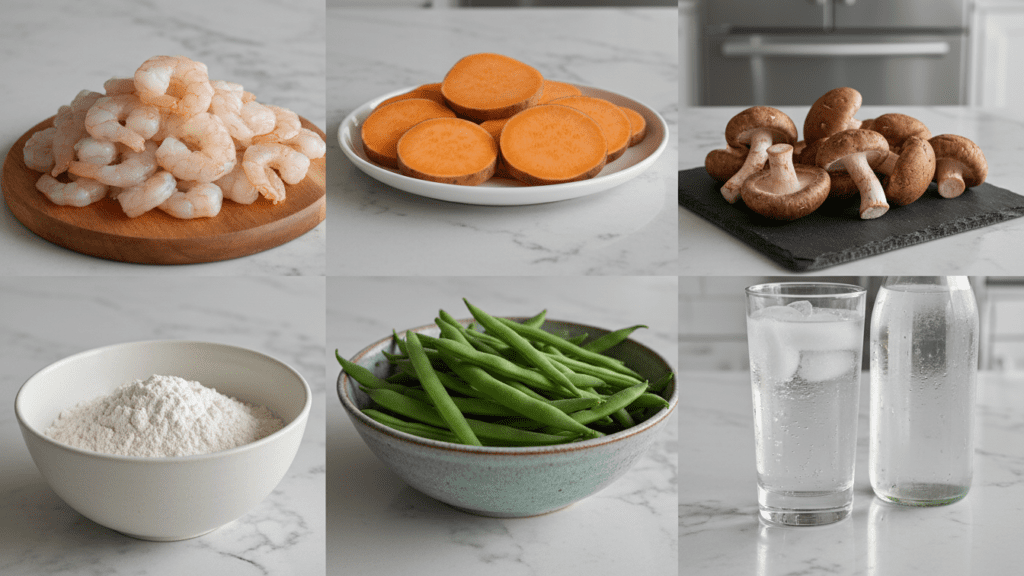
Gather your supplies, people. Precision is your best friend here. If your water isn’t cold enough to preserve a woolly mammoth, go back to the freezer and try again.
The Batter
- 1 cup All-Purpose Flour (Cake flour is even better if you want maximum lightness)
- 1 large Egg (Keep it cold!)
- 1 cup Ice-Cold Sparkling Water (The bubbles add extra lift, trust me)
- A pinch of Salt
The Goods (The Fryables)
- 8 large Shrimp (Peeled and deveined, tail on for the “look”)
- 1 small Sweet Potato (Sliced into thin rounds)
- 1 small Zucchini (Sliced into sticks)
- 4 Shiitake Mushrooms (Stems removed)
- Handful of Green Beans (Trimmed)
The Dipping Sauce (Tentsuyu)
- 1/2 cup Dashi Stock
- 2 tablespoons Soy Sauce
- 2 tablespoons Mirin
- 1 teaspoon Grated Daikon Radish (For that fresh zing)
Tools & Kitchen Gadgets Used
You don’t need a commercial fryer, but a few specific tools make the difference between a crispy triumph and a greasy disaster.
- Heavy-Bottomed Dutch Oven or Deep Skillet – You need something that holds heat like a grudge.
- Stainless Steel Wire Cooling Rack – This is non-negotiable; if you put hot fry-ups on a flat plate, the steam will ruin the bottom crust.
- Instant-Read Digital Meat Thermometer – To ensure your oil stays at the perfect temp.
- Stainless Steel Spider Strainer – For fishing your crispy treasures out of the bubbling deep.
- Mixing Bowls with Ice Bath – To keep your batter chilled while you work.
Step-by-Step Instructions
Alright, let’s get to the “crunch” of the matter. Put on your favorite playlist and let’s make some magic happen.
Step 1: Prep the Veggies and Shrimp
Slice your vegetables thinly. If the sweet potato is too thick, it won’t cook before the batter burns. For the shrimp, make three small shallow slits on the belly side and press them down until they “snap” straight. Why? Because curly shrimp are hard to dip and even harder to eat.
Step 2: The Dipping Sauce
Combine the dashi, soy sauce, and mirin in a small saucepan. Bring it to a simmer, then take it off the heat. Stir in your grated daikon right before serving. This sauce is the unsung hero of the dish, so don’t skip it.
Step 3: The Coldest Batter
Beat your cold egg in a bowl. Pour in the ice-cold sparkling water. Sift in the flour and a pinch of salt. Now, listen closely: DO NOT OVERMIX. Use chopsticks and stir just a few times. Lumps are your friends. If the batter is smooth, you’ve made glue, and your tempura will be tough.
Step 4: The Heat Check
Fill your Dutch oven with oil and heat it to 340°F (170°C) for vegetables and 350°F (180°C) for seafood. If you don’t have a thermometer, drop a bit of batter in; if it sinks halfway and then pops back up immediately, you are in the zone.
Step 5: Dip and Drop
Dust your ingredients lightly in dry flour first—this helps the batter stick. Dip them into the lumpy cold batter and carefully lower them into the hot oil. Do not crowd the pan! If you put too many things in at once, the oil temp drops, and you end up with greasy, sad veggies.
Step 6: The Golden Finish
Fry the vegetables for 2-3 minutes and the shrimp for about 2 minutes. They should be a very pale golden yellow, not dark brown like chicken. Use your spider strainer to move them to the wire cooling rack immediately.
Calories & Nutritional Info

Let’s be real: we are deep-frying things. It’s a treat. But for the curious, here is the damage estimate per serving (about 5-6 pieces):
- Calories: ~350-400 kcal (depending on your oil drainage skills).
- Fats: 20-25g (The price of crunchiness).
- Carbohydrates: 30g (Mostly from the flour and sweet potato).
- Protein: 15g (Mostly from the shrimp).
- Note: Using sparkling water and keeping the batter cold reduces oil absorption. FYI, the daikon in the sauce actually helps with fat digestion.
Common Mistakes to Avoid
Don’t let your Japanese dinner turn into a tragedy. Avoid these classic slip-ups:
- Overmixing the Batter: This is the #1 mistake. Mixing develops gluten, which makes the coating bready instead of crispy. Keep it lumpy.
- Warm Batter: If the batter gets warm, it won’t react with the hot oil correctly. Keep the bowl over ice if your kitchen is hot.
- Crowding the Pot: Adding too many pieces at once turns your fryer into a steamer. Fry in small batches.
- Low Oil Temp: If the oil isn’t hot enough, the food just soaks up grease. Check the temp between every batch.
- Skipping the Flour Dust: If you don’t coat the shrimp in a little dry flour first, the batter will just slide right off like a silk robe.
Variations & Customizations
Once you master the base, the world is your crispy oyster.
- The Spicy Kick: Add a teaspoon of shichimi togarashi (Japanese seven-spice) to your dipping sauce or directly into the dry flour dusting.
- Keto-Friendly Swap: Replace the all-purpose flour with unflavored whey protein isolate or a mix of almond flour and xanthan gum. It’s surprisingly crunchy!
- The Herbivore Feast: Use kale leaves, sliced pumpkin, or even avocado slices. Kale tempura is a revelation—it’s like the world’s best chip.
FAQ Section
What is the secret to crispy tempura? The secret is the temperature contrast. Cold batter meeting hot oil creates immediate steam, which puffs up the coating before it can soak up the grease.
Why is my tempura soggy? You probably overmixed the batter or the oil wasn’t hot enough. Also, never put fried food on paper towels; the steam gets trapped and turns it into a soggy mess. Use a wire rack!
Can I use regular water instead of sparkling? Yes, but it must be ice-cold. Sparkling water is just a little insurance policy for extra airiness. IMO, it’s worth the extra dollar. 🙂
Which oil is best for frying? Use a neutral oil with a high smoke point, like canola, vegetable, or grapeseed oil. Avoid olive oil unless you want your kitchen to smell like a burnt Italian garden.
Can I make the batter in advance? No! The batter starts to degrade the second you mix it. Make it the very second you are ready to start frying.
Is tempura gluten-free? Not usually, but you can make it so by using rice flour or a dedicated gluten-free flour blend. Rice flour actually makes a very light, crispy crust.
What do I do with the leftover oil? Let it cool, strain it through a coffee filter, and you can reuse it once or twice. Or, you know, just use it as an excuse to make more tempura tomorrow.
Final Thoughts
There you have it—the tempura recipe that will officially make you a household legend. It’s light, it’s airy, and it’s a lot easier than you think once you embrace the lumps. Once you hear that first crunch, you will realize that store-bought, frozen shrimp are a crime against humanity.
Go ahead, fry up a batch and enjoy the smug satisfaction of a restaurant-quality meal. Just try not to act too surprised when your friends ask if you’ve secretly been training in Tokyo. Ready to ruin every other appetizer for yourself? Happy frying!