🌮 Better Than Tacos: Mastering the Ultimate Authentic Sopes Recipe at Home
Let’s be brutally honest: if your only experience with Mexican “masa” involves a crunchy yellow shell from a cardboard box, you’ve been living a culinary lie. We’ve all been there—paying fifteen dollars for a plate of “street food” at a trendy bistro, only to find three tiny corn discs that have the structural integrity of a wet napkin. It’s a tragedy! But then, you bite into a real, thick, hand-pinched sopes recipe, and suddenly your soul undergoes a spiritual awakening involving refried beans and pure joy.
I once served a mountain of these to a friend who insisted that “tacos are the peak of Mexican cuisine.” After the first bite of the crispy-on-the-outside, soft-on-the-inside corn boat holding a pool of salsa, he actually stopped talking for ten minutes. He essentially became one with the queso fresco. That, my friends, is the power of a proper masa edge. Are you ready to stop settling for lukewarm takeout and start building a legendary Mexican masterpiece in your own kitchen?
🏆 Why This Sopes Recipe is the Actual GOAT
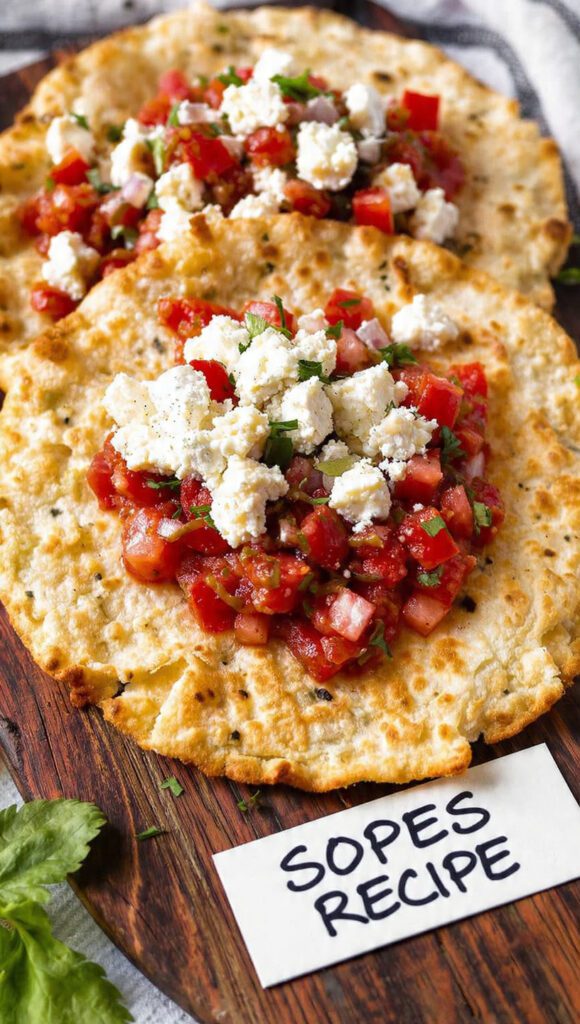
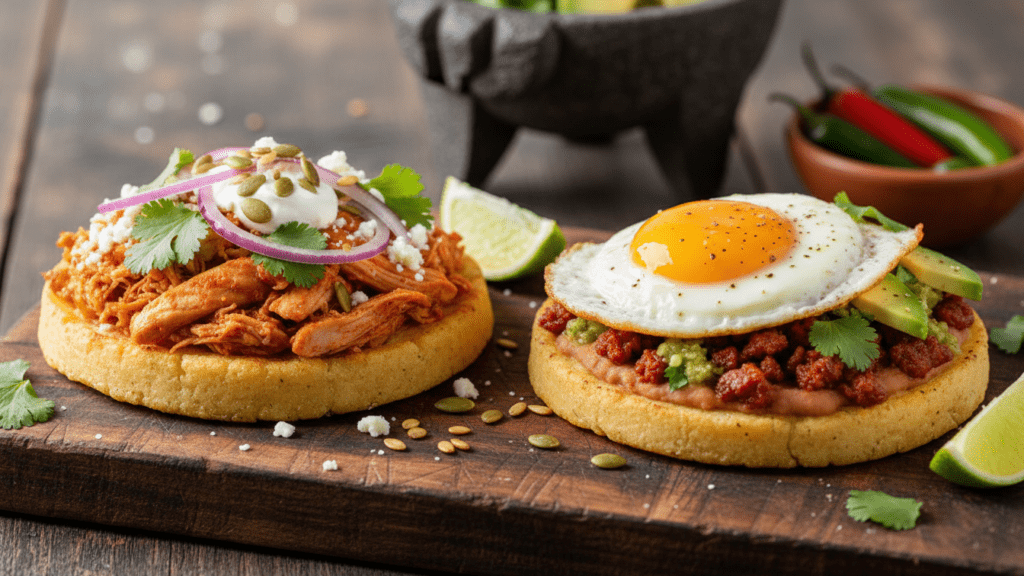
Why should you bother pinching hot dough when you could just fold a tortilla? Because this sopes recipe delivers a level of textural satisfaction that a thin taco simply cannot provide. We are talking about a thick, fried corn base with raised edges—basically a culinary life raft designed specifically to hold as much salsa, meat, and cream as humanly possible without spilling.
This recipe is awesome because it’s a high-impact, ego-stroking flex for any home cook. It impresses guests because it looks incredibly technical (look at those handmade rims!), when in reality, you just know how to use your thumb effectively. Plus, it’s the ultimate “fridge raid” meal. If you have masa and a can of beans, you’re basically a Michelin-starred chef. It’s the undisputed champion of weekend wins, IMO.
🧂 The “Masa-Elite” Ingredient List

Success depends entirely on the hydration of your corn and the quality of your fat. Don’t go for “low-fat” toppings here, or your sopes will taste like sad, dry crackers.
- 2 Cups Masa Harina: Look for the Maseca brand; it’s the gold standard for a reason.
- 1 1/2 Cups Warm Water: To transform dust into deliciousness.
- 1/2 Teaspoon Salt: Because unseasoned masa is a crime against humanity.
- Vegetable Oil: For that essential shallow fry.
- 2 Cups Refried Beans: The “mortar” that holds your toppings in place.
- 1 Cup Shredded Chicken or Beef: Rotisserie chicken is a great “cheat” here.
- 1 Cup Lettuce: Finely shredded for that crunch.
- 1/2 Cup Queso Fresco: Crumbled like your motivation on a Monday morning.
- Mexican Crema: For that viral-worthy drizzle.
- Salsa Roja or Verde: Use the spicy stuff if you want to feel something.
Key Substitutions
- Fat Swap: Use lard (manteca) instead of oil for the most authentic, decadent flavor profile.
- Cheese Swap: Use mild Feta if Queso Fresco is extinct in your area—it’s a surprisingly close cousin.
- Vegan Swap: Skip the meat and cheese; use seasoned black beans and avocado mash.
🔪 Tools & Kitchen Gadgets Used
You don’t need a professional comal, but a few basics make this a ten-minute sizzle instead of a sticky struggle.
- Cast Iron Skillet: The absolute MVP for achieving that perfect, even sear. Check out top-rated cast iron pans here!
- Tortilla Press: To get that perfectly uniform thickness without using a heavy book. Grab a sturdy one here!
- Parchment Paper or Plastic Liners: To keep your masa from sticking to the press (and your soul).
- Flat Silicone Spatula: To flip your corn boats without shattering them. Check them out on Amazon!
- Small Mixing Bowl: For the hydration ritual.
👩🍳 Step-by-Step Instructions: The Path to Masa Glory
Follow these steps precisely. Sopes are about the “pinch,” not the rush. Patience (and high heat) is your best friend.
1. The Hydration Meditation
In your mixing bowl, combine the masa harina, salt, and warm water. Knead it with your hands for about 2 minutes. TBH, it should feel like playdough. If it’s cracking, add a tablespoon of water; if it’s sticking to your fingers, add more masa. Let it rest for 10 minutes—it needs a nap.
2. The Pressing Protocol
Divide the dough into balls the size of a golf ball. Place a ball between two pieces of plastic liner in your tortilla press. Press down gently. We aren’t making thin tortillas here; we want a thick, 1/4-inch disc. FYI, thin sopes are just sad tostadas.
3. The Initial Sear
Heat your cast iron skillet over medium-high heat (no oil yet!). Cook the disc for about 1 minute per side until light brown spots appear. It should be cooked through but still pliable.
4. The Famous Pinch (The Danger Zone)
This is the part where you prove your bravery. While the disc is still hot, use your thumb and forefinger to pinch the edges upward to create a rim. Bold Key Info: Do this while they are hot! Once they cool, they will crack instead of bend. If your fingers are sensitive, use a paper towel to protect your skin. 🙂
5. The Golden Bath
Now, add a generous glug of oil to the skillet. Fry the sopes for 2-3 minutes until the bottom is golden-brown and crispy. This creates the structural integrity needed to hold the weight of your toppings. Drain on paper towels.
6. The Topping Ceremony
Spread a thick layer of warm refried beans inside the rim. Add your meat, followed by the lettuce. This is the foundation of your empire.
7. The Final Drizzle
Top with queso fresco, crema, and salsa. Serve immediately while the base is still crunchy and the beans are molten. Do not wait! Sopes wait for no one. 🙂
📊 Calories & Nutritional Info (The Rich Reality)
Since we used corn and beans, we can legally pretend this is a high-fiber wellness bowl. Right?
- Estimated Calories Per Sope: $\approx$ 220–280 kcal.
- Fiber Power: High levels from the corn masa and refried beans.
- Protein Punch: A solid 12g per sope (thanks to the chicken and cheese).
- Gluten-Free: 100% naturally, provided you don’t use flour “shortcuts.”
- Mood: Scientifically proven to improve by 1,000% after the first bite.
🚨 Common Mistakes to Avoid (The Masa Crimes)
Avoid these if you want people to actually keep talking to you at the dinner table.
- Using Cold Water: Warm water “blooms” the masa for a softer texture. Keep it warm!
- Waiting to Pinch: If the dough cools down, you can’t form the rim. Pinch through the pain.
- Under-frying: A soft sope will collapse under the weight of the salsa. Get that golden crunch!
- Over-filling: If you pile it too high, it becomes a salad you eat with a fork. Aim for handheld glory. 🙂
✨ Variations & Customizations
Because you’re the boss of this corn-filled circus.
1. The Keto-Friendly Swap
Use a cauliflower and almond flour “dough” for the base. It won’t have the same corn soul, but it holds a rim surprisingly well when baked before frying.
2. The “Fire-Breather” Version
Mix chopped Habanero peppers directly into the masa dough before pressing. It turns the base itself into a spicy surprise that will challenge even the bravest souls.
3. The Breakfast Sope
Swap the meat for a fried egg and crispy chorizo. It’s the ultimate hangover cure and looks incredible on a brunch spread.
❓ FAQ Section: Your Sopes Queries Answered
What is the difference between a Sope and a Huarache?
A sope is small, round, and thick with pinched edges. A huarache is larger, oval-shaped (like a sandal), and usually topped with more significant portions of meat.
Can I make sopes in advance?
Yes! You can cook the discs and pinch them, then store them in the fridge. When you’re ready to eat, just do the final fry step to freshen them up.
Why did my sopes crack when I pinched them?
You either let them cool down too much or your dough was too dry. Add a splash more water to your masa next time!
Are sopes better than tacos?
IMO, yes. The thick base provides a much better ratio of “toppings to carb” and doesn’t fall apart halfway through the meal.
What is the best masa to use?
Look for nixtamalized corn flour. If the bag doesn’t say “nixtamalized,” it won’t have that iconic corn flavor or the right binding properties.
Can I air-fry sopes?
You can, but they won’t have that signature “crispy-fat” flavor. Spray them heavily with oil and air-fry at 370°F for 8 minutes for a lighter version.
How do I store leftovers?
Keep the shells and toppings in separate containers. Sopes stored with beans on top will turn into a soggy mess by morning. TBH, they are best eaten fresh.
🥂 Final Thoughts: Go Forth and Pinch!
You’ve done it. You’ve successfully navigated the world of “Hand-Formed Corn Boats” without having a public breakdown. You are now a titan of the cast iron and a hero of the taco night. Go ahead, have that fourth sope—it’s mostly just “vegetables and protein,” right? Just don’t tell me if you used a microwave to “sear” the masa; I have a reputation to maintain. 😉