

The Ultimate Sheet Pan Salmon Recipe for People Who Hate Dishes
Let’s be honest, the hardest part of cooking dinner isn’t the chopping or the stirring—it’s the catastrophic mess that explodes in your kitchen afterward. On those hectic weeknights when you’re teetering on the brink of ordering pizza for the third time, you need a hero. A meal that is healthy, delicious, impressive, and—most importantly—only uses one pan. My friend, allow me to introduce you to your new culinary savior: this incredible Sheet pan salmon. It’s the dinner that tastes like you have your life together, even when you definitely don’t.
H2: So, Why Is This Recipe Basically a Weeknight Miracle?

What’s not to love about a recipe that delivers a complete, balanced meal with virtually no cleanup? The number one reason this recipe rocks is the one-pan wonder factor. Everything—your flaky protein, your tender-crisp veggies—cooks together in perfect harmony on a single sheet pan. When dinner’s done, you just toss the parchment paper. It feels like cheating, but I promise it’s legal.
Beyond the glorious lack of dishes, this meal is lightning-fast, taking you from hungry to happy in under 30 minutes. It’s also ridiculously healthy, loaded with Omega-3s from the salmon and all sorts of vitamins from the roasted veggies. Plus, it looks absolutely stunning. The vibrant colors make it look like a gourmet meal from a fancy restaurant, making it perfect for a casual date night or when you have guests and want to look like you tried way harder than you actually did.
H2: Your Simple Shopping List for Success
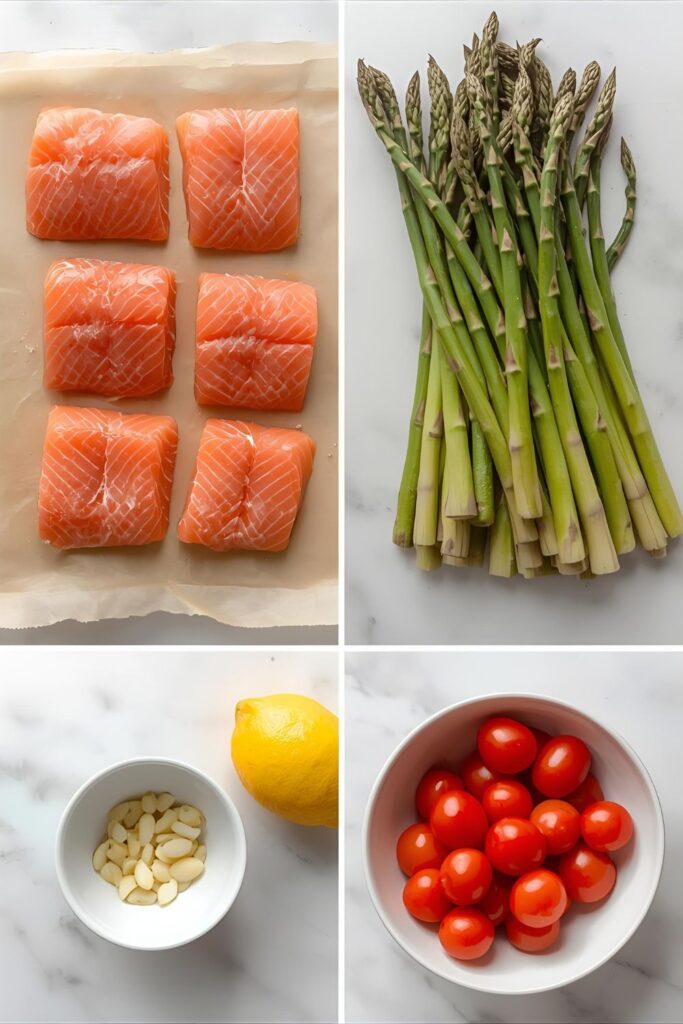

This recipe is all about fresh, simple ingredients that pack a major flavor punch. No weird, obscure items here!
H3: For the Salmon & Veggies
- 4 salmon fillets (about 6 oz each): Skin-on or skinless, your call. Try to get fillets that are similar in thickness for even cooking.
- 1 bunch of asparagus: Look for spears that are firm, not limp. Snap off the tough, woody ends.
- 1 pint of cherry or grape tomatoes: These burst with sweetness when roasted, creating a jammy, delicious sauce.
- 1 lemon: You’ll use this for slicing and for juice.
- 3-4 cloves of garlic, minced: Because garlic makes everything better. Don’t argue with science.
H3: For the Seasoning
- 3 tablespoons olive oil: The good stuff, if you have it.
- 1 teaspoon dried dill (or your favorite herb): Italian seasoning or dried oregano also work great.
- 1/2 teaspoon salt: Or to taste.
- 1/4 teaspoon black pepper: Freshly ground is always best.
H2: The Tools You’ll Need (Spoiler: It’s a Short List)
Prepare for the least intimidating tool list of your life. This is the beauty of a one-pan meal.
- A Large, Rimmed Baking Sheet: This is the MVP. A “half sheet” size is perfect. The rim is crucial to keep any juices from dripping into your oven.
- Parchment Paper or Aluminum Foil: This makes cleanup an absolute dream. Don’t skip it!
- A Small Bowl: For mixing up your garlic and herb oil.
- Cutting Board and a Sharp Knife: For basic veggie and garlic prep.
- Fish Spatula or Tongs: For serving your perfectly cooked salmon without breaking it.
H2: Let’s Get Cooking: Your Step-by-Step Guide
This is so easy, you’ll have it memorized after making it once.
H3: Step 1: Get the Oven Ready
Preheat your oven to 400°F (200°C). Line your large baking sheet with parchment paper for the easiest cleanup known to humankind.
H3: Step 2: Season the Veggies
Place your trimmed asparagus and cherry tomatoes on the prepared baking sheet. In your small bowl, mix together the olive oil, minced garlic, salt, and pepper. Drizzle about two-thirds of this mixture over the vegetables and toss them with your hands or tongs until they are evenly coated. Spread them out in a single layer.
H3: Step 3: Give the Veggies a Head Start
Roast the vegetables for about 10-12 minutes. They need a little more time in the oven than the salmon to get perfectly tender-crisp.
H3: Step 4: Prep the Salmon
While the veggies are roasting, pat your salmon fillets completely dry with a paper towel. This is a key step for getting a nice sear! Rub the remaining olive oil mixture all over the fillets and sprinkle them with the dried dill.
H3: Step 5: Assemble and Bake
After the veggies have had their head start, carefully remove the hot pan from the oven. Push the vegetables to the sides to make room for the salmon in the center. Place the salmon fillets down the middle of the pan. Top each fillet with a thin slice of lemon.
H3: Step 6: The Final Roast
Return the sheet pan to the oven and roast for another 12-15 minutes. The exact time will depend on the thickness of your salmon. It’s done when it flakes easily with a fork and is cooked to your liking. Squeeze a little fresh lemon juice over everything before serving.
H2: The Nutritional Lowdown (Per Serving)
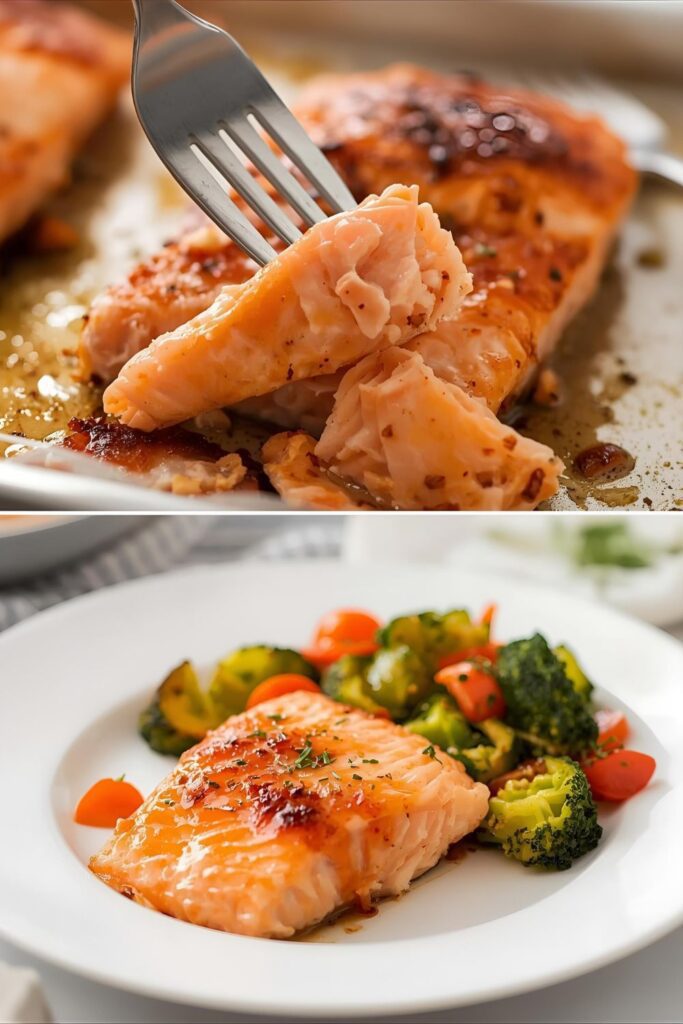
Here’s a ballpark estimate for one serving of this healthy and delicious meal.
- Calories: Approximately 450-500 kcal
- Protein: 40g
- Fat: 30g (The good kind of fat!)
- Carbohydrates: 10g
- Fiber: 4g
- Omega-3 Fatty Acids: Off the charts!
H2: Common Weeknight Tragedies to Avoid
Don’t let these simple mistakes sabotage your beautiful dinner.
- The Ultimate Sin: Overcooked Salmon: Dry, chalky salmon is a culinary crime. Salmon cooks quickly! Check it early. It’s done when it flakes easily with a fork and the color changes from translucent to opaque. A slightly pink center is perfect for moistness.
- A Crowded, Steamy Pan: If you cram everything onto the pan, your vegetables will steam instead of roast. Give everything some personal space. Use a large enough pan or two smaller ones if necessary. Roasting requires air circulation.
- Uneven Cooking Times: Don’t just throw everything in at once. Vegetables like asparagus and broccoli take longer to cook than salmon. Giving them that 10-minute head start is the secret to a perfectly cooked meal where everything is done at the same time.
- Forgetting to Pat the Fish Dry: A wet salmon fillet will steam in the oven. Patting it dry with paper towels ensures the oil and seasonings adhere properly and helps the exterior cook nicely.
H2: Get Creative: Sheet Pan Variations
Once you master the technique, the possibilities are endless.
- Sweet & Spicy Asian-Style Salmon: Swap the dill and lemon for a glaze made of soy sauce, honey, ginger, and a dash of sriracha. Use broccoli florets and sliced bell peppers as your vegetables. Top with sesame seeds before serving.
- Mediterranean Salmon: Use zucchini chunks and red onion wedges as your veggies. Season everything with oregano. After baking, top with crumbled feta cheese, Kalamata olives, and fresh parsley.
- Pesto Salmon with Green Beans: Skip the oil and herb mixture and instead spread a generous layer of basil pesto on each salmon fillet. Use green beans and sliced potatoes (give the potatoes a 20-minute head start) as your base.
H2: FAQ: Your Sheet Pan Salmon Questions, Answered
Got questions? I’ve got answers.
H3: Can I use frozen salmon fillets?
You can, but for the best results, you should thaw them completely in the refrigerator overnight. Cooking from frozen can lead to an unevenly cooked piece of fish.
H3: How do I know when salmon is perfectly cooked?
The official USDA recommendation is an internal temperature of 145°F (63°C), which will be fully opaque and firm. However, most chefs and foodies prefer it cooked to medium, around 125°F to 130°F (52°C to 54°C), where the center is still slightly translucent and incredibly moist. It will also flake easily with a fork.
H3: What other vegetables work well on a sheet pan?
Broccoli florets, green beans, bell pepper strips, zucchini, and red onion are all fantastic choices that have similar cooking times to asparagus. Root vegetables like potatoes and carrots need a longer head start (about 20-25 minutes) before you add the salmon.
H3: Should I cook the salmon with the skin on?
It’s a matter of preference! The skin provides a great barrier that helps prevent the salmon from drying out. If you get it crispy, it’s delicious! If you don’t like the skin, it’s very easy to remove after cooking.
H3: How do I store and reheat leftovers?
Store leftovers in an airtight container in the refrigerator for up to 2 days. To reheat, it’s best to use the oven or an air fryer at a low temperature (around 275°F / 135°C) for about 10-15 minutes. Microwaving can make it dry and rubbery.
H3: How do I make the cleanup even easier?
Use a sheet of heavy-duty aluminum foil in addition to or instead of parchment paper. You can literally just wrap up the mess and toss it. It doesn’t get easier than that.
H3: My salmon stuck to the pan! What did I do wrong?
You probably forgot to use parchment paper or foil, or you didn’t use enough oil. A well-oiled piece of foil or parchment is your best insurance against sticking.
H2: Final Thoughts: You’ve Conquered the Weeknight
And there you have it. A delicious, healthy, and stunningly simple meal that leaves you with only one pan to wash. You’ve officially outsmarted the weeknight dinner rush. You can now spend less time scrubbing pots and more time doing… well, anything else. Go ahead and add this to your weekly rotation. You can thank me later.

