
🇮🇹 The Gold Standard: Mastering the Ultimate Authentic Risotto Milanese Recipe
Let’s be brutally honest: if your only experience with “rice” involves a plastic bag and a microwave, we need to have a serious intervention. We’ve all been there—paying thirty dollars at a “fancy” bistro for a plate of yellow mush that has the structural integrity of wet cement and the flavor profile of a plain cracker. It’s a culinary tragedy! But then, you take a bite of real, shimmering, saffron-infused risotto milanese, and suddenly your soul feels like it’s being hugged by a wealthy Italian grandmother who just gave you her secret inheritance.
I once served this to a friend who claimed they “didn’t really do carbs.” After the first spoonful of this golden liquid gold, they were literally scraping the bottom of the pot with a piece of crusty bread, questioning their entire existence. That, my friends, is the power of high-quality saffron and the perfect mantecatura. Are you ready to stop settling for lukewarm, starchy disappointment and start building a legendary Italian masterpiece?
🏆 Why This Risotto Milanese is the Actual GOAT
Why should you bother standing over a stove stirring for twenty minutes when you could just order takeout? Because this risotto milanese delivers a velvety, opulent experience that a restaurant kitchen simply cannot replicate in bulk. We are talking about the “Holy Trinity” of Italian comfort: silky fat, aromatic saffron, and the perfect al dente bite.
This recipe is awesome because it’s a high-impact, low-ingredient flex. It impresses guests because it looks like a plate of edible gold, when in reality, you just know how to handle a wooden spoon effectively. Plus, it’s the ultimate meditative kitchen ritual—there is something strangely therapeutic about watching rice absorb broth like a tiny, delicious sponge. It’s the undisputed champion of sophisticated weeknight wins, IMO.
💛 The “Gilded Age” Ingredient List
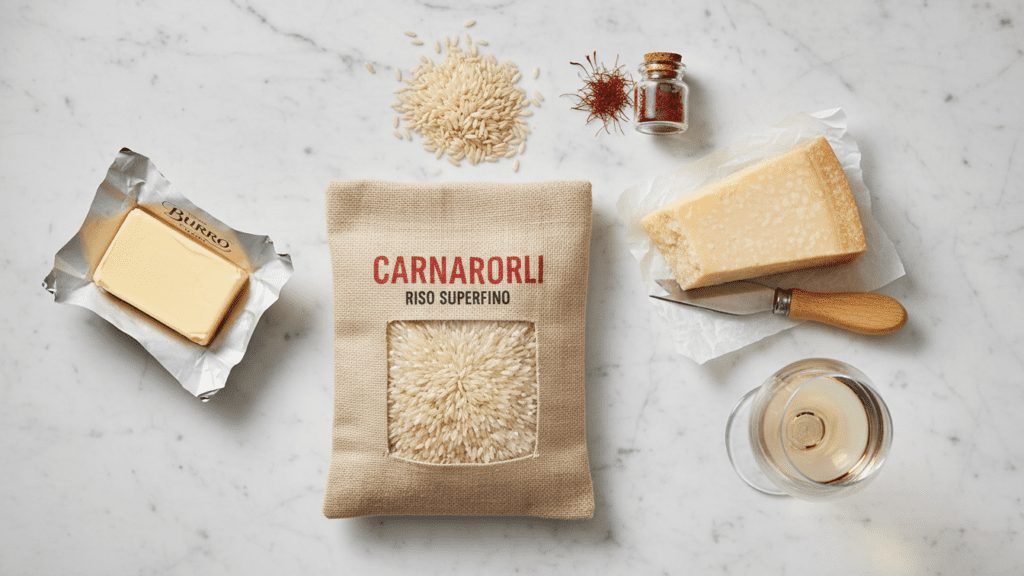
Success depends entirely on the quality of your grains and the potency of your saffron. Don’t go cheap here, or your risotto will lack joy and your life will lack flavor.
- 1 ½ Cups Carnaroli or Arborio Rice: CRUCIAL. Carnaroli is the “king” of rice for a reason—it holds its shape better than Arborio.
- 1 Pinch High-Quality Saffron Threads: Do not use the powder; we want the real floral aromatics.
- 5 Cups Beef or Chicken Stock: Hot. MANDATORY. Cold stock will shock the rice and ruin the starch release.
- ½ Cup Dry White Wine: Think Pinot Grigio or Sauvignon Blanc. If you wouldn’t drink it, don’t cook with it!
- 1 Small White Onion or Shallot: Finely minced into oblivion.
- 4 Tablespoons Unsalted Butter: Divided (half for the sauté, half for the finish).
- ½ Cup Freshly Grated Parmigiano-Reggiano: Do not use the stuff from a green shaker bottle unless you want to hurt my feelings.
- 2 Tablespoons Bone Marrow (Optional): This is the traditional “Milanese” secret, but butter works if you aren’t feeling primal.
- Sea Salt: To taste.
Key Substitutions
- Stock Swap: Use a high-quality vegetable broth for a vegetarian miracle.
- Alcohol Swap: If you’re skipping the booze, use a splash of white wine vinegar mixed with water for that essential acidity.
- Onion Swap: Use shallots for a more delicate, garlicky undertone.
🔪 Tools & Kitchen Gadgets Used
You don’t need a professional laboratory, but a few basics make this a twenty-minute job instead of a starchy struggle.
- Heavy-Bottomed Saucepan or Sauté Pan: For even heat distribution so you don’t burn the bottom. Check out stainless steel pans here!
- Wooden Spoon with a Hole: The “Risotto Spoon.” It aerates the rice while you stir. Grab a traditional one here!
- Small Ladle: For the precise addition of “liquid gold” broth. Check out ergonomic ladles!
- Fine Mesh Strainer: To bloom your saffron threads in a little warm broth. Get a sturdy one here!
- Microplane Grater: For that fluffy, cloud-like parmesan. Check out the best ones here!
👩🍳 Step-by-Step Instructions: The Path to Golden Glory
Follow these steps precisely. Risotto is about the “rhythm,” not the rush. Patience is your best friend.
1. The Saffron Bloom
Take your saffron threads and place them in a small bowl with 2 tablespoons of warm broth. Let them sit and contemplate their existence. This ensures the color and flavor distribute evenly through the risotto milanese.
2. The Aromatic Base
Melt 2 tablespoons of butter (and the bone marrow if you’re being fancy) in your saucepan over medium heat. Add the minced onion. Sauté until translucent but DO NOT let it brown. We want sweetness, not toasted notes.
3. The “Tostatura” (The Toast)
Add the rice to the pan. Stir it for 2 minutes until the edges look translucent but the center is still white. You should hear the rice “singing” or clicking against the pan. This toasts the starch and keeps the grain intact.
4. The Deglaze
Pour in the white wine. It will hiss and steam—this is the smell of a good decision. Stir until the wine has completely evaporated.
5. The Ladle Dance
Add one ladle of hot stock at a time. Stir constantly. Wait until the liquid is almost absorbed before adding the next ladle. This friction is what releases the starch to create that creamy sauce. FYI, you don’t need to stir like a maniac, just keep the rice moving.
6. The Golden Moment
Halfway through the cooking (about 10 minutes in), pour in your saffron-infused broth. Watch the rice turn a brilliant, regal yellow. Continue the ladle-and-stir dance until the rice is tender but still has a firm “bite” (al dente).
7. The “Mantecatura” (The Finish)
Remove the pan from the heat. This is the most important step. Stir in the remaining butter and the Parmigiano-Reggiano. Beat it vigorously for 30 seconds to create that “wave” (all’onda) texture.
8. The Rest
Cover the pan and let it sit for 2 minutes. This allows the flavors to settle and the texture to reach peak silkiness. Serve immediately on flat plates, tapping the bottom of the plate to let the risotto spread out like a beautiful golden pool.
📊 Calories & Nutritional Info (The Rich Reality)
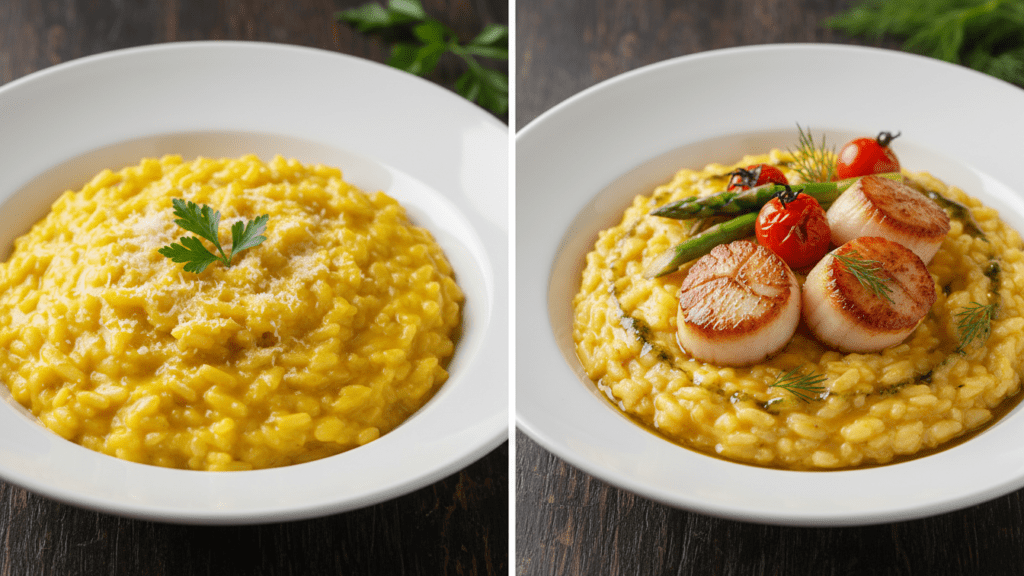
Since this is flavored with the world’s most expensive spice, we can legally pretend it’s a luxury health food. Right?
- Estimated Calories Per Serving: $\approx$ 380–450 kcal.
- Carbohydrates: High (The good, slow-burning starch kind).
- Vitamin B12: Plenty from the beef stock and parmesan.
- Antioxidants: Saffron is actually packed with them!
- Mood: Scientifically proven to improve by 1,000% after the first bite. 🙂
🚨 Common Mistakes to Avoid (The Risotto Fails)
Avoid these if you want people to actually keep talking to you at the dinner table.
- Using Cold Stock: Adding cold liquid stops the cooking process and makes the rice gummy. Keep the stock simmering.
- Washing the Rice: You’ll wash away the starch, which is the whole point of the creaminess! Leave the dust alone.
- Overcooking: Risotto should not be mushy. If it feels like baby food, you’ve gone too far. Aim for al dente.
- The “Green Bottle” Cheese: Pre-shredded cheese contains potato starch to prevent clumping.1 It will make your risotto grainy. Grate your own Parm! 🙂
✨ Variations & Customizations
Because you’re the boss of this golden circus.
1. The Keto-Friendly Swap
Replace the rice with riced cauliflower. Sauté the cauliflower with the saffron and aromatics, but reduce the broth significantly—cauliflower doesn’t absorb liquid like rice does. Use extra butter and parmesan to cheat the creaminess.
2. The “Fire-Breather” Version
Add a pinch of red chili flakes to the initial butter sauté. The heat against the floral saffron creates a sophisticated “sweet and spicy” vibe.
3. The Seafood Upgrade
Stir in some sautéed shrimp or scallops at the very end. The pink seafood against the golden rice makes for an Instagram-ready masterpiece that tastes like the Mediterranean.
❓ FAQ Section: Your Risotto Queries Answered
What is the best rice for risotto?
IMO, Carnaroli is the undisputed king. It has a higher starch content and a firmer core than Arborio, making it harder to overcook.
Why do I have to stir risotto constantly?
The stirring creates friction, which rubs the starch off the outside of the rice grains. This starch thickens the broth into that iconic creamy sauce.
Can I make risotto without wine?
Yes! Use a tablespoon of lemon juice or white wine vinegar to provide that necessary acidic “brightness” that cuts through the heavy fat of the butter and cheese.
How long does it take to cook?
From the moment the first ladle of broth hits the pan, it usually takes 18 to 22 minutes. Don’t rush it; the rice needs time to hydrate!
Can I reheat risotto?
TBH, risotto is best fresh. However, if you have leftovers, add a splash of water and reheat it slowly in a pan. Or, better yet, make Arancini (fried risotto balls)!
Is risotto gluten-free?
Yes! Rice is naturally gluten-free. Just ensure your stock doesn’t have hidden wheat thickeners (check the label!).
Why is my risotto crunchy?
You likely didn’t use enough liquid or cooked it on too high a heat. The rice should be tender but firm, not like eating birdseed.
🥂 Final Thoughts: Go Forth and Stir!
You’ve done it. You’ve successfully navigated the world of “Expensive Italian Grains” without having a public breakdown. You are now a titan of the saucepan and a hero of the dinner table. Go ahead, have that second serving—it’s mostly just rice and sunshine, right? Just don’t tell me if you used a microwave to “steam” the rice; I have a reputation to maintain. 😉