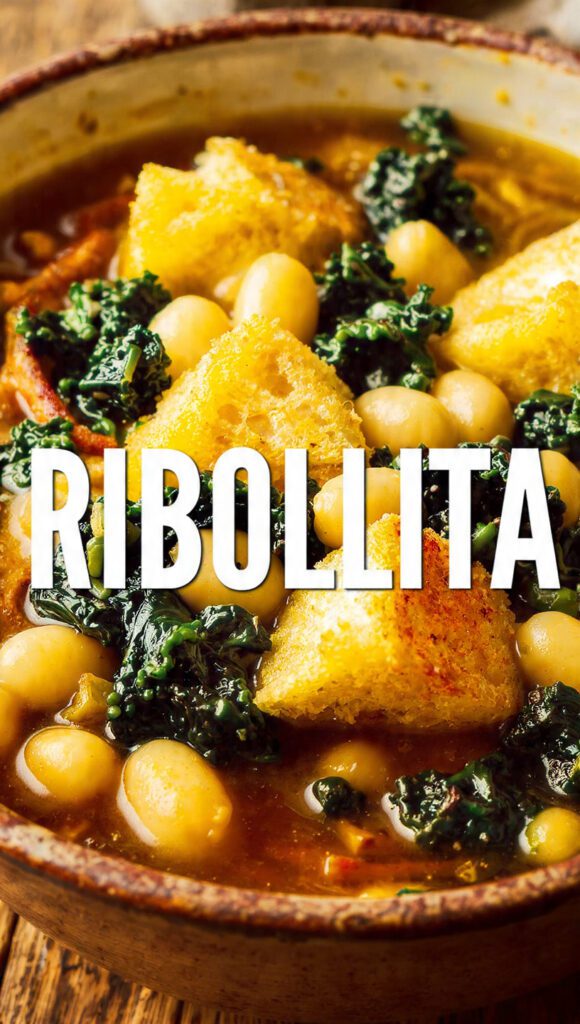
🍲 The “Day-After” Miracle: Mastering the Ultimate Authentic Ribollita Recipe
Let’s be brutally honest: if your current definition of “vegetable soup” involves a dusty tin from the back of the pantry that tastes like metallic sadness and regret, we need to have a serious talk. We’ve all been there—staring at a bowl of watery broth with three lonely peas, wondering if this is what adulting is supposed to feel like. It’s a culinary tragedy! But then, you realize that the Tuscans figured out how to turn stale bread and “bottom-of-the-bin” veggies into a thick, savory stew called ribollita, and suddenly your soul undergoes a spiritual awakening.
I once served a giant pot of this to a friend who insisted that “soup isn’t a meal.” After the first bite of the silky, oil-drenched kale and the creamy cannellini beans, he actually stopped talking for ten minutes. He essentially went through a transformation right over my rustic wooden table. That, my friends, is the power of “re-boiling” your leftovers into a bowl of liquid gold. Are you ready to stop settling for lukewarm, uninspired broths and start building a legendary, bread-heavy masterpiece in your own kitchen?
🏆 Why This Ribollita Recipe is the Actual GOAT
Why should you bother chopping kale and soaking beans when you could just order a pizza? Because this ribollita recipe delivers a level of textural satisfaction and earthy depth that a delivery driver simply cannot preserve in a cardboard box. We are talking about a stew so thick your spoon should technically be able to stand upright in it—a dish that hits the “Holy Trinity” of comfort: salty, hearty, and rich.
This recipe is awesome because it’s a high-impact, low-cost flex. It impresses guests because it looks incredibly artisanal (who else makes bread-thickened stews on a Tuesday?), when in reality, you just know how to use a Dutch oven effectively. Plus, it’s the ultimate “fridge raid” move for those winter months when you have more wilted greens than friends. It’s the undisputed heavyweight champion of budget-friendly gourmet wins, IMO.
🧂 The “Peasant-Elite” Ingredient List
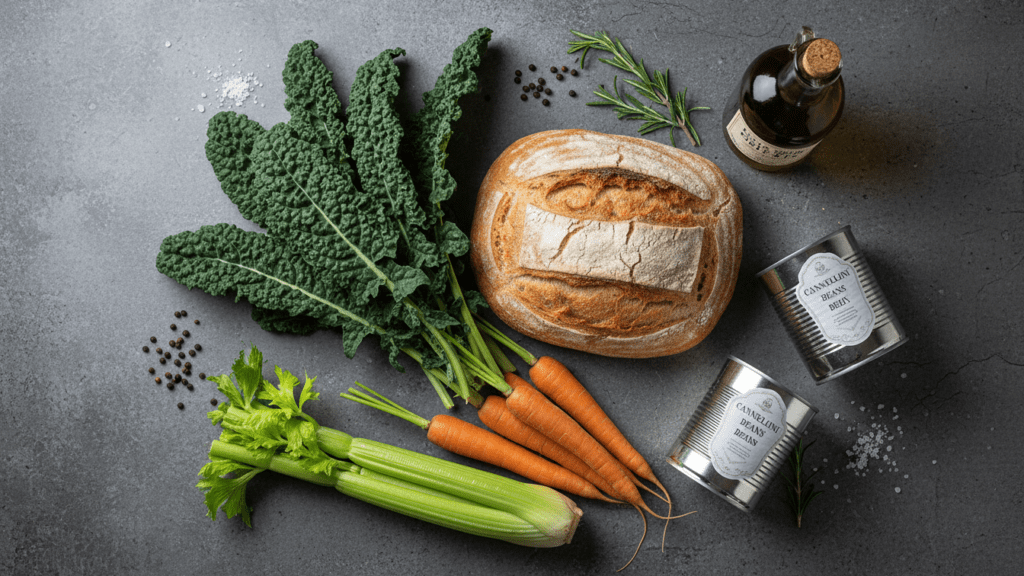
Success depends entirely on the quality of your olive oil and the staleness of your bread. If you try to use fresh, soft sandwich bread here, we are no longer on speaking terms. 🙂
- 1 lb Stale Crusty Bread: CRUCIAL. Use Sourdough or Ciabatta. It needs to be tough enough to handle a liquid beating.
- 2 Cans (15 oz) Cannellini Beans: One can gets mashed for creaminess; one stays whole for “personality.”
- 1 Bunch Lacinato Kale (Dino Kale): Stripped and chopped. This is the soul of the stew.
- 1 Bunch Swiss Chard: Because we pretend we are healthy.
- 2 Tablespoons Tomato Paste: For that deep, moody umami base.
- The “Sofritto”: 1 large onion, 2 carrots, 2 celery stalks—all diced like you mean it.
- 1 Quart Vegetable or Chicken Stock: Use the high-quality stuff.
- Extra Virgin Olive Oil: Use the “expensive” bottle for the final drizzle.
- Pinch of Red Chili Flakes: For that subtle “I’m sophisticated” heat.
Key Substitutions
- The Green Swap: Use Savoy cabbage if kale is too trendy for your palate.
- The Protein Swap: Add diced pancetta or bacon at the start if you aren’t ready for a vegetarian commitment.
- The Bean Swap: Use Borlotti beans if Cannellini are extinct in your local grocery store.
🔪 Tools & Kitchen Gadgets Used
You don’t need a professional laboratory, but a few basics make this a one-pot job instead of a messy struggle.
- Large Enameled Dutch Oven: The absolute MVP for achieving that slow-simmered perfection. Check out the best Dutch ovens here!
- High-Quality Chef’s Knife: To tackle all that vegetable dicing without losing a finger. Grab a precision one here!
- Wooden Spoon: For scraping the “fond” (the brown treasure) off the bottom. Check out these sturdy spoons!
- Immersion Blender: To partially cream the beans without making a mess. Grab a reliable one here!
- Stainless Steel Ladle: For the essential “serving with style” ritual.
👩🍳 Step-by-Step Instructions: The Path to Tuscan Glory
Follow these steps precisely. Ribollita is a game of layering and “the rest.” Prep all your veggies before the pan gets hot.
1. The Sofritto Sizzle
Heat a generous glug of olive oil in your Dutch oven. Add the onion, carrots, and celery. Sauté for 10 minutes until they look soft and slightly defeated. This is the foundation of your flavor empire.
2. The Umami Boost
Stir in the tomato paste and garlic. Cook for 2 minutes until the paste turns a deep rust color. TBH, the smell at this stage is better than any candle you own.
3. The Bean Creaming
Add one can of cannellini beans (with their liquid) to the pot. Use your immersion blender to buzz them into a thick paste. FYI, this is the secret to a velvety ribollita that doesn’t rely on cream.
4. The Green Infusion
Dump in the kale, chard, stock, and the remaining whole beans. Season with salt, pepper, and chili flakes. Bring to a boil, then drop to a whisper of a simmer for 30 minutes.
5. The Bread Infiltration
Tear your stale bread into chunky pieces. Submerge them into the liquid. It will look like too much bread—trust the process. Bold Key Info: The bread must absorb the liquid! Cover and let it simmer for another 10 minutes.
6. The “Ribollita” Ritual
Turn off the heat. Let the pot sit for at least 20 minutes. In Tuscany, they would let this sit overnight and “re-boil” it the next day. This makes the flavors perform a secret handshake. 🙂
7. The Final Flourish
Ladle the thick stew into bowls. Drizzle with a ridiculous amount of extra virgin olive oil and a sprinkle of parmesan. Serve it warm, not piping hot. Do not wait! (Actually, it tastes better on day two, but good luck waiting).
📊 Calories & Nutritional Info (The Health Flex)
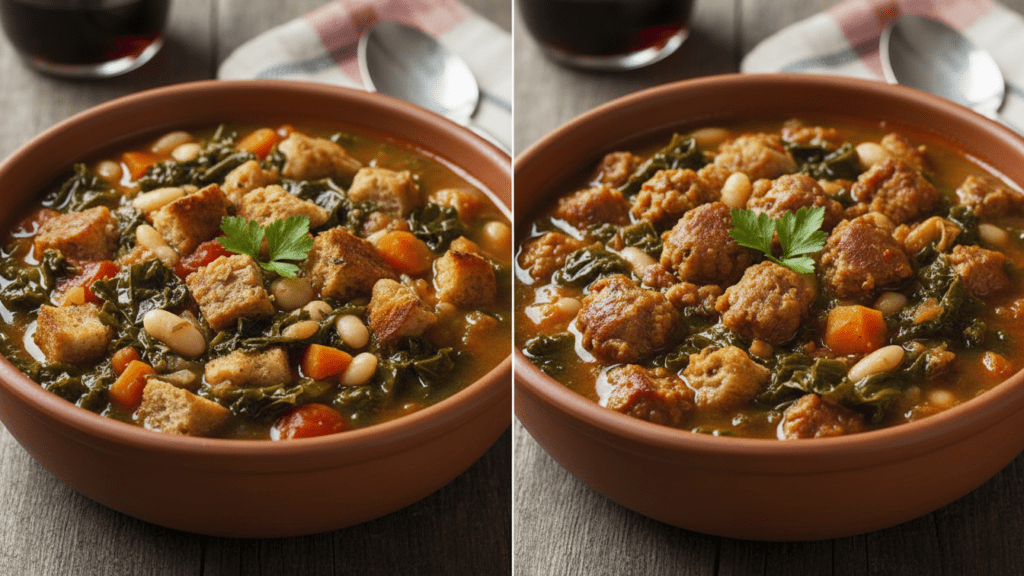
Since this is 90% vegetables and beans, we can legally pretend this is a wellness bowl. Right?
- Estimated Calories Per Serving: $\approx$ 320–410 kcal.
- Fiber Power: Massive amounts from the kale and white beans.
- Protein: A solid 15g per bowl to keep your muscles happy.
- Healthy Fats: High levels from the olive oil (great for your hair and ego).
- Mood: 100% improved after the first earthy slurp.
🚨 Common Mistakes to Avoid (The Ribollita Crimes)
Avoid these if you want people to actually keep talking to you after dinner.
- Using Fresh Bread: Fresh bread turns into a gluey paste. Stale and crusty only!
- Skipping the Oil: Olive oil isn’t a garnish; it’s an ingredient. Be generous.
- Too Much Liquid: This isn’t a broth; it’s a stew you can eat with a fork. Don’t drown it.
- Rushing the Simmer: Greens need time to surrender their bitterness. Give them the full 30 minutes. 🙂
✨ Variations & Customizations
Because you’re the boss of this bread-filled circus.
1. The Keto-Friendly Swap
Ditch the bread! Use chunks of roasted cauliflower and extra parmesan rinds to thicken the soup. It won’t be traditional, but it’ll keep you in ketosis while hitting those Tuscan notes.
2. The “Fire-Breather” Version
Add a tablespoon of Calabrian chili paste to the sofritto. The heat against the earthy beans is a sophisticated game-changer that will wake up your taste buds.
3. The Sausage Upgrade
Brown some Italian fennel sausage at the start of the recipe. It adds a smoky, meaty depth that turns this into a high-protein heavy hitter.
❓ FAQ Section: Your Ribollita Queries Answered
What does “Ribollita” actually mean?
It literally translates to “Re-boiled.” It started as a way for peasants to take leftover minestrone and thicken it with bread for the next day’s meal.
Is ribollita supposed to be mushy?
There is a fine line between “thick and creamy” and “mushy.” A proper ribollita should have discernible bits of greens and beans held together by a bread-thickened sauce.
Can I make this in a slow cooker?
Yes! Throw everything except the bread in the slow cooker for 6 hours. Stir the bread in during the last 30 minutes. IMO, the stovetop gives a better sear on the veggies.
How long does ribollita last?
It stays fresh in the fridge for up to 4 days. In fact, it actually gets better on the second and third days!
Is ribollita gluten-free?
Not traditionally, because of the bread. However, you can use high-quality gluten-free sourdough and it works surprisingly well.
What is the best bread for ribollita?
Tuscan bread (Pane Toscano) is the gold standard because it’s saltless and sturdy. A rustic sourdough is the best second choice.
Do I have to use kale?
TBH, yes. Lacinato (Dino) kale provides the specific earthy flavor that defines this dish. Spinach will just disappear into nothingness.
🥂 Final Thoughts: Go Forth and Re-Boil!
You’ve done it. You’ve successfully navigated the world of “Intentional Sogginess” without having a public breakdown. You are now a titan of the Dutch oven and a hero of the winter dinner table. Go ahead, have that second bowl—it’s mostly just “infused hydration” and fiber, right? Just don’t tell me if you used a microwave to “sear” the veggies; I have a reputation to maintain. 😉