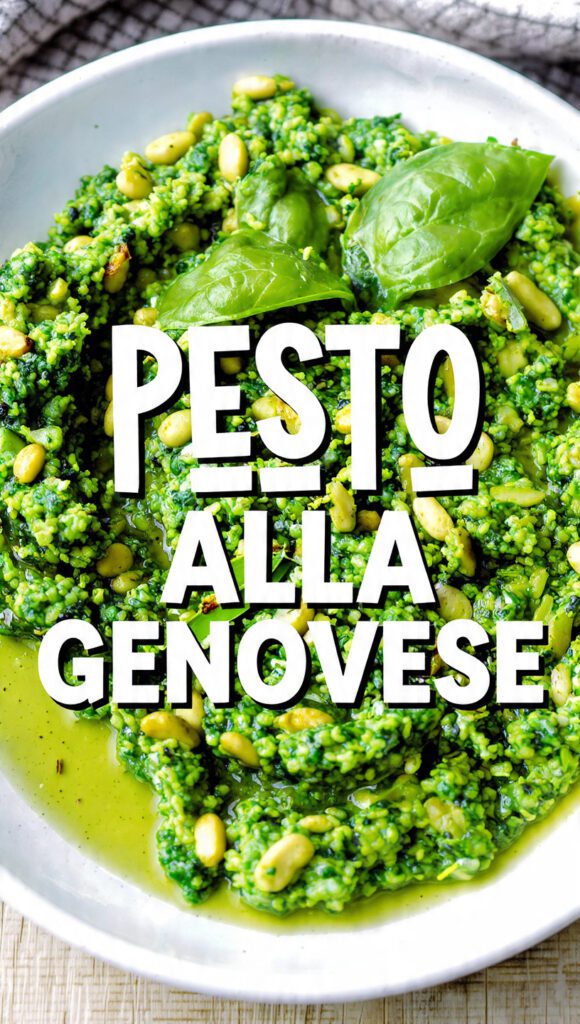
Authentic Pesto Alla Genovese: How to Make Green Gold Without the Grocery Store Guilt
We have all walked that dark path. You are standing in the pasta aisle, staring at a tiny glass jar filled with a sludge that looks suspiciously like swamp water. You pay seven dollars for it, toss it with some dry noodles, and wonder why your dinner tastes like metallic salt and disappointment. Listen, if you want a sauce that actually tastes like a sun-drenched Italian summer, you need to make pesto alla genovese at home.
I remember the first time I tried to make this with a blender. I accidentally “over-processed” it into a warm, brown, oxidized soup that looked more like an oil spill than a culinary masterpiece. My Italian friends still bring it up when they want to humble me. But once you learn the secret to keeping that vibrant, emerald green color, you will never look back. Ready to stop settling for “good enough” and finally start cooking like someone who actually likes themselves?
Why This Recipe Is the Absolute GOAT
Why should you bother tracking down specific pine nuts and fresh basil when you could just open a jar? Because homemade pesto is the ultimate culinary flex. It turns a boring bowl of pasta into a vibrant, aromatic masterpiece in about fifteen minutes. You aren’t just making a sauce; you are performing a feat of flavor alchemy.
Beyond the ego boost, the flavor is incomparable. We are talking about the sharp bite of garlic, the creamy richness of toasted nuts, and the floral high notes of fresh basil. It is naturally vegetarian, impressively flashy for guests, and makes your kitchen smell like a boutique garden. Plus, once you master the “no-heat” method, you’ll realize that the grocery store has been lying to you for years. Ready to reclaim your kitchen glory?
The Goods: What You Actually Need
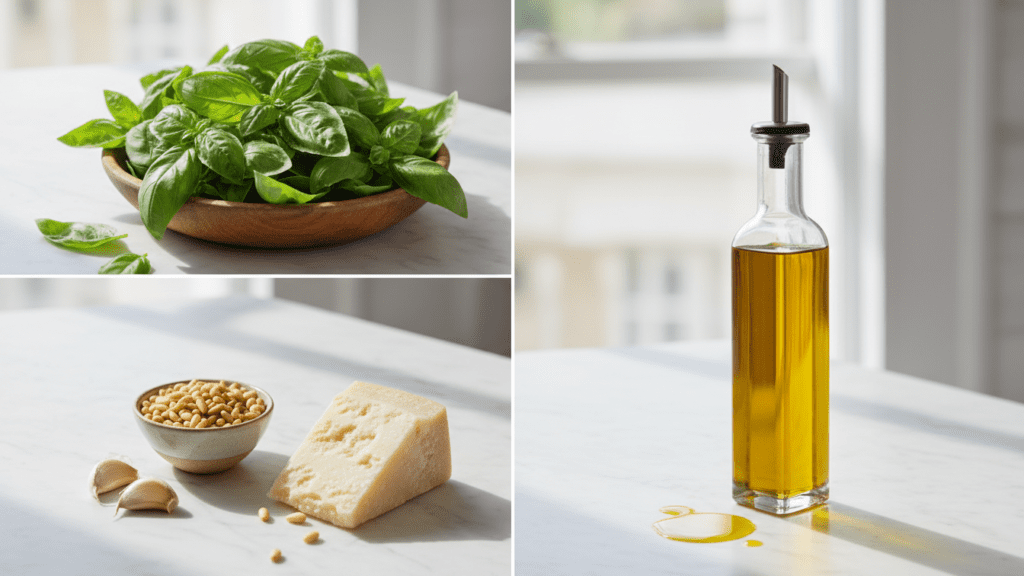
Do not even think about using that dried basil from 2018. If you do, we are no longer friends. Quality is everything here, so buy the good stuff.
- 2 cups Fresh Genovese Basil: Look for small, tender leaves. If they look like tough cabbage, keep walking.
- 1/2 cup Extra Virgin Olive Oil: Use a mild, buttery one. This isn’t the time for that peppery “burn your throat” oil.
- 1/3 cup Pine Nuts: Toast them lightly unless you enjoy the taste of raw wood.
- 2 Garlic Cloves: Small ones! We want a tickle of garlic, not a vampire-slaying level of breath.
- 1/2 cup Grated Parmigiano-Reggiano: Real stuff only. Leave the green shaker in the trash.
- 2 tbsp Grated Pecorino Fiore Sardo: Adds that essential salty, sheep’s milk “funk.”
- Pinch of Sea Salt: Coarse salt helps grind the leaves if you’re going old-school.
The Arsenal: Tools & Kitchen Gadgets
You don’t need a degree in engineering, but a few specific tools make the difference between a silky sauce and a gritty mess.
- Marble Mortar and Wooden Pestle: The traditional way. It prevents the basil from oxidizing (turning brown).
- Food Processor: The modern “I have a job and a life” way. Just don’t over-blend!
- Microplane or Fine Grater: For the cheese. We want fluffy clouds of parmesan, not gravel.
- Small Skillet: To toast those expensive pine nuts without burning them into charcoal.
- Glass Jar: For storing your liquid gold if you (somehow) have leftovers.
Step-by-Step Instructions: The Path to Green Perfection
Step 1: The Nutty Business
Start by tossing your pine nuts into a dry skillet over medium-low heat. Shake the pan constantly! They go from “perfectly toasted” to “burnt ruin” in about three seconds. Once they smell like a fancy candle, move them to a cold plate immediately.
Step 2: The Garlic Crush
If you are using a mortar and pestle, crush the garlic with a pinch of coarse salt until it becomes a smooth paste. If you are using a food processor, pulse the garlic and nuts together first. TBH, a smooth base is the secret to a professional texture.
Step 3: The Basil Bath
Wash your basil in cold water and pat it bone-dry. Excess water is the enemy of good pesto. Add the leaves to your container. If using a processor, use short pulses! We want chopped leaves, not a basil smoothie. If using a mortar, use a circular motion to “tear” the leaves against the sides.
Step 4: The Cheese Convergence
Stir in your grated Parmigiano and Pecorino. At this point, the mixture will look thick and a bit chunky. Don’t panic; this is normal. We are building the structure of the sauce before we introduce the liquid gold.
Step 5: The Olive Oil Emulsion
Slowly drizzle in the olive oil while stirring or pulsing. If you are using a machine, keep the speed low. High speeds create heat, and heat turns basil brown. We want a vibrant, emerald green emulsion that clings to a spoon.
Step 6: The Final Touch
Taste it! Does it need more salt? Probably not, thanks to the cheese. Does it need more oil? Maybe. If you are serving it with pasta, add a tablespoon of starchy pasta water to your bowl to help the pesto coat the noodles. Serve it cold or at room temperature; never cook your pesto!
Calories & Nutritional Info
I’m going to be honest with you: this is a sauce made of oil, nuts, and cheese. It is a calorie bomb, but it’s a “good for your soul” bomb.
- Calories: ~110 kcal per tablespoon.
- Protein: 3g (Thank the nuts and cheese).
- Total Fat: 10g (Mostly the healthy, monounsaturated kind!).
- Carbohydrates: 1g.
- Vitamin K: You are getting a massive dose from all that basil.
Common Mistakes to Avoid (The Cheeky Guide)
- Over-processing: If your food processor runs for two minutes straight, you are making basil butter. Short pulses only!
- Cooking the Pesto: Never put pesto in a hot pan over a flame. It turns gray and loses its aroma. Toss it with the pasta in a bowl.
- Wet Basil: If you don’t dry your leaves, the oil won’t stick, and you’ll have a watery mess. Pat it dry!
- Using “Parmesan” in a Can: That stuff is mostly wood pulp. Grate a real block of cheese.
Variations & Customizations
Feeling a little adventurous? Try these three spins on the classic:
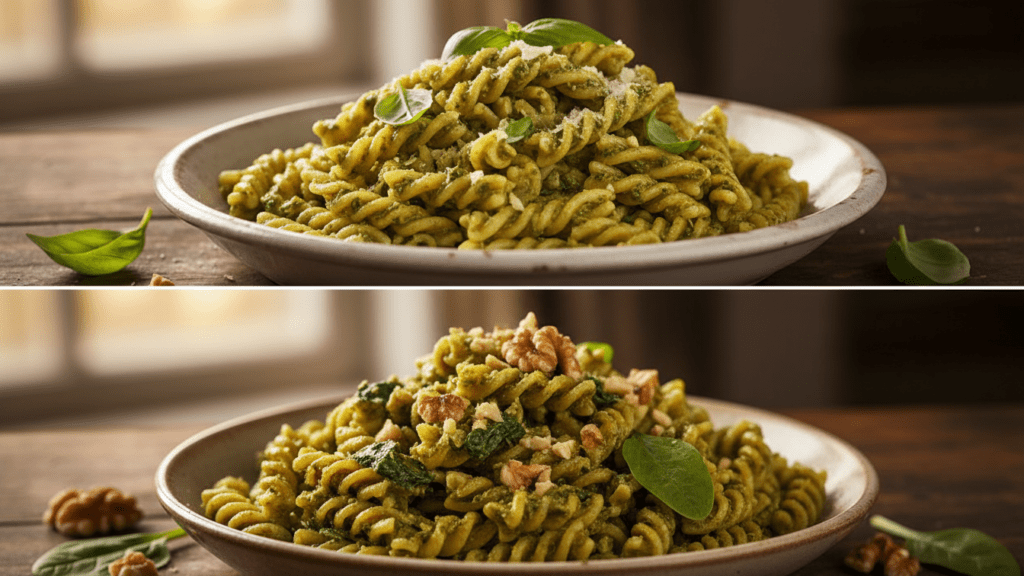
- The “Budget” Pesto: Swap pine nuts for toasted walnuts and basil for fresh baby spinach. It’s cheaper and still tastes 90% as good.
- The Spicy Kick: Add a half-teaspoon of red chili flakes during the garlic stage. It adds a modern, fiery depth to the traditional profile.
- The Vegan Swap: Replace the cheese with two tablespoons of nutritional yeast and a little extra salt. FYI, it’s surprisingly delicious.
FAQ: Everything You’re Dying to Know
Why did my pesto turn brown?
Oxidation is the culprit. Heat and air are the enemies. To prevent this, use a mortar and pestle or keep your food processor pulses short and cold.
Can I freeze pesto?
Yes! Pour it into an ice cube tray and cover the top with a thin layer of olive oil to seal out the air. It lasts for months!
What is the best pasta for pesto?
Trofie or Trenette are the traditional Ligurian choices. In a pinch, fusilli or farfalle work great because the sauce gets trapped in the nooks and crannies.
Do I really need pine nuts?
They are traditional, but they are also expensive. Walnuts, cashews, or even sunflower seeds make great substitutes if you’re broke.
Can I use a blender?
You can, but be careful! Blenders create a lot of heat and can turn your pesto into a bitter, brown liquid very quickly.
Why does my pesto taste bitter?
You might have used low-quality olive oil or over-processed the basil. High-speed blades can sometimes cause the oil and basil to react bitterly.
How long does it last in the fridge?
Keep it in a jar with a layer of oil on top to prevent browning. It stays fresh for about 3–5 days. IMO, it’s best within the first 24 hours.
Final Thoughts
There you have it—a bowl of pesto alla genovese that will make you feel like you’ve been transported to a terrace in Genoa. Once you master the art of the cold emulsion, you’ll realize that those grocery store jars are a crime against humanity.
Go ahead, grab a bunch of basil and show those expensive pine nuts who’s boss. Just don’t blame me when your friends start showing up at your door with empty pasta bowls every Sunday. Happy crushing! 🙂