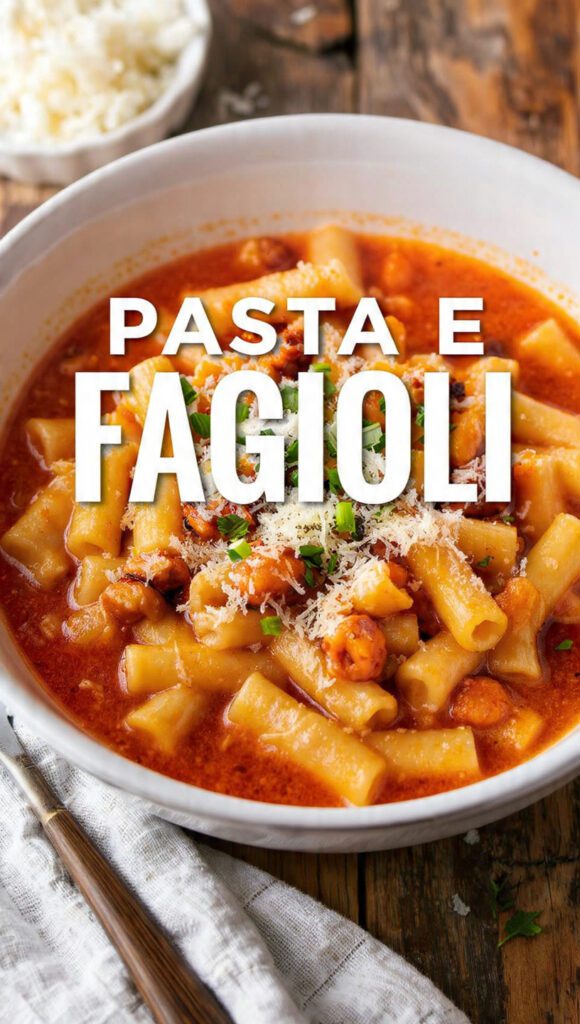
🇮🇹 The “Better Than Olive Garden” Legend: Mastering the Ultimate Pasta e Fagioli Recipe
Let’s be brutally honest: if your only experience with Italian soup involves a red-roofed chain restaurant and “unlimited” breadsticks that have the structural integrity of a pool noodle, you haven’t lived. We’ve all been there—paying fifteen dollars for a bowl of salty brown water with three sad beans floating in it like they’re waiting for a rescue boat. It’s a culinary tragedy! But then, you take a bite of a real, thick, soul-warming pasta e fagioli, and suddenly the world makes sense again.
I once served a massive pot of this to a friend who insisted that “soup isn’t a meal.” Three bowls later, he was slumped in my armchair, questioning his entire life philosophy while clutching a piece of crusty sourdough. That, my friends, is the power of the “Pasta and Beans” alchemy. It’s not just soup; it’s a thick, savory hug for your insides. Are you ready to stop settling for lukewarm canned disappointment and start building a legendary Italian masterpiece?
🏆 Why This Recipe Is the Actual GOAT
Why should you bother dicing carrots and simmering beans when you could just open a tin of “Minestrone”? Because this pasta e fagioli recipe delivers a depth of flavor that a factory simply cannot compute. We are talking about a rich, tomato-based broth thickened by the starch of the beans and the salty magic of a Parmesan rind.
This recipe is awesome because it’s the ultimate “peasant food” flex. It impresses guests because it looks and tastes like it took twelve hours of labor, when in reality, you just know how to layer aromatics effectively. Plus, it’s one of those rare dishes that actually tastes better the next day after the pasta and beans have had a chance to get intimately acquainted in the fridge. It’s the undisputed champion of winter comfort food, IMO.
🥫 The “Non-Negotiable” Ingredient List
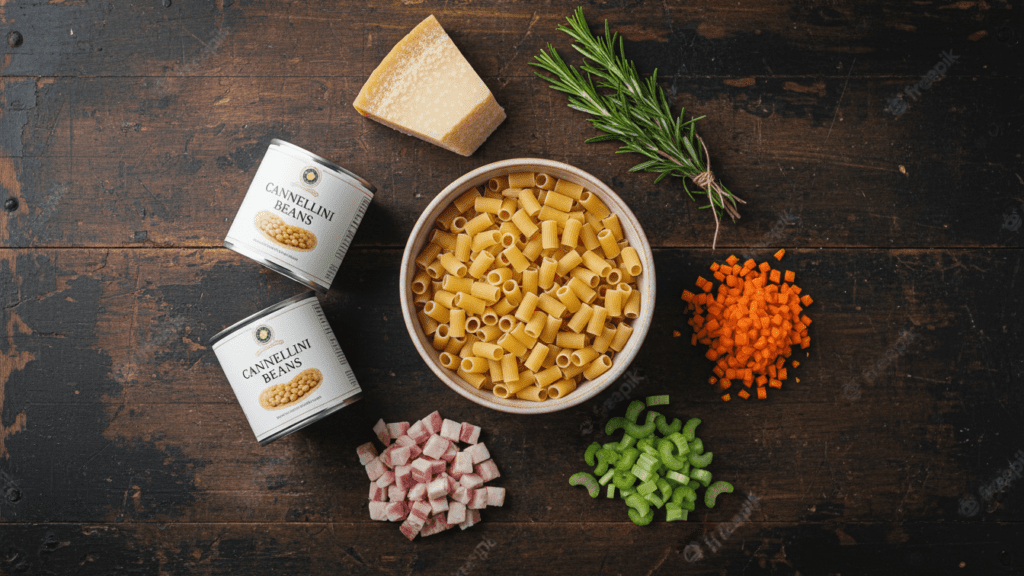
Success depends on the quality of your base. If you use “vague vegetable water” instead of a proper broth, your soup will taste like sadness.
- 1 lb Ditalini or Small Shell Pasta: Small shapes are MANDATORY so you get a bit of everything in every spoonful.
- 2 Cans (15 oz) Cannellini or Borlotti Beans: One can gets drained; the other gets mashed for creaminess.
- 4 oz Pancetta or Thick-Bacon: Diced. This provides the smoky “soul” of the dish.
- The Holy Trinity (Soffritto): 1 Large onion, 2 carrots, and 2 stalks of celery, all finely diced.
- 4 Cloves Garlic: Minced (measure with your heart, but use at least four).
- 28 oz Can Crushed Tomatoes: San Marzano if you’re feeling elite.
- 6 Cups Chicken or Vegetable Broth: Low sodium so you don’t turn into a salt lick.
- 1 Parmesan Rind: CRUCIAL. Do not throw these away; they are the secret to “umami” greatness.
- Fresh Rosemary & Thyme: Tied together so you can fish them out later.
- Red Chili Flakes: For that essential Italian “kick.”
Key Substitutions
- Meat Swap: Use Italian sausage (out of the casing) if you want a meatier, heartier stew.
- Fat Swap: Use Extra Virgin Olive Oil for a vegetarian miracle—just double down on the smoked paprika.
- Bean Swap: If you can’t find Cannellini, Great Northern beans are a perfectly acceptable backup.
🔪 Tools & Kitchen Gadgets Used
You don’t need a high-tech lab, but a heavy pot is the difference between a rich stew and a burnt mess.
- Large Enameled Dutch Oven: The skyscraper of the kitchen. Check out the best ones here!
- Immersion Blender: The secret weapon for thickening the soup without adding cream. Grab a powerful one here!
- Chef’s Knife: For all that therapeutic dicing. Check out top-rated knives!
- Wooden Spoon: For scraping up the “fond” (the brown bits of joy) at the bottom.
- Kitchen Twine: To keep your herbs from going rogue in the pot.
👩🍳 Step-by-Step Instructions: The Path to Savory Glory
Follow these steps precisely. Soup-making is a marathon, not a sprint. Patience is your best friend.
1. The Fat Rendering
Heat your Dutch oven over medium heat. Toss in the pancetta (or bacon). Let it sizzle until the fat has melted and the meat is crispy and golden. If you’re going vegetarian, just use a healthy glug of olive oil and skip the sizzle.
2. The Soffritto Symphony
Add your diced onion, carrots, and celery to the pot with the pancetta fat. Cook for about 8-10 minutes until they are soft and fragrant. TBH, the smell at this stage is better than any candle you own. Add the garlic and chili flakes for the last minute so they don’t burn.
3. The Tomato Tumble
Pour in the crushed tomatoes and use your wooden spoon to scrape up all those brown bits at the bottom. Add the broth, the herb bundle, and that glorious Parmesan rind. Bring everything to a gentle boil.
4. The Bean Cheat Code
Take one can of beans (undrained) and blitz it with your immersion blender or smash it with a fork in a bowl. Add this “bean paste” along with the other can of whole, drained beans to the pot. This is the secret to a thick, velvety texture without using flour.
5. The Low and Slow
Reduce the heat to low. Let the soup simmer for at least 20-30 minutes. You want the flavors to perform a secret marriage ceremony. Remove the herb bundle and the Parmesan rind (which should be soft and weirdly delicious now).
6. The Pasta Performance
Now, you have two choices. Choice A (The Pro Move): Boil the ditalini in a separate pot and add it to individual bowls. This stops the pasta from turning into a giant sponge and drinking all your broth. Choice B (The Lazy Move): Throw the pasta directly into the soup. FYI, if you do this, you must eat it immediately, or you’ll have “Pasta e Mush” tomorrow. 🙂
7. The Final Flourish
Ladle the soup into wide bowls. Drizzle with your most expensive olive oil, a heavy dusting of freshly grated Parmesan, and a crack of black pepper. Serve with bread so you can mop up every last drop of evidence.
📊 Calories & Nutritional Info (The Justification)
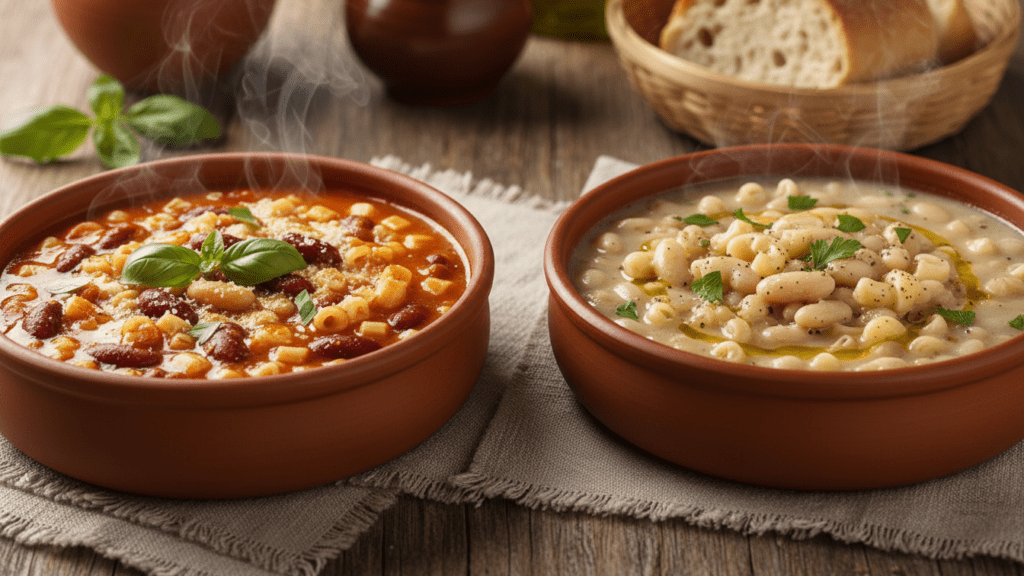
Since it has beans and carrots, we can legally pretend this is a detox meal. Right?
- Estimated Calories Per Serving: $\approx$ 350–420 kcal.
- Fiber King: High levels thanks to our bean heroes (keeps you full for hours!).
- Protein Punch: A solid 18-22g per serving from the beans and cheese.
- Vitamins: Packed with Vitamin A from the carrots and Lycopene from the tomatoes.
- Mood: 100% improved after the first spoonful.
🚨 Common Mistakes to Avoid (The Soup Fails)
Avoid these pitfalls unless you want a pot of disappointment.
- Discarding the Rind: The Parmesan rind is 50% of the flavor. DO NOT THROW IT AWAY.
- Overcooking the Pasta: If the noodles are mushy, the whole dish feels “cafeteria-style.” Aim for al dente.
- Skipping the Mashing: If you don’t mash some of the beans, the broth will feel thin and watery. Creaminess is key.
- Adding Salt Too Early: Pancetta, broth, and Parmesan are all salty. Wait until the very end to adjust. 🙂
✨ Variations & Customizations
Because you’re the boss of this bean-filled circus.
1. The Keto-Friendly Swap
Ditch the pasta! Replace the ditalini with diced zucchini or chopped kale. It lowers the carb count while keeping the savory Italian vibe intact.
2. The “Fire-Breather” Version
Add a tablespoon of Calabrian chili paste to the aromatics. The fruity, intense heat against the creamy beans is a sophisticated game-changer.
3. The Vegan Miracle
Omit the pancetta and the cheese rind. Add a tablespoon of white miso paste and a drop of liquid smoke. You’ll get that salty, smoky depth without any animal products.
❓ FAQ Section: Your Pasta e Fagioli Queries Answered
What is the difference between Pasta e Fagioli and Minestrone?
Pasta e Fagioli is focused strictly on beans and pasta in a thick broth. Minestrone is the “kitchen sink” of soups, usually containing a dozen different vegetables like green beans and zucchini.
Why did my pasta soak up all the broth?
Pasta is a thirsty beast! If you leave it in the soup overnight, it will turn into a thick porridge. Store the pasta and soup separately if you plan on having leftovers.
Do I have to use Ditalini?
IMO, yes. The shape mimics the size of the beans, making the texture uniform. But shells or elbow macaroni are acceptable backups if you’re in a crisis.
Can I make this in a Slow Cooker?
Absolutely. Toss everything (except the pasta) in and cook on Low for 6-8 hours. Add the cooked pasta right before serving.
Why is my soup bland?
You likely didn’t sauté the aromatics long enough. The caramelization of the onions and carrots is where the base flavor lives. Also, add more pepper!
Is Pasta e Fagioli gluten-free?
It can be! Just use a high-quality gluten-free small pasta (look for corn/rice blends so they don’t disintegrate).
Can I freeze this soup?
Yes, but only the base. Freeze the soup without the pasta. When you’re ready to eat, thaw the soup and boil fresh pasta to add in.
🥂 Final Thoughts: Go Forth and Simmer!
You’ve done it. You’ve successfully navigated the world of “Authentic Italian Comfort” without having a public breakdown. You are now a titan of the Dutch oven and a hero of the dinner table. Go ahead, have that third bowl—it’s mostly beans, after all. Just don’t tell me if you used a canned “soup starter”; I have a reputation to maintain. 😉