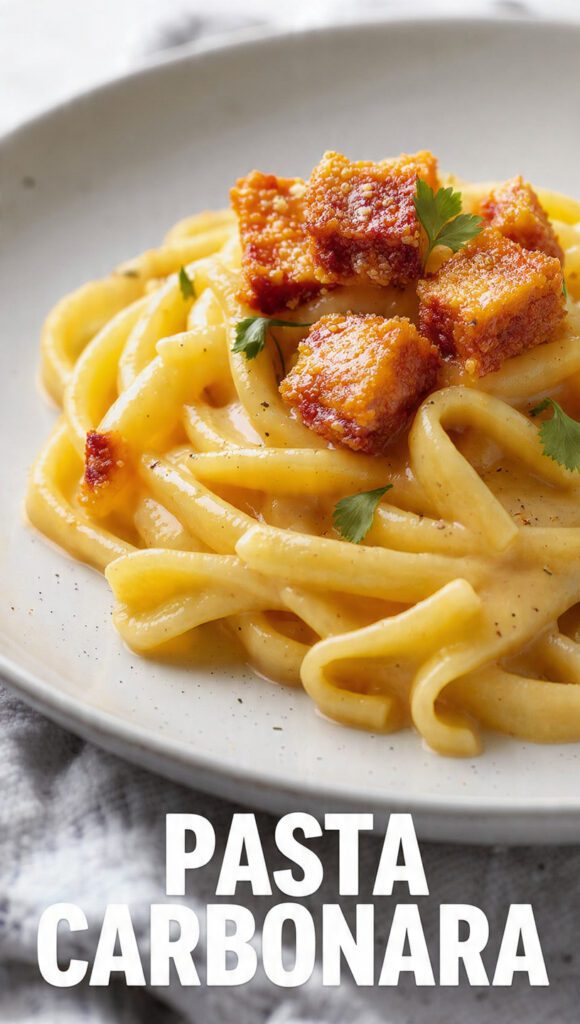
🍝 The “Don’t You Dare Add Cream” Manifesto: Mastering Authentic Pasta Carbonara
Let’s be brutally honest: if your only experience with “carbonara” involves a jar of white goop or a puddle of heavy cream, you’ve been living a culinary lie. We’ve all been there—ordering a “carbonara” at a mid-tier chain restaurant only to receive a bowl of fettuccine Alfredo with some sad, floppy bacon bits. It’s a tragedy! But then, you take a bite of real, silky, pepper-forward pasta carbonara, and suddenly your soul undergoes a spiritual awakening that only Pecorino Romano and cured pork can provide.
I once served this to a friend who genuinely believed that cream was the “secret ingredient” to a smooth sauce. I sat him down, gave him a glass of dry Italian red, and let the emulsion do the talking. By the third bite, he was apologizing to the ghost of every Italian grandmother for his previous life choices. That, my friends, is the power of high-quality eggs and the perfect pasta-water-to-cheese ratio. Are you ready to stop settling for lukewarm, dairy-heavy disappointment and start building a legendary Roman masterpiece?
🏆 Why This Carbonara Recipe is the Actual GOAT
Why should you bother whisking eggs and tempering cheese when you could just open a jar? Because pasta carbonara is the ultimate “kitchen alchemy” flex. It relies on the magic of residual heat—where raw eggs and sharp cheese transform into a glossy, velvety sauce that actually tastes like the ingredients rather than a chemistry experiment. It is the king of minimalist cooking.
This recipe is awesome because it hits the “Holy Trinity” of cravings: salty pork, sharp cheese, and a massive kick of black pepper. It impresses guests because it looks (and tastes) incredibly technical, even though it’s really just a very sophisticated game of “don’t scramble the eggs.” Plus, it’s the best excuse to buy the “expensive” cheese for once. It’s the undisputed champion of 15-minute dinner wins, IMO.
🥓 The “Roman-Elite” Ingredient List
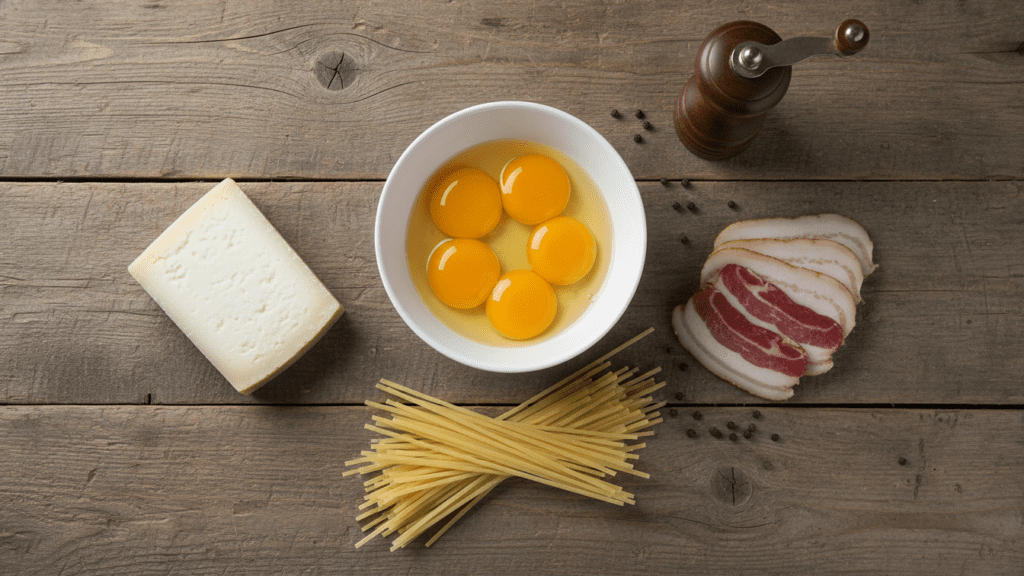
Success depends entirely on the quality of your fat and the sharpness of your cheese. Don’t go cheap here, or your pasta will lack joy and your life will lack flavor.
- 1 lb Spaghetti or Rigatoni: CRUCIAL. Use a high-quality bronze-die pasta so the sauce has something to cling to.
- 5 oz Guanciale (Cured Pork Jowl): The traditional VIP. If you can’t find it, use high-quality Pancetta. Bacon is a last resort, but don’t tell the Italians.
- 1 Cup Freshly Grated Pecorino Romano: Do not use the stuff from a green shaker bottle unless you want to hurt my feelings.
- 3 Large Eggs + 2 Egg Yolks: The yolks provide that iconic neon-yellow richness.
- 2 Teaspoons Freshly Cracked Black Pepper: Toast it in the pan for extra depth.
- Pasta Water: The “liquid gold” that binds the whole operation together.
- Sea Salt: Only for the pasta water (the cheese is plenty salty!).
Key Substitutions
- Meat Swap: Use thick-cut peppered bacon if Guanciale is extinct in your area.
- Cheese Swap: Use a 50/50 mix of Parmigiano-Reggiano and Pecorino if you find pure Pecorino too “funky.”
- Noodle Swap: Bucatini is an elite choice if you want a thicker, hollow noodle that holds sauce inside.
🔪 Tools & Kitchen Gadgets Used
You don’t need a high-tech lab, but a few basics make this a ten-minute job instead of a curdled struggle.
- Large Stainless Steel Skillet: The absolute MVP for rendering pork fat. Check out the best pans here!
- Heat-Resistant Mixing Bowl: To create the egg-and-cheese “slurry” away from the direct fire. Grab a sturdy glass set!
- Whisk or Fork: For making sure the cheese and eggs are perfectly homogenized. Get a reliable whisk here!
- Microplane Grater: For that fluffy, cloud-like cheese that melts instantly. Check out top-rated graters!
- Kitchen Tongs: To transfer the pasta directly from the pot to the pan.
👩🍳 Step-by-Step Instructions: The Path to Glossy Glory
Follow these steps precisely. Carbonara is about the “rhythm,” not the rush. Patience (and keeping the heat low) is your best friend.
1. The Water Ritual
Bring a large pot of water to a boil. Salt it until it tastes like the Mediterranean Sea. Drop your pasta in. FYI, you want to pull the pasta out 2 minutes before it’s al dente—it will finish cooking in the pan juices.
2. The Fat Rendering
While the pasta boils, cut your guanciale (or pancetta) into small batons. Toss them into a cold skillet and turn the heat to medium. We want the fat to melt slowly until the meat becomes golden and crispy. Add the black pepper to the pan for the last minute to “bloom” the spice.
3. The Slurry Setup
In a separate mixing bowl, whisk together your 3 whole eggs, 2 yolks, and the grated Pecorino Romano. It should form a thick, pale yellow paste. TBH, it looks a bit like mortar, but this is the foundation of your creamy empire.
4. The Tempering Technique
Scoop out about half a cup of the boiling pasta water. Slowly—and I mean slowly—whisk a tablespoon of it into your egg/cheese mixture. This “tempers” the eggs so they don’t turn into a breakfast omelet the moment they touch the hot pasta.
5. The Great Integration
Turn off the heat under the skillet. Transfer the hot pasta directly into the pan with the rendered pork fat. Toss vigorously for 30 seconds so every strand is coated in liquid gold.
6. The Emulsion Performance
Remove the skillet from the burner entirely. Pour the egg and cheese slurry over the pasta. Use your tongs to stir and toss like a mad scientist. Add small splashes of the remaining pasta water as you go. The starch in the water and the fat from the pork will emulsify with the eggs to create a glossy, thick sauce.
7. The Final Flourish
Keep tossing until the sauce reaches “velvet” status. If it looks too thick, add more water. If it looks too thin, keep stirring—the residual heat will thicken it. Serve immediately with an extra dusting of cheese and more pepper. Do not wait! Carbonara waits for no one.
📊 Calories & Nutritional Info (The Rich Reality)
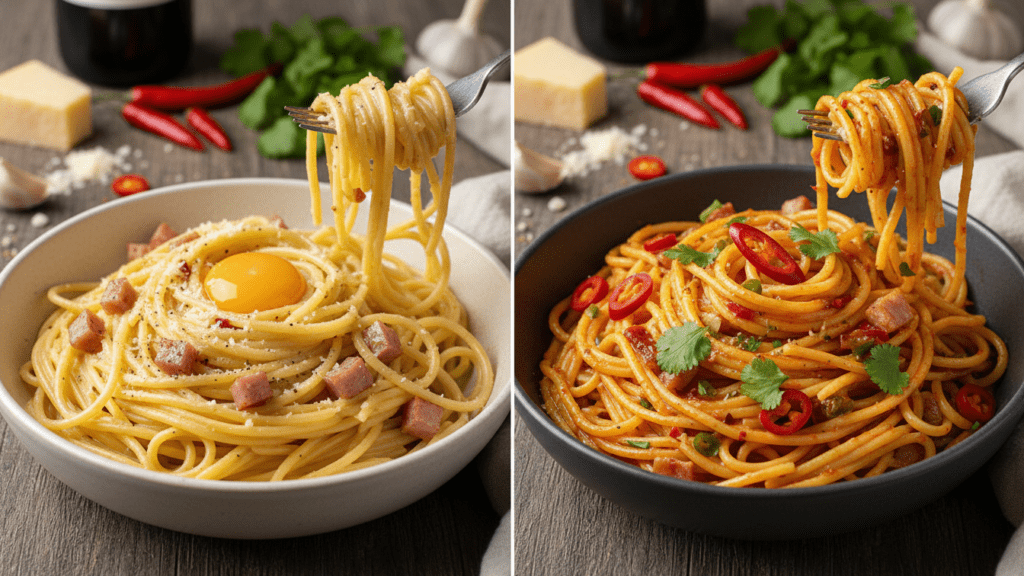
Since this is authentic and lacks heavy cream, we can legally pretend it’s a high-protein power meal. Right?
- Estimated Calories Per Serving: $\approx$ 550–680 kcal.
- Protein: High levels from the eggs and Pecorino (approx 25g).
- Healthy-ish Fats: Monounsaturated fats from the guanciale (let’s just go with that).
- B Vitamins: Plenty from the eggs for that brain-boost.
- Mood: 100% improved after the first silky bite. 🙂
🚨 Common Mistakes to Avoid (The Carbonara Sins)
Avoid these if you want people to actually keep talking to you at the dinner table.
- Using Heavy Cream: This is the ultimate sin. Cream is a crutch for people who can’t emulsify eggs. Ditch the dairy!
- The Scrambled Egg Disaster: If the heat is too high when you add the eggs, you get pasta with scrambled eggs. Turn the stove OFF.
- Adding Salt to the Sauce: Guanciale and Pecorino are salt bombs. Only salt the water.
- Discarding the Pasta Water: That starchy water is the only thing keeping your sauce from being a dry mess. Save the water! 🙂
✨ Variations & Customizations
Because you’re the boss of this Roman circus.
1. The Keto-Friendly Swap
Replace the spaghetti with zucchini noodles or palmini pasta. Sauté them briefly in the pork fat before adding the egg mixture. It’s a low-carb dream that still feels decadent.
2. The “Fire-Breather” Version
Add a teaspoon of Calabrian chili paste to the guanciale as it renders. The heat against the creamy eggs is a sophisticated game-changer.
3. The Vegetarian Swap
Skip the pork! Use smoked sun-dried tomatoes or roasted mushrooms to get that umami hit. Add a drop of liquid smoke to the eggs if you really miss the bacon vibe.
❓ FAQ Section: Your Carbonara Queries Answered
Why is my carbonara sauce watery?
You likely didn’t whisk long enough or your pasta wasn’t hot enough to activate the cheese melt. Keep tossing! The friction is what builds the body of the sauce.
Can I use Parmesan instead of Pecorino?
IMO, Pecorino is mandatory for the authentic sharp “bite.” However, a mix of the two is perfectly acceptable if you find pure Pecorino too salty.
Why did my eggs scramble?
Your pan was too hot. Always take the skillet off the burner and let it sit for 20 seconds before adding the egg mixture.
What is Guanciale and where do I find it?
It is cured pork jowl. It has a higher fat-to-meat ratio than bacon. Look for it at Italian delis or high-end butcher shops.
Is pasta carbonara healthy?
It’s a balanced meal of carbs, fats, and protein. Just keep the portion sizes reasonable and maybe serve it with a side of greens!
Can I reheat carbonara?
TBH, no. Reheating usually results in scrambled eggs. If you must, do it very gently in a pan with a splash of water, but it will never be the same.
Why use extra egg yolks?
The whites can get “rubbery.” Using extra yolks ensures a deep yellow color and an ultra-rich, creamy texture without needing cream.
🥂 Final Thoughts: Go Forth and Emulsify!
You’ve done it. You’ve successfully navigated the world of “Real Roman Pasta” without having a public breakdown. You are now a titan of the skillet and a hero of the dinner party. Go ahead, have that second serving—it’s mostly just eggs and sunshine, right? Just don’t tell me if you used a bottle of “Alfredo sauce” to cheat; I have a reputation to maintain. 😉