
Gut Health on Autopilot: The Easiest Overnight Kombucha Recipe Hack!
Let’s talk about the magic elixir of life: kombucha. You know, that fizzy, tangy, slightly vinegary drink packed with probiotics that makes your gut feel like it’s throwing a party. But making it yourself? That usually involves a fuzzy, floating pancake (the SCOBY), multi-week fermentation, and the general vibe of running a weird science experiment in your pantry. Who has time for all that? Not me! That’s why I’m sharing the ultimate Overnight Kombucha hack. This recipe uses a few shortcuts to deliver a light, tangy, and fizzy brew that’s ready in a fraction of the time. Get ready for quick, bubbly goodness!
Why This Overnight Kombucha Recipe is Your Gut’s Best Friend
Why battle a two-week fermentation cycle when you can get bubbly in hours? Because this recipe is awesome, that’s why. It delivers a refreshingly light, tart, and effervescent drink that captures the essence of kombucha without the long-term commitment.
First, the speed is unmatched. We use strong, cold ingredients to jumpstart a very short fermentation, or rather, a rapid second fermentation flavor infusion. Second, it’s ridiculously easy—no heating, no cooling, no handling the scary SCOBY. Third, you control the flavor entirely, meaning no more expensive, overly sweet store-bought bottles! Plus, you get those healthy probiotics and a fantastic natural energy boost. Who needs complicated hobbies when you can master a simple, healthy beverage?
Ingredients: The Bubbly Base & Flavor Boost
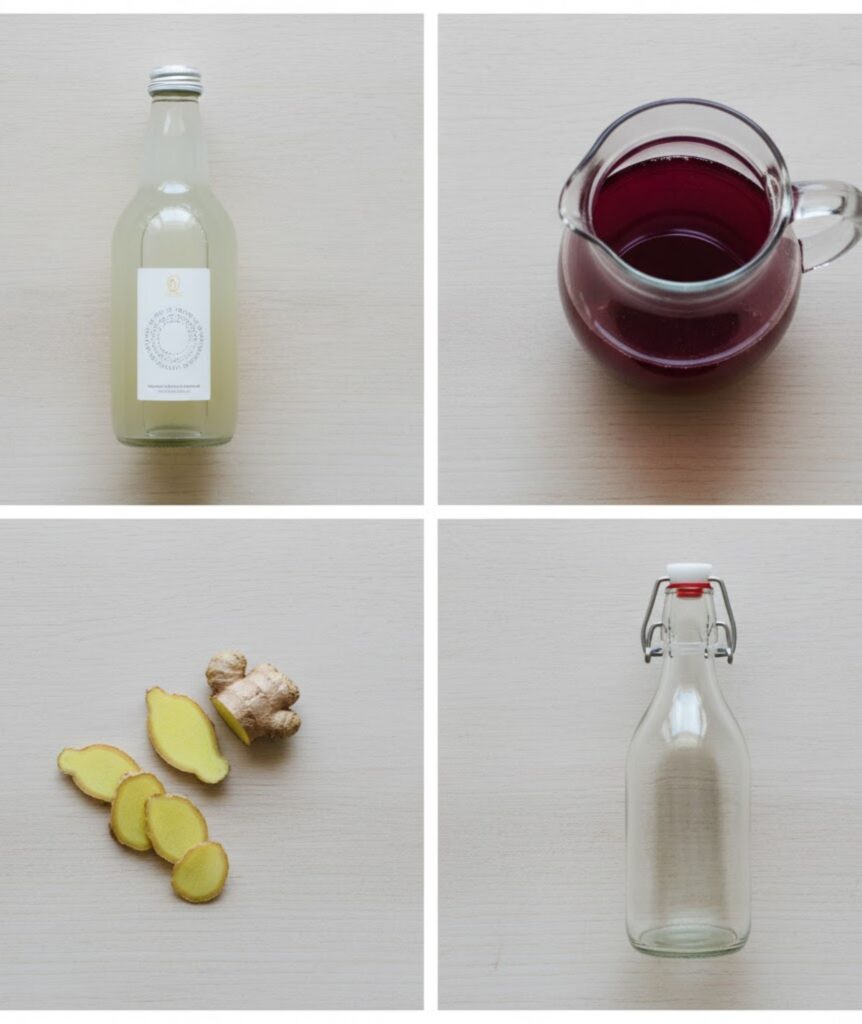
We are using pre-made kombucha and leveraging its active cultures for a fast, flavor-packed second ferment (F2).
H3: The Quick F2 Base
- 4 cups High-Quality Plain or Unflavored Kombucha: Crucial! This provides the active cultures, starter tea, and SCOBY by proxy. Make sure it’s live kombucha!
- ½ cup 100% Fruit Juice: Essential for flavor and fizz! Use pomegranate, cranberry, or apple juice (not from concentrate). The sugar feeds the carbonation.
- Optional: 1-inch piece Fresh Ginger: Sliced or grated. Adds a huge punch of flavor and boosts fizz.
H3: Optional Flavoring Agents
- 2 tablespoons Sliced Fresh Fruit: Berries, peaches, or lemon slices.
- 1 teaspoon Sweetener: Honey or agave (if you need it sweeter).
- A few Mint or Basil Leaves: For a fresh, herbaceous note.
Key Substitutions:
- Kombucha Swap: You must use high-quality, unpasteurized kombucha. Any kombucha that is not plain will likely make the flavor combo weird, IMO.
- Juice Swap: You can use pureed fresh fruit instead of juice, but the juice is easier and provides more immediate sugar for carbonation.
- Sweetener Swap: Use stevia or monk fruit if you want to control the sugar, but understand that the carbonation relies on some sugar being present!
Tools & Kitchen Gadgets Used: Your Home Brew Lab
Forget the fermentation vessels; we are keeping this simple and focusing on airtight storage.
- Large Glass Pitcher or Bowl: For mixing the ingredients quickly.
- Airtight Bottles (Swing-Top or Recycled Kombucha Bottles): CRUCIAL for carbonation! They must be heavy-duty and designed to hold pressure.
- Funnel: Highly recommended for pouring without spilling precious brew.
- Measuring Cups and Spoons: For accurate flavor ratios.
- Strainers/Sieves: For straining out the fruit/ginger before drinking.
Step-by-Step Instructions: Brewed in Your Sleep!
This process is so fast, the hardest part is waiting for the carbonation to build. Get ready to mix and seal!
H3: Step 1: Prep the Flavor Agents
If using ginger, thinly slice it or give it a rough chop. If using fresh fruit, slice or lightly crush it to release the juices. If using fresh herbs like mint, lightly bruise them with the back of a spoon.
H3: Step 2: Mix the Base Liquid
In a large pitcher, combine the pre-made kombucha and the fruit juice. Stir gently to combine. If you are adding additional honey or agave, stir it in now until dissolved.
H3: Step 3: Bottle and Flavor
Using a funnel, carefully pour the liquid mixture into your airtight swing-top bottles. Leave about 1-2 inches of headspace in each bottle—this is necessary for safe carbonation! Add your flavor agents (ginger, fruit, or herbs) directly into the bottles now.
H3: Step 4: The Overnight Ferment (The Quick Fizz)
Seal the bottles tightly. Leave them at room temperature (ideally $68^{\circ}\text{F}$ to $75^{\circ}\text{F}$ / $20^{\circ}\text{C}$ to $24^{\circ}\text{C}$) for 12 to 24 hours. This short, rapid second fermentation allows the yeast in the kombucha to consume the sugar in the juice, creating $\text{CO}_{2}$ (fizz!). Check the bottles occasionally.
H3: Step 5: The Chill and The Sip
After 12-24 hours, move the bottles to the refrigerator. This chills the kombucha and slows the fermentation, building up safe pressure and stopping the process. Chill for at least 6 hours before opening. When ready to drink, open the bottle slowly over a sink (it might fizz a lot!). Strain out the fruit/ginger, and enjoy your quick, fizzy, probiotic goodness!
Calories & Nutritional Info: The Healthy-ish Truth
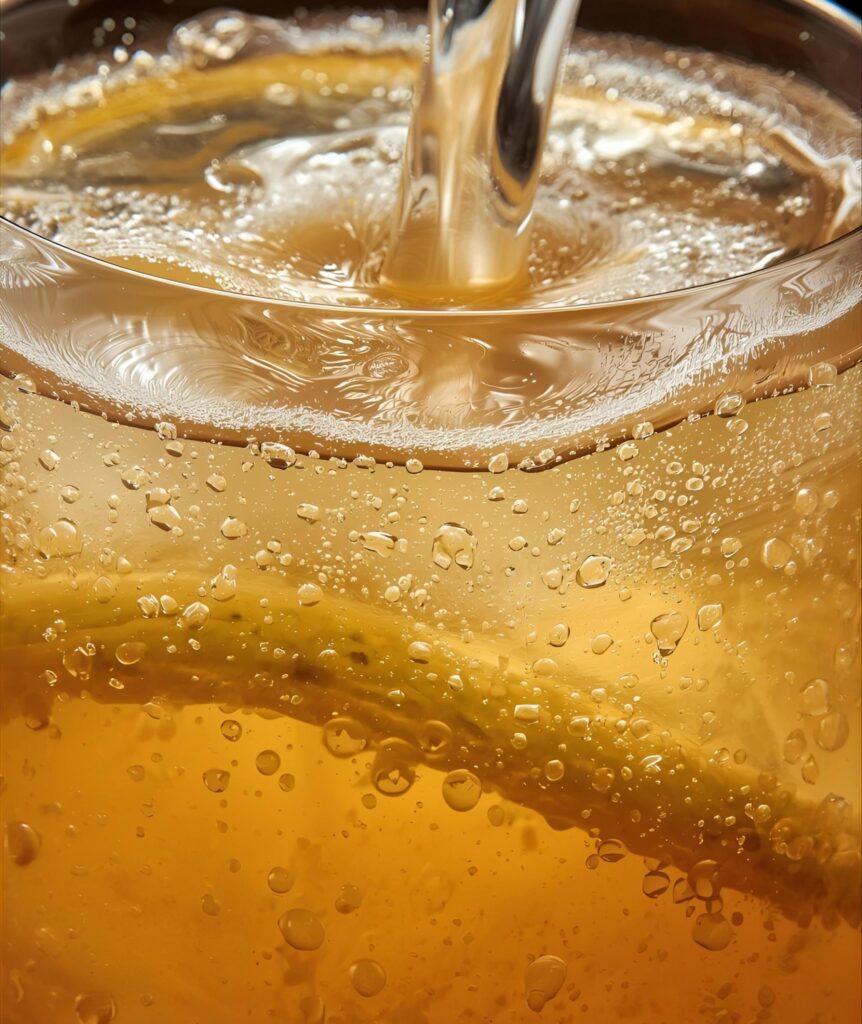
This is a much lower-sugar option than many store-bought sodas, but the calories depend on the juice you choose. These estimates are approximate per 1-cup serving.
- Estimated Calories per serving (1 cup): 50-90 calories (varies greatly by juice/sugar)
- Sugar: 8-15g (mostly natural fruit sugar)
- Carbohydrates: 8-15g
- Fat/Protein: Minimal
- Probiotics: Contains live and active cultures. Hello, happy gut!
- Vitamins/Minerals: Provides natural vitamins from the juice.
- The Bottom Line: A refreshing, healthier alternative to soda.
Common Mistakes to Avoid: Stop Making Kombucha Bombs!
Safety first! This quick ferment is mostly foolproof, but bottling requires attention.
- Using the Wrong Bottles: DO NOT use standard screw-top soda bottles, wine bottles, or jars that are not pressure-rated. Fermentation builds intense pressure; the bottles must be airtight swing-top style to prevent explosions. Safety first!
- Forgetting Headspace: Leave 1-2 inches of air at the top of the bottle. This allows space for the $\text{CO}_{2}$ to build. Too little space increases the risk of exploding bottles.
- Not Using Live Kombucha: The entire process relies on the active cultures (SCOBY remnants) in the store-bought brew. Ensure your base kombucha is unpasteurized and clearly labeled “live cultures.”
- Over-Fermenting: Leaving the bottles out for too long (e.g., 3 days) will result in extremely tart kombucha with dangerously high pressure. Stick to the 12-24 hour window and refrigerate promptly.
- Opening Too Quickly: Always assume the bottle is pressurized. Open bottles slowly over a sink to catch any potential overflow (fizz explosion).
Variations & Customizations: Your Flavor Lab
The beauty of F2 is the endless flavor possibilities! Get creative!
- Spicy Ginger-Turmeric: Use fresh turmeric and ginger (grated) along with a dash of black pepper (black pepper boosts turmeric absorption!). This is a great anti-inflammatory shot.
- Mojito Mint-Lime: Replace the juice with a splash of lime juice. Add fresh mint leaves and a teaspoon of raw sugar to the bottle.
- Berry Basil Blend: Use a combination of muddled raspberries and strawberries with a few fresh basil leaves. The herbaceous basil and sweet berries create a complex, sophisticated flavor.
FAQ Section: Answering Your Bubbly Questions
You’ve got questions about this fast-track brew. I’ve got answers.
H3: Q1: Is this method safe for home brewing?
A1: Yes, provided you use pressure-rated bottles and follow the headspace and chill time rules. This is a common and safe method for flavoring pre-made kombucha.
H3: Q2: Does this method create a new SCOBY?
A2: No. You are not performing the primary, long-term fermentation (F1) needed to grow a SCOBY. You are only performing a rapid, flavor-focused secondary fermentation (F2) for fizz.
H3: Q3: Why did my kombucha not get fizzy overnight?
A3: Fizz relies on sugar and warmth. Check these things: Was the temperature too cold? (Needs to be above $68^{\circ}\text{F}$). Did you use enough sugar (from the juice/sweetener)? Was the base kombucha actually live/unpasteurized?
H3: Q4: How long does this overnight kombucha last in the fridge?
A4: Store your F2 kombucha in the refrigerator for up to 2 weeks. It will slowly continue to ferment, becoming tangier over time, but it should remain safe to drink.
H3: Q5: Can I use frozen fruit for flavoring?
A5: Yes! Frozen fruit works great! Just thaw it slightly and muddle it to release the juices before adding it to the bottle.
H3: Q6: What is the “vinegary” taste in kombucha?
A6: The vinegary taste comes from acetic acid, a byproduct of the bacteria that ferment the tea. If your kombucha is too vinegary, it has fermented for too long. Use a shorter F2 time!
H3: Q7: Can I use essential oils to flavor kombucha?
A7: No, absolutely not! Essential oils are highly concentrated and can be toxic if consumed, even in small amounts. Always use fresh or dried fruits, herbs, or extracts (like vanilla extract).
Final Thoughts: Sip Your Way to Speed!
You did it! You’ve mastered the art of the fast ferment with this gloriously fizzy Overnight Kombucha hack. Go ahead, pop that top (carefully!) and take a sip. Doesn’t that taste exactly like the healthy, bubbly perfection you deserve? I knew it would. You are now a quick-brew wizard. Are you ever going to pay $4 for a bottle again? I highly doubt it. Enjoy your speedy, sparkling victory!