

Ostrich Egg Omelette: How to Cook the World’s Biggest, Best Brunch
Let’s be honest, your morning scramble is a little predictable. You crack two or three little eggs, throw in some cheese, and call it a day. Yawn. It’s time to stop thinking small and start thinking huge. We are talking about the Ostrich egg omelette, the single most dramatic breakfast you will ever create.
An ostrich egg is the equivalent of about 24 chicken eggs. This isn’t just an omelette; it’s a social event, a challenge, and a spectacular showstopper. We’ll show you how to crack the thing (spoiler: you need a drill), season it right, and cook it to fluffy, golden perfection. Get ready to host brunch for an entire football team, or just yourself, if you’re having a really intense day. Seriously, why settle for a little hen’s egg when you can have a giant bird’s egg?
Why This Recipe Is Awesome (Size, Flavor, and Spectacle)

Cooking an ostrich egg is a commitment, but the payoff in flavor and spectacle is unparalleled.
First, the Jaw-Dropping Size. One ostrich egg equals a carton of chicken eggs. It feeds 8-10 people easily, maybe more. This is the ultimate “I brought the main course” move. It’s impossible not to be impressed by its sheer volume. Why cook individual plates when you can serve one glorious, giant meal?

Second, the Surprisingly Delicate Flavor. Ostrich eggs taste similar to chicken eggs but are often described as having a richer, slightly buttery, and more delicate flavor. They have a higher yolk-to-white ratio, contributing to that incredible richness. IMO, it makes the fluffiest, most luxurious omelette base.
Third, the Unforgettable Spectacle. The process of cracking and cooking this colossal egg is a story in itself. It’s fun, it’s dramatic, and it’s a guaranteed conversation starter. TBH, your guests will ask about the egg long before they ask about your career.
The Goods: Ingredients You Need
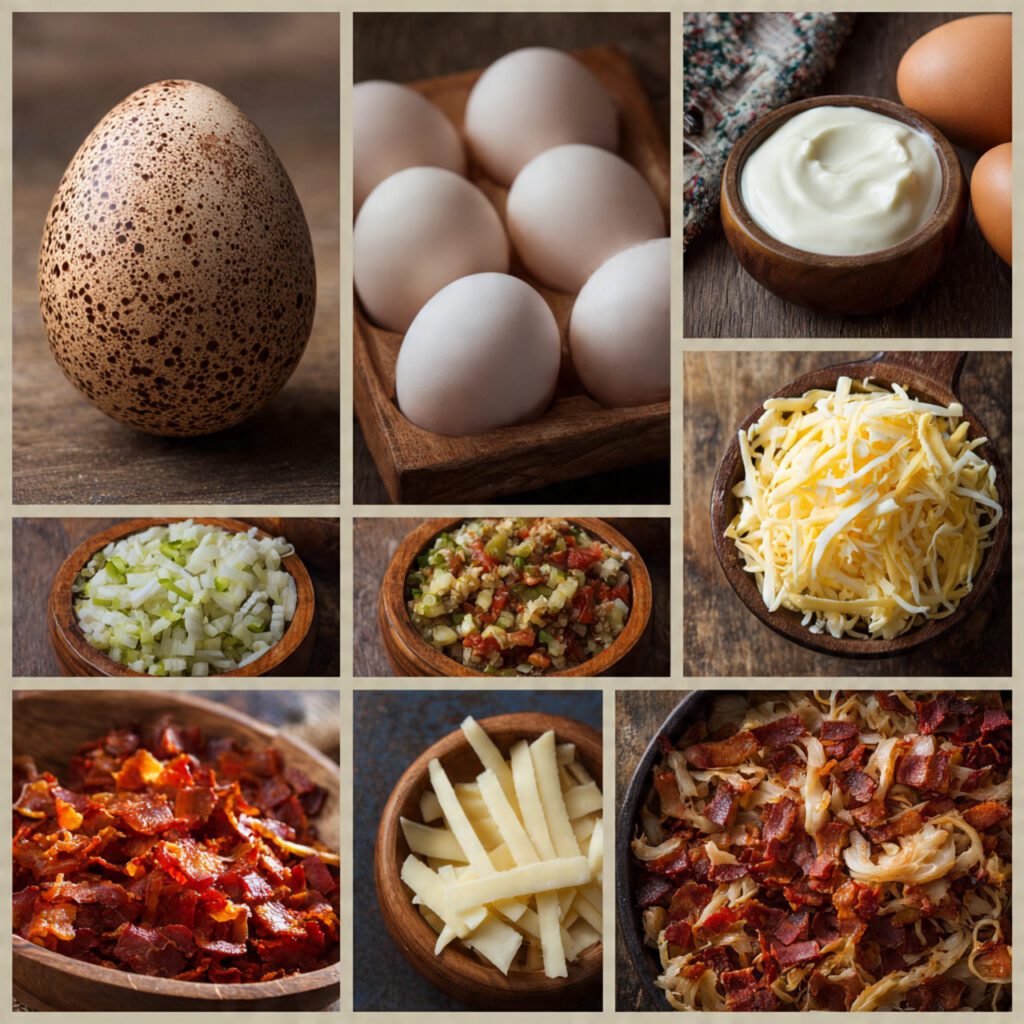
Since one egg feeds a crowd, we’re building a massive, classic omelette base designed for maximum fluffiness.
- The Star Protein:
- 1 Ostrich Egg (sourced from a specialty farm or exotic meat supplier).
- The Dairy/Binder:
- 1/2 cup Heavy Cream or Whole Milk (adds richness and fluffiness).
- 1 teaspoon Salt.
- 1/2 teaspoon Freshly Cracked Black Pepper.
- The Fillings (Go Big or Go Home):
- 1 cup Shredded Cheese (Cheddar, Gruyère, or Monterey Jack).
- 1 cup Chopped, Cooked Meat (Bacon, Ham, or Sausage, optional).
- 1/2 cup Sautéed Veggies (Onions, Bell Peppers, or Spinach).
- Cooking Fat:
- 3 tablespoons Butter or Olive Oil.
H3 Key Substitutions (When You Can Only Find Little Eggs)
- No Ostrich Egg? Use 24 chicken eggs or 10 duck eggs. Adjust the cooking time significantly!
- Cream Substitute: Use half-and-half or evaporated milk. The fat content is essential for a tender omelette. Do not use water!
- Filling Swap: Use any classic omelette filling. Just make sure you cook the fillings ahead of time—you don’t want raw veggies in your finished omelette.
Tools & Kitchen Gadgets Used (The Heavy Artillery)
You need standard kitchen gear, plus one very specific item for the cracking. Don’t try to use a spoon on this thing!
- Electric Drill and Large Drill Bit: CRUCIAL! For carefully piercing the thick shell (or a hammer and sharp chisel, if you feel extra rustic).
- Large Mixing Bowl (Colossal): You need space to hold 24 eggs’ worth of liquid and whisk them effectively.
- Whisk or Immersion Blender: For vigorously beating the mixture to incorporate air.
- Extra-Large Skillet or Roasting Pan (12-inch minimum): A standard 10-inch skillet won’t cut it. You need a large surface area for even cooking.
- Rubber Spatula: For scraping the sides and testing doneness.
- Instant-Read Meat Thermometer (Optional): For checking the internal temperature (safe internal temp is 160°F / 71°C).
Step-by-Step Instructions (The Cracking and Cooking Challenge)
This is a commitment, so plan for at least 30 minutes of cooking time. The key is low, slow heat.
H3 Step 1: The Great Egg Crack (Safety First!)
- Place the ostrich egg on a sturdy towel on a flat surface. Hold it firmly.
- Use the electric drill and a large bit to carefully drill a hole about 1/2 inch in diameter in the top of the shell. You can also use a hammer and chisel, tapping gently to avoid shattering the whole thing.
- Carefully drain the egg contents (yolk and white) into your colossal mixing bowl. You might need a chopstick or thin skewer to break up the yolk membrane inside.
- Once empty, rinse and save the shell! It makes a fantastic centerpiece (or drum).
H3 Step 2: The Whisking Marathon
- Add the cream, salt, and pepper to the bowl with the ostrich egg liquid.
- Whisk vigorously for 2-3 minutes. You want to incorporate a lot of air—this is what makes the final omelette fluffy and light. An immersion blender with a whisk attachment or a hand mixer works wonders here.
- Gently fold in your cooked meat and sautéed veggies. Reserve the cheese for the final stage.
H3 Step 3: The Low and Slow Cook
- Preheat your extra-large skillet or roasting pan over medium-low heat. Add the butter or oil.
- Pour the entire egg mixture into the hot pan. Immediately reduce the heat to low.
- Cook for 15–20 minutes. As the edges set, gently push the cooked egg toward the center, tilting the pan so the raw egg flows underneath. This technique ensures even cooking.
- Once the top is mostly set (still slightly wet), sprinkle the shredded cheese evenly over the surface.
H3 Step 4: The Final Bake and Serve
- Transfer the skillet to a preheated oven (set to 350°F / 175°C) for 8–10 minutes to finish setting the center and melting the cheese completely.
- Use the instant-read thermometer to verify the omelette is 160°F (71°C) in the center.
- Remove the omelette from the oven. Let it cool for 5 minutes, then slice it into generous wedges and serve directly from the pan.
Calories & Nutritional Info (The Giant Meal)
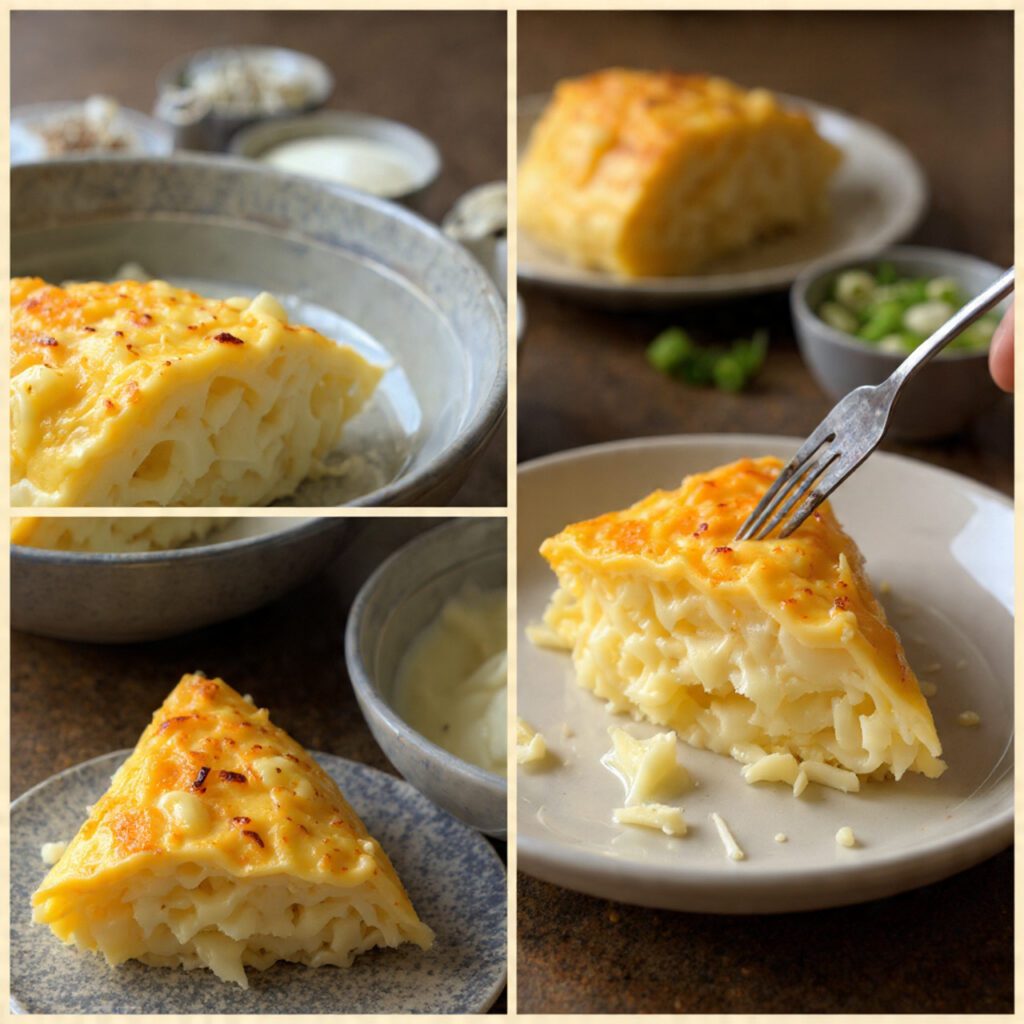
Since an ostrich egg is about 24 chicken eggs, the calorie count is high, but the nutritional value is fantastic. This estimate is for one generous wedge (1/8 of the full omelette).
- Estimated Calories Per Serving (1/8 wedge with cheese/meat): ~350–450 calories. It is a very large meal!
- Extremely High in Protein: One wedge provides about 25g-35g of protein. Great for muscle repair.
- Rich in Iron: Ostrich eggs contain high levels of iron and magnesium.
- Lower Cholesterol: Surprisingly, ostrich eggs generally have slightly lower cholesterol and fat than chicken eggs by volume, but the total volume is massive.
- Contains Vitamin B12 and Folate: A complete nutritional breakfast.
Common Mistakes to Avoid (The Giant Fail)
A huge omelette requires huge attention to detail. Don’t ruin this massive undertaking.
- Cooking on High Heat: High heat cooks the bottom layer too fast, making it rubbery and potentially burning it before the center even begins to set. Use low, gentle heat and finish in the oven.
- Not Pre-Cooking Fillings: Raw or watery fillings (like fresh mushrooms or spinach) release moisture during cooking, resulting in a soggy, wet omelette. Sauté all veggies first!
- Skipping the Oven Finish: Due to the depth and size, cooking entirely on the stovetop results in an uncooked center. The oven finish is mandatory for even doneness.
- Using a Small Pan: A small pan creates a ridiculously thick omelette that takes an hour to cook and is rubbery. Use an extra-large skillet or roasting pan for a manageable thickness.
Variations & Customizations (Flavor Safaris)
Once you master the massive omelette base, you can adapt the fillings to any cuisine.
- Spicy Mexican Omelette: Fold in crumbled chorizo sausage, diced green chilies, and pepper jack cheese. Top the finished omelette with a dollop of sour cream and fresh cilantro.
- Keto/Low-Carb Feast: Stick to savory, high-fat, low-carb fillings like heavy cream, bacon, spinach, and high-fat cheeses (Gruyère or Cream Cheese). Serve with avocado slices instead of toast.
- Mediterranean Feta & Herb: Mix in crumbled Feta cheese, sun-dried tomatoes, black olives, and a handful of fresh oregano and basil. Finish with a drizzle of olive oil.
FAQ Section (The Bird-Brained Questions)
When you cook a giant egg, people are fascinated. Answer these with flair!
- Q: How long does it take to crack an Ostrich egg?
- A: Anywhere from 5 minutes (if you use a drill) to 20 minutes (if you try to hammer it). The shell is extremely thick and tough. Be prepared and proceed carefully!
- Q: Where can I buy an Ostrich egg?
- A: Look for them at specialty butcher shops, exotic game meat retailers, or sometimes at large farmers’ markets during spring/early summer. They are usually sold seasonally.
- Q: Can I scramble the whole egg and save the leftovers?
- A: Yes. Once the contents are drained, you can whisk the entire liquid mass and store it in an airtight container in the fridge for up to 2 days. Use a portion for your omelette and save the rest for scrambling later.
- Q: Does it taste gamey or exotic?
- A: No! The flavor is very mild, rich, and similar to a high-quality chicken egg. The excitement is in the size, not the taste.
- Q: Can I make this in the oven only?
- A: You can, but you must use a heavy-duty, oven-safe pan. Preheat the oven and bake at 325°F (160°C) for 40-60 minutes, until set. The stovetop start helps set the base faster.
- Q: How do I store and use the leftover egg shell?
- A: Clean and dry the shell completely. People often use them for decoration, carving, or as a very large bowl/centerpiece.
- Q: What is the serving size for one ostrich egg?
- A: One egg is typically enough for 8-10 people when made into a loaded omelette. Plan your party accordingly!
Final Thoughts (The Brunch Behemoth)
You brought the giant bird to the breakfast table and won. You conquered the shell, you mastered the low and slow cook, and you served a true brunch spectacle. That Ostrich egg omelette is proof that sometimes, bigger really is better.
Go ahead, cut yourself the biggest wedge. Did you realize breakfast could be this much of an adventure? I bet you’ll never look at a tiny carton of hen’s eggs the same way again. Now, tell me, did you use the power drill?

