
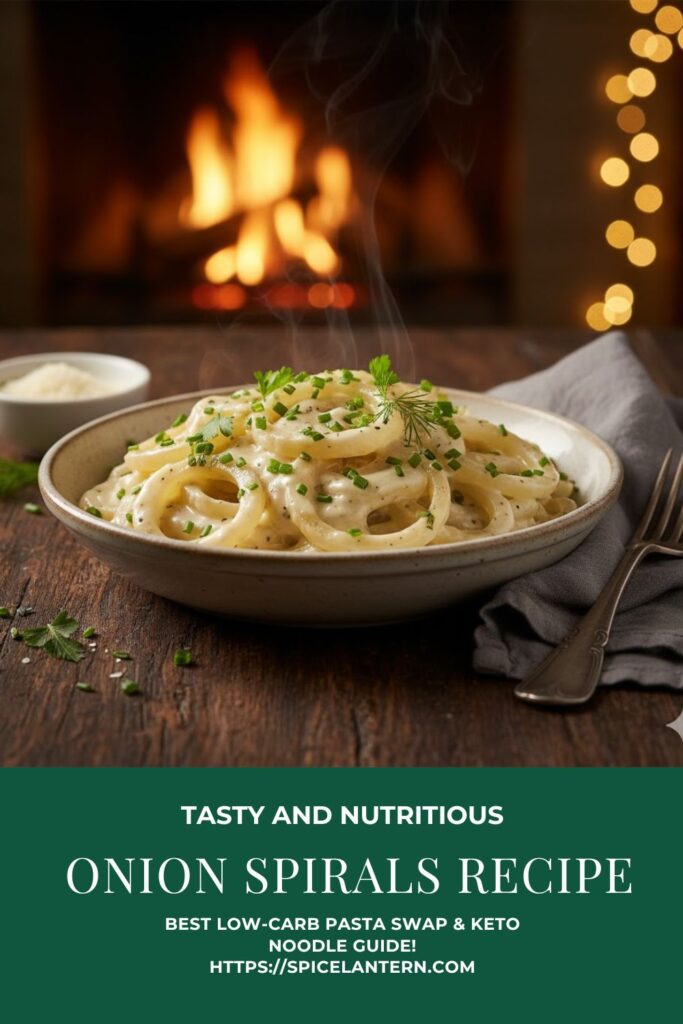
🧅 Tear-Free Triumph: The Ultimate Guide to Perfect Onion Spirals (Your New Favorite Noodle!)
We all have that moment: staring at the spiralizer, wondering, “Can I noodle this?” You’ve done the zucchini, you’ve conquered the sweet potato, but the humble onion? That’s next-level commitment. You might think the only good onion is a fried onion ring, but hold my wine. The Onion spirals revolution is here, and it will change the way you look at low-carb pasta forever.

I know, you’re picturing yourself weeping violently over your kitchen counter. But here’s the hook: once spiralized and cooked, onions lose their aggressive raw bite and become sweet, silky, and surprisingly noodle-like. They’re savory, naturally low-carb, and they cling to sauce like they were born to do it. Ready to face the tear challenge for an incredible dinner? Of course, you are.
🤩 Why This Recipe Is Awesome (Sweet, Silky, and So Savory)
Why should you bother spiralizing a vegetable that makes you cry? Because cooked onion spirals are pure, savory magic. When lightly sautéed, their natural sugars caramelize quickly, giving you a sweet, smooth, and deeply satisfying base for any hearty sauce. They offer a much more complex, savory flavor profile than watery zoodles or overly sweet butternut squash.

They are also ridiculously easy and cheap. You want a sophisticated, low-carb foundation for your dinner that uses a basic pantry staple? This is it. Plus, you get to tell everyone you had “onion spaghetti” for dinner, and watch their confused, impressed faces. You’re basically a culinary trailblazer, TBH.
🧅 The Core Ingredients You Need
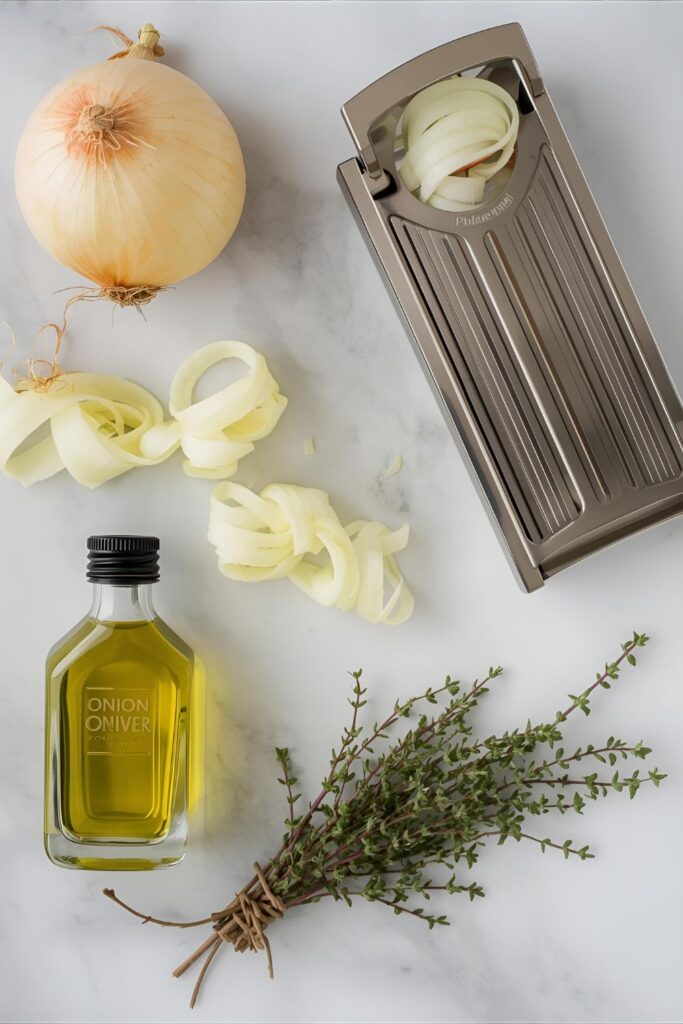
Keep it simple. The flavor comes from the onion itself, not a million complex additions.
- 2 large Yellow Onions (or Sweet Onions like Vidalia): Yellow or sweet onions work best due to their size and high sugar content.
- 2 Tbsp. Olive Oil or Butter (or a mix!): The fat is essential for the sauté and flavor development.
- 1/4 cup Vegetable or Beef Broth: The secret weapon for steaming and deglazing the sweet caramelization.
- Salt and freshly ground Black Pepper: Seasoning is absolutely crucial for bringing out the onion’s natural sweetness.
- Optional Finish: A sprinkle of fresh thyme or oregano.
Key Substitutions:
- Onion Type: White onions work, but they are sharper and less sweet when cooked. Red onions spiral beautifully but leave a faint pink tinge in the sauce.
- Fat Swap: Use ghee or avocado oil. If you use butter, be careful not to burn it during the caramelization process.
🛠️ Tools & Kitchen Gadgets Used
This is a job for the spiralizer. A knife is theoretically possible, but who needs that kind of stress?
- Sharp Chef’s Knife: For trimming the onions and, well, crying.
- Cutting Board: A stable, non-slip board.
- Spiralizer (Countertop is best!): Essential for this recipe. A sturdy countertop model handles the firm texture of the onion more easily than a flimsy handheld one.
- Large Skillet or Sauté Pan: You need a wide surface area to ensure the onion spirals sauté quickly and evenly.
- Spoon or Spatula: For gentle stirring and flipping.
🔪 Step-by-Step Instructions: Conquering the Tear Factory
Put on a brave face (or goggles). The slicing is the worst part; the cooking is pure joy.
Step 1: Prep the Onion (And Cry a Little)
Peel the outer papery layers from the yellow onions. Slice off the top and bottom ends so the onion stands flat. Find the root end (the flattest, toughest part) and make sure it’s securely attached to your spiralizer. Pro-Tip: If the onion is very wide, cut it in half before spiralizing to make the noodles shorter and more manageable.
Step 2: Noodle the Onion
Secure the onion on your spiralizer (using the finest blade if possible) and start spiraling. The layers will separate as they come out. You’ll end up with long, gorgeous, slightly pungent strands. Give the long strands a rough chop—you want noodle lengths, not a giant onion ball.
Step 3: Sauté to Sweetness
Set your large skillet over medium heat. Add the olive oil or butter. Once shimmering, toss the onion spirals into the pan. Add a generous sprinkle of salt and pepper. Sauté for 5–7 minutes, stirring frequently. The goal is to soften the onions and achieve a slight caramelization, but not to cook them until mushy.
Step 4: Deglaze and Finish
When the spirals are tender-crisp and starting to turn translucent, pour the vegetable broth into the pan. It will sizzle and lift all those tasty caramelized bits from the bottom—that’s called deglazing, and it’s where flavor comes from! Stir for about 1 minute until the broth reduces.
Step 5: Sauce and Serve
Remove the pan from the heat. Toss the warm onion spirals with your favorite sauce—a creamy Alfredo or a rich meat ragu works incredibly well. Garnish with a little fresh herb and a final pinch of salt. Serve immediately and enjoy the non-soggy texture!
📊 Calories & Nutritional Info (The Health Report)
Yes, onions are technically low-cal! This estimate is for one serving of noodles (about 1/2 the recipe, before adding a heavy sauce).
- Estimated Calories Per Serving: Around 100–130 calories. (Mostly from the oil used for sautéing.)
- Carbs: Low, approximately 10–12g net carbs per serving. Excellent low-carb pasta substitute!
- Fiber: Onions provide a decent dose of fiber, which helps keep things moving.
- Key Nutrient: Rich in Vitamin C and antioxidants. You are eating your veggies!
- The Good News: You get the satisfaction of a full bowl of “pasta” without the carb coma.
🛑 Common Mistakes to Avoid (The Onion Pitfalls)
Avoid these common slip-ups to guarantee a delicious, non-bitter final product.
- Under-Seasoning: Onions need a surprising amount of salt to bring out their natural sweetness and tame their raw flavor. Don’t be shy with the salt in Step 3.
- Using a Cold Pan: If the pan is too cool, the onions will steam and get soggy instead of caramelizing and softening. Ensure your pan is hot before adding the onions.
- Leaving the Root End Attached: You must leave the root end intact on the spiralizer peg! The root holds the onion layers together while you spiralize. Without it, the layers fall apart immediately.
- Rinsing the Spirals: Onion spirals absorb water quickly. Do not rinse the spirals after cutting, or they will become waterlogged and soggy during the sauté.
🍝 Variations & Customizations
Bored of basic? Impossible, but here are three fun ways to tweak your onion spirals.
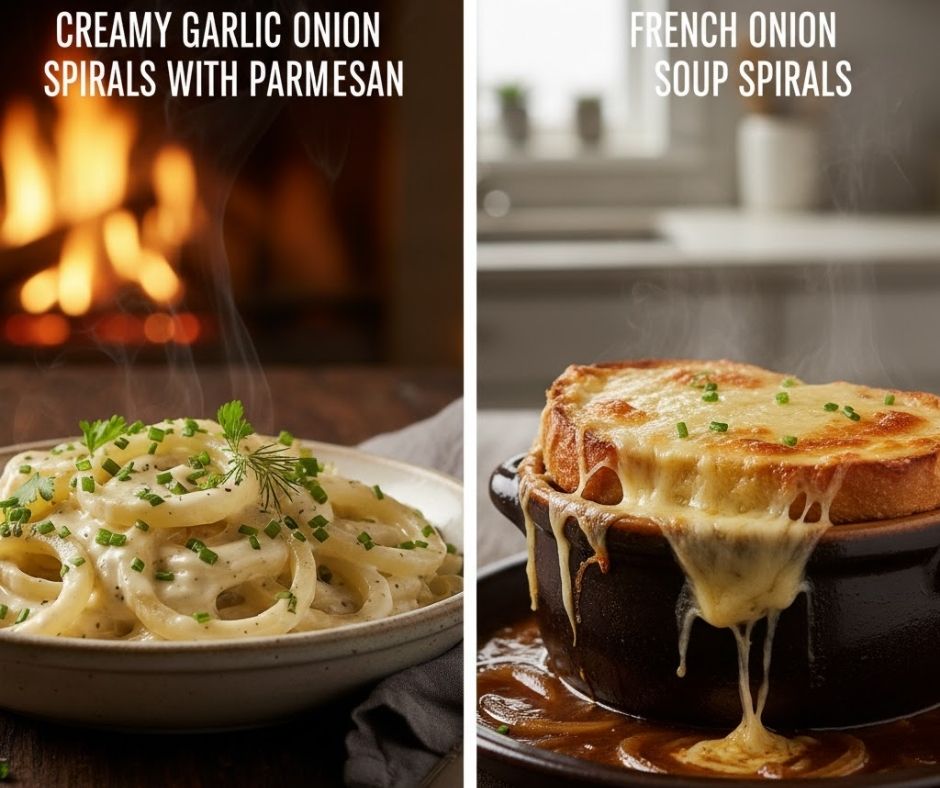
- French Onion Soup SpiralsAfter the initial sauté, use beef broth instead of vegetable broth for deglazing. Serve the noodles in a shallow bowl, cover with a slice of toasted baguette and a thick slice of Gruyère cheese, then broil until bubbly and golden. It’s the whole soup experience!
- Spicy Asian Sesame NoodlesSauté the onion spirals in sesame oil. Deglaze with soy sauce (or tamari) and a dash of rice vinegar. Toss with chili-garlic paste and garnish with toasted sesame seeds and fresh cilantro. A quick, flavorful noodle bowl!
- Creamy Garlic & Herb PastaAfter deglazing the onions, pour in 1/4 cup of heavy cream or full-fat coconut milk. Let it reduce slightly. Stir in chopped parsley and lots of fresh Parmesan cheese. This makes a rich, creamy sauce base for your spirals.
❓ FAQ Section: Your Spiraled Onion Questions Answered
Everyone wants to know how to conquer the onion. Let’s tackle the pressing issues.
Are onion spirals high in carbs?
No! Onions are significantly lower in carbs than wheat pasta, making onion spirals a great option for low-carb and keto diets.
How do I stop crying when I slice them?
The fastest way is to chill the onions (peeled) in the freezer for about 15 minutes before spiralizing. This slows the release of the tear-inducing compounds.
What kind of spiralizer blade should I use?
Use a thin, spaghetti-style blade for the most noodle-like texture. A fettuccine blade works too, but the spaghetti shape is best for clinging to sauces.
Can I eat onion spirals raw?
Yes, but they will have a sharp, pungent raw onion flavor. If you want to eat them raw in a salad or slaw, I recommend soaking them in ice water for 15 minutes to soften the flavor first.
How long does it take for onion spirals to cook?
Very fast! They only need about 5–7 minutes of sautéing to soften and lose their sharpness without turning into mush.
My onions seized up and won’t soften. What happened?
Your pan was likely not hot enough, and the onions steamed instead of sautéing. You must use medium-high heat for a proper sauté.
Can I make the spirals ahead of time?
You can spiralize them, but they are best cooked immediately. If you must prep ahead, store the raw spirals in an airtight container in the fridge for up to 2 days, but expect a slightly less firm texture when cooked.
Final Thoughts (The Unexpected Hero)
You faced the onion, you conquered the crying, and you created a genuinely delicious, low-carb miracle. You made Onion spirals! You’ve proved that the best substitutes often come from the most overlooked vegetables. Go ahead, twirl those savory strands onto your fork. You’ll never look at a spaghetti dinner the same way again. Now, are you topping yours with a creamy sauce or a spicy Asian glaze?

