🍲 The “Empty the Crisper” Miracle: Mastering the Ultimate Minestrone Soup
Let’s be honest: your vegetable drawer currently looks like a graveyard for ambitious New Year’s resolutions. We’ve all been there—staring at a half-wilted carrot, a lonely zucchini, and a rogue stalk of celery, wondering if we should just order a pizza and call it a day. But what if I told you that those sad, forgotten veggies are actually the VIP guests for the most legendary minestrone soup you’ve ever tasted?
I once served a giant pot of this to a friend who genuinely believes that “soup isn’t a meal.” Three bowls later, he was scraping the bottom of the pot with a piece of sourdough, questioning his entire life philosophy. That is the magic of a proper Italian vegetable stew. It’s hearty, it’s vibrant, and it treats your produce with more respect than they probably deserve. Are you ready to stop neglecting your veggies and start eating like a sophisticated Italian nonna?
🏆 Why This Minestrone Soup is the Actual GOAT
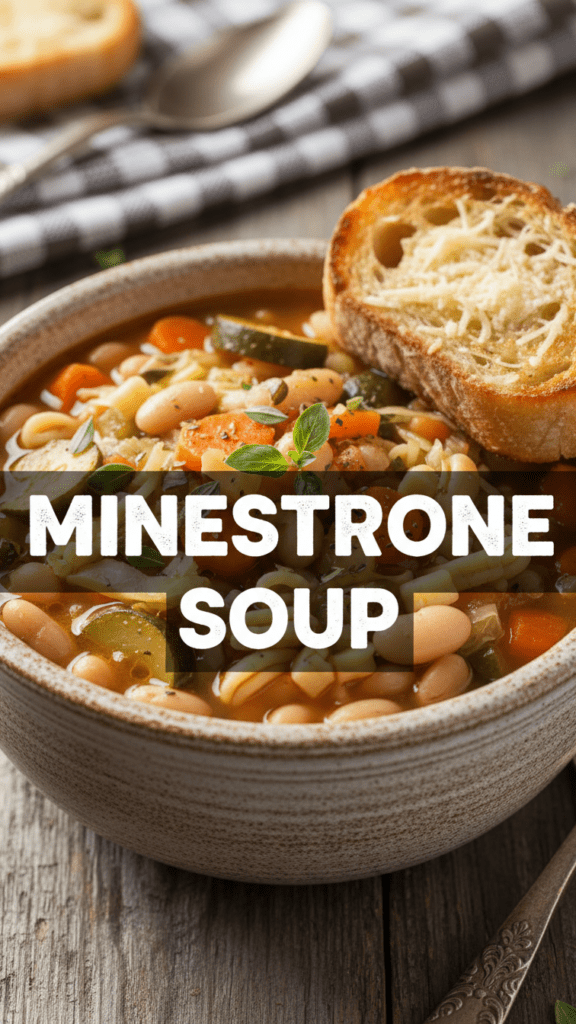
Why should you bother chopping things for twenty minutes when you could just open a can? Because canned minestrone soup usually tastes like salty tin and regret. Homemade minestrone is a completely different beast. It relies on the “Soffritto” (the holy trinity of onions, carrots, and celery) to build layers of flavor that a factory simply can’t replicate.1
This recipe is awesome because it’s a nutritional powerhouse disguised as comfort food. It’s packed with fiber, plant-based protein, and every vitamin under the sun. It impresses guests because it looks like a rustic masterpiece, especially when you finish it with a cheeky drizzle of high-quality olive oil. It’s the ultimate kitchen-flex for people who want to look healthy but feel full, FYI.
🥦 The “No Veggie Left Behind” Ingredient List
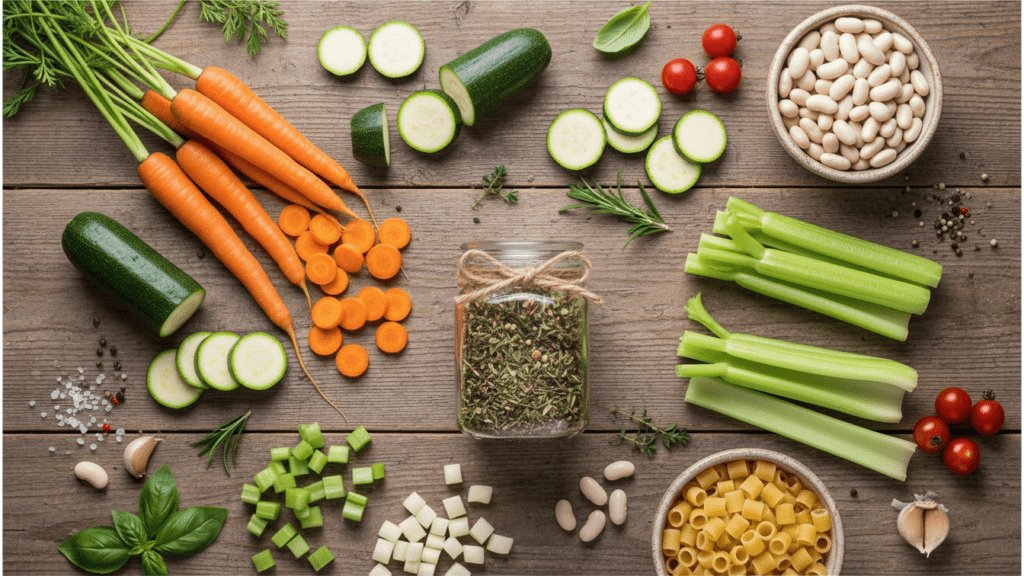
Don’t let the length of this list scare you. It’s mostly just plants doing their thing.
- 2 Tablespoons Extra Virgin Olive Oil: The “good” stuff makes a difference here.
- 1 Large Yellow Onion: Diced into chunky bits.
- 2 Large Carrots: Sliced into rounds (peeling is optional, we’re keeping it rustic).
- 2 Stalks Celery: Sliced thin.
- 1 Medium Zucchini: Diced into bite-sized cubes.
- 3 Cloves Garlic: Minced (measure this with your heart, honestly).
- 1 Teaspoon Dried Oregano & 1 Teaspoon Dried Basil: The Italian duo.
- 1 Can (14 oz) Diced Tomatoes: With all their glorious juices.
- 1 Tablespoon Tomato Paste: For that deep, umami “I’ve been cooking all day” vibe.
- 6 Cups Vegetable Broth: Keep it low-sodium so you control the salt levels.
- 1 Can (15 oz) Cannellini Beans: Drained and rinsed (protein, baby!).
- 1 Cup Ditalini or Macaroni Pasta: Small shapes are the law of minestrone.
- 2 Cups Chopped Kale or Spinach: For that “I’m a health icon” finish.
- Salt & Black Pepper: To taste.
- Parmesan Cheese & Fresh Parsley: For garnish (the non-negotiables).
Key Substitutions
- Pasta Swap: Use Gluten-Free pasta or diced potatoes if you’re avoiding wheat.
- Veggie Swap: Feel free to throw in green beans, butternut squash, or even cabbage.
- Broth Swap: Use Chicken Broth if you aren’t worried about keeping it strictly vegetarian.
🔪 Tools & Kitchen Gadgets Used
You don’t need a lab to make soup, but these basics will save your sanity.
- Large Dutch Oven or Heavy-Bottomed Pot: This is where the magic happens. Check out enameled pots here!
- Sharp Chef’s Knife: For the massive amount of therapeutic chopping. Grab a reliable one here!
- Microplane or Grater: For that fresh Parmesan mountain. This tool is a lifesaver!
- Wooden Spoon: For all that satisfying stirring. Classic sets are best!
- Ladle: Because pouring soup with a cup is a disaster waiting to happen.
👩🍳 Step-by-Step Instructions: The Roadmap to Soup Glory
Follow these steps, and please, for the love of all things holy, don’t overcook the pasta.
1. The Soffritto Start
Heat the olive oil in your Dutch oven over medium heat. Throw in the onion, carrots, and celery. Sauté them for about 8–10 minutes until they are soft and smelling like a dream. TBH, this is the most important part of the whole process.
2. Aromatic Awakening
Stir in the garlic, oregano, and basil. Cook for just 1 minute. You want the garlic to be fragrant, not burnt and bitter like your last breakup.
3. The Tomato Transition
Add the tomato paste and stir it around for 2 minutes. This “toasts” the paste and deepens the flavor. Now, dump in the diced tomatoes (with juice!) and the zucchini. Give it a good stir.
4. The Big Simmer
Pour in the vegetable broth. Bring the whole beautiful mess to a boil, then immediately turn the heat down to low. Cover and let it simmer for 15–20 minutes. Your house is going to smell like a Marrakesh spice market’s Italian cousin.
5. Pasta and Protein
Stir in the Cannellini beans and the dry pasta. Cook for about 8–10 minutes (check the pasta box for “al dente” timing). IMPORTANT: If you plan on having leftovers, cook the pasta separately and add it to individual bowls so it doesn’t turn into a giant sponge overnight.
6. The Green Finale
Once the pasta is tender, stir in the kale or spinach. It will wilt in about 2 minutes. Taste the soup. Does it need salt? More pepper? A squeeze of lemon? Adjust as you see fit.
7. The Garnish Ritual
Ladle the minestrone soup into bowls. Top with a ridiculous amount of freshly grated Parmesan, a sprinkle of parsley, and a drizzle of olive oil. Serve with crusty bread for maximum satisfaction.
📊 Calories & Nutritional Info (The Good Stuff)
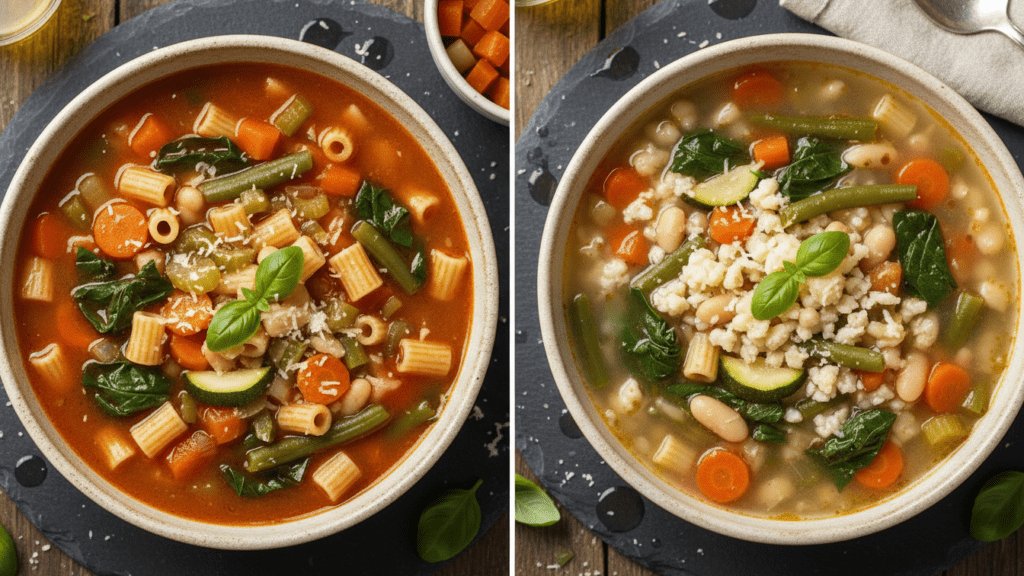
Since we didn’t use a gallon of cream, this is actually pretty great for you.
- Calories per serving: $\approx$ 220–280 kcal (without the entire loaf of bread).
- Fiber: Massive amounts from the beans and veggies.
- Vitamin A & C: Enough to make your skin glow for days.
- Protein: About 10g per serving from the beans and pasta.
- Mood: 100% improved after the first spoonful.
🚨 Common Mistakes to Avoid (The Soup Sins)
Avoid these pitfalls unless you want to end up with a sad, watery mess.
- Overcooking the Pasta: If the pasta is mushy, the soup is ruined. Cook it al dente!
- Ignoring the Soffritto: Rushing the onion and carrot stage means your soup will taste flat. Give them the time they need to caramelize.
- Too Much Liquid: Minestrone should be “thick enough for a spoon to stand up” (almost). Don’t drown your veggies in too much broth.
- Skipping the Garnish: That final hit of cheese and oil is what separates “cafeteria soup” from “gourmet meal.” 🙂
✨ Variations & Customizations
Because you’re the boss of your kitchen.
1. The Keto-Friendly Swap
Omit the pasta and beans. Use extra cauliflower florets and green beans instead. It’s basically a bowl of hot vitamins.
2. The “Fire-Breather” Version
Add a teaspoon of dried chili flakes with the garlic. Top the finished bowl with a swirl of pesto for a spicy, herby kick.
3. The Smoky Vegetarian Twist
Add a teaspoon of Smoked Paprika or a small piece of Parmesan rind to the broth while it simmers. It adds a deep, smoky richness that usually requires bacon.
❓ FAQ Section: Your Soup Solutions Solved
Why is minestrone soup called “Big Soup”?
The word “minestrone” literally comes from the Italian “minestra” (soup) with the suffix “-one,” meaning “big” or “thick.” It’s meant to be the ultimate chunky meal.
Can I make this in a slow cooker?
Yes! Put everything except the pasta and greens in the slow cooker for 4 hours on high. Stir the pasta and greens in 20 minutes before serving.
Why is my minestrone too thick the next day?
Pasta is a sponge. It will absorb all the broth while it sits in the fridge. If this happens, just add a splash of water or broth when you reheat it.
Is minestrone soup vegan?
Our base recipe is vegan if you use vegetable broth and skip the Parmesan garnish (or use nutritional yeast).
How long does it last in the fridge?
It actually tastes better the next day. It stays good for 4-5 days, making it the king of meal prep.
Can I freeze minestrone?
Absolutely. It freezes beautifully for up to 3 months. Just leave the pasta out and add fresh pasta when you thaw and reheat it.
What is the best pasta for minestrone?
Small shapes are best. Ditalini, small shells, or broken-up spaghetti pieces are the classic choices.
🥂 Final Thoughts: Go Forth and Slurp!
You’ve done it. You’ve successfully turned a pile of random vegetables into a minestrone soup that would make a professional chef weep with envy. You are now the master of the “clean out the fridge” dinner. Go ahead, take that first hearty bite—you’ve earned it. Just don’t tell your neighbor that their “gifted” zucchini actually tasted good; we don’t want to encourage them too much. 😉