
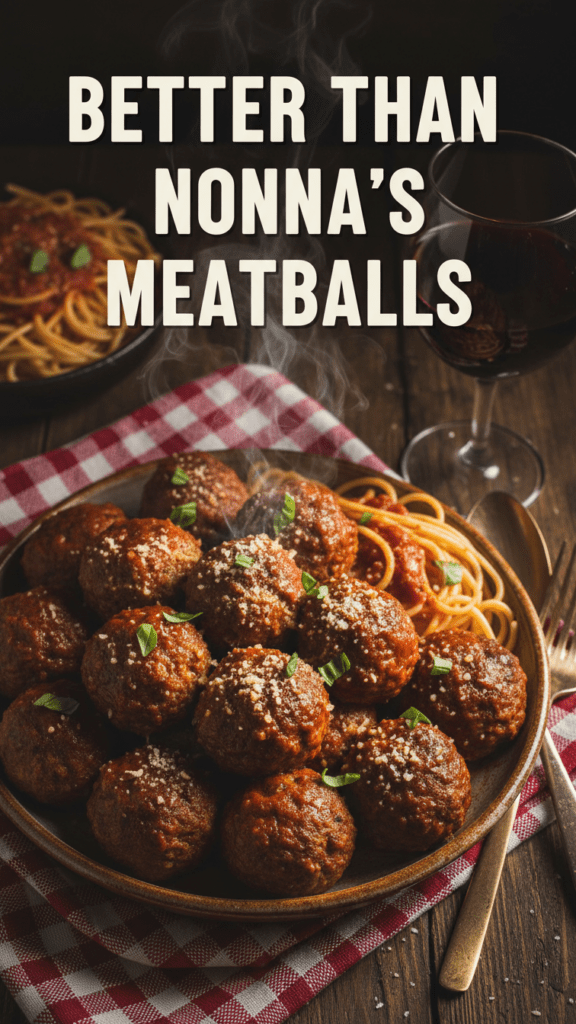
The Ultimate Juicy Italian Meatballs Recipe: Better Than Nonna’s?
Let’s be honest for a second. We’ve all sat through a dinner where the host served “meatballs” that were actually just round, flavorless bouncy balls. You know the ones—they require a steak knife to cut and possess the culinary charm of a pencil eraser. Why do we settle for mediocrity when the glory of authentic italian meatballs is so easily within reach?
I once witnessed a heated debate at a family wedding over whether milk-soaked bread or breadcrumbs reigned supreme. People almost lost teeth over it. But after years of “research” (mostly just eating), I’ve found the truth. Are you ready to stop serving meat-flavored marbles and start serving legendary, tender pillows of joy? Let’s get to work.
Why This Recipe is Absolutely Essential
First of all, this isn’t just a recipe; it’s a personality trait. Once you master these italian meatballs, you become “The Meatball Person” in your friend group. People will suddenly find excuses to visit your house on Sunday afternoons. Is it the smell of simmering garlic or your winning personality? IMO, it’s definitely the garlic. 🙂
Secondly, these are incredibly versatile. You can toss them into a giant pot of marinara, slide them into a sub roll with melted provolone, or just eat them cold over the sink at midnight. No judgment here. The texture remains impossibly tender thanks to a few secret tricks that keep the protein from toughening up.
Finally, you can freeze these bad boys. Make a massive batch, freeze them on a tray, and you have an instant “I’m too tired to adult” dinner ready in ten minutes. It’s basically a gift to your future, hungrier self. Ready to make your kitchen smell like a dream?
The Meatball Blueprint
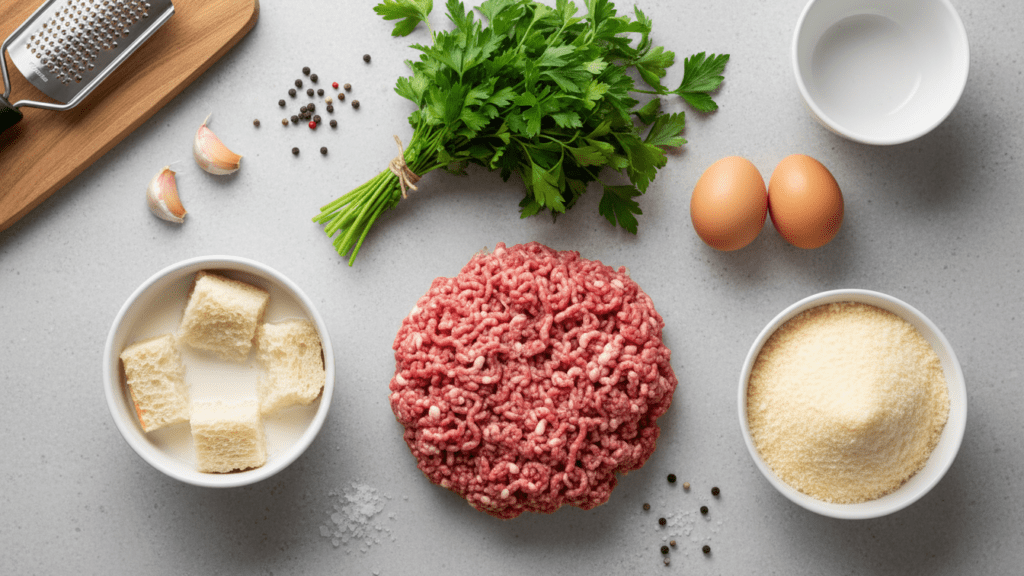
Gather your supplies. We are using a blend of meats here because one-dimensional flavor is for people who don’t like joy.
- Ground Beef (80/20): You need the fat for flavor and moisture. Don’t even think about using extra-lean beef here unless you want a dry disaster.
- Ground Pork: This adds a subtle sweetness and a much-needed texture boost. Sub: Ground veal if you’re feeling particularly fancy.
- Fresh White Bread: Trim the crusts and tear it into bits. We are making a panade (bread and milk paste), which is the secret to a tender bite.
- Whole Milk: To soak that bread. This keeps the meat fibers apart so they don’t knit together into a dense brick.
- Parmigiano-Reggiano: Please, for the love of all that is holy, grate it fresh. The stuff in the green can is a crime.
- Fresh Parsley: It adds a brightness that cuts through the richness of the meat.
- Eggs: These act as our glue.
- Garlic: Lots of it. Minced so fine it practically disappears.
- Dried Oregano & Red Pepper Flakes: For that classic Italian herb profile and a tiny bit of “hello there” heat.
- Salt and Black Pepper: Season aggressively.
Tools for the Meatball Master
You don’t need a laboratory, but a few specific gadgets will make your life significantly easier and less messy.
- Large Stainless Steel Mixing Bowl: You need plenty of room to mix without flinging meat across the kitchen.
- Digital Kitchen Scale: If you want perfectly even meatballs that cook at the same rate, this is your best friend.
- Cookie Scoop (Medium): This ensures every ball is the same size and keeps your hands slightly cleaner.
- Cast Iron Skillet: Perfect for getting that beautiful, crusty sear before they finish in the sauce.
- Microplane Zester: Use this to grate your parmesan and garlic into a fine snowy mist.
- Sheet Pan and Parchment Paper: For the “oven-baked” method if you’re feeding a crowd and hate cleaning grease splatters.
Step-by-Step Instructions for Culinary Glory
1. The Secret Panade
Place your torn bread bits in a small bowl and pour the milk over them. Let it sit for about 10 minutes, then mash it with a fork until it forms a thick paste. This, my friend, is why your meatballs will be better than everyone else’s.
2. The Flavor Base
In your large mixing bowl, whisk the eggs, freshly grated parmesan, minced garlic, parsley, oregano, salt, and pepper. Adding the seasonings to the eggs first ensures they distribute evenly. Nobody wants a meatball with a “salt pocket.”
3. The Gentle Mix
Add the beef, pork, and the bread-milk paste to the bowl. Now, listen closely: use your hands, but do not squeeze. Mix gently until just combined. If you overwork the meat, you are essentially making meat-flavored rubber. Stop the moment it looks uniform!
4. The Rolling Stones
Lightly oil your hands. Scoop about 2 tablespoons of mixture and roll it into a ball. Don’t pack them tight! Think of them as delicate ornaments, not snowballs meant for combat. TBH, the uglier, looser balls often taste the best because they soak up more sauce. 🙂
5. The Sear
Heat a cast iron skillet with a splash of olive oil over medium heat. Brown the meatballs in batches. You aren’t cooking them through yet; you’re just developing a deep, brown crust. This is where the flavor lives!
6. The Final Simmer
Drop those beautiful browned globes into a simmering pot of marinara sauce. Let them cook for about 20–30 minutes. This finishes the cooking and allows the meatballs to infuse the sauce with their meaty essence while they soak up the tomatoey goodness.
Calories & Nutritional Info
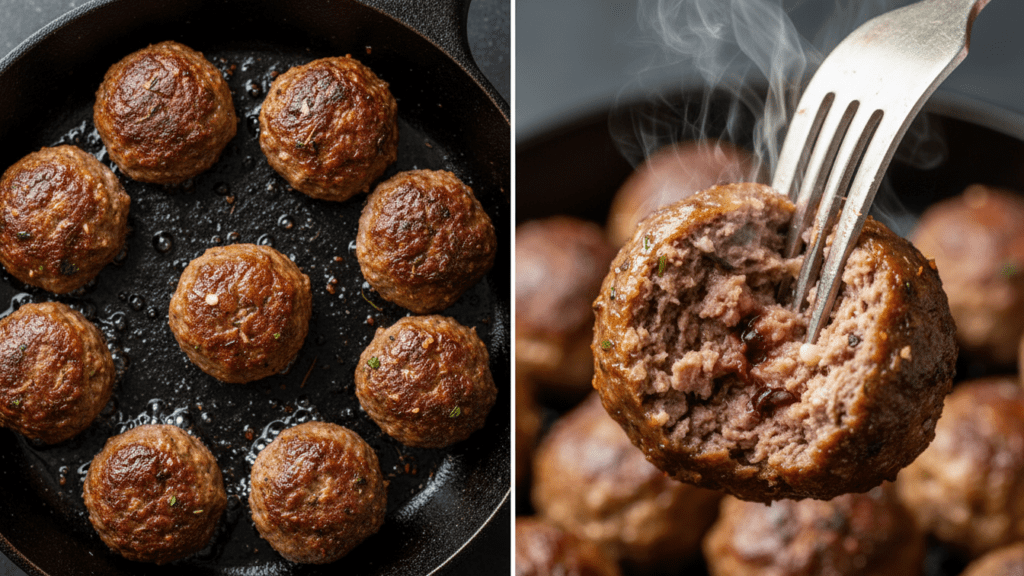
It’s a meatball, not a kale smoothie. Let’s embrace the richness.
- Calories: Approximately 180 calories per large meatball.
- Protein: Around 12g of high-quality protein to keep you full.
- Fat: 14g (The source of all happiness).
- Carbs: About 4g from the bread panade.
- Micronutrients: You’re getting a solid dose of Iron, B12, and Zinc.
- Pro-tip: Serve over zoodles instead of pasta if you’re watching the carb count, but don’t tell the Italians I said that.
Common Mistakes to Avoid
Do not use pre-packaged breadcrumbs. They are often too dry and seasoned with “mystery dust.” Stick to the fresh bread and milk method. It’s the difference between a dry rock and a juicy cloud.
Avoid the “Extra-Lean” trap. Fat is moisture. Without it, your italian meatballs will be sad and crumbly. Aim for at least 20% fat in your beef blend. Why would you want a dry meatball anyway?
Stop overmixing! I’ve said it once, but it bears repeating. Treat the meat like a fragile ego. The more you touch it, the tougher it gets. Use a light hand and keep those air pockets intact.
Don’t crowd the pan. If you put too many meatballs in the skillet at once, they will steam instead of sear. You want a crust, not a gray, boiled exterior. Patience is a virtue, especially when meat is involved. :/
Variations & Customizations
Once you have the classic down, start experimenting with your “house style.”
- Spicy Calabrian Version: Stir in a tablespoon of chopped Calabrian chiles or extra red pepper flakes into the meat mixture. It gives the meatballs a slow, rolling heat.
- Keto-Friendly Swap: Replace the bread and milk with crushed pork rinds or almond flour. You’ll lose a bit of that “pillowy” feel, but the flavor remains top-tier.
- Vegetarian Swap (The Impossible Ball): Use a plant-based ground “meat” alternative. Skip the milk-soaked bread and use a bit of tomato paste for umami. It’s surprisingly convincing!
FAQ Section: Your Meatball Burning Questions
Can I bake these instead of frying?
Yes! If you hate cleaning oil off your stove, bake them at 400°F for 15-20 minutes on a parchment-lined sheet pan. You lose a little bit of that pan-seared crust, but the ease of cleanup is a major win.
Why do my meatballs fall apart in the sauce?
You likely didn’t use enough “binder” (eggs and bread) or you didn’t sear them long enough. That crust acts like a protective suit for the meatball. Let them get a good brown before they dive into the sauce.
Can I use ground turkey instead?
You can, but turkey is notoriously lean. You’ll need to add a tablespoon of olive oil to the mix to prevent them from becoming “meat-flavored sawdust.”
Should I put onions in my meatballs?
Traditionalists often argue this. If you use them, grate the onion or sauté it first. Raw chunks of onion can prevent the meatball from staying together and create weird textures.
How do I know when they are done?
Use an instant-read thermometer. You’re looking for an internal temperature of 165°F. Or, you know, just cut one open and hope for the best.
Can I make the mixture ahead of time?
Absolutely. You can prep the raw mixture and keep it in the fridge for up to 24 hours. In fact, it often helps the flavors meld together. Just don’t wait too long!
Why are my meatballs so tough?
You overmixed the meat. It’s the #1 culprit. Next time, use a fork or your fingers like a “claw” to gently toss the ingredients together rather than kneading them like bread dough.
Final Thoughts
Making authentic italian meatballs is a rite of passage for any home cook. It’s about more than just food; it’s about the process, the smell, and the inevitable “cookie monster cake” you might have for dessert after a big pasta meal. (Hey, we all have our traditions!).
Once you see your friends’ faces when they bite into these tender, flavor-packed clouds, you’ll never buy the frozen bags again. Now, go get your hands dirty and make some magic happen. Your pasta is waiting!