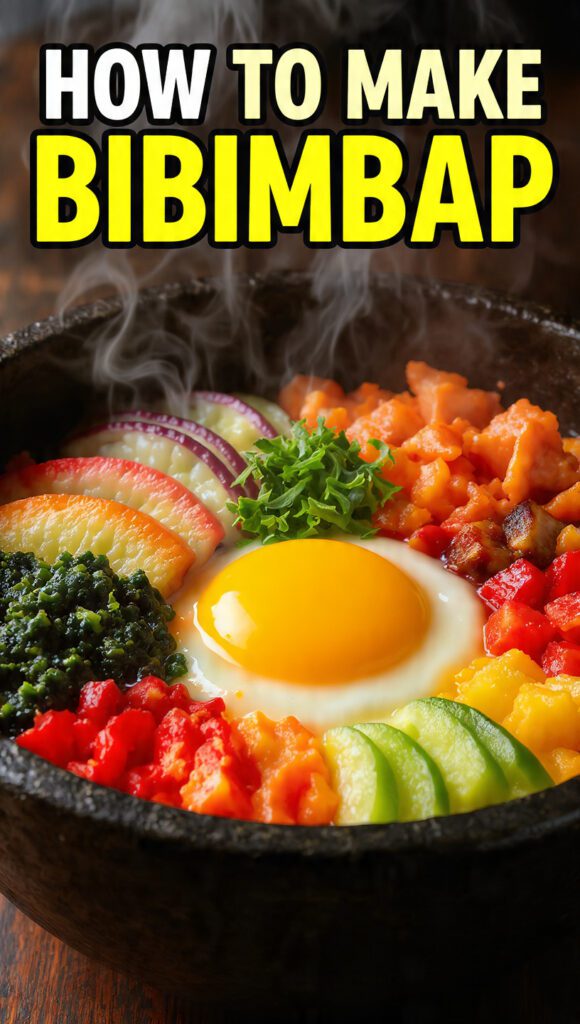
🍚 The “Everything but the Kitchen Sink” Masterpiece: Mastering How to Make Bibimbap at Home
Let’s be brutally honest: most of us have looked at a colorful, steaming bowl of Korean food and thought, “There is no way I can recreate that rainbow without a culinary degree and six extra sets of hands.” We’ve all been there—paying eighteen dollars for a “stone bowl” at a trendy bistro, only to find three wilted sprouts and a half-hearted drizzle of sauce. It’s a tragedy! But then, you realize that learning how to make bibimbap is actually just a very sophisticated way of playing with your leftovers, and suddenly, your kitchen feels like a Michelin-starred eatery.
I once served a giant platter of this to a friend who genuinely believed that “healthy food” was synonymous with “sad steamed kale.” After the first bite of the spicy, fermented gochujang sauce and the crunch of the golden rice crust, he actually stopped talking for ten minutes. He essentially went through a spiritual awakening over a bowl of rice and carrots. That, my friends, is the power of a proper Korean mix. Are you ready to stop settling for lukewarm takeout and start building a legendary, customizable masterpiece in your own kitchen?
🏆 Why This Bibimbap Recipe is the Actual GOAT
Why should you bother sautéing individual vegetables when you could just throw a stir-fry together? Because bibimbap is the ultimate “low-effort, high-impact” flex. It relies on the beauty of separation—each vegetable keeps its integrity until the very moment you decide to “mix it up” (which is literally what bibimbap means). It is the king of presentation and the undisputed champion of “I forgot to go grocery shopping but I have random produce in the crisper drawer.”
This recipe is awesome because it hits every single taste bud: salty, sweet, spicy, and savory. It impresses guests because it looks incredibly technical (look at all those colors!), when in reality, you just know how to use a frying pan and a bottle of sesame oil effectively. Plus, it’s the best excuse to eat a fried egg at 8 PM. It’s the undisputed heavyweight champion of weeknight wins, IMO.
🧂 The “Rainbow-Elite” Ingredient List
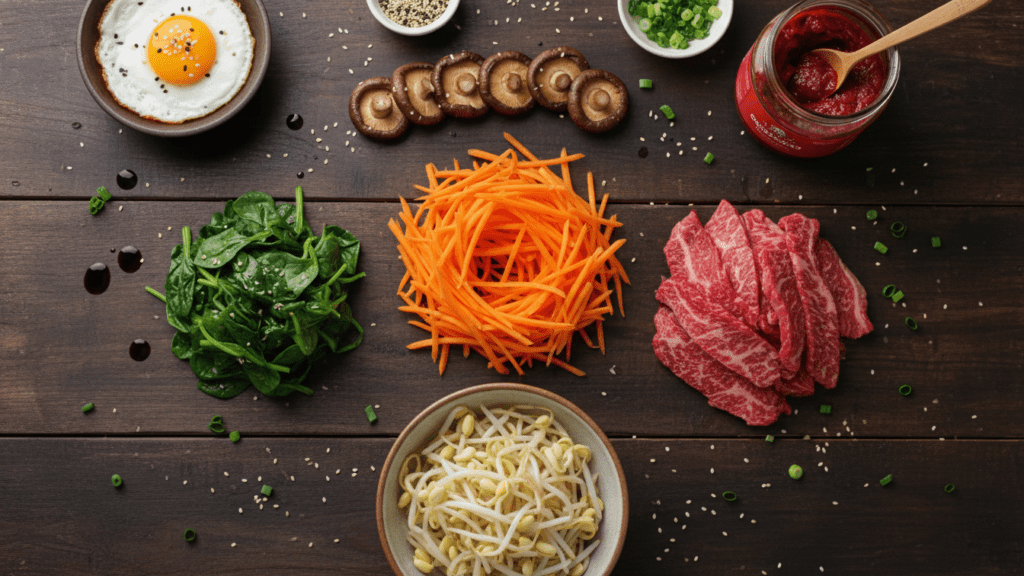
Success depends entirely on the variety of textures and the quality of your sauce. If you try to swap gochujang for regular hot sauce, we are no longer on speaking terms. 🙂
- 2 Cups Short-Grain White Rice: CRUCIAL. You need that stickiness to hold the universe together.
- 1 lb Lean Beef (Ribeye or Sirloin): Sliced into thin ribbons (or use ground beef if you’re on a budget).
- 1 Bunch Fresh Spinach: For that essential green pop.
- 2 Large Carrots: Shredded or julienned into “matchsticks.”
- 1 Cup Bean Sprouts: For the crunch factor.
- 4-5 Shiitake Mushrooms: Sliced thin for that earthy umami.
- 4 Large Eggs: One for every lucky soul at the table.
- Gochujang (Korean Chili Paste): The soul of the dish.
- Toasted Sesame Oil & Soy Sauce: The “Holy Trinity” of seasoning.
- Garlic & Ginger: Minced into microscopic bits of flavor.
Key Substitutions
- The Protein Swap: Use extra-firm tofu or tempeh for a vegetarian miracle.
- The Grain Swap: Use brown rice or quinoa if you’re trying to pretend you’re on a health kick, though the texture will be less “traditional.”
- The Veggie Swap: Toss in some zucchini or cucumber if you want more shades of green in your life.
🔪 Tools & Kitchen Gadgets Used
You don’t need a professional Korean restaurant setup, but a few basics make this a twenty-minute job instead of a lumpy struggle.
- Cast Iron Skillet or Dolsot (Stone Bowl): The absolute MVP for achieving that viral-worthy crispy rice bottom. Check out the best cast iron pans here!
- Stainless Steel Mixing Bowls: For the essential marinating and veggie-resting phases. Grab a nesting set!
- Sharp Chef’s Knife: Because dull knives lead to ugly carrots. Check out top-rated knives here!
- High-Heat Silicone Spatula: To keep things moving fast without melting. Grab a sturdy one here!
- Rice Cooker: Because “stove-top rice” is an unnecessary gamble in this economy. Get a reliable one here!
👩🍳 Step-by-Step Instructions: The Path to Noodle Glory
Follow these steps precisely. How to make bibimbap is a game of speed and “batch-processing.” Prep all your veggies before the pan gets hot.
1. The Rice Meditation
Start your rice in the cooker. TBH, many people skip the rinse, but you need to wash that starch away until the water runs clear. Let it cook until fluffy and perfect.
2. The Meat Infusion
Marinate your beef in a mix of soy sauce, sesame oil, sugar, and minced garlic. Let it sit for 15 minutes while you contemplate your spice tolerance.
3. The Vegetable Gauntlet
Heat a teaspoon of oil in your skillet. Sauté each vegetable separately. Start with the carrots, move to the mushrooms, then the bean sprouts. Season each with a tiny pinch of salt. FYI, keeping them separate is what makes it bibimbap and not just “slop.”
4. The Spinach Steam
Blanch the spinach in boiling water for 30 seconds, squeeze out the moisture like it owes you money, and toss it with a drop of sesame oil.
5. The Screaming Sear
Crank the heat to High. Cook the marinated beef in the skillet until charred and caramelized. This “Maillard reaction” is where the restaurant-quality flavor lives!
6. The Golden Crown
Wipe the pan and fry your eggs. We are looking for “sunny-side up” with a runny yolk. That yolk acts as a secondary sauce that binds the rice to the spices. 🙂
7. The Great Assembly
If you have a stone bowl, heat it with oil until it sizzles. Add the rice, then arrange your colorful veggies and meat in a circle on top. Place the egg in the center.
8. The Final Blow
Add a massive dollop of gochujang sauce (mixed with a little vinegar, sugar, and sesame oil). Serve it sizzling. Do not wait! Bibimbap waits for no one.
📊 Calories & Nutritional Info (The Justification)
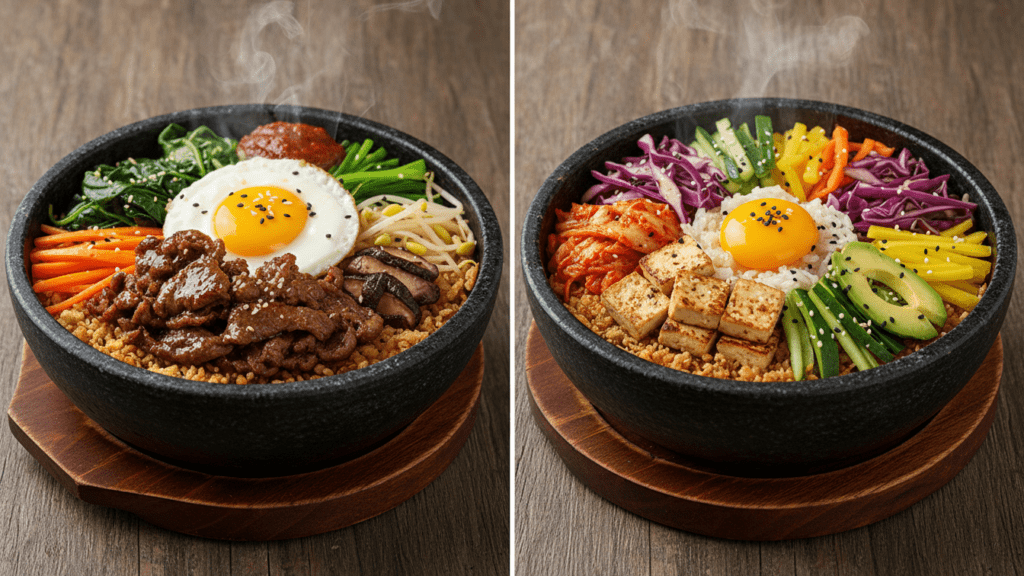
Since it’s mostly fresh vegetables and lean protein, we can legally pretend this is a wellness bowl.
- Estimated Calories Per Serving: $\approx$ 480–550 kcal.
- Fiber Power: High levels from the mushrooms, carrots, and sprouts.
- Protein Punch: A solid 25-30g to keep your muscles happy.
- Probiotics: High if you add a side of kimchi (which you should).
- Mood: 100% improved after the first spicy, savory bite.
🚨 Common Mistakes to Avoid (The Bibimbap Crimes)
Avoid these if you want people to actually keep talking to you at the dinner table.
- Dumping Everything at Once: If you stir-fry all the veggies together, you lose the “rainbow” effect. Stay organized.
- Mushy Rice: If you use too much water, the rice won’t get crispy. Follow the finger-line rule.
- Skipping the Sesame Oil: This is the “fragrance” of Korea. Don’t leave it out.
- Fear of the Heat: Bibimbap is meant to be warm. If your bowl isn’t radiating heat, it’s just a salad. Wait for the sizzle. 🙂
✨ Variations & Customizations
Because you’re the boss of this colorful rice circus.
1. The Keto-Friendly Swap
Replace the white rice with riced cauliflower. Use a sugar substitute in the beef marinade. It’s a low-carb dream that still delivers the “crunch” if you sear the cauliflower long enough.
2. The “Fire-Breather” Version
Add two tablespoons of kimchi and an extra shot of chili flakes (gochugaru) to the sauce. Top with fresh jalapeños for a bowl that fights back.
3. The Seafood Miracle
Swap the beef for seared scallops or shrimp. The sweetness of the seafood pairs perfectly with the fermented funk of the gochujang.
❓ FAQ Section: Your Bibimbap Queries Answered
What does “Bibimbap” actually mean?
It literally translates to “Mixed Rice.” “Bibim” means mixing and “bap” means rice.1 So if you don’t stir it all together before eating, you’re technically doing it wrong.
Is bibimbap served hot or cold?
IMO, hot is the only way. While “Hoedeopbap” (raw fish version) is served cold, traditional bibimbap thrives on the heat of the bowl and the freshly cooked toppings.
Do I need a stone bowl?
TBH, no. A heavy cast iron skillet works just as well to get that crispy rice bottom (Nurungji). The stone bowl just looks cooler on Instagram.
Is bibimbap actually healthy?
Absolutely. It’s one of the most balanced meals on the planet—offering complex carbs, lean protein, and a massive variety of micronutrients from the vegetables.
How do I store leftovers?
Store the rice and vegetables separately. If you store them together, the rice will absorb all the moisture and turn into a gummy brick.
Why is my rice not getting crispy?
You likely didn’t use enough oil or didn’t wait long enough. Let the bowl sit on the heat for 3-5 minutes without touching it!
Can I make this gluten-free?
Yes! Just ensure your gochujang and soy sauce (Tamari) are certified gluten-free. Many commercial chili pastes use wheat as a thickener.
🥂 Final Thoughts: Go Forth and Mix!
You’ve done it. You’ve successfully navigated the world of “Rainbow Bowls” without having a public breakdown. You are now a titan of the skillet and a hero of the dinner table. Go ahead, have that second bowl—it’s mostly just “vegetables,” right? Just don’t tell me if you used a microwave to “fry” the egg; I have a reputation to maintain. 😉