🍷 The Ultimate Cold Weather Cure: Tender Beef Stew Recipe
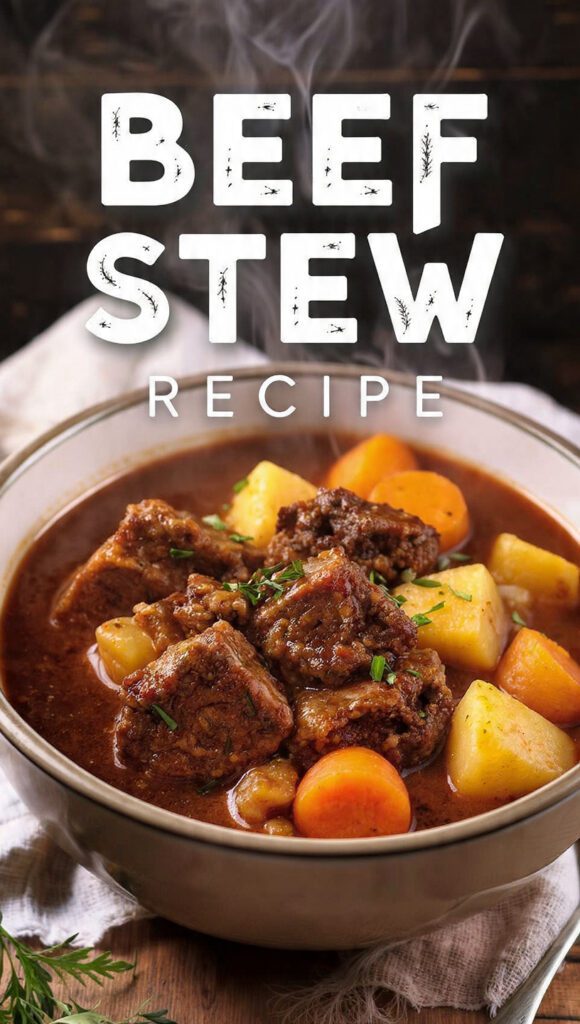
Let’s talk about the weather. Is it cold? Is it gloomy? Do you need a hug in a bowl that can single-handedly cure all your seasonal woes? If you answered yes (and you always should), you need this classic beef stew recipe. Forget those sad, watery, flavorless versions you’ve suffered through. We’re talking rich, thick, deep-red gravy infused with red wine, surrounding fork-tender chunks of beef and perfectly cooked root vegetables. This is the definition of comfort food—a true labor of love that is surprisingly easy, thanks to the magic of low and slow simmering. Ready to master the perfect winter warm-up?
✨ Why This Stew is the Only One You Need

Why should you devote a few hours to this simmering pot of goodness? Because this recipe is awesome for one reason: depth of flavor. We don’t just rely on beef broth; we build a complex, savory gravy by searing the meat, deglazing with red wine, and thickening the base with tomato paste and a slow reduction. The result is a gravy so rich, you’ll want to drink it.
You need this in your life because it’s a complete meal that tastes even better the next day. It’s the perfect make-ahead dish, ideal for feeding a crowd or just ensuring you have easy, hearty lunches all week long. Plus, serving a rich, homemade beef stew instantly makes you look like a seasoned chef. Who knew patience was the secret to culinary acclaim?
🥩 The All-Star Ingredients Lineup
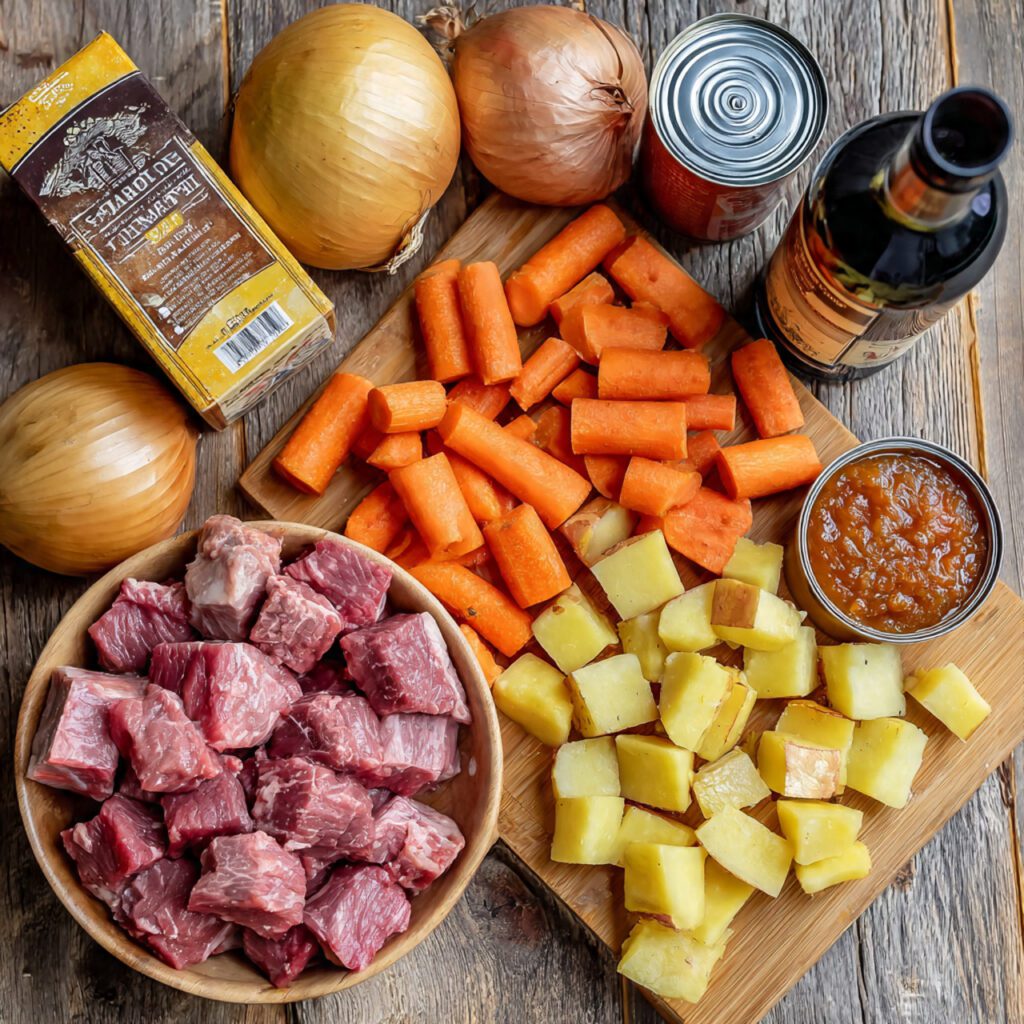

Searing and seasoning are key. Don’t skip the step of dusting the beef—it helps achieve a deep sear and thickens the gravy!
H3 The Beef & Aromatics
- 2 pounds Stewing Beef (Chuck Roast): Cut into 1.5-inch cubes. Chuck is the only way to go—it becomes tender when slow-cooked.
- 1/4 cup All-Purpose Flour: For dusting the beef (adds sear and thickens the gravy).
- 2 tablespoons Olive Oil: For searing.
- 1 large Yellow Onion: Roughly chopped.
- 4 cloves Garlic: Minced.
- 1 tablespoon Tomato Paste: Adds a rich, savory foundation.
- 1 cup Dry Red Wine (Optional but Recommended): Cabernet or Pinot Noir. (Substitution: Use extra beef broth and a splash of red wine vinegar.)
H3 The Broth & Seasoning
- 4 cups Beef Broth (or stock): Low sodium.
- 1 Bay Leaf: Adds depth (remember to remove it!).
- 1 teaspoon Dried Thyme: Classic pairing with beef.
- 1 teaspoon Dried Rosemary: Earthy and fragrant.
- 1 teaspoon Salt and 1/2 teaspoon Black Pepper: For seasoning the stew.
H3 The Vegetables (The Last Hour)
- 2 cups Carrots: Peeled and cut into 1-inch chunks.
- 2 cups Celery: Cut into 1-inch chunks.
- 2 cups Russet or Yukon Gold Potatoes: Cut into 1.5-inch chunks.
🛠️ Tools & Kitchen Gadgets Used
A heavy-bottomed pot is your best friend for this recipe, ensuring even heat distribution for the long braise.
- Large Dutch Oven (Recommended) or Heavy-Bottomed Pot with Lid: Essential for searing and simmering.
- Tongs: For handling and turning the beef while searing.
- Cutting Board and Sharp Knife: For chopping the aromatics and vegetables.
- Whisk and Rubber Spatula: For stirring and scraping the pot.
- Measuring Cups and Spoons: Standard issue, always necessary.
🚀 Step-by-Step Instructions: Low and Slow to Tender
Follow these steps exactly. The two secrets are the initial sear and the timing of the vegetables!
H3 Sear the Beef (The Flavor Builder)
- Prep the Beef: Pat the beef cubes completely dry. In a shallow dish, toss the beef with the 1/4 cup of flour, salt, and pepper until evenly coated.
- Sear in Batches: Heat the olive oil in the Dutch oven over medium-high heat until shimmering. Sear the beef in small batches (do not overcrowd the pot!). Cook for 2-3 minutes per side until deep brown. Crowding steams the meat. Set the seared beef aside.
- Sauté Aromatics: Reduce the heat to medium. Add the onions and cook for 5 minutes until soft. Stir in the minced garlic and cook for 1 minute.
H3 Deglaze and Simmer
- Add Flavor Paste: Stir in the tomato paste, thyme, and rosemary. Cook for 1 minute.
- Deglaze with Wine (Optional): Pour in the red wine. Bring it to a simmer, scraping up all the stuck brown bits from the bottom of the pot (this is pure flavor!). Let it reduce by half.
- Add Broth and Beef: Pour in the beef broth and add the bay leaf. Bring the liquid to a simmer. Return the seared beef cubes to the pot.
- Slow Simmer: Cover the pot tightly. Simmer gently on the stovetop on the lowest setting (or in a $325^{\circ}\text{F}$ oven) for 1.5 hours. Do not lift the lid!
H3 Add Veggies and Finish
- Add the Hard Veggies: After 1.5 hours, add the carrots and celery to the pot. Stir gently. Re-cover.
- Add Potatoes (The Final Hour): After another 30 minutes, add the potatoes. Re-cover.
- Finish Cooking: Simmer for a final 30-45 minutes, or until the beef is fork-tender and the potatoes and carrots are easily pierced with a fork.
- Season and Serve: Remove the bay leaf. Skim any excess fat off the top. Taste the gravy and adjust the salt/pepper. It should be rich and bold. Serve hot with crusty bread or over mashed potatoes.
📊 Calories & Nutritional Info
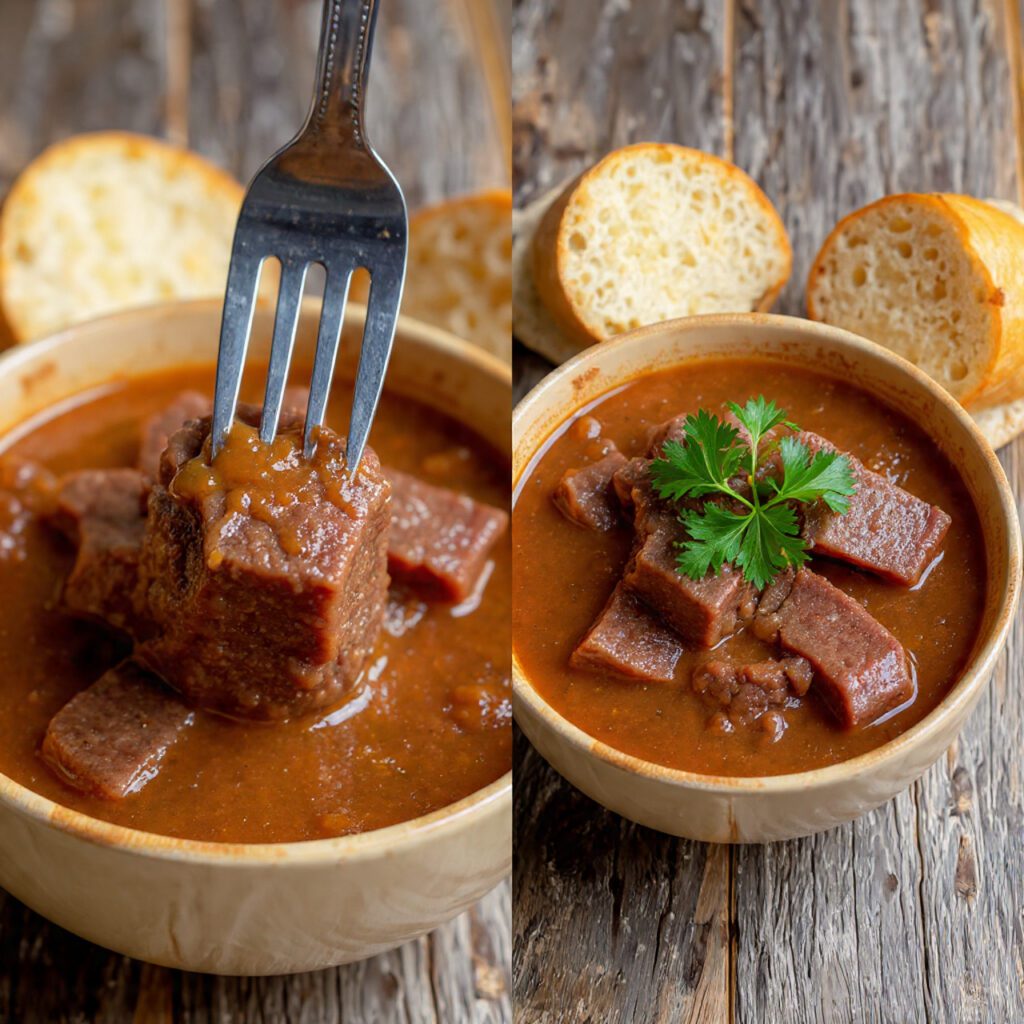
This is a hearty, nutrient-rich stew. These are estimated notes per serving (assuming 8 servings).
- Estimated Calories Per Serving: ~380-450 kcal (Leaner than pot roast, but still very satisfying).
- Macronutrient Notes:
- High Protein: Beef stew meat provides excellent, satiating protein.1
- Complex Carbs: Potatoes and carrots offer satisfying complex carbohydrates.2
- Iron and B Vitamins: Beef is a great source of iron and B vitamins.3
- Note: This stew is naturally low in fat if you trim the beef well and skim the fat from the gravy before serving.
🛑 Common Mistakes to Avoid (Tough Meat Terrors)
Avoid these blunders for a perfectly tender, thick stew!
- Not Searing in Batches: If you throw all the beef in at once, the temperature drops, and the meat steams instead of searing. This results in pale, tough meat and a lack of deep flavor. Sear in small batches!
- Using the Wrong Cut of Meat: Do not use round steak or sirloin! These lean cuts require slow cooking in acid/liquid, but tend to dry out. Chuck roast (or stew meat cut from chuck) is the right choice for tenderness.
- Adding Potatoes Too Early: Potatoes cook faster than carrots and beef. Adding them at the beginning ensures they dissolve into mushy chunks by the time the beef is tender. Add them during the final hour.
- Not Scrapping the Brown Bits: Those bits stuck to the bottom of the pot after searing are called the fonda. Scrape them up with the wine/broth! They hold all the concentrated flavor.
- Serving Immediately: Stew tastes infinitely better the next day once the flavors have fully married. If you eat it immediately, be prepared for an intense, but slightly less harmonious flavor profile.
🌶️ Variations & Customizations: Your Stew Story
Ready to tweak this winter warmer? Try these fun additions!
H3 Guinness Stout Stew (Rich & Malty)
Swap the red wine with 1 cup of Guinness Stout or another dark beer. Increase the brown sugar slightly (1 tablespoon) to cut the bitterness of the stout. The stout adds a deep, malty, beautiful color and richness to the gravy.
H3 Spicy Smoked Paprika Stew
Add smokiness and heat. Use the same recipe, but add 1 teaspoon of smoked paprika and 1/2 teaspoon of cayenne pepper when you add the dried herbs. Finish with a squeeze of lime juice for brightness.
H3 Hearty Root Vegetable Stew (Vegetarian Swap)
Make it meatless! Omit the beef and use vegetable broth. Add 1 cup of cubed parsnips and 1 can of drained, rinsed cannellini beans to the stew with the potatoes. Use a full tablespoon of tomato paste for a rich, savory base.
❓ FAQ Section: Your Hearty Broth Questions Answered
We know you have specific questions about achieving the perfect tender beef and thick gravy.
H3 How do I thicken my beef stew gravy?
The easiest way is to add a cornstarch slurry at the end. Mix 1 tablespoon of cornstarch with 2 tablespoons of cold water and whisk it into the simmering stew. Let it bubble for 1 minute until thickened.
H3 Why is my beef still tough after 2 hours of cooking?
Tough beef means it hasn’t cooked long enough! Chuck roast must cook until the internal temperature reaches $200^{\circ}\text{F}$ to $205^{\circ}\text{F}$ for the collagen to break down. Cover and cook for another 1-2 hours on LOW.
H3 Can I make beef stew in a slow cooker?
Yes! Sear the beef on the stovetop first (highly recommended!). Add all ingredients (including the potatoes and carrots) to the slow cooker. Cook on LOW for 7-8 hours or on HIGH for 4-5 hours. Thicken the gravy using a cornstarch slurry at the end.
H3 When should I add the potatoes and carrots to the stew?
Add the carrots and celery about 1.5 hours before the stew is done, and add the potatoes about 1 hour before the stew is done. This prevents the potatoes from becoming mushy and disintegrating into the gravy.
H3 What is the purpose of dusting the beef with flour before searing?
Dusting the beef lightly with flour serves two purposes: 1) It helps the beef develop a deeper, crispier sear and 2) the flour dissolves into the liquid, acting as a natural thickener for the gravy.
H3 How long does beef stew last in the refrigerator?
Beef stew keeps well in an airtight container in the refrigerator for 3-4 days. The flavors actually meld and deepen overnight, making the leftovers superior!
H3 Can I use water instead of beef broth?
You can, but your stew will lack depth. Broth (or stock) is essential for a rich flavor base. If you must use water, add a beef bouillon cube or beef base paste (like Better Than Bouillon) for concentrated flavor.
🎉 Final Thoughts: Go Forth and Braise!
You did it. You mastered the sear, honored the long simmer, and produced the ultimate, rich, and tender beef stew recipe. You created a pot of pure, concentrated comfort that is perfect for any chilly day. You are a true braising legend!
Go ahead, scoop out that huge bowl of savory goodness. You’ll never look at a flimsy can of soup the same way again, will you? Now, are you serving this with crusty bread or dumplings? (Both are correct.) 😉