
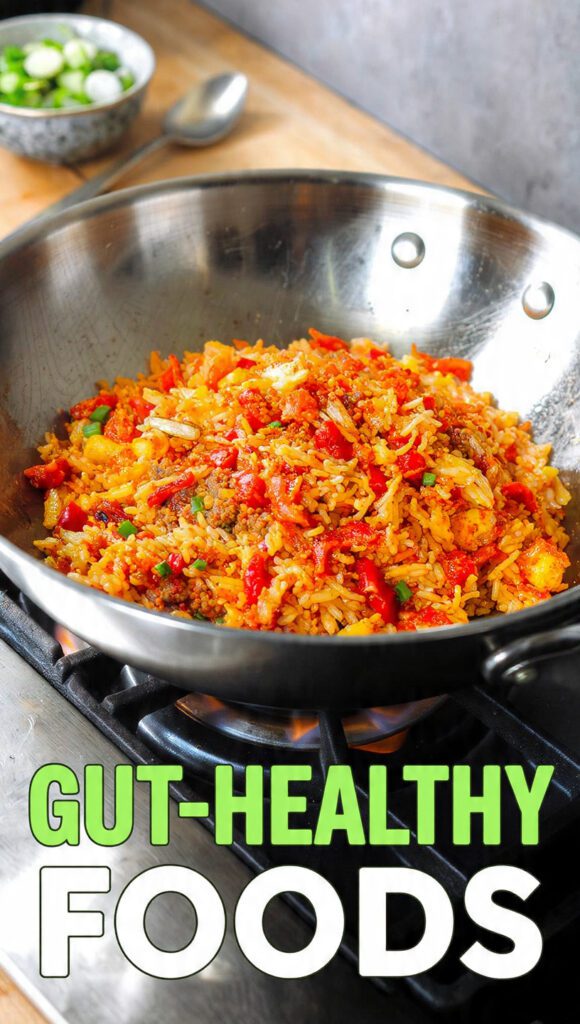
🦠 Happy Tummy, Happy Life: The Ultimate Gut-Healthy Foods (Kimchi Fried Rice)
Let’s just address the awkward elephant in the room: your gut microbiome. It sounds scientific and complicated, but really, it’s just a tiny ecosystem running the show inside you! If you’ve ever felt sluggish, bloated, or just generally “off,” your little bacterial friends might be staging a rebellion. But fear not! This guide to delicious gut-healthy foods is here to introduce you to the powerful, tangy, probiotic magic of Kimchi Fried Rice. It’s savory, spicy, packed with fermented goodness, and so much tastier than boring plain yogurt. Ready to feed your inner ecosystem something genuinely exciting?
✨ Why This Fermented Dish is Your Gut’s New BFF
Why should you swap your usual fried rice for this kimchi-loaded version? Because this recipe is awesome for three simple, science-backed reasons: Probiotics, Prebiotics, and Fiber. Kimchi is a fermented vegetable powerhouse, delivering live, beneficial bacteria (probiotics) directly to your gut.
You need this in your life because it’s a quick, easy, one-pan meal that repurposes day-old rice (which, bonus, creates resistant starch—another gut health hero!). It’s spicy, savory, tangy, and crunchy—everything a good comfort meal should be. Plus, you get to tell people you’re eating fermented foods for dinner. Instant health guru status unlocked. Who knew optimizing your internal flora could be this delicious?
🍚 The All-Star Ingredients Lineup
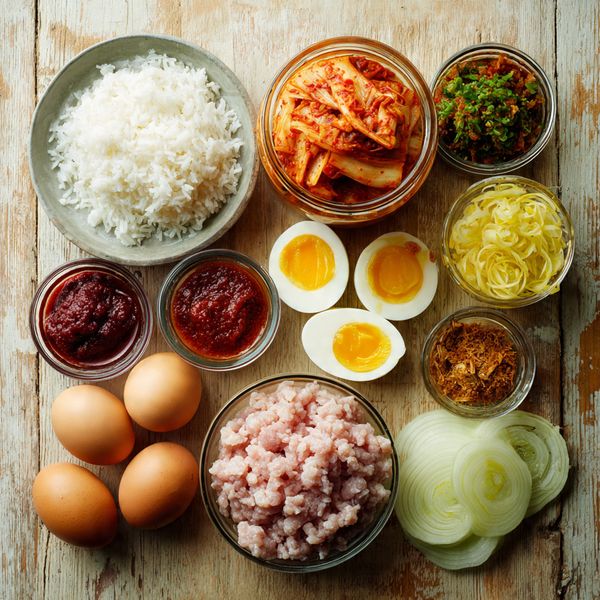

The quality of your kimchi and the use of day-old rice are the secrets to this dish’s success.
H3 The Probiotic & Fiber Heroes
- 1 cup Fermented Kimchi: Chopped coarsely. Crucial for the probiotic punch!
- 1/4 cup Kimchi Juice: The liquid from the jar. Adds essential tang and depth.
- 3 cups Day-Old Cooked White Rice: Non-negotiable! Cold, dry rice fries crispy; fresh rice turns mushy.
- 1 cup Chopped Vegetables (Carrots, Peas, Broccoli): For fiber and texture.
H3 The Protein & Savory Base
- 1/2 pound Ground Pork or Chicken: (Substitution: Cubed firm tofu for vegetarian.)
- 1 tablespoon Sesame Oil: For cooking.
- 1 large Yellow Onion: Diced.
- 2 cloves Garlic: Minced.
- 1 tablespoon Gochujang (Korean Chili Paste): Adds savory heat and thickens the sauce.
- 1 tablespoon Soy Sauce or Tamari (for Gluten-Free): For saltiness.
- 2 large Eggs: Scrambled, for binding and protein.
🛠️ Tools & Kitchen Gadgets Used
A wok or a wide, heavy skillet is essential for achieving true fried rice texture.
- Large Wok or Deep Skillet: The MVP! High heat and a large surface area are key for crispy rice.
- Cutting Board and Sharp Knife: For chopping veggies and kimchi.
- Spatula: For stirring and scraping the wok.
- Colander (Optional): For rinsing and draining any fresh vegetables.
- Rice Cooker (Optional): For perfectly cooked, day-old rice.
🚀 Step-by-Step Instructions: Fry, Ferment, and Flip
Follow these steps exactly. High heat and the use of cold rice are the secrets to non-mushy fried rice!
H3 Sauté the Protein and Aromatics
- Sauté Protein: Heat the sesame oil in the wok over medium-high heat. Add the ground pork/chicken and brown it, breaking it up with a spoon. Cook until no longer pink. Drain off most of the grease.
- Add Veggies: Add the diced onion, minced garlic, and harder vegetables (carrots/broccoli) to the pot. Cook for 5 minutes until the onions soften slightly.
H3 The Kimchi Fry
- Fry the Kimchi: Push the meat and veggies to one side of the wok. Add the chopped kimchi to the empty side and let it fry for 2-3 minutes. This softens the kimchi and intensifies the flavor.
- Add Rice: Add the cold day-old rice to the wok. Pour in the kimchi juice, gochujang, and soy sauce. Break up the clumps and toss everything together vigorously for 3-4 minutes until the rice is heated through and slightly crispy at the edges.
H3 Finish and Serve
- Scramble the Eggs: Push the rice mixture to the side. Quickly pour the scrambled eggs into the empty side of the wok. Cook, stirring rapidly, until the eggs are just set. Stir the eggs into the rice mixture.
- Season and Garnish: Taste the rice and adjust the seasoning (needs more soy sauce?). Serve immediately. Garnish with a sprinkle of extra chopped kimchi (more probiotics!) and sesame seeds.
📊 Calories & Nutritional Info

This is a hearty, complex meal packed with beneficial components. These are estimated notes per serving (assuming 4 servings).
- Estimated Calories Per Serving: ~400-550 kcal (Varies based on meat fat content).
- Macronutrient Notes:
- Probiotics: Kimchi delivers beneficial live cultures for gut health.
- Prebiotics & Fiber: Kimchi and the added vegetables provide fiber to feed gut bacteria.
- Resistant Starch: Cold, day-old rice contains resistant starch, a form of prebiotic fiber.
- Protein: Meat and eggs ensure high satiety.
- Note: This meal is naturally dairy-free. Use Tamari for a gluten-free option.
🛑 Common Mistakes to Avoid (The Mushy Rice Misery)
You want crispy rice and happy bacteria. Avoid these gut-health killers!
- Using Freshly Cooked Rice: The fastest way to mushy, sticky fried rice! Fresh rice has too much moisture. Always use cold, day-old rice that has dried out in the fridge.
- Skipping the Kimchi Fry: Adding kimchi straight to the rice can make the dish watery. Frying the kimchi first evaporates excess moisture and intensifies its flavor.
- Washing Off the Probiotics: Do not rinse the kimchi! The liquid (kimchi juice) is packed with probiotics and essential flavor. You add this liquid right back into the pot.
- Overcrowding the Wok: If you pile too much food into a small pan, the temperature drops, and the food steams instead of frying. Use a large wok/skillet and ensure a single layer while frying the rice.
- Using Vegetable Seed Oils: High amounts of refined seed oils (canola, soybean) can contain pro-inflammatory Omega-6s. Stick to sesame oil or olive oil for sautéing.
🌶️ Variations & Customizations: Your Gut-Health Glow-Up
Ready to mix up your probiotic-packed meal? Try these fun swaps!
H3 Kimchi & Tofu Scramble (Breakfast Swap)
Go vegetarian and high-protein. Substitute the meat with 1 block of crumbled, pressed firm tofu. Omit the rice. Sauté the tofu and kimchi and finish by adding 1/2 teaspoon of turmeric for anti-inflammatory benefits. Serve with sliced avocado.
H3 Low-Carb Kimchi Helper
Go low-carb/keto. Substitute the day-old rice with cauliflower rice (add during the frying step). Reduce the cooking time since cauliflower rice cooks much faster. Add a dash of fish sauce for extra umami.
H3 Tempeh Probiotic Power Bowl
Swap the rice base. Substitute the day-old rice with quinoa or brown rice. Omit the ground meat. Sauté the kimchi, then add cubed tempeh (steamed first) to the pot. Finish with a drizzle of tamari and extra spring onions.
❓ FAQ Section: Your Probiotic Puzzles Solved
We know you have specific questions about keeping your microbiome thriving.
H3 What are the best foods for gut health?
The best gut-healthy foods are rich in probiotics (fermented foods like kimchi, sauerkraut, yogurt, kombucha) and prebiotics (fiber-rich foods like onions, garlic, bananas, and oats) that feed the good bacteria.
H3 Does cooking kimchi kill the probiotics?
Yes, high heat kills the live cultures (probiotics). To maximize the probiotic benefit, ensure you add extra raw kimchi to the top of your plate after the fried rice is cooked, or serve with a side of plain kimchi.
H3 Can I use freshly cooked rice in fried rice?
You can, but it is highly discouraged. Fresh rice is too moist and steamy, resulting in a soggy, sticky mess. Always plan ahead and use cold, day-old rice straight from the refrigerator.
H3 What is resistant starch and why is it gut-healthy?
Resistant starch is a type of starch found in cooked and cooled carbohydrate foods (like day-old rice or potatoes). It “resists” digestion in the small intestine and acts as a prebiotic fiber in the large intestine, feeding beneficial gut bacteria.
H3 What dairy-free sources of probiotics are best?
Excellent dairy-free probiotic sources include kimchi, sauerkraut, tempeh, miso, water or coconut milk kefir, and non-dairy yogurts with live active cultures.
H3 Is the kimchi juice necessary in this recipe?
Yes! The kimchi juice provides intense tang, liquid bulk, and concentrated probiotics. It is essential for the authentic, complex flavor profile of the fried rice.
H3 Should I use regular soy sauce or Tamari?
Use Tamari if you want a guaranteed gluten-free option. Tamari is a Japanese-style soy sauce that offers a slightly richer, darker flavor and is widely available gluten-free.
🎉 Final Thoughts: Crown Yourself the Gut-Health Guru!
You did it. You bypassed the bland health foods and created the ultimate, spicy, tangy, probiotic-packed gut-healthy foods feast! You’ve successfully fed your little microbial friends the dinner of their dreams. You are officially a microbiome master!
Go ahead, scoop up that crispy, tangy fried rice. You’ll never look at a boring bowl of health food the same way again, will you? Now, are you making extra for lunch or saving the leftover kimchi for a midnight snack? 😉