
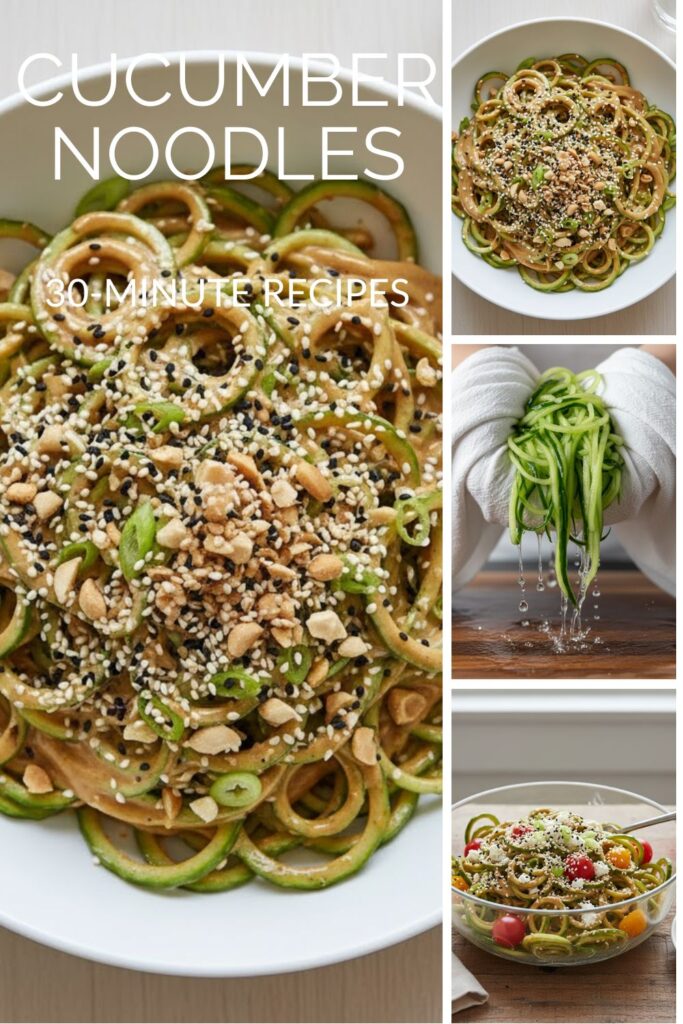
Ditch the Heat: Your Guide to Refreshing, Non-Watery Cucumber Noodles
Let’s talk summer struggles. It’s too hot to boil pasta, but you still crave that satisfying bowl of slippery, slurpable goodness. Enter Cucumber Noodles. These low-carb, no-cook heroes are the ultimate solution to the summer heat and the pasta craving. But let’s be real: cucumbers are basically solid water, so making zoodles often means making cucumber soup. Right? Wrong! I’ve cracked the code to perfectly crunchy, non-soggy Cucumber Noodles that actually hold the dressing and don’t turn your meal into a watery disappointment. Prepare yourself for a refreshingly crunchy texture and a massive, guilt-free plate of “pasta.”
Why This Recipe Is Awesome (It’s the Crispiest Carb Substitute)

You need this recipe because it achieves the impossible: crunchy raw noodles.
- Zero Cooking Required: This recipe is entirely no-cook. That means zero minutes spent over a hot stove and zero risk of making mushy, overcooked vegetable sludge. Win!
- The Crunch Secret: We use a simple, two-step process—salting and squeezing—to draw out the excess water. This is the only way to concentrate the flavor and ensure a perfectly crisp, al dente texture.
- Low-Calorie, High Volume: You get a huge, satisfying bowl of food for virtually no calories or carbs. It’s the ultimate keto, low-carb, and gluten-free vehicle for your favorite creamy or savory dressings.
Ingredients: The Cool, Crisp Essentials
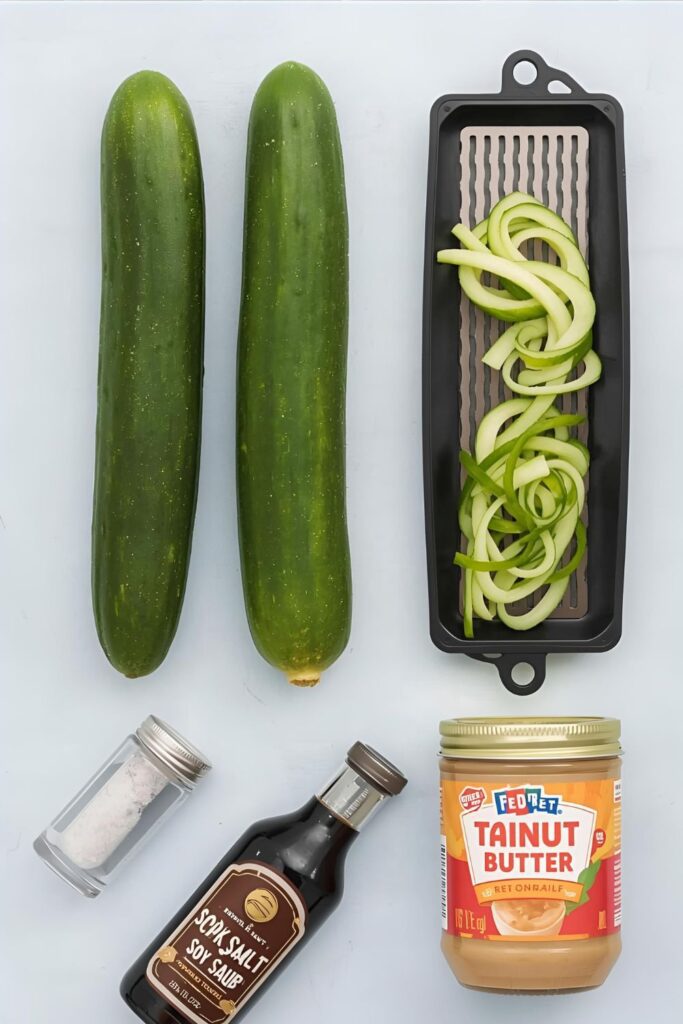
Choose your cucumbers wisely. The right kind makes this process seamless.
- 2 large English Cucumbers (or 4 Persian Cucumbers): English or Persian are preferred because they have thin skin and fewer seeds, making them easier to spiralize and less watery.
- 1 teaspoon Fine Sea Salt: MANDATORY. This is your osmotic weapon against sogginess.
- For the Dressing (Spicy Sesame Tahini – Whisk Separately):
- 2 tablespoons Tahini (or Creamy Peanut Butter): Adds body, richness, and helps the sauce cling.
- 2 tablespoons Soy Sauce (or Tamari for GF): Umami and salt.
- 1 tablespoon Rice Vinegar: Essential for tang.
- 1 teaspoon Maple Syrup or Honey: Balances the spice and tang.
- 1 teaspoon Toasted Sesame Oil: Fragrant finish.
- ½ teaspoon Sriracha or Chili Crisp: For a pleasant warmth.

Key Substitutions:
- English Cucumbers: Use Persian cucumbers if you can find them (they’re usually sold in packs of 5-6). If you only have standard waxy cucumbers, peel them and remove the seeds before spiraling.
- Tahini: Creamy peanut butter or smooth almond butter work beautifully for a richer flavor.
- Soy Sauce: Use Coconut Aminos for a soy-free, slightly sweeter profile.
Tools & Kitchen Gadgets Used: Your Crisp-Making Arsenal
Your peeler or spiralizer is the star here.
- Spiralizer or Julienne Peeler: MANDATORY. You need a dedicated tool to create the noodle shape.
- Colander and Large Bowl: For the salting and draining process.
- Paper Towels or Clean Kitchen Towel: CRITICAL for the final squeeze.
- Small Jar with Lid or Whisk: For mixing the quick dressing.
- Tongs: For gentle tossing and serving.
Step-by-Step Instructions: The Anti-Soggy Ritual
We are fighting water. Don’t skip the salting or the squeeze!
Step 1: Spiralize and Salt (5 Minutes)
- Prep the Cucumbers: Wash and dry the cucumbers (no need to peel the English kind!). Trim the ends.
- Noodle Time: Use your spiralizer or julienne peeler to turn the cucumbers into long noodles. Stop spiraling when you reach the seedy core—that part is the most watery.
- Place the Cucumber Noodles in a colander set over a bowl. Sprinkle generously with the salt.
- Toss gently and let them drain for 15 minutes. You will see a significant amount of salty liquid collecting in the bowl below. That’s the soup you just avoided making!
Step 2: Squeeze and Pat Dry (3 Minutes)
- Gather the drained noodles and place them onto a double layer of paper towels or a clean kitchen towel.
- Roll the noodles up tightly in the towel.
- SQUEEZE FIRMLY to press out the remaining moisture. This step is key to maintaining a crisp texture after dressing. The noodles should look dry and feel firm.
Step 3: Mix the Sauce (2 Minutes)
- While the cucumbers are resting, assemble your sauce. In a jar or small bowl, whisk or shake the tahini, soy sauce, rice vinegar, maple syrup, sesame oil, and sriracha.
- Whisk until the sauce is completely smooth and emulsified. Tahini or peanut butter gives the dressing a thick body that clings perfectly to the noodles.
Step 4: Toss and Serve Immediately (2 Minutes)
- Place the squeezed, dry Cucumber Noodles in a large mixing bowl.
- Pour the sauce over the noodles.
- Toss gently with tongs until every strand is coated.
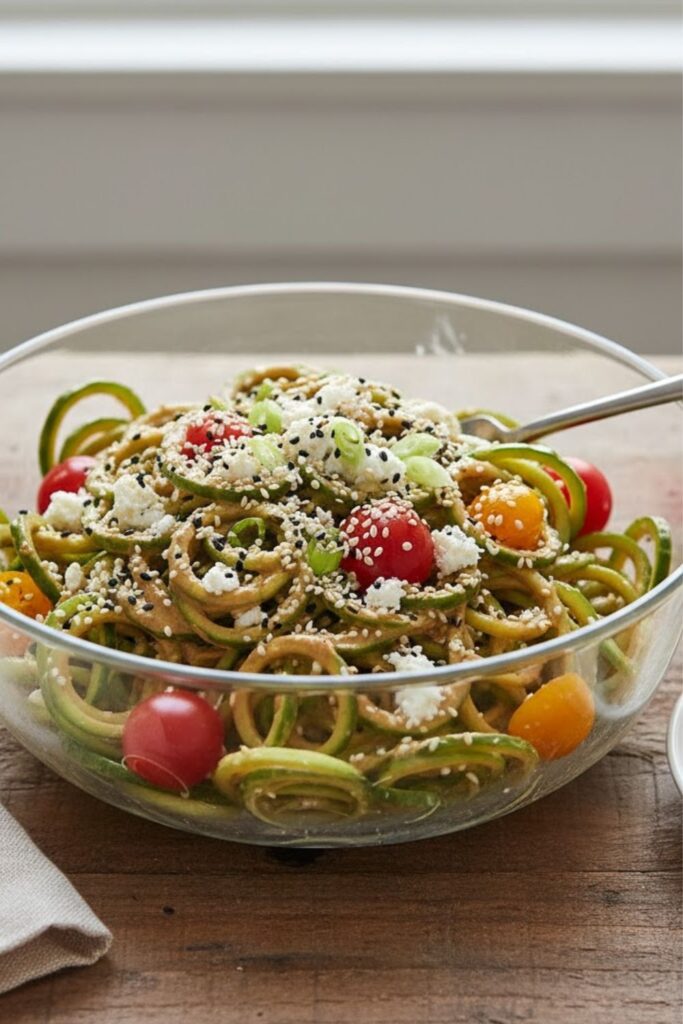
- Garnish with sesame seeds, and serve immediately while they are still crisp. The noodles will start to release moisture again shortly after being dressed.
Calories & Nutritional Info: The Zero-Guilt Zone (Estimated)
These are estimates for one generous serving, including the tahini-based dressing.
- Calories per serving (1 large bowl): ~200-250 calories
- Net Carbs: ~10-15g (Mostly from the tahini/peanut butter and maple syrup.)
- Protein: ~8-12g
- Fat: ~15-20g (Healthy fats from tahini/nut butter and sesame oil.)
- Hydration Hero: Cucumbers are mostly water, making this dish incredibly hydrating and a fantastic source of Vitamin K.
Common Mistakes to Avoid: Stop the Watery Mess
Cucumber noodles are simple, but they demand respect for the water content!
- Ignoring the Salting/Squeezing: The number one mistake! If you skip this, the water stays in the cucumber and immediately pools at the bottom of your finished dish.
- Using Hot Ingredients: Do not add these to hot food or sauce! The heat will cook the raw cucumber, destroying the crunch and immediately causing them to release a flood of water. Serve this cold or at room temperature.
- Dressing Too Early: The dressing contains salt, which continues to draw water out of the cucumber. Toss the noodles with the dressing just before serving to keep the crunch intact.
- Spiralizing the Seeds: The center core of the cucumber is the most watery part. Stop spiraling when you reach the seeds to avoid diluting your flavor.
- Using Waxed Cucumbers: Waxy skin can interfere with the texture. Stick to the thin-skinned English or Persian varieties.
Variations & Customizations: Your Cold Noodle Bar
The cold, crisp texture of these noodles pairs beautifully with bright, fresh flavors.
- Creamy Greek Tzatziki: Skip the Asian dressing. Toss the squeezed noodles with a mixture of Greek yogurt, minced garlic, lemon juice, salt, and fresh dill. Add some crumbled feta.
- Spicy Chili Crunch: Use only rice vinegar, soy sauce, and chili crisp as the dressing. Top the finished dish with toasted peanuts and fresh mint for a fiery, aromatic salad.
- Avocado Lime Bliss (Keto/Raw): Blend half an avocado, lime juice, cilantro, salt, and a splash of water for a thick, creamy dressing. Toss immediately with the noodles for a super-fresh, raw meal.
FAQ Section: The Cool Facts
Let’s answer the inevitable questions about raw vegetable pasta.
Q1: Are cucumber noodles keto or low-carb?
A: Yes! Cucumbers are one of the lowest-carb vegetables available. One cup of cucumber noodles contains approximately 3-4 grams of total carbs, making them extremely popular for keto and low-carb diets.
Q2: How do I store cucumber noodles without them getting soggy?
A: Store the noodles and the dressing separately. After squeezing them dry, place the noodles in an airtight container lined with paper towels in the fridge. Toss with the dressing just before serving.
Q3: What is the best type of cucumber to use?
A: English or Persian (mini) cucumbers are best because they have thin, unwaxed skin and small seeds, minimizing the prep needed for the core.
Q4: Can I freeze cucumber noodles?
A: No! Freezing will cause the water inside the cucumber cells to expand and rupture, turning the noodles into unusable mush upon thawing. Always use them fresh.
Q5: Can I use a regular vegetable peeler instead of a spiralizer?
A: Yes, you can use a regular peeler to create thin, wide ribbons (like fettuccine) instead of spirals. The texture will be different (wider), but it is still crisp and effective.
Q6: Why do you need tahini or peanut butter in the dressing?
A: Tahini/Peanut Butter adds necessary body and viscosity to the dressing. Since the cucumber noodles don’t have the starch of pasta, a thick sauce clings better and prevents a watery pool from forming at the bottom of the bowl.
Q7: Should I peel the cucumbers?
A: You do not have to peel thin-skinned varieties (like English or Persian). The skin contains fiber and nutrients. Just scrub them well!
Final Thoughts: Refreshment Achieved
You’ve mastered the art of moisture control. You made crisp, delicious Cucumber Noodles and skipped the boring, high-carb alternative. You are officially a low-carb genius. Go ahead, slurp those crunchy strands and revel in the fact that your summer meal is both healthy and impossibly refreshing.

