Bison Tartare: The Ultimate Lean, Gourmet Appetizer That Takes 10 Minutes
I once paid $28 for a tiny, meticulously crafted serving of beef tartare at a fancy restaurant. It was delicious, but honestly, my wallet cried for days. That moment convinced me: gourmet raw meat appetizer experiences should not require a second mortgage. That’s why we’re making Bison tartare, a richer, leaner, and frankly more interesting version of the classic steak tartare, all in about ten minutes.
Bison is the secret weapon here. It’s leaner than beef, has a slightly sweeter, deeper flavor, and is the perfect canvas for bright, sharp, savory seasonings. This recipe is fast, requires zero cooking (except maybe toasting some bread, you lazy thing), and instantly makes you look like a fearless culinary genius. Get ready to feel incredibly chic while eating raw buffalo.
Why This Recipe Is Awesome (Lean Protein, Big Flavor, Zero Heat)
Why choose Bison Tartare over the usual steak? Because it’s a nutritional and flavor upgrade.
First, the Nutritional Superiority. Bison is notoriously lean, packing serious protein without the heavy fat content of conventional beef. It’s rich in iron and B vitamins. You get an incredibly decadent, rich-tasting appetizer that is actually much healthier than its beef counterpart. Why eat fatty when you can eat fitspo?
Second, Complex Flavor Profile. Bison has a subtle, earthy sweetness and a cleaner, less metallic taste than beef. It stands up beautifully to the traditional tartare seasonings like capers, mustard, and shallots. IMO, it offers a more nuanced flavor foundation than basic beef.
Third, Ultimate Speed and Elegance. This appetizer requires no heat whatsoever. You dice, you mix, you chill, and you serve. It’s the perfect summer appetizer or date night starter. You spend 10 minutes of prep and look like you’ve been slaving away all day. TBH, that’s the definition of smart cooking.
The Goods: Ingredients You Need
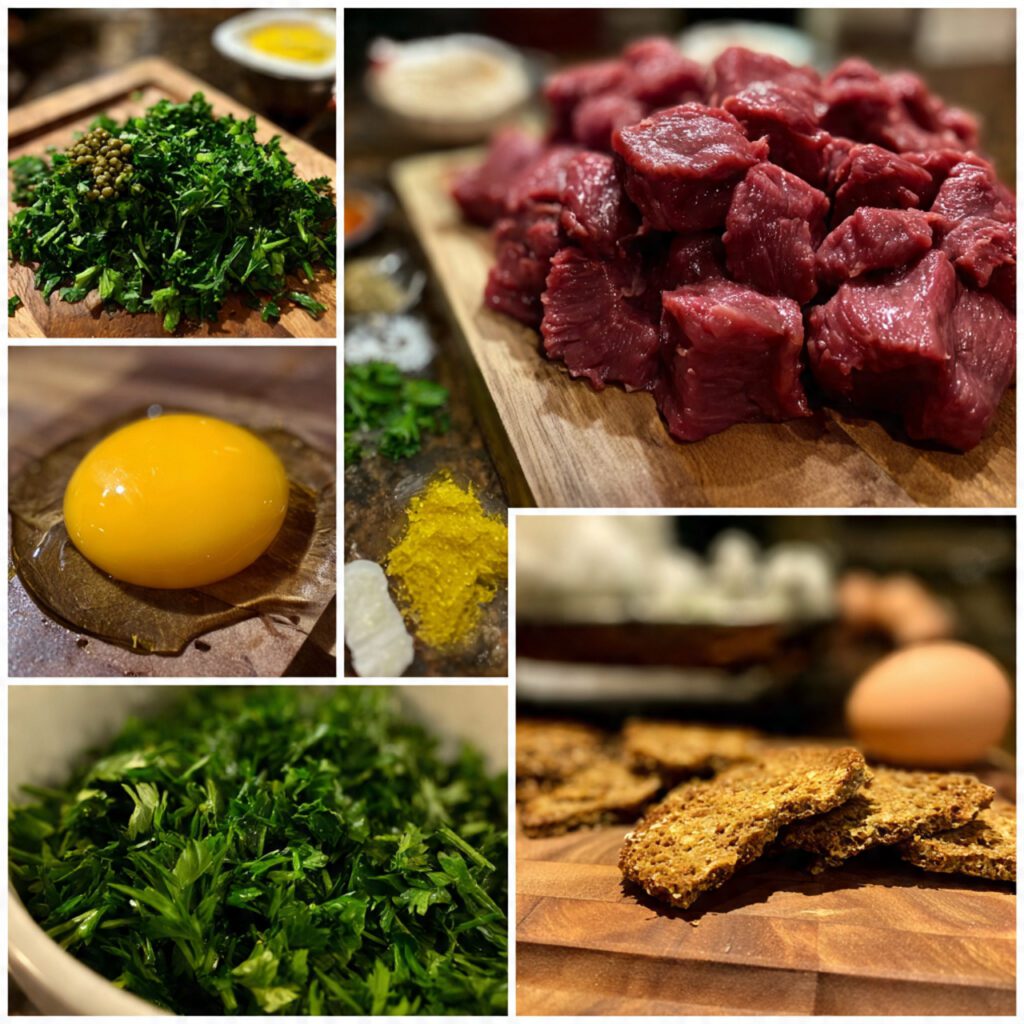
This recipe is simple, but the quality and cold temperature of the bison are absolutely crucial for both safety and texture.
- The Star Protein (MUST BE CULINARY/TARTARE GRADE):
- 8 ounces Bison Tenderloin or Sirloin, trimmed of all fat and silver skin, chilled.
- The Flavor Agents:
- 1 tablespoon Shallot, finely minced (crucial flavor base).
- 1 tablespoon Capers, rinsed and finely chopped.
- 1 teaspoon Dijon Mustard (use a high-quality, sharp mustard).
- 1/2 teaspoon Worcestershire Sauce (optional, for deeper umami).
- 1/2 teaspoon Freshly Cracked Black Pepper.
- 1/4 teaspoon Salt (start light; adjust later).
- The Essential Binder/Emulsifier:
- 1 large Egg Yolk (farm-fresh and cold).
- 1 teaspoon Extra Virgin Olive Oil.
- The Serving Vehicles:
- Croûtes: Thin slices of baguette, toasted or fried until crisp.
- Or: Potato chips or endive spears (for a low-carb option).
H3 Key Substitutions (When the Bison is Booked)
- No Bison? Use the highest quality beef tenderloin or sirloin available, ensuring it’s “culinary grade” or intended for raw consumption.
- Capers Substitute: Use finely diced pickled gherkins or cornichons for that crucial salty acidity.
- Shallot Swap: Use a very small amount of finely minced red onion, but shallots are milder and less aggressive.
Tools & Kitchen Gadgets Used (The Chopping Block)
No need for a flame, but a super-sharp knife and immediate chilling are mandatory.
- Very Sharp Chef’s Knife: CRITICAL! For finely dicing the meat cleanly. A dull knife will smash the meat, not chop it.
- Cutting Board: Keep it clean and dry.
- Small Mixing Bowl: For combining the ingredients.
- Ramekins or Ring Molds (Optional): For shaping the tartare beautifully on the plate.
- Small Whisk: For blending the seasoning mixture before adding the meat.
- Serving Platter/Plates: Keep them chilled before assembly.
Step-by-Step Instructions (Dice, Season, Serve Cold)
Speed and temperature control are the keys to safe and delicious tartare. Keep everything cold!
H3 Step 1: Prep the Meat (The Fine Dice)
- Wrap the bison tenderloin and place it in the freezer for about 15 minutes. This firms up the meat, making it much easier to dice cleanly.
- Use your sharp chef’s knife to finely dice the chilled bison into uniform, 1/8-inch cubes. This is a precise chop, not a mince! Uniformity is key for texture.
- Place the diced bison immediately into a bowl placed over a larger bowl of ice (an ice bath).
H3 Step 2: Mix the Binder and Flavor
- In a separate small bowl, whisk together the minced shallot, capers, Dijon mustard, Worcestershire sauce, olive oil, pepper, and salt.
- Create a small indentation in the center of the diced bison and place the cold egg yolk inside. (You add the yolk last for aesthetics, but you mix it immediately).
H3 Step 3: Combine and Chill
- Pour the flavor mixture over the meat and egg yolk. Use a spoon to gently fold the ingredients together until everything is just coated. Do not overmix! Overmixing turns the tartare into a paste.
- Taste a tiny bit and adjust the seasoning (usually needs more salt or pepper).
- Cover the bowl and refrigerate the tartare for at least 15 minutes. This chilling time helps the flavors marry and firms up the texture.
H3 Step 4: Plate and Serve (The Grand Reveal)
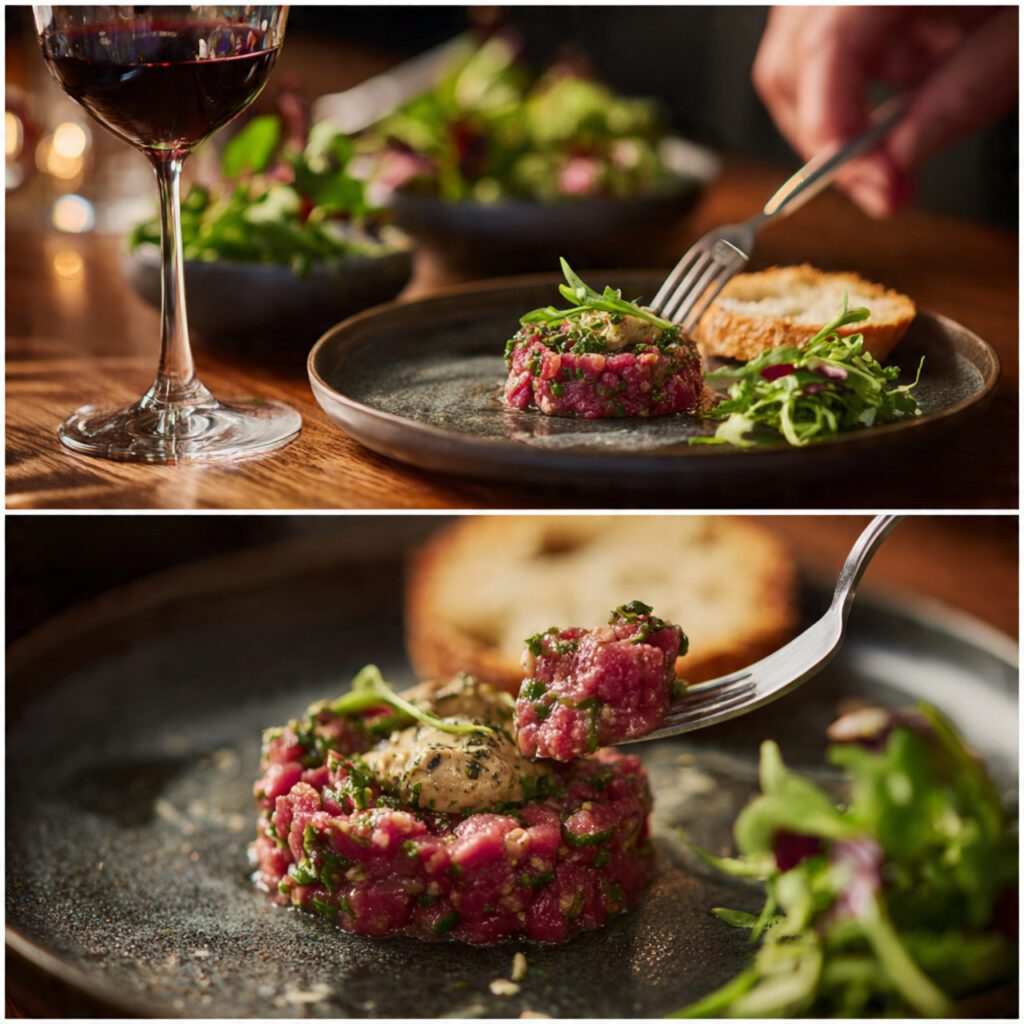
- Use a ring mold (or a sturdy glass rim) to press the chilled tartare onto a chilled serving plate.
- Carefully lift the mold. Garnish the plate with a drizzle of olive oil, extra capers, and a few fresh parsley leaves.
- Serve immediately with a generous side of toasted croûtes or potato chips.
Calories & Nutritional Info (Lean Luxury)
Bison tartare is a high-protein, low-fat appetizer. This estimate is for a 4-ounce serving of the tartare mix without the bread.
- Estimated Calories Per Serving (4oz meat base): ~200–250 calories. Very lean for red meat!
- Extremely High in Protein: Bison is an excellent source of complete protein.
- Low in Fat: Significantly lower in saturated fat than beef.
- Rich in Iron and B Vitamins: Bison meat is known for high iron and Niacin (Vitamin B3) content.
- Keto-Friendly: Naturally very low in carbohydrates.
Common Mistakes to Avoid (Tartare Trauma)
When eating raw meat, safety and texture are paramount. Do not compromise on these steps.
- Ignoring the “Culinary Grade” Rule: This is the most serious mistake. Only use meat explicitly sold and stored for raw consumption. Do not use meat packaged as ground beef or stew meat.
- Using a Dull Knife: Smashing the meat instead of cleanly dicing it ruins the pleasant, chunky texture. Use a razor-sharp knife.
- Overmixing: Mixing the diced meat aggressively releases moisture and protein, creating a sticky, dense, unpleasant paste. Fold gently until just combined.
- Warm Meat: Warm raw meat is unsafe and unappetizing. Keep the bison and serving plates cold throughout the entire process.
Variations & Customizations (Flavors of the Plains)
The classic preparation is fantastic, but bison’s earthy flavor supports many bold twists.
- Smoked Paprika & Sherry Vinaigrette (Spicy Version): Replace the Worcestershire with a teaspoon of Sherry Vinegar and add 1/2 teaspoon of smoked paprika and a dash of hot sauce (like Tabasco).
- Asian Wasabi & Sesame: Skip the capers/mustard. Toss the bison with toasted sesame oil, soy sauce, minced ginger, and a pinch of wasabi paste. Top with chopped cilantro and crispy fried shallots.
- Vegetarian Swap (Beetroot Tartare): Skip the meat. Use chilled, cooked, and finely diced red beetroot (or watermelon). Mix it with the exact same flavor agents (shallot, capers, Dijon, oil). Top with a dollop of crème fraîche.
FAQ Section (The Raw Meat Rules)
Raw appetizers come with questions. Be prepared to answer them confidently!
- Q: Is it safe to eat raw bison?
- A: Yes, provided you use meat that has been frozen to USDA standards (often labeled “culinary grade” or “sashimi grade”). Never use regular grocery store ground meat.
- Q: Where should I buy bison for tartare?
- A: Find a trusted specialty butcher or an online retailer specializing in exotic/game meats. Tell them it’s for tartare—they will give you the right cut.
- Q: How long can bison tartare sit out?
- A: Raw meat should not sit at room temperature for more than 1 hour. Keep the plated tartare chilled by serving it on a cold plate or a tray of ice.
- Q: What wine pairs best with bison tartare?
- A: A dry, crisp white wine (like Sauvignon Blanc) or a light-bodied red like a Pinot Noir works best. Avoid heavy, tannic wines that clash with the iron in the meat.
- Q: Can I use a food processor to chop the bison?
- A: No! A food processor will immediately turn the bison into a pasty puree. You must hand-chop it for the correct, slightly chunky texture.
- Q: What if I don’t want to use the raw egg yolk?
- A: The yolk acts as a binder and emulsifier, giving the tartare a creamy texture. You can substitute it with a tiny bit of high-quality mayonnaise or a dollop of Dijon mustard for binding, but the texture will be slightly less rich.
- Q: Can I make bison tartare ahead of time?
- A: Prep all the chopped ingredients ahead of time, but do not mix them with the meat or yolk until 30 minutes before serving. The acid will “cook” the meat over time.
Final Thoughts (The Fearless Gourmet)
You embraced the raw, the lean, and the exotic. You successfully made a stunning, complex appetizer in the time it takes most people to decide on takeout. That Bison tartare is proof that you are a fearless gourmet.
Go ahead, take a proud bite on that crispy croûte. Did you realize raw meat could be this quick and delicious? I bet you’ll never order the beef version again. Now, are you ready to conquer the next culinary frontier?