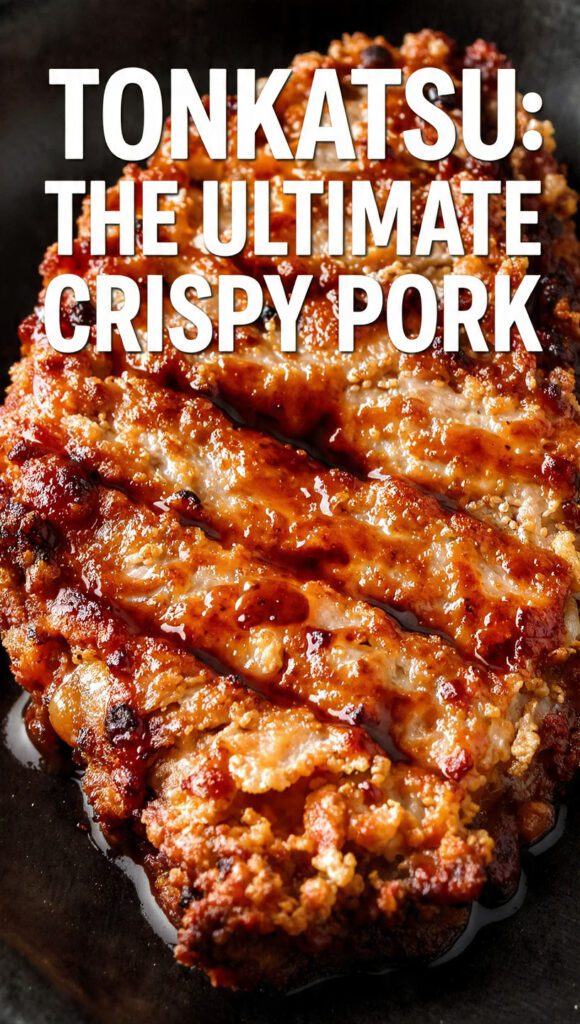
The Ultimate Crispy Fix: Why You Need This Authentic Tonkatsu Recipe
We have all been there. You are scrolling through social media at 11 PM, and suddenly a video of a golden, crunchy pork cutlet appears. The sound of the knife scraping against that crust—you know the one—triggers a hunger so deep it borders on a spiritual crisis. You could order takeout, but by the time it reaches your door, that glorious crunch has transformed into a sad, soggy memory of its former self. Today, we take matters into our own hands and master the art of tonkatsu in your very own kitchen.
Seriously, why settle for mediocre fried pork when you can create a masterpiece that sounds like a forest fire and tastes like a hug? I once tried to replicate this with standard breadcrumbs and a shallow pan, and let’s just say the result was more “depressing pork nugget” than Japanese delicacy. TBH, once you experience the shatteringly crisp texture of real panko, there is no going back to your old ways. Ready to turn your kitchen into a high-end Tokyo katsu house?
Why This Recipe is Awesome
Why should you bother deep-frying things on a weeknight? Because tonkatsu is the undisputed heavyweight champion of comfort food. It combines the juicy tenderness of a pork loin with a crust so light and airy it practically defies gravity. It’s the kind of meal that makes people stop talking and start nodding in silent approval.
The beauty of this recipe lies in its deceptive simplicity. You don’t need a 40-ingredient spice rack or a culinary degree to pull this off. You just need a little bit of technique and the right kind of breadcrumbs. It’s the ultimate “impress your guests” dish because it looks and sounds incredibly professional, yet you spent most of the prep time just pounding meat with a mallet.
Plus, it’s incredibly versatile. You can serve it over rice (Katsudon), with curry (Katsu Curry), or sandwiched between fluffy white bread (Katsu Sando). IMO, it’s the most efficient way to achieve maximum culinary satisfaction with minimal emotional labor. 🙂
Ingredients

Gather your supplies. Do not try to substitute the panko for regular breadcrumbs unless you want to hurt my feelings and ruin your dinner.
- 4 Boneless Pork Loin Chops (About 1/2 to 3/4 inch thick)
- Salt and Black Pepper (Be generous, nobody likes bland pork)
- 1/2 cup All-Purpose Flour (This is your glue)
- 2 Large Eggs (Beaten into submission)
- 2 cups Panko Breadcrumbs (The Japanese kind—look for the big, flaky ones)
- Vegetable Oil (Enough to submerge your porky friends; canola or peanut oil works too)
- Tonkatsu Sauce (You can buy it, but we’ll talk about a quick hack later)
- Shredded Cabbage (The traditional, crunchy sidekick)
Tools & Kitchen Gadgets Used
You don’t need a commercial fryer, but a few specific tools will make the difference between a crispy triumph and a greasy disaster.
- Heavy-Bottomed Deep Skillet or Dutch Oven – You need something that holds heat like a grudge.
- Meat Mallet – For tenderizing the pork and venting your daily frustrations.
- Stainless Steel Wire Cooling Rack – This is non-negotiable; if you put hot katsu on a flat plate, the steam will ruin the bottom crust.
- Instant-Read Digital Meat Thermometer – To ensure your oil is at the perfect temperature and your pork isn’t a dry brick.
- Tongs or a Professional Spider Strainer – For safe and easy flipping in hot oil.
Step-by-Step Instructions
Alright, let’s get to the “crunch” of the matter. Put on your favorite playlist and let’s make some magic happen.
Step 1: Prep the Pork
Start by trimming any excess tough gristle from the edges of your pork loin chops. Take your meat mallet and pound the cutlets until they are an even 1/2 inch thick. This ensures they cook quickly and stay tender. Season both sides aggressively with salt and pepper.
Step 2: The Dredging Station
Set up three shallow bowls. Bowl one: All-purpose flour. Bowl two: Beaten eggs. Bowl three: Panko breadcrumbs. This is a factory line of deliciousness. Don’t skip the order!
Step 3: The Coating Ritual
Dredge a pork cutlet in the flour and shake off the excess. Dip it into the egg wash, ensuring total coverage. Finally, press it firmly into the panko breadcrumbs. Pro tip: Press the crumbs into the meat with your palms to make sure they stick like they mean it.
Step 4: The Oil Check
Heat your oil in the Dutch oven to 340°F (170°C). If you don’t have a thermometer, drop a single panko crumb in; if it sizzles and stays on the surface, you are ready for action. Do not crowd the pan! Cook one or two at a time.
Step 5: The Golden Fry
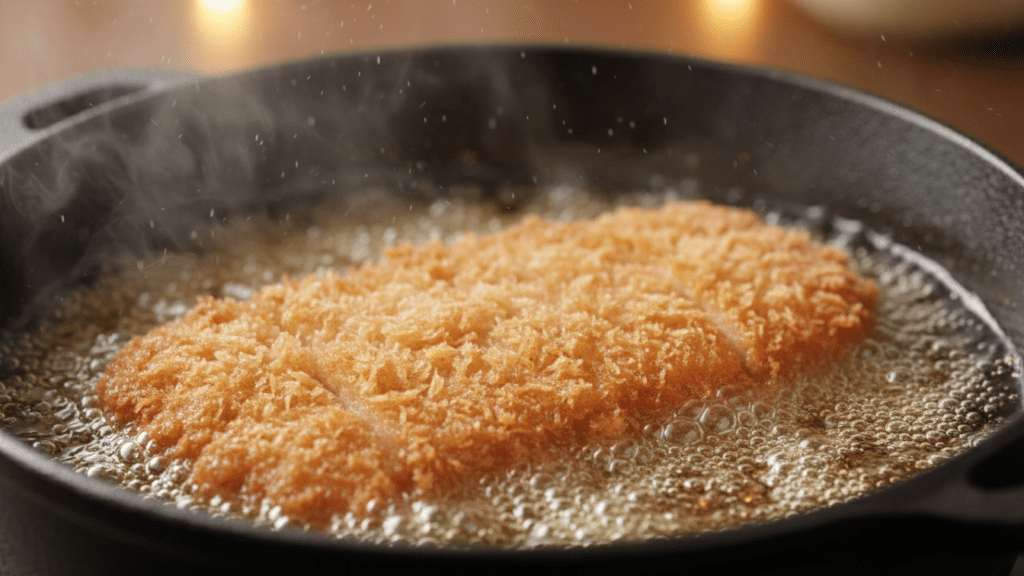
Carefully lower the pork into the oil. Fry for about 3 to 4 minutes per side. You are looking for a deep, golden-brown color that looks like a sunset over a field of fried dreams. Use your meat thermometer to ensure the internal temp hits 145°F (63°C).
Step 6: The Rest
This is the most important part: Place the finished tonkatsu on a wire cooling rack. If you put it on paper towels or a plate, the trapped steam will make the crust soggy in seconds. Let it rest for 3 minutes. This allows the juices to redistribute so the meat stays moist.
Step 7: The Slice
Use a sharp knife and cut the cutlet into 1-inch thick strips. You should hear a satisfying crunch with every stroke. Drizzle with plenty of tonkatsu sauce and serve alongside a mountain of shredded cabbage.
Calories & Nutritional Info
Let’s be real: you are eating deep-fried pork. It is a treat, not a salad. But for the curious, here is the damage estimate per serving:
- Calories: ~480 kcal (depending on the size of your pork and your oil drainage skills).
- Protein: 32g (A solid muscle-building win!).
- Fats: 24g (The price we pay for glory).
- Carbohydrates: 30g (Mostly from those beautiful panko flakes).
- Note: Serving this with raw shredded cabbage actually helps with digestion. FYI, the cabbage provides Vitamin U and fiber to balance out the richness.
Common Mistakes to Avoid
Don’t let your tonkatsu dreams be crushed by these common errors.
- Oil Too Hot: If the oil is too hot, the breadcrumbs will burn before the pork is cooked. Keep it at 340°F.
- Oil Too Cold: If the oil isn’t hot enough, the panko will act like a sponge and soak up the fat, leaving you with a greasy mess. Wait for the sizzle.
- Skipping the Mallet: If you don’t pound the meat, it will curl up in the pan and cook unevenly. Flatten it out!
- The Sogginess Trap: Never, ever stack your fried cutlets on top of each other. Give them space on the wire rack.
- Subbing the Crumbs: Regular breadcrumbs are too fine and dense. You must use panko for that signature Japanese texture.
Variations & Customizations
Once you master the pork, why stop there? The world is your deep-fried oyster.
- Chicken Katsu: Swap the pork for chicken thighs or breasts. It’s a lighter alternative that is equally addictive.
- Keto-Friendly Swap: Replace the flour and panko with a mixture of crushed pork rinds and parmesan cheese. It’s not traditional, but it’s shockingly close to the real thing!
- Spicy Curry Version: Serve your tonkatsu over a bed of rice and drench it in Japanese curry sauce. It’s the ultimate winter comfort meal.
FAQ Section
What is the difference between Tonkatsu and Schnitzel? While they look similar, the main difference is the breading. Tonkatsu uses Panko, which creates a much larger, airier crunch compared to the fine crumbs used in German schnitzel.
Which cut of pork is best for tonkatsu? Pork loin (Rosu-katsu) is the classic choice for a juicy, fatty bite. If you prefer something leaner, go with pork tenderloin (Hire-katsu).
How do I make tonkatsu sauce if I can’t find it? Mix 4 tablespoons of ketchup, 2 tablespoons of Worcestershire sauce, 1 tablespoon of oyster sauce, and 2 teaspoons of sugar. It’s a 90% match for the real thing!
Can I make tonkatsu in an air fryer? You can, but it won’t be as golden or juicy. If you do, spray the panko with oil before air-frying at 400°F for 12 minutes. IMO, deep-frying is worth the effort for the texture. 🙂
How do I get the panko to stay on the pork? Make sure the pork is dry before flouring it, and really press those breadcrumbs down with your hands. The egg acts as the glue; don’t rush the dip!
Why is my shredded cabbage so bitter? Soak your shredded cabbage in ice-cold water for 10 minutes, then drain it well. This removes the “sulfury” bite and makes it incredibly crisp.
Can I freeze cooked tonkatsu? Yes! Freeze them in a single layer. Reheat in a 400°F oven to bring back the crunch. Don’t use the microwave unless you enjoy rubbery pork.
Final Thoughts
There you have it—the tonkatsu recipe that will make you the most popular person in your household. It is crunchy, it is juicy, and it is a lot easier than you think once you get the oil temp right. Once you hear that first crunch, you will realize that store-bought, frozen cutlets are a lie.
Go ahead, fry up a batch and enjoy the smug satisfaction of a restaurant-quality meal. Just try not to get too upset when your family asks you to make it every single weekend. Ready to ruin every other pork chop for yourself? Happy frying!