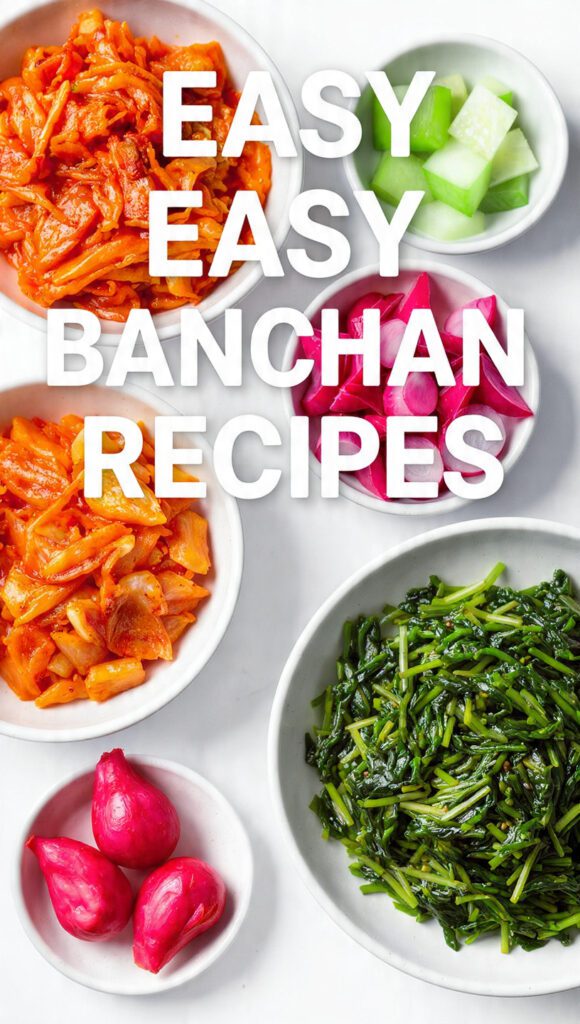
The Ultimate Guide to Easy Banchan Recipes: Turn Your Fridge into a K-Drama Feast
Have you ever sat down at a Korean BBQ restaurant, and before you can even order your meat, the server covers your table in a dozen tiny, colorful plates of mysterious goodness? We’ve all been there. You spend the next twenty minutes ignoring the main course because you’re too busy fighting your friends for the last piece of glazed potato. Today, we are ending that struggle by mastering banchan recipes in your own kitchen, so you can stop begging for “one more refill, please” like a desperate Victorian orphan.
Let’s be real for a second. The meat is just the supporting actor; the side dishes are the real stars of the show. Making these at home tells the world, “Yes, I am a domestic deity who understands the complex balance of sweet, salty, and spicy.” Or, at the very least, it tells your roommates you finally bought something other than frozen pizza. Ready to transform your boring dinner into a multi-dish extravaganza?
Why This Recipe Collection is Awesome
Why should you bother making five different tiny dishes instead of one big pile of food? Because banchan recipes are the ultimate meal-prep hack. Most of these dishes actually taste better after sitting in the fridge for a day or two. You do the work once, and suddenly your lunches for the rest of the week look like they were catered by a professional chef.
These recipes offer the perfect balance of flavors: the crunch of garlic-infused spinach, the savory-sweet glaze of potatoes, and the spicy kick of quick-pickled cucumbers. They make any plain bowl of rice feel like a celebratory feast. Plus, they are incredibly impressive to guests. Nothing says “I have my life together” like a table covered in variety.
Best of all, these are low-stress. Most of these dishes take less than fifteen minutes of actual cooking time. You get high-level flavor with mid-level effort. IMO, it’s the most efficient way to eat your vegetables without feeling like you’re on a sad diet. 🙂
Ingredients
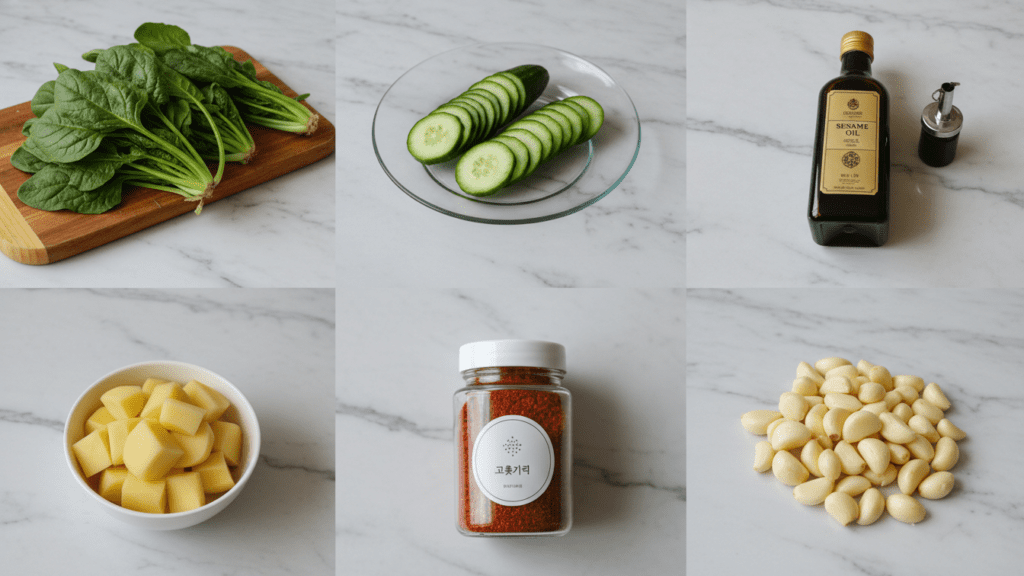
We are focusing on the “Big Three” beginner-friendly banchans: Sigeumchi Namul (Garlic Spinach), Gamja Jorim (Braised Potatoes), and Oi Muchim (Spicy Cucumber Salad).
For the Garlic Spinach (Sigeumchi Namul)
- 1 lb Fresh Spinach (Bundled with stems is best, but bagged works)
- 2 cloves Garlic, minced into oblivion
- 1 tablespoon Toasted Sesame Oil
- 1 tablespoon Soy Sauce
- 1 teaspoon Toasted Sesame Seeds
For the Braised Potatoes (Gamja Jorim)
- 2 large Russet or Yukon Gold Potatoes, peeled and cubed small
- 3 tablespoons Soy Sauce
- 2 tablespoons Rice Syrup or Honey (Rice syrup gives that glossy restaurant shine)
- 1 tablespoon Vegetable Oil
- 1/2 cup Water
For the Spicy Cucumbers (Oi Muchim)
- 2 English or Persian Cucumbers, sliced into thin rounds
- 1 tablespoon Gochugaru (Korean red chili flakes—don’t swap for pizza flakes!)
- 1 tablespoon Rice Vinegar
- 1 teaspoon Sugar
- 1 stalk Green Onion, chopped
Tools & Kitchen Gadgets Used
You don’t need a professional kitchen, but a few specific gadgets make these banchan recipes much easier to execute without losing your mind.
- Stainless Steel Fine Mesh Strainer – Essential for draining spinach without losing half of it down the sink.
- Large Non-Stick Skillet – The secret to getting that perfect glaze on the potatoes without them sticking to the pan.
- Professional Vegetable Peeler – Because peeling potatoes with a dull blade is a form of slow torture.
- Glass Hermetic Storage Jars – These keep your banchans fresh and prevent your entire fridge from smelling like a garlic farm.
- Silicone Kitchen Tongs – Perfect for tossing the spinach delicately so you don’t turn it into a bruised mess.
- Ceramic Mixing Bowls – You’ll need several to keep your different flavor profiles separate.
Step-by-Step Instructions
We’re going to tackle these in order of “cook time” so you can be a multi-tasking wizard.
Step 1: Start the Potatoes (The Longest Step)
Heat the vegetable oil in your skillet over medium heat. Toss in the cubed potatoes and fry them for about 3 minutes until the edges look slightly translucent. Add the water, soy sauce, and honey. Lower the heat, cover the pan, and let them simmer for 8–10 minutes. Remove the lid at the end to let the sauce reduce into a thick, sticky glaze that coats every piece.
Step 2: Blanch the Spinach
While the potatoes simmer, boil a pot of water. Drop the spinach in for exactly 30 seconds. Do not walk away to check your phone! Drain it immediately and plunge it into ice-cold water. Squeeze the spinach with your hands like you’re trying to get a refund from a dry cleaner—get every drop of water out.
Step 3: Season the Spinach
Place the squeezed spinach ball in a bowl and loosen it up. Mix in the minced garlic, soy sauce, and sesame oil. Massage the seasoning into the leaves with your hands (or a spoon if you’re fancy). Sprinkle the sesame seeds on top. Boom. Done.
Step 4: The Spicy Cucumber Sprint
Slice your cucumbers and put them in a bowl. Add the gochugaru, rice vinegar, sugar, and green onions. Toss them together until the cucumbers turn a beautiful, vibrant red. TBH, you can eat these immediately, but letting them sit for 10 minutes makes them even better.
Step 5: The Final Plate-Up
Arrange your three masterpieces in small individual bowls. If you want to go full “Instagram Chef,” garnish everything with an extra pinch of sesame seeds and a drizzle of oil. You just built a Korean feast.
Calories & Nutritional Info
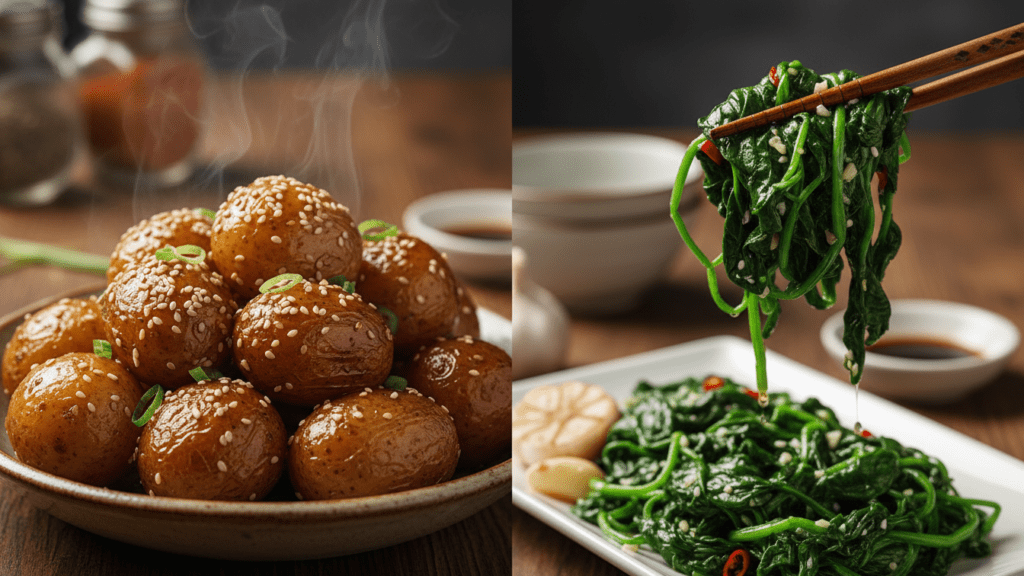
Since these are mostly vegetables, you can eat a mountain of them without the “food baby” regret. Here is the estimated breakdown per serving (about 1/2 cup):
- Garlic Spinach: 45 kcal (High in Iron and Vitamin K).
- Braised Potatoes: 120 kcal (The starch provides your energy hit).
- Spicy Cucumbers: 30 kcal (Hydrating and low-carb, FYI).
- Nutritional Note: These dishes are packed with antioxidants and healthy fats from the sesame oil. It’s basically a multivitamin in food form.
Common Mistakes to Avoid
Don’t let your banchans turn into a culinary “what not to do” list.
- Overcooking the Spinach: If the spinach stays in the hot water for more than a minute, it turns into slime. Stick to the 30-second rule.
- Leaving Water in the Spinach: If you don’t squeeze it enough, the sauce will be watery and tasteless. Squeeze it harder than you think.
- Crowding the Potato Pan: If the potatoes are piled on top of each other, they’ll steam instead of braising. Use a wide pan.
- Using the Wrong Chili Flakes: Standard red pepper flakes are way too spicy and smoky. Use Gochugaru for that specific sweet-heat flavor.
- Peeling Cucumbers Completely: Keep some skin on for texture and color. A bald cucumber is a sad cucumber.
Variations & Customizations
Feeling adventurous? Here are three ways to tweak these banchan recipes to fit your vibe.
- The Keto-Friendly Swap: For the braised potatoes, swap the potatoes for cubed radish or zucchini. Use a brown sugar substitute or monk fruit syrup instead of honey to keep the carbs low.
- The Extra Spicy Version: Add a teaspoon of Gochujang (fermented chili paste) to the potato braising liquid for a deeper, fiery funk that will clear your sinuses.
- The Nutty Vegetarian Twist: Add a tablespoon of creamy peanut butter to the spinach seasoning. It’s not traditional, but it creates a rich, satay-like flavor that is absolutely addictive.
FAQ Section
How long do these banchan recipes last in the fridge? The spinach and potatoes stay fresh for about 3–4 days. The cucumbers are best within 2 days because they start to release water and lose their “crunch” after that.
Can I make these without sesame oil? Technically yes, but why would you? The toasted sesame oil provides that signature nutty aroma that defines Korean cuisine. If you must skip it, use a neutral oil and double the toasted seeds.
Is Gochugaru the same as Cayenne pepper? No! Cayenne will burn your house down. Gochugaru is much milder and has a fruity, smoky profile. Do not swap them 1:1 unless you want to cry.
Why are my braised potatoes mushy? You likely simmered them for too long or used a potato with too much starch. Use Yukon Gold for a firmer bite, and check them frequently with a fork.
Do I need to peel the cucumbers? For English cucumbers, the skin is thin enough to keep. For regular garden cucumbers, peel strips off (like a zebra) to remove the bitterness while keeping some structure.
Can I use frozen spinach? You can, but the texture will be significantly mushier. Fresh spinach is highly recommended for that “snap” that makes the dish satisfying.
Should I eat these hot or cold? Spinach and cucumbers are strictly cold/room temp. The potatoes are delicious warm, but most Koreans eat them cold straight from the fridge. It’s a personal journey.
Final Thoughts
There you have it—your starter pack for the world of banchan recipes. You’ve officially leveled up from “ordering takeout” to “creating a cultural experience.” These little side dishes are the secret to a happy fridge and an even happier stomach.
Now, go ahead and fill your table with tiny bowls. Invite your friends over and act like it was no big deal, even though we both know you spent thirty seconds panicking about the spinach. Ready to show off your new skills? Tag me in your photos, or just enjoy the fact that you’ll never have to buy store-bought, soggy sides again. Happy eating!