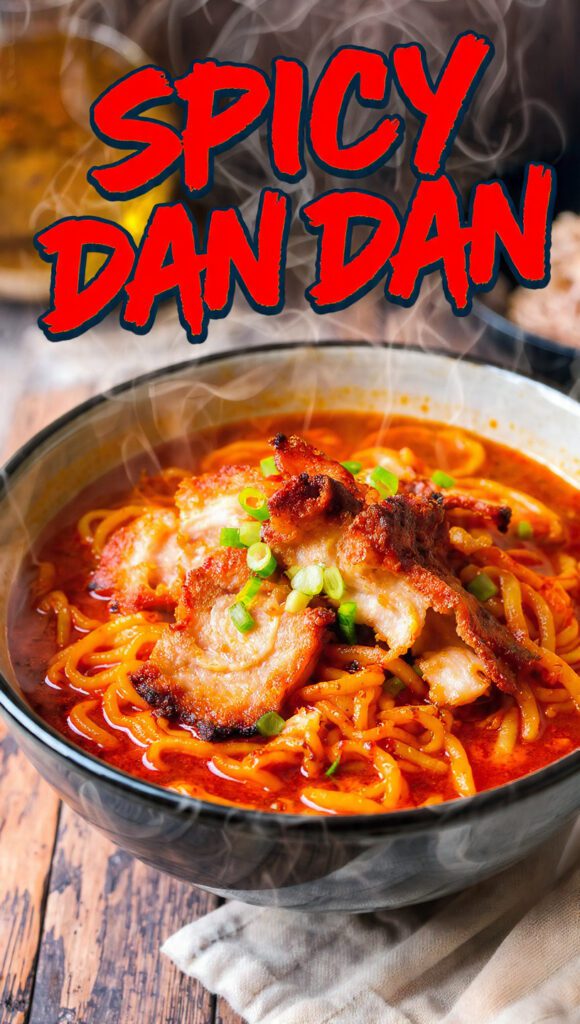
Szechuan Spice at Home: The Ultimate Guide to Authentic Dan Dan Noodles
Have you ever sat in a restaurant, sweating through your shirt while eating a bowl of noodles that feels like a party in your mouth—and by party, I mean a tiny construction crew is jackhammering your tongue with spice? We’ve all been there. Today, we are bringing that glorious, addictive heat into your kitchen with this dan dan noodles recipe, because paying fifteen bucks for a bowl of spicy pasta you can make in twenty minutes is officially over.
Imagine the look on your friends’ faces when you serve them a dish that actually tastes like it came from a street stall in Chengdu. Will they think you’ve secretly attended culinary school? Probably. Will you tell them it was actually easier than assembling that Swedish bookshelf in your living room? Absolutely not. Let them bask in your genius. Ready to set your taste buds on fire in the best way possible?
Why This Recipe is Awesome
This dish is the king of the “flavor bomb” category. You get creamy sesame, tingly Szechuan peppercorns, savory pork, and a kick of chili oil all in one bite. Does life actually get better than that? The balance of nutty, salty, and spicy creates a depth of flavor that most “instant” noodles can only dream of.
It also serves as the ultimate “impress your date” meal. It looks complex and exotic, but it really just involves some clever mixing and a hot pan. You don’t need years of training to master the art of the noodle toss. Just a little confidence and a willingness to embrace the heat.
Plus, it’s a total sensory experience. The aroma of toasted peppercorns hitting the oil will make your neighbors wonder why they’re eating plain chicken again. IMO, this is the most satisfying 20-minute meal in existence. Who needs takeout when you have a pantry full of Szechuan secrets?
Ingredients
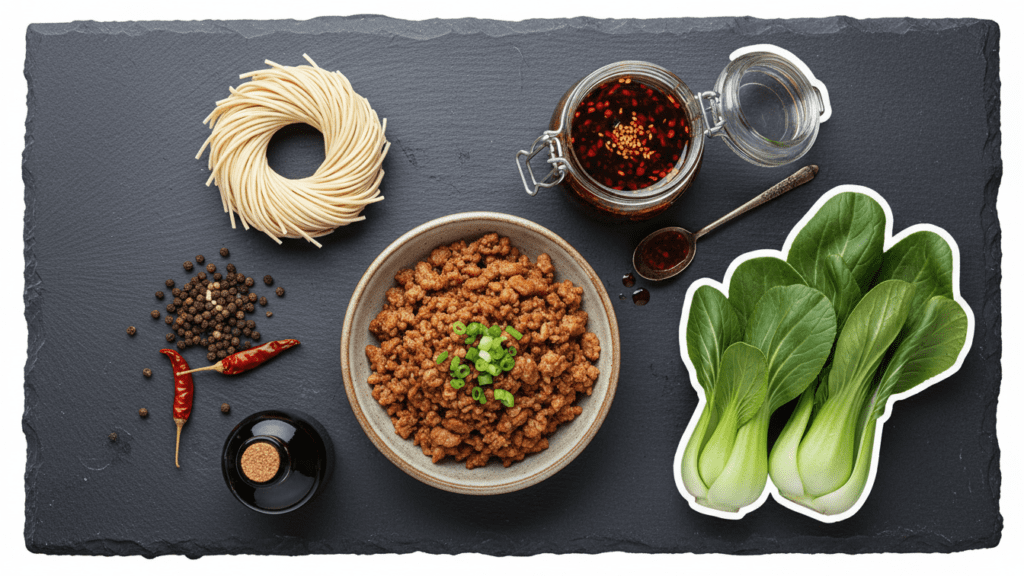
Don’t panic if your local grocery store doesn’t have an entire aisle dedicated to Szechuan province. Most of these are easy to find or have very reasonable swaps. Keep it authentic where you can, but don’t stress the small stuff.
The Meat Topping
- 1/2 lb Ground Pork (or beef, or finely chopped mushrooms for a veg twist)
- 1 tablespoon Shaoxing Wine (Dry sherry works if you’re in a pinch)
- 1 tablespoon Hoisin Sauce
- 1 teaspoon Five Spice Powder
- 1 tablespoon Sui Mi Ya Cai (Preserved mustard greens—these add that funky, salty “soul” to the dish)
The Liquid Gold Sauce
- 3 tablespoons Chinese Sesame Paste (Do not use Tahini unless you want it to taste like a Mediterranean salad; peanut butter is a better sub!)
- 2 tablespoons Light Soy Sauce
- 1 tablespoon Chinkiang Vinegar (Black vinegar is essential for that malty tang)
- 2–4 tablespoons Chili Oil with Flakes (Measure with your heart, or your pain tolerance)
- 1/2 teaspoon Toasted Szechuan Peppercorn Powder (The “numbing” ingredient)
The Body and Garnish
- 1 lb Fresh or Dried Wheat Noodles (Thin noodles work best here)
- 1 cup Chicken Broth or Noodle Water
- Handful of Bok Choy or Spinach
- Crushed Peanuts and Scallions for that final crunch
Tools & Kitchen Gadgets Used
You don’t need a high-end wok to make this work, though it certainly helps with the vibes. Here is the gear that makes the process seamless and affiliate-link-worthy.
- Heavy-Bottomed Wok or Cast Iron Skillet – High heat is your friend for browning that pork to crispy perfection.
- Szechuan Peppercorn Grinder – Freshly ground peppercorns provide ten times the “tingle” of the pre-ground stuff.
- Stainless Steel Spider Strainer – Perfect for fishing noodles and greens out of boiling water without the drama.
- Large Ceramic Noodle Bowls – Part of the joy is the presentation; deep bowls keep the heat in.
- Small Silicone Whisk – Essential for emulsifying the sesame paste into a smooth, dreamy sauce.
Step-by-Step Instructions
Alright, let’s build this bowl of fire. Focus up, because once the noodles hit the water, things move fast.
Step 1: Crisp the Pork
Heat your wok over medium-high heat with a splash of oil. Add the ground pork and break it apart. Cook it until it’s no longer pink, then add the Shaoxing wine, hoisin, five spice, and preserved mustard greens. Keep frying until the pork gets crispy and dark. Do not skim off the fat; that is where the flavor lives!
Step 2: The Sauce Base
In your serving bowls (yes, build the sauce directly in the bowls), whisk together the sesame paste, soy sauce, black vinegar, chili oil, and peppercorn powder. Add a splash of warm chicken broth or noodle water to loosen it up. It should look like a thick, spicy liquid sunset.
Step 3: Noodle Time
Boil a large pot of water. Cook your noodles according to the package. About one minute before they finish, throw your bok choy into the same pot. Why wash two pots when one does the job?
Step 4: The Assembly
Use your spider strainer to lift the noodles and greens directly into the sauce bowls. Do not rinse them! You want that starch to help the sauce cling to every strand.
Step 5: The Final Flourish
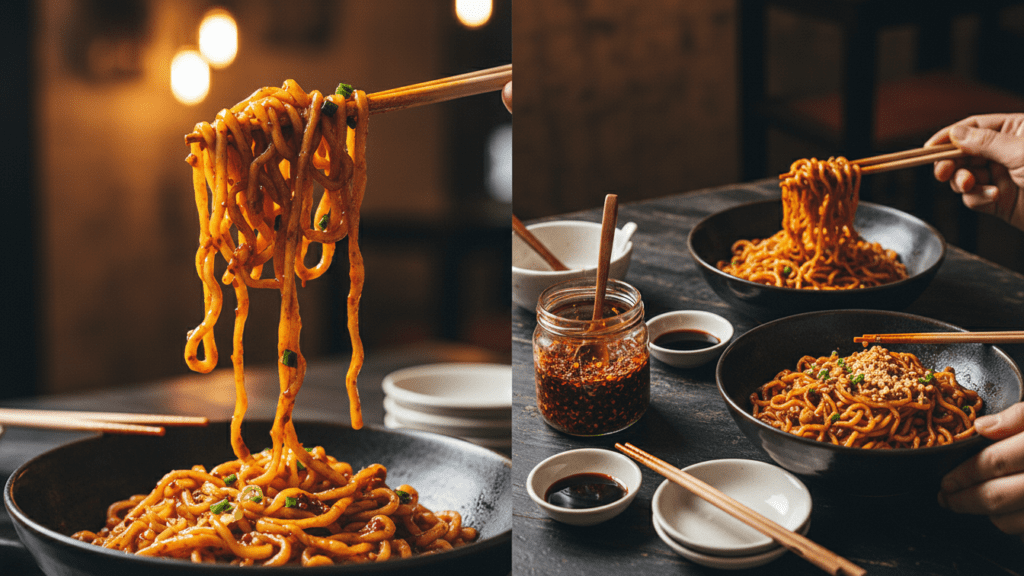
Top the noodles with a generous scoop of the crispy pork mixture. Garnish with crushed peanuts and sliced scallions. Now, the most important part: mix it like you mean it. The sauce sits at the bottom, so dig deep and toss until every noodle is coated in red, nutty glory.
Calories & Nutritional Info
You aren’t eating this to fit into your high school prom outfit, but it’s actually not as “bad” as people think. Here is the breakdown per serving:
- Calories: Approximately 550–650 kcal (mostly from those delicious noodles and sesame fats).
- Protein: 22g (Thank the pork and peanuts).
- Fats: 30g (Mostly healthy fats from the sesame and chili oil—mostly).
- Sodium: High (Drink a glass of water, you’ll be fine).
- Note: The Szechuan peppercorns contain hydroxy-alpha-sanshool, which creates the numbing sensation. It’s not an allergic reaction; it’s a feature, not a bug!
Common Mistakes to Avoid
Don’t ruin your dinner by being a rebel. Follow these rules to avoid noodle tragedy.
- Using Tahini: I’ll say it again—Tahini is for hummus. Use Chinese Sesame Paste or even natural peanut butter for the right flavor profile.
- Overcooking the Noodles: Mushy noodles are a crime against humanity. Aim for al dente.
- Skipping the Black Vinegar: Regular white vinegar is too sharp. You need the malty, deep notes of Chinkiang vinegar to balance the spice.
- Forgetting to Mix: If you eat the top first, you’re just eating plain pork. Toss the bowl until it looks messy and perfect.
- Fear of the Peppercorn: If you don’t feel the tingle, you didn’t add enough. Don’t be a coward!
Variations & Customizations
Make this recipe your own. Here are three ways to flip the script:
- The Vegan Vanguard: Swap the pork for finely diced shiitake mushrooms and firm tofu. Use vegetable broth and omit the honey in the hoisin if necessary.
- The Keto Kick: Use shirataki noodles or zucchini spirals. You’ll still get 100% of the sauce flavor with 5% of the carbs.
- The “Nuclear” Version: Add a tablespoon of doubanjiang (spicy bean paste) to the pork while frying and double the chili oil flakes. Have a glass of milk standing by.
FAQ Section
What makes Dan Dan noodles different from other noodles? It’s all about the Sui Mi Ya Cai (mustard greens) and the numbing Szechuan peppercorns. Without that funky saltiness and the “tingle,” it’s just spicy peanut pasta.
Is this dish supposed to be a soup? Actually, no. Authentic dan dan noodles are served with just enough sauce to coat the noodles, not swimming in a bowl of broth like ramen.
Can I make this kid-friendly? If your kids hate spice, leave out the chili oil and peppercorns. It becomes a creamy, savory sesame noodle dish that even the pickiest eater will love.
Where can I find preserved mustard greens? Check the vacuum-sealed packets in the refrigerated or preserved vegetable section of an Asian grocery store. They are a game-changer.
Can I use spaghetti? In an absolute emergency, yes. But wheat-based Asian noodles have a different alkaline content that gives a better “snap.”
Why is it called “Dan Dan”? The name refers to the carrying pole (dan dan) used by street vendors who sold these noodles on the streets of Sichuan.
Is sesame paste the same as peanut butter? Not exactly. Sesame paste is made from toasted seeds and is much more bitter and nutty. Peanut butter is a decent sub, but add a drop of toasted sesame oil to it to bridge the gap.
Final Thoughts
There you go! You are now the master of your own spicy destiny. These dan dan noodles will ruin you for the soggy, bland versions you find in food courts. Once you experience that first tingle of the peppercorns, there is no going back.
Go ahead, snap a photo of your masterpiece before you inhale it. Just don’t blame me when you start craving these at 2 AM on a Tuesday. Ready to give your delivery driver a break? Happy slurping!