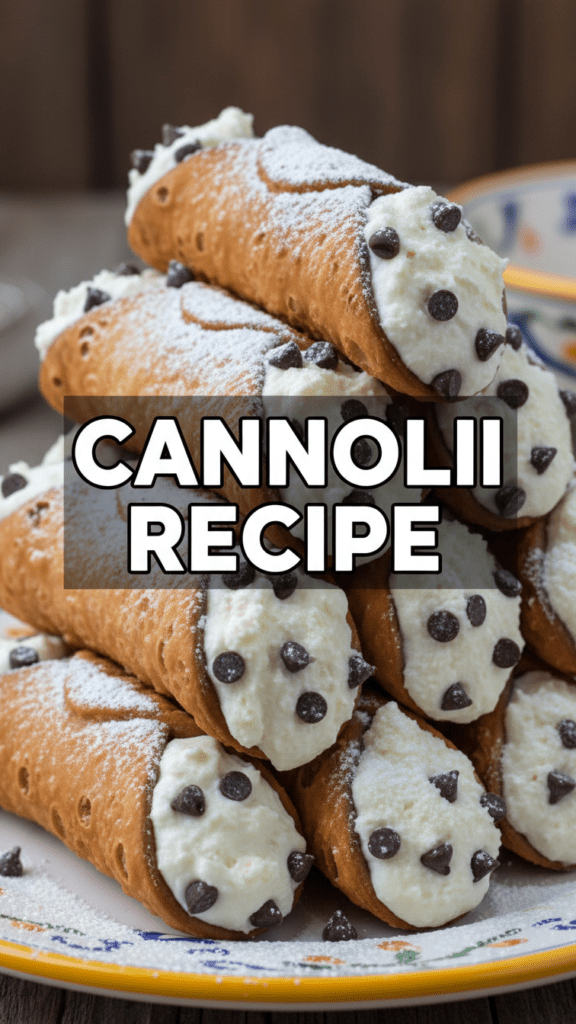
🇮🇹 Holy Cannoli: Mastering the Ultimate Authentic Sicilian Cannoli Recipe
Let’s be brutally honest: if you’ve only ever had a cannoli from a grocery store bakery case, you haven’t actually had a cannoli. You’ve had a soggy, sad, vaguely sweet biscuit filled with what I assume is repurposed industrial caulking. It’s a culinary hate crime! A real cannoli recipe is a symphony of textures—a shatteringly crisp, bubbly shell meeting a velvety, wine-spiked ricotta cream that makes you want to spontaneously start speaking Italian.
I once brought a batch of these to a family gathering where my Great Aunt Rosa—a woman who judges everyone’s cooking with the intensity of a grand inquisitor—actually finished two of them. She didn’t even complain about the cinnamon. That, my friends, is the Sicilian seal of approval. Are you ready to stop settling for mush and start frying up shells that would make a nonna weep with pride?
🏆 Why This Cannoli Recipe is the Actual GOAT
Why should you bother making a cannoli recipe from scratch when it involves deep-frying and metal tubes? Because the “crunch factor” has a half-life of about twenty minutes. The second you fill a shell, the clock starts ticking. By making them at home, you ensure that glorious contrast between the warm, crispy shell and the cold, sweet cream.
This recipe is awesome because it uses the traditional secret weapon: Marsala wine. The acidity in the wine reacts with the heat to create those iconic tiny bubbles on the shell’s surface. It impresses guests because, let’s face it, nobody makes their own cannoli shells anymore. You’ll look like a pastry wizard who just stepped off a plane from Palermo. It’s the ultimate kitchen-flex, IMO.
🥛 The “Leave the Gun, Take the Ingredients” List
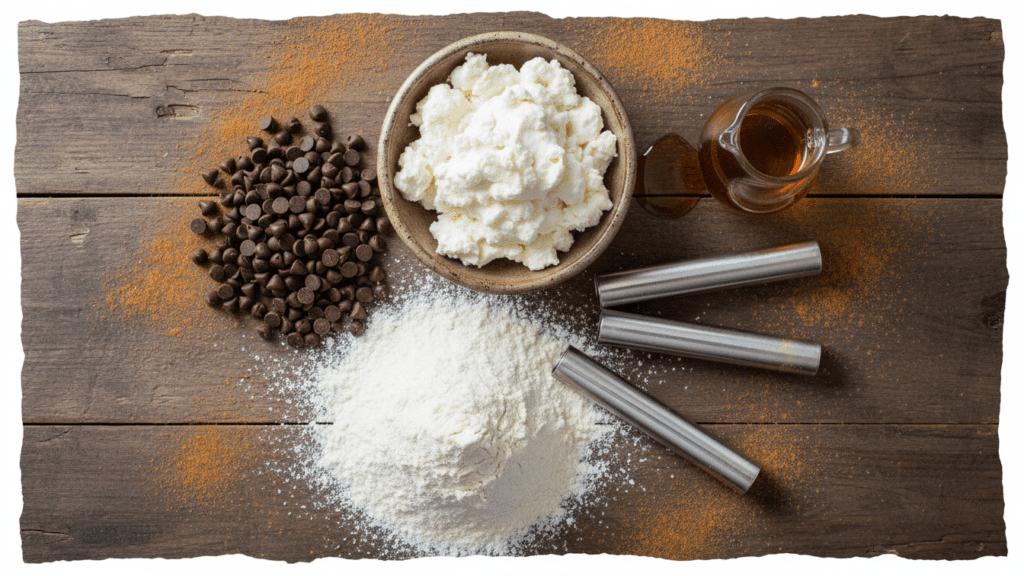
The secret to success here is high-quality fat and very dry cheese. Don’t even think about using that watery ricotta from a plastic tub without draining it first!
The Shells (Scorza)
- 2 Cups All-Purpose Flour: Plus a little extra for your work surface.
- 2 Tablespoons Granulated Sugar: Just enough to help the browning process.
- 1 Teaspoon Unsweetened Cocoa Powder: This gives the shells their signature deep, dark color.
- ½ Teaspoon Ground Cinnamon: Trust me, it adds an earthy mystery.
- 3 Tablespoons Cold Unsalted Butter: Cubed like tiny gold nuggets.
- ½ Cup Dry Marsala Wine: The bubbles depend on this!
- 1 Large Egg: Lightly beaten (save a bit for the “glue”).
- Pinch of Salt: To make the chocolate pop.
- Neutral Oil (Canola or Vegetable): For the deep-fry bath.
The Sweet Ricotta Filling
- 2 Cups Whole Milk Ricotta Cheese: CRUCIAL: Must be drained overnight in cheesecloth.
- ¾ Cup Powdered Sugar: Sifted, because lumps are the enemy.
- ¼ Teaspoon Ground Cinnamon: (Optional, but highly recommended).
- ½ Cup Mini Semi-Sweet Chocolate Chips: Or finely chopped dark chocolate.
- 1 Teaspoon Vanilla Extract: Use the real stuff, please.
Key Substitutions
- Wine Swap: If you can’t find Marsala, a dry white wine with a splash of white vinegar works in a pinch to provide the necessary acidity.
- Fat Swap: Traditionalists use lard for the shells for maximum crispiness.1 Use it if you’re brave!
- Cheese Swap: Some people mix in a little mascarpone for extra stability, but true Sicilians stick to pure sheep or cow milk ricotta.
🔪 Tools & Kitchen Gadgets Used
You can’t really wing it with cannoli; you need the right structural support.
- Cannoli Forms (Metal Tubes): You literally cannot do this without them. Check out stainless steel ones here!
- Deep Fry/Candy Thermometer: Because “hot enough” isn’t a measurement. Grab a reliable one here!
- Round Cookie Cutter (3 or 4 inch): For uniform shells. Get a nested set here!
- Pasta Machine or Rolling Pin: We need that dough paper-thin. Check out the best manual rollers!
- Pastry Bag and Large Tip: For a mess-free filling experience. Reusable bags are best!
- Fine Mesh Sieve: For the essential powdered sugar dusting.
👩🍳 Step-by-Step Instructions: The Path to Sicilian Glory
Follow these steps, and please, for the love of all things holy, do not fill them until you are ready to eat them. Soggy shells are a culinary sin.
1. The Dough Workout
In a large bowl, whisk your flour, sugar, cocoa, cinnamon, and salt. Rub the butter in with your fingers until it looks like wet sand. Add the egg and Marsala wine. Knead the dough on a floured surface for about 10 minutes until it’s smooth and elastic. Wrap it in plastic and let it rest for at least 1 hour. TBH, the rest is just as important as the kneading.
2. The Great Drain (Do This Yesterday!)
If you haven’t drained your ricotta, stop now. Put it in a sieve lined with cheesecloth, put a weight on top, and let it sit in the fridge for 12–24 hours. You want it dry enough to hold its shape, not like a runny yogurt.
3. Thin is In
Roll your rested dough out. If you have a pasta machine, go down to the second-to-thinnest setting. If using a rolling pin, roll until you can practically see your hopes and dreams through the dough. Cut out circles using your cookie cutter.
4. The Tube Wrap
Lightly grease your cannoli forms. Wrap a dough circle around each tube. Dab a tiny bit of the beaten egg on the edge to seal it. IMPORTANT: Don’t get egg on the metal tube, or the shell will never slide off!
5. The Golden Fry
Heat your oil to exactly 360°F (180°C). Fry the shells (with the tubes inside) for about 2–3 minutes until they are golden brown and covered in beautiful bubbles. Carefully remove them with tongs and let them cool on paper towels for a minute before sliding the tubes out.
6. The Cream Dream
Whisk the drained ricotta and powdered sugar together until smooth. Fold in the vanilla, cinnamon, and chocolate chips. Don’t over-mix, or the cheese will get watery. Chill this mixture in your pastry bag until you’re ready for the grand assembly.
7. The Final Flourish
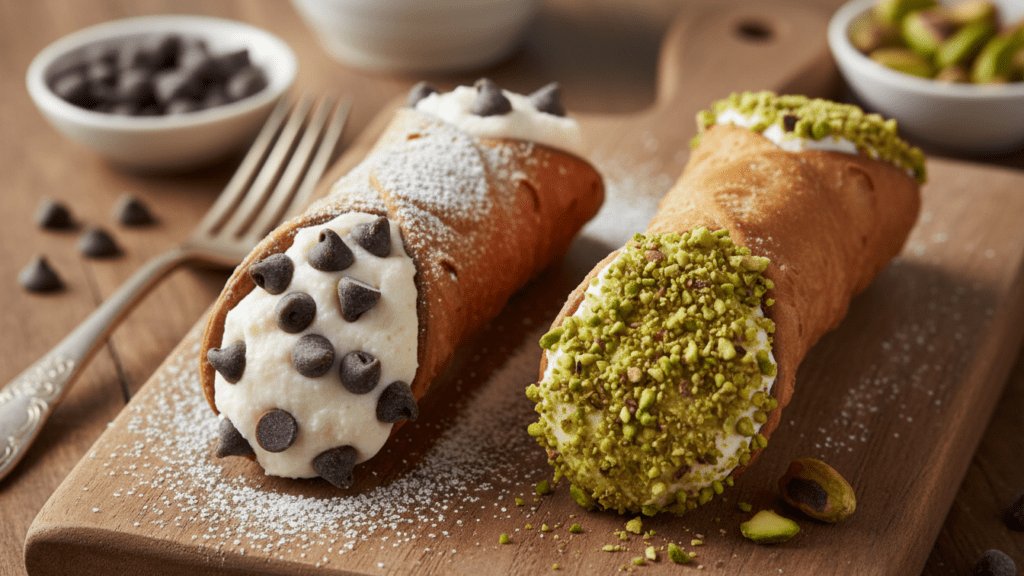
Pipe the cream into the shells from both ends so there’s no “air gap” in the middle. Dip the ends in extra chocolate chips, crushed pistachios, or candied orange peel. Give it a heavy snowstorm of powdered sugar and serve immediately!
📊 Calories & Nutritional Info (The Justification)
Since it’s filled with cheese, it’s basically a protein bar, right? Let’s look at the “facts.”
- Calories per cannoli: $\approx$ 220–280 kcal (depending on your “generosity” with the chips).
- Protein: Decent levels thanks to the ricotta.
- Calcium: Strong bones through Italian pastry—you’re welcome.
- Mood: Scientifically proven to increase happiness by 400% per bite.
🚨 Common Mistakes to Avoid (The Hall of Shame)
Avoid these if you want Great Aunt Rosa to keep talking to you.
- Filling Too Early: This is the #1 mistake. If you fill them an hour before the party, you are serving soggy cardboard. Fill at the last possible second.
- Dough Too Thick: If the dough is thick, it won’t bubble and it will be chewy. Roll it until it’s translucent.
- Watery Ricotta: If you skip the draining process, the filling will leak out of the shell like a sad puddle. Drain it until it’s stiff.
- Oil Too Cold: If the oil isn’t hot enough, the shells will absorb the grease and become heavy and oily. Use that thermometer! 🙂
✨ Variations & Customizations
Make it weird. I won’t judge, but a Sicilian might.
1. The Keto-Friendly Swap
Use almond flour and xanthan gum for the shell (though it won’t bubble as much) and replace the sugar with powdered monk fruit. It’s a “low-carb-noli.”
2. The “Fire-Breather” Version
Add a pinch of cayenne pepper to the chocolate filling and use spiced rum instead of Marsala in the dough. It’s a spicy, boozy kick that works surprisingly well with the cream.
3. The Pistachio Powerhouse (Vegetarian Swap)
The recipe is already vegetarian! To level it up, swap the chocolate chips for finely crushed Sicilian pistachios and add a drop of almond extract to the cream.
❓ FAQ Section: Your Cannoli Conundrums Answered
Why do my cannoli shells not have bubbles?
You likely skipped the Marsala wine or your dough didn’t rest long enough. The acidity and the gluten relaxation are what create those beautiful blisters.
Can I bake the shells instead of frying?
You can, but they won’t be authentic. Baked shells are more like crackers. If you must, bake at 400°F for 10 minutes, but IMO, the fry is worth the effort.
How long do the shells last?
Unfilled shells will stay crispy in an airtight container at room temperature for up to 5 days.
What is the best ricotta to use?
Look for “Impastata” ricotta if you can find it—it’s specifically designed for pastries. If not, just ensure your regular whole-milk ricotta is drained perfectly.
Can I freeze cannoli?
You can freeze the shells and the filling separately for up to a month. Do not freeze the assembled cannoli, or you’ll end up with a soggy disaster upon thawing.
Why do I need cocoa powder in the dough?
It doesn’t make the shell taste like chocolate; it provides a deep mahogany color and a hint of bitterness that balances the sweet cream.
How do I get the shells off the metal tubes?
Wait about 60 seconds after frying. Use a paper towel to grip the shell and gently twist and slide the tube out. If they stick, you probably didn’t grease the forms!
🥂 Final Thoughts: Go Forth and Fry!
You’ve done it. You’ve mastered the most intimidating dessert in the Italian repertoire. You are now a titan of the metal tube and a hero of the ricotta. Go ahead, have that second one—it’s mostly air and tradition, after all. Just don’t tell me if you used the pre-made shells from the store; I have a reputation to maintain. 🙂