
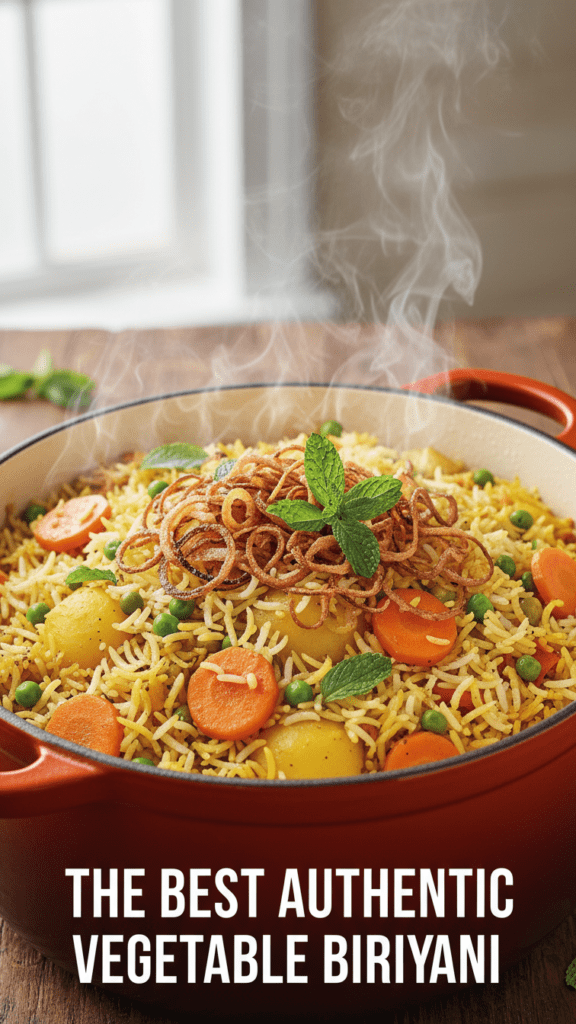
The Ultimate Gourmet Vegetable Biryani: A Royal Feast for Your Inner Foodie
Let’s be brutally honest for a second: we’ve all been there. You’re at a mid-tier wedding, eyeing the buffet line, only to be served a scoop of what looks like yellow-stained rice with three sad, overcooked peas. It’s a culinary betrayal of the highest order. But what if I told you that a vegetable biryani actually exists that is so fragrant, so complex, and so unapologetically elite that your meat-loving friends will literally fight over the last grain?

I first mastered this recipe for a friend who claimed that “rice is just a side dish.” One bite of these saffron-infused, hand-layered beauties later, and he was guarding the raita bowl like a gargoyle. This isn’t just a “healthy-ish” vegetarian option; it is objectively elite comfort food. If you want to shut down the skeptics and reclaim your kitchen dignity, you’re in the right place. Ready to ruin standard takeout for yourself forever? Let’s get to the layering.
Why This Recipe is the Absolute GOAT of Rice Dishes
Why should you bother blooming saffron for a vegetable biryani when you could just throw everything in a pressure cooker and call it a day? Because your taste buds deserve a party, not a funeral. First off, the flavor profile is a masterpiece of balance—think the earthy sweetness of caramelized onions playing tag with the bright zing of fresh mint and the savory punch of whole spices. It isn’t just “good for a veggie dish”; it is a vibrant, satisfying masterpiece that makes you feel like a Michelin-star chef in your own pajamas.

Secondly, it is ridiculously easy to impress guests with this. If you can boil water and follow a simple “sandwich” method of layering, you’ve already won. It’s a low-effort, high-reward project that makes you look sophisticated while the pot does 90% of the heavy lifting. Plus, it is naturally packed with fiber and nutrients, so you can satisfy everyone without the post-kebab grease coma. TBH, once you smell that steam escaping the pot, you’ll never look at a rice cooker the same way again. 🙂
The Grocery List: Clean, Simple, and High-End
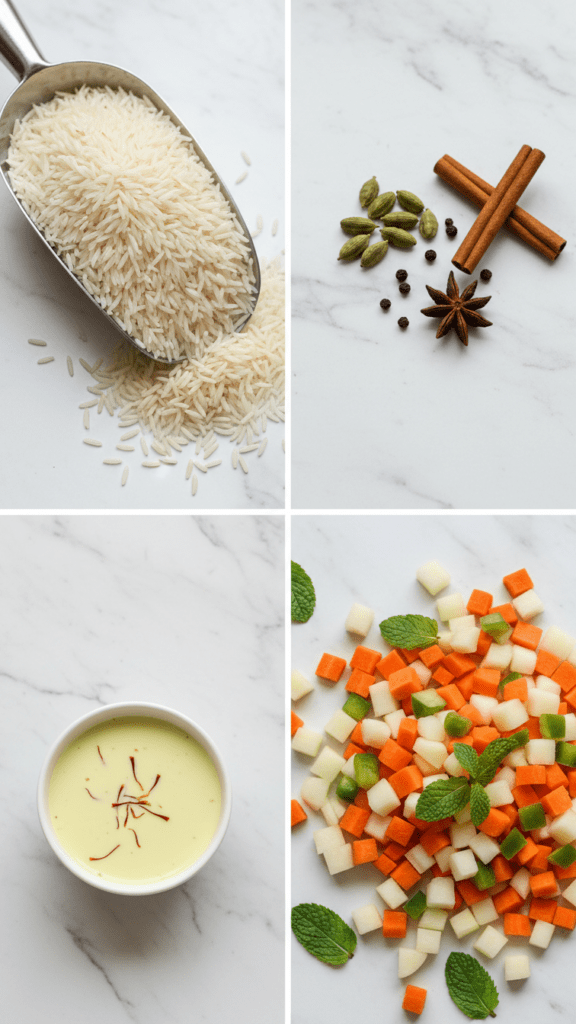
Don’t overcomplicate your life by searching for rare grains harvested under a blue moon. We are using powerhouse pantry staples that actually work together to create magic.
- Basmati Rice: 2 cups. Always use long-grain aged basmati—anything else is just sad porridge.
- The Veggie Squad: 2 large potatoes (cubed), 1 cup of cauliflower florets, 1/2 cup of peas, and 2 large carrots.
- The Aromatics: 2 large red onions (sliced thin for “biryani gold”), 3 cloves of garlic, and 1 inch of fresh ginger.
- Yogurt (Dahi): 1 cup. This creates the “masala” base that hugs the rice.
- The Saffron Flex: A pinch of saffron strands soaked in 2 tablespoons of warm milk.
- The Whole Spice Cabinet: Green cardamom, cloves, cinnamon sticks, and bay leaves.
- The Powdered Spices: Turmeric, red chili powder, and Garam Masala (the holy grail).
- Fresh Finish: A giant handful of fresh mint and cilantro.
Tools & Kitchen Gadgets You Need
To make this the smoothest cooking experience of your life, snag these basics. I’ve linked my favorites so you can treat your kitchen to the upgrades it deserves!
- Heavy-Bottomed Dutch Oven: Essential for the “dum” (slow-steam) method without burning the bottom. Grab this professional Lodge pot here.
- Sharp Chef’s Knife: Dull knives lead to jagged onions and bad moods. Check out this ergonomic blade.
- Fine Mesh Sieve: For rinsing rice until the water runs clear. Try this sturdy sifter set.
- Stainless Steel Spatula: Perfect for fluffing the rice without breaking the delicate grains. Get a professional one here.
- Digital Kitchen Scale: Because “one cup” of rice is an existential crisis. Get a reliable scale here.
Step-by-Step Instructions: The Path to Fragrant Glory
Follow these steps precisely. TBH, the way you treat your rice matters almost as much as the spices themselves.
1. The Rice Awakening
Rinse the basmati rice until the water runs clear. Soak it for 30 minutes. FYI: skipping the soak is a crime; it’s the difference between fluffy clouds and a sticky mess.
2. The Caramelization Ritual
Heat oil in your Dutch oven. Fry the sliced onions until they are a deep, mahogany brown. Remove half for the garnish. These are your “Biryani Gold.” Don’t burn them, or the whole dish will taste like regret.
3. The Veggie Masala Marriage
In the same pot, sauté the ginger-garlic paste and whole spices. Add the veggies, yogurt, and powdered spices. Cook until the oil starts to separate. The vegetables should be almost cooked but still have a bit of “snap.”
4. The Par-Boiling Secret
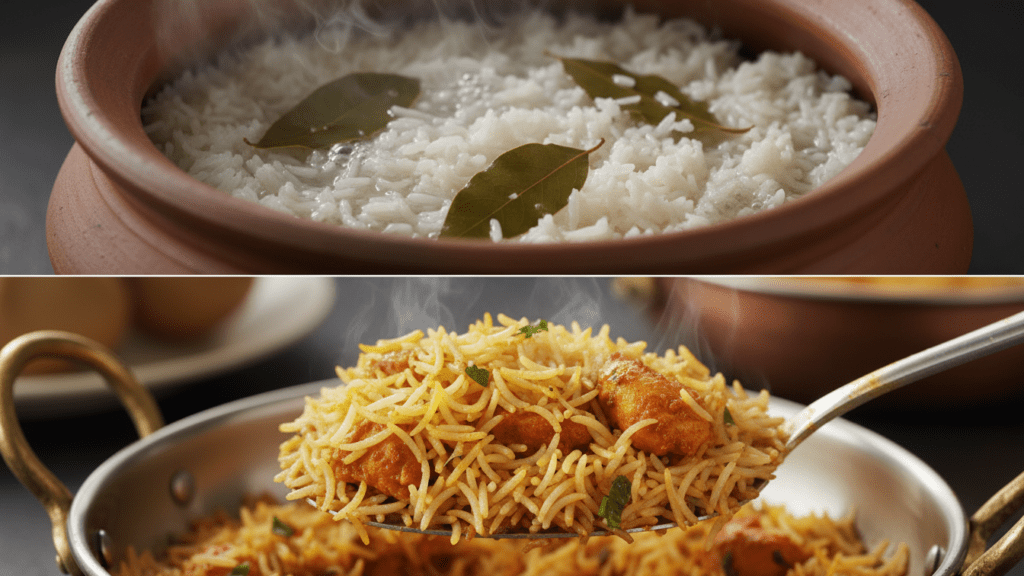
Boil a large pot of water with salt and bay leaves. Cook the soaked rice for exactly 5-6 minutes. Aim for 70% cooked. It should have a “bite” in the middle. Drain it immediately.
5. The Grand Layering
Lower the heat. Layer the par-boiled rice over the veggie masala. Sprinkle the reserved fried onions, mint, cilantro, and the saffron milk. Add a few drops of ghee if you’re feeling extra indulgent.
6. The “Dum” Steam
Seal the pot with a tight lid. Let it steam on the lowest heat possible for 15-20 minutes. This is where the magic happens. Turn off the heat and let it rest for 10 minutes. Do not peek! Opening the lid early is how you lose all that aromatic goodness. 🙂
Calories & Nutritional Info
For those of you who track your stats like a part-time job, here is the lowdown per serving (approx. 4 large servings):
- Calories: ~450 kcal (Mostly from the glorious rice and ghee).
- Net Carbs: ~65g (Energy for your soul!).
- Protein: ~12g (Thanks, yogurt and peas!).
- Fat: ~15g (Mostly heart-healthy fats and buttery joy).
- Fiber: ~6g (Vegetables are involved, after all).
Common Mistakes to Avoid: Don’t Be That Person
Even a recipe this simple can go sideways if you get cocky. Avoid these blunders to keep your kitchen dignity.
- Overcooking the Rice: If the rice is fully cooked before layering, it will turn into mush. 70% cooked is the goal.
- Using Fresh Onions in Layers: Raw onions don’t belong here. Caramelize them first or go home.
- Skipping the Saffron: Saffron provides that “royal” yellow color and floral scent. The Saffron Flex is mandatory.
- Stirring Too Vigorously: You’ll break the long rice grains. Use a gentle “folding” motion with your spatula.
- Using Low-Fat Yogurt: It will curdle and look like a science experiment. Use full-fat dahi. 🙂
Variations & Customizations
Feeling adventurous? Here are three ways to flip the script on this vegetable biryani:
The Spicy Siren
Add three chopped Thai bird’s eye chilies to the masala and a teaspoon of extra red chili powder. Serve with a side of extra-hot mirchi ka salan. Keep a glass of milk nearby.
The Keto-Friendly Hack
Ditch the rice! Use cauliflower rice and skip the par-boiling step. Sauté the cauliflower with the masala for 5 minutes and top with fried onions. You’re now a low-carb wizard.
The “Nuts & Fruits” Vegetarian Swap
Add toasted cashews, raisins, and pomegranate seeds to the layers. It turns a savory dish into a Persian-inspired feast that feels very high-end. IMO, it’s a total game-changer.
FAQ Section: You Asked, I Answered
What is the best rice for vegetable biryani? Extra-long grain aged Basmati is the only correct answer. It has the lowest starch and the highest aroma.
Can I make vegetable biryani in a pressure cooker? You can, but it’s not true biryani; it’s a “pulao.” The dum method (slow steaming) is what gives it those distinct layers of flavor.
Why is my biryani dry? You probably didn’t use enough yogurt or oil in the masala. Add a splash of water or more ghee during the layering stage to fix this.
Is biryani gluten-free? Yes! This recipe is naturally gluten-free. It’s the perfect “crowd-pleaser” for guests with dietary restrictions.
How do I prevent the bottom from burning? Use a heavy-bottomed pot or place a flat tawa (griddle) under your pot during the steaming phase. It diffuses the heat perfectly.
How long do leftovers last? About 3 days in the fridge. Don’t use the microwave to reheat! Steam it in a pan with a splash of water to bring the fluff back.
Can I use frozen vegetables? Sure! Just add them directly to the masala. They might cook faster than fresh ones, so watch the texture.
Final Thoughts
There you have it. A vegetable biryani recipe that actually respects your time and your taste buds. It’s smoky, it’s fresh, and it’s the only meal that makes me feel like I’m winning at adulthood on a random Tuesday night. Once you master the layers, you’ll realize that store-bought takeout is just a sad, salty lie. Go forth, fry those onions, and enjoy the arrangement. Just don’t be surprised when your neighbors start “accidentally” dropping by at dinner time. 🙂
Would you like me to help you find a quick recipe for a cooling cucumber raita to go with this?