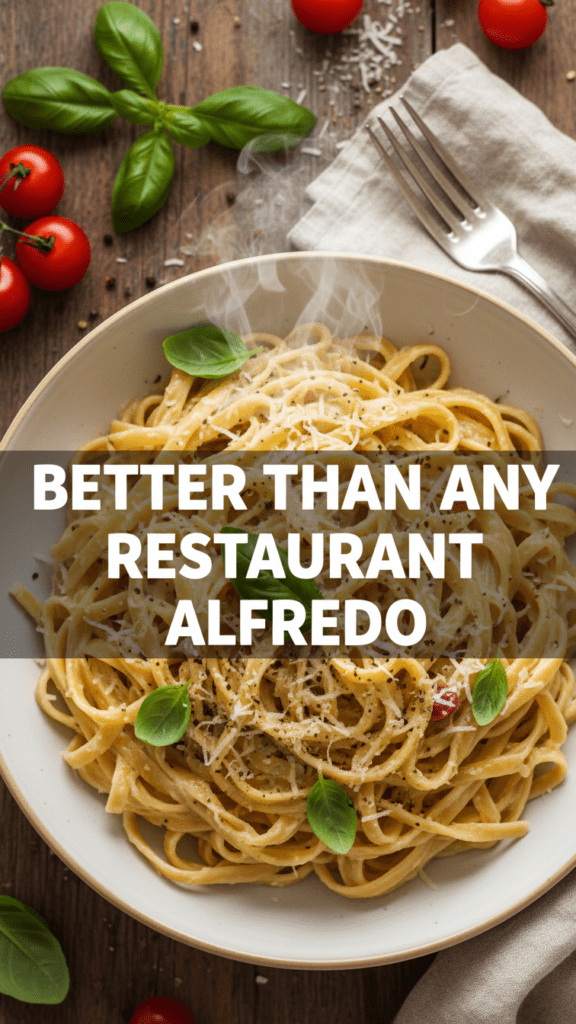
The Ultimate Creamy Fettuccine Alfredo Recipe: Better Than Any Chain Restaurant
We’ve all been there: sitting in a crowded Italian chain restaurant, waiting for a bowl of pasta that costs twenty bucks and tastes like it came out of a plastic bag. You take a bite of that “white sauce” and realize it has the consistency of library paste and the soul of a lukewarm sponge. Why do we keep doing this to ourselves when the perfect fettuccine alfredo is just fifteen minutes away in our own kitchens?
I once watched a friend try to make this using a jar of “Alfredo sauce” and a block of processed yellow cheese. I almost called the authorities. If you want to experience true, silky, buttery bliss without the artificial thickeners, you have to do it the right way. Are you ready to stop settling for mediocre pasta and start making a dish that would make a Roman grandmother weep with joy? Let’s get into it.
Why This Recipe is Absolutely Awesome
Let’s be honest—this recipe is basically a warm hug in a bowl. It’s the ultimate comfort food for when life gets a little too loud. The flavor profile is simple but incredibly sophisticated, relying on the high-quality marriage of butter, cream, and cheese. No mystery ingredients here!
Secondly, this is the world’s best “emergency” dinner. You probably already have everything you need in your fridge and pantry. It takes less time to cook than it does to browse a delivery app. Plus, it’s remarkably easy to scale up if you suddenly find yourself hosting a crowd of hungry friends.
Finally, the bragging rights are massive. When you serve a bowl of perfectly emulsified, glossy fettuccine alfredo, you look like a culinary wizard. People will ask for your secret, and you can just smile and tell them it’s a family recipe (I won’t tell). TBH, once you master this sauce, you’ll realize that the jarred stuff is a personal insult to your taste buds. 🙂
The Ingredient Lineup
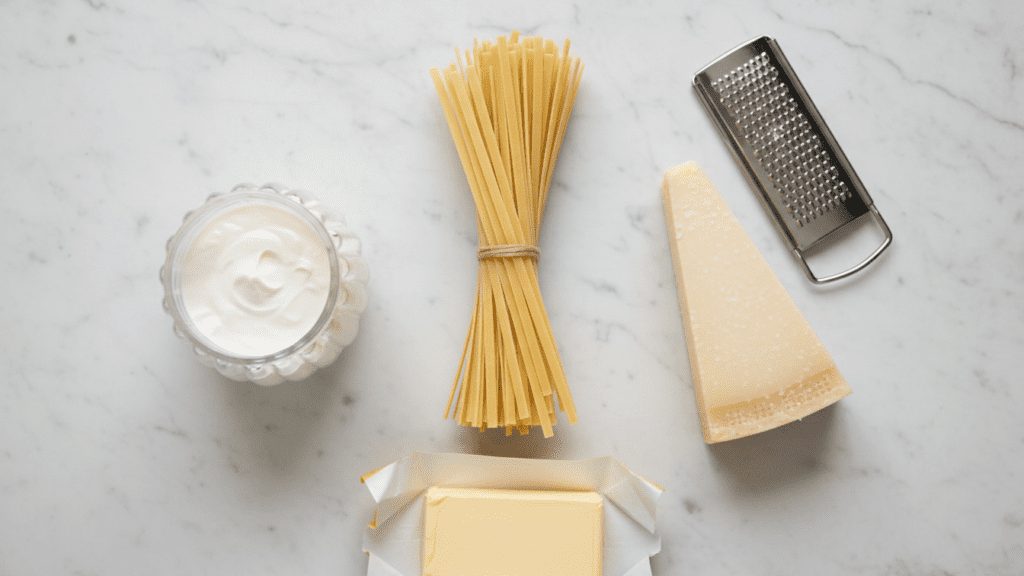
Gather your essentials. Because this recipe uses so few ingredients, the quality of each one actually matters. Don’t go cheap on the cheese!
- Fettuccine Pasta: Look for a high-quality bronze-cut pasta if possible. The rougher surface helps that silky sauce cling to every strand like a needy ex.
- Unsalted Butter: Use the good stuff—European style butter with a higher fat content makes a world of difference.
- Heavy Cream: No, you cannot use skim milk. Don’t even think about it. We need the fat for that iconic velvety texture.
- Parmigiano-Reggiano: Buy a wedge and grate it yourself. Pre-shredded cheese is coated in potato starch to prevent clumping, which will turn your sauce into a grainy mess.
- Fresh Garlic: One or two cloves, finely minced. It adds a subtle depth that balances the richness of the dairy.
- Freshly Cracked Black Pepper: This provides the essential “bite” that cuts through the cream.
- Sea Salt: For the pasta water (which should taste like the ocean) and a pinch for the sauce.
- Fresh Parsley (Optional): Just for a pop of color so you can pretend there’s something healthy in there.
Tools & Kitchen Gadgets Used
You don’t need a professional kitchen, but a few specific tools will help you reach that restaurant-quality finish.
- Large Pasta Pot: Give your noodles plenty of room to dance.
- Deep Skillet or Sauté Pan: You want enough surface area to toss the pasta and sauce together without making a mess.
- Box Grater or Microplane: Essential for turning that block of gold (Parmesan) into a fine, melty snow.
- Tongs: The absolute best tool for tossing long pasta and ensuring every strand is coated.
- Measuring Cups: Precision helps, especially when you’re first learning the ratio of cream to cheese.
- Fine Mesh Strainer: To drain your pasta (but remember to save some water!).
Step-by-Step Instructions
1. The Salty Sea
Fill your large pasta pot with water and add a generous handful of sea salt. Bring it to a rolling boil. Drop your fettuccine in and cook it for about a minute less than the package directions. We want it al dente—firm to the bite—because it will finish cooking in the sauce.
2. The Golden Base
While the pasta boils, melt your unsalted butter in a deep skillet over medium-low heat. Add your minced garlic and sauté for about 30 seconds. Do not let it brown! We want sweet, mellow garlic, not bitter, burnt nuggets.
3. The Creamy Simmer
Pour the heavy cream into the skillet with the butter. Bring it to a very gentle simmer. Let it cook for about 3 to 4 minutes until it thickens slightly. Keep the heat low; we aren’t trying to make a volcano here.
4. The Liquid Gold
Before you drain the pasta, scoop out a cup of the starchy pasta water. This is your secret weapon. Drain the noodles and toss them directly into the skillet with the cream and butter.
5. The Cheese Shower
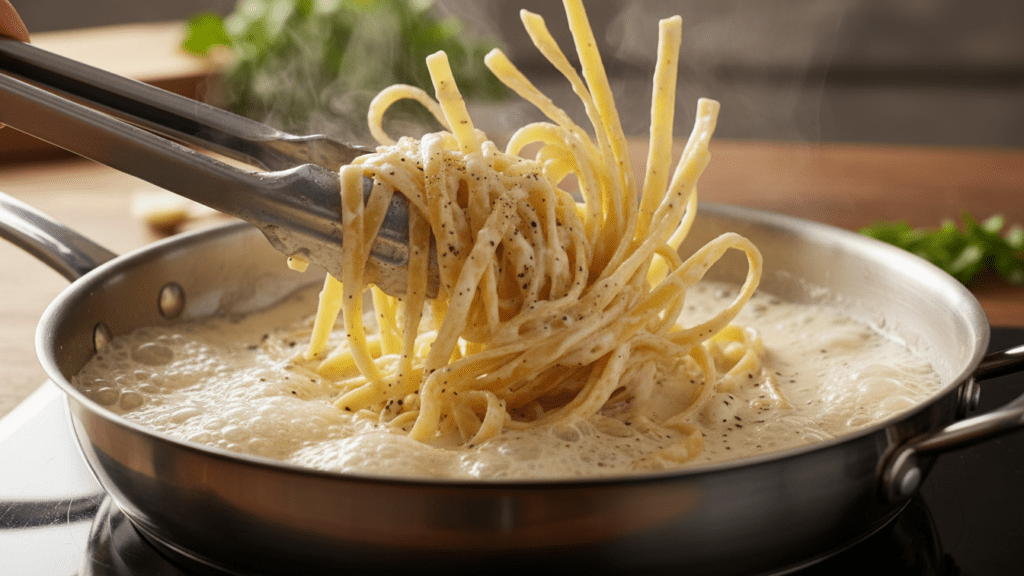
Turn the heat to the lowest setting. Sprinkle your freshly grated Parmigiano-Reggiano over the pasta in batches. Toss vigorously with your tongs. If the sauce looks too thick or dry, add a splash of that reserved pasta water. The starch helps the cheese and cream emulsify into a glossy, smooth coating.
6. The Finishing Touch
Season with a generous amount of freshly cracked black pepper. Give it one last toss. Does it look like a dream? Good. Serve it immediately in warmed bowls. IMO, cold Alfredo is a tragedy that shouldn’t happen to good people. 🙂
Calories & Nutritional Info
It’s pasta, butter, and cream. Let’s not pretend we’re eating a salad, okay?
- Calories: Approximately 850-950 calories per serving.
- Total Fat: Around 60g (mostly the delicious, saturated kind).
- Carbohydrates: 65g of pure energy.
- Protein: 25g, largely from the Parmesan.
- Note: This dish is high in calcium and happiness, but maybe don’t make it a nightly staple if you value your cholesterol levels.
Common Mistakes to Avoid
Do not use pre-shredded cheese. I will haunt your kitchen if you do. The anti-caking agents will prevent the cheese from melting properly, leaving you with a clumpy, gritty sauce. Buy the wedge!
Stop using high heat. If you boil the sauce too hard after adding the cheese, the dairy will break and the oils will separate. Keep it low and slow for a smooth finish. Why would you want a greasy puddle instead of a creamy sauce?
Don’t forget the pasta water. That cloudy, salty water is the glue that holds the dish together. Without it, your sauce might stick to the bottom of the pan instead of the noodles. FYI, a dry Alfredo is just sad. :/
Avoid overcooking the noodles. The pasta should have a bit of “bite.” If you cook it to mush in the water, it will fall apart when you toss it in the skillet. Nobody wants a bowl of “Alfredo Porridge.”
Variations & Customizations
Once you master the classic, feel free to get a little creative with your additions.
- Chicken or Shrimp Alfredo: Sauté some chicken breast strips or jumbo shrimp in the butter before adding the cream. It adds a great punch of protein and makes the meal feel even more substantial.
- Spicy Version: Add a teaspoon of red pepper flakes to the butter and garlic. It provides a beautiful “back-of-the-throat” heat that cuts through all that rich cream.
- Keto-Friendly Swap: Use zucchini noodles (zoodles) or spaghetti squash instead of wheat pasta. You still get all the buttery, cheesy goodness without the carb heavy-lifting.
FAQ Section
Why is my Alfredo sauce grainy?
This usually happens if you use pre-shredded cheese or if you add the cheese to a sauce that is too hot. Grate your own cheese finely and add it over low heat while tossing constantly.
Can I make this without heavy cream?
Authentic Roman Alfredo (Alfredo di Lelio style) actually uses only butter and cheese. However, the Americanized version with cream is much more stable and easier for beginners to get right.
How do I reheat leftovers?
Low and slow is the key. Add a splash of milk or water to the pan to help the sauce loosen up. Never use the microwave on high, or you’ll end up with a bowl of oil and clumps.
Can I use milk instead of heavy cream?
You can, but the sauce will be much thinner and won’t have that signature “cling.” You might need to add a bit of flour (a roux) to thicken it, but then it’s technically a Béchamel, not a true Alfredo.
What is the best pasta for Alfredo?
Fettuccine is the classic choice because the wide, flat noodles provide plenty of surface area for the sauce. However, penne or rigatoni work surprisingly well too!
Is Alfredo sauce gluten-free?
The sauce itself (cream, butter, cheese) is naturally gluten-free! Just swap the traditional wheat pasta for your favorite gluten-free alternative.
How do I keep the sauce from separating?
Keep your heat low and don’t overcook the sauce once the cheese is in. If it starts to separate, a splash of hot pasta water and some vigorous whisking can often save it.
Final Thoughts
There you have it—the only fettuccine alfredo recipe you will ever need. It’s rich, it’s decadent, and it’s about a thousand times better than the stuff you get at the mall. Once you taste that first bite of glossy, garlicky pasta, you’ll never look back at a jar again.
Now, go forth and embrace the carbs. Invite some friends over, open a bottle of white wine, and enjoy the masterpiece you just created. Just don’t blame me if you start making this every single weekend. What are you going to top yours with first—chicken, shrimp, or just extra cheese?