
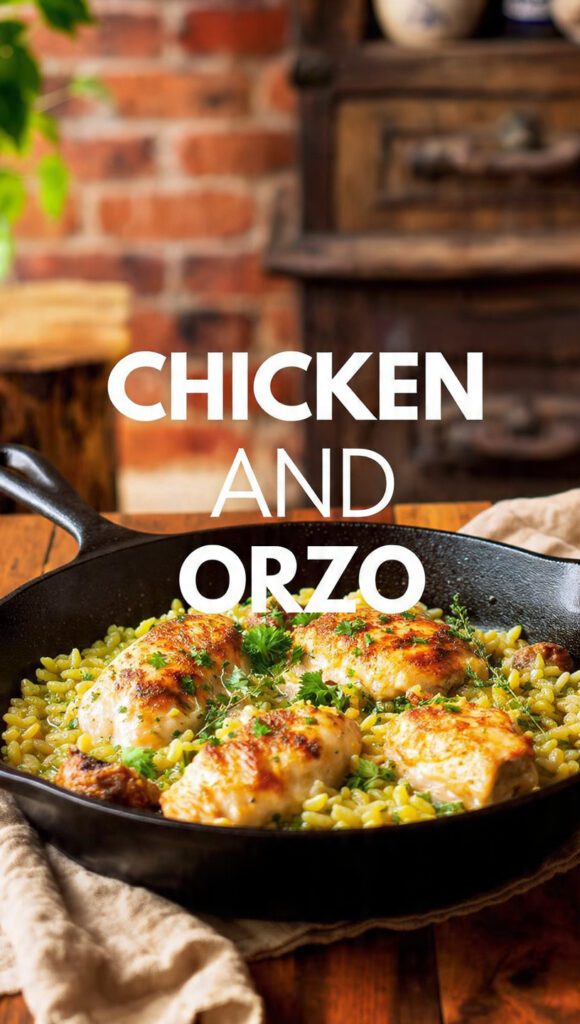
One-Pan Wonder: Easy Lemon Herb Chicken and Orzo Recipe
Remember that time you spent an hour making a complicated dinner, only for your family to ask, “Why didn’t you just make pasta?” Yeah, we’ve all been there. It’s exhausting. We crave maximum flavor for minimum effort. That, my friend, is where this incredible, one-pan chicken and orzo recipe swoops in like a culinary superhero. It delivers tender, juicy chicken, pearl-shaped pasta cooked in a savory broth, and a bright lemon-herb flavor that basically screams, “I am a fantastic cook and I still have free time!”

This recipe is the answer to the age-old question, “What the heck am I making for dinner?” It’s simple, it’s satisfying, and it will effortlessly become a high-rotation meal in your home. Seriously, if you can chop an onion and boil water, you can master this. You’re ready for the easiest fancy-tasting dinner of your life.
Why This Recipe Deserves a Permanent Home in Your Favorites
Why do you need this recipe? First, because it’s a one-pan meal. That means less cleanup. Seriously, if you hate washing dishes as much as I do, this is revolutionary. Secondly, the flavor synergy here is unreal. We sear the chicken to golden perfection, then cook the orzo right in the same pan with the savory drippings and broth. It’s like risotto, but with way less stirring and much less pretense.

The orzo absorbs all that fantastic chicken and herb flavor, instead of just plain water. Every bite is infused with savory depth and bright acidity from the lemon. Plus, it looks great. You’ll present this dish and everyone will think you spent hours slaving away. Want to impress guests without breaking a sweat? This is your secret weapon. Who knew tiny pasta could be so powerful?
The Grocery Run: Ingredients You Need
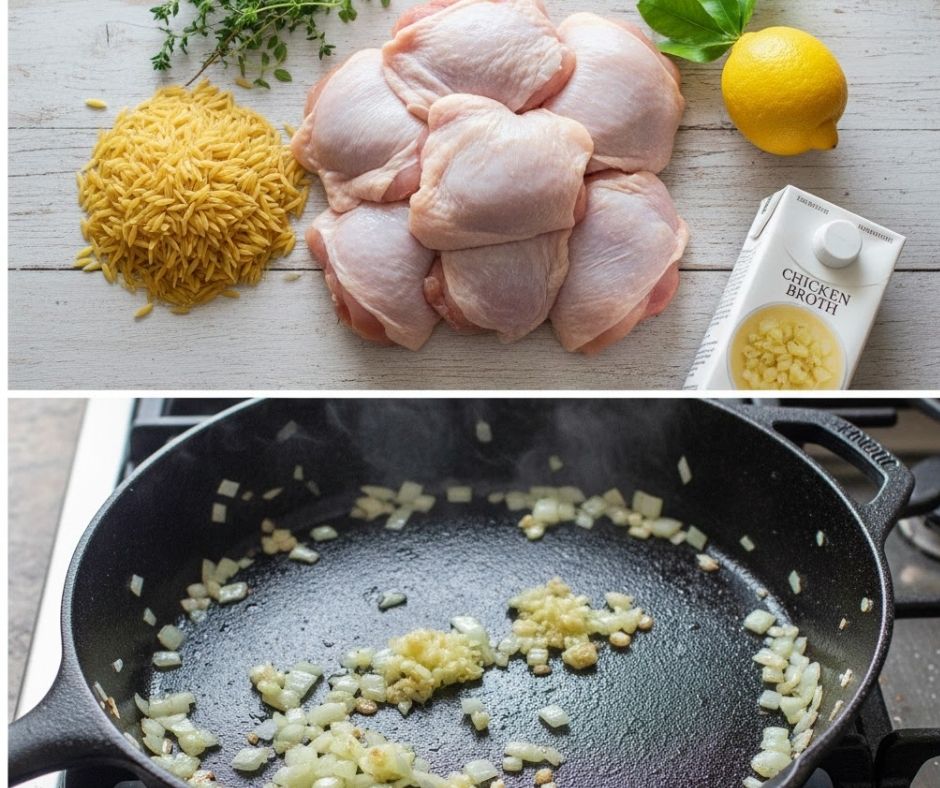
This recipe uses straightforward ingredients, but the quality of your chicken and broth really shines through.
- Chicken: Boneless, skinless chicken thighs are best here. They stay juicy and flavorful. Breasts work too, but they dry out easier.
- Orzo Pasta: The star carbohydrate. It looks like rice but acts like pasta.
- Olive Oil: For searing the chicken and sautéing the veggies.
- Aromatics: Diced yellow onion and minced garlic. The foundation of flavor.
- Chicken Broth: Low-sodium is a great idea so you control the salt. This is critical—it’s what cooks the orzo.
- White Wine (Optional): A splash of dry white wine (like Pinot Grigio) adds depth, but you can skip it if you prefer.
- Lemon: You need both the zest and the juice for that vibrant, fresh kick.
- Herbs: Fresh oregano and thyme are non-negotiable. Dried works, but fresh is better.
- Spinach or Arugula: A massive handful tossed in at the end for color and nutrients.
- Parmesan Cheese: Freshly grated for serving. The final, glorious touch.
Tools & Kitchen Gadgets Used
You don’t need a lot of gear, but one piece of equipment is absolutely essential for the “one-pan” status.
- Large Oven-Safe Skillet or Dutch Oven: This is the MVP. You need a skillet that can go from stovetop to oven seamlessly. Cast iron or a sturdy stainless steel skillet works best.
- Cutting Board and Sharp Chef’s Knife: For prepping the chicken and veggies. Safety first, folks.
- Tongs: Essential for flipping the chicken without splashing grease everywhere.
- Microplane Zester: The easiest way to get the fine zest from the lemon.
- Liquid Measuring Cup: To precisely measure that crucial chicken broth.
- Wooden Spoon or Spatula: For scraping up all those delicious brown bits (the fond!) from the bottom of the pan.
Step-by-Step Instructions
We are cooking in two main phases: searing on the stovetop and finishing in the oven. Get ready to feel like a kitchen wizard.
1. Prep the Chicken and Sear
Pat the chicken pieces very dry with paper towels. Season them aggressively with salt, pepper, oregano, and thyme. Heat the olive oil in your oven-safe skillet over medium-high heat. Sear the chicken for about 4-5 minutes per side until it is beautifully golden brown. Do not cook it through; you just want that incredible crust. Remove the chicken and set it aside—it’s resting!
2. Build the Flavor Base
Turn the heat down to medium. Add the diced onion to the pan. Sauté the onion for about 5 minutes until soft. If you see any browned bits stuck to the bottom, that’s good! Now, stir in the garlic for just one minute until fragrant. Don’t burn the garlic. If you are using wine, pour it in now and scrape up the browned bits. Let the wine simmer until it reduces by about half.
3. Add the Orzo and Broth
Dump the dry orzo directly into the pan. Stir it around for 1 minute—this gently toasts the pasta, giving it a deeper, nuttier flavor. Now, pour in the chicken broth and add the lemon zest. Bring the liquid to a simmer, stirring everything together nicely.
4. Bake to Perfection
Nestle the partially seared chicken pieces back into the orzo mixture. They should sit right on top of the pasta. Cover the skillet tightly with foil or a tight-fitting lid. Transfer the whole thing to a preheated oven (set to 400°F or 200°C). Bake for about 15-20 minutes. The orzo should absorb the liquid, and the chicken should register 165°F (74°C) internally.
5. The Finishing Touches
Remove the skillet from the oven. Carefully take off the lid. Stir in the fresh spinach and the lemon juice. The residual heat will wilt the spinach instantly. Let the dish sit for 5 minutes—the orzo will absorb any remaining liquid. Serve immediately, garnished with a generous grating of fresh Parmesan cheese and maybe a little extra oregano. Voilà!
Calories & Nutritional Info
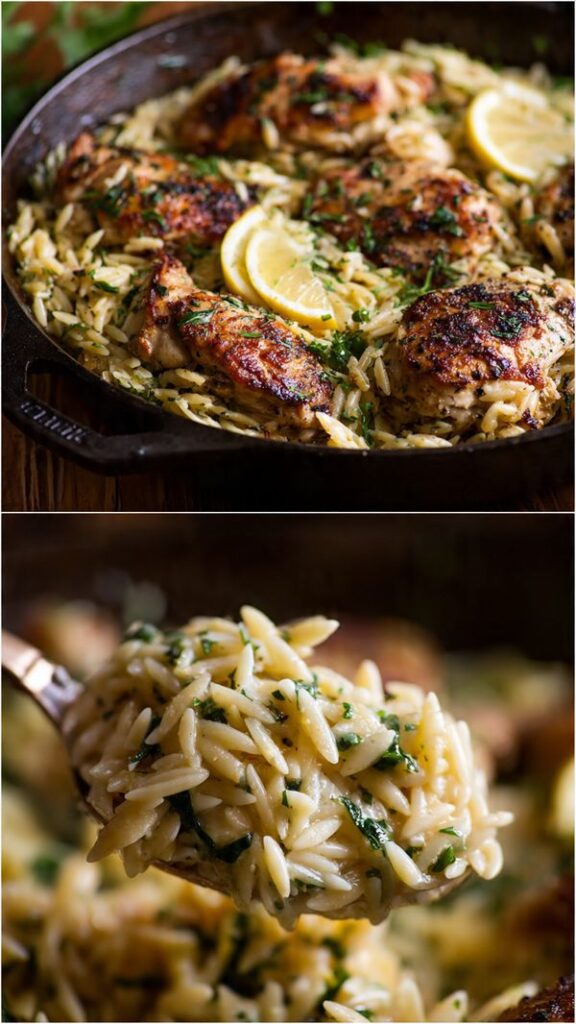
Here’s the quick breakdown for those of you who track macros (estimates based on 4 servings):
- Calories: ~550 kcal per serving
- Protein: High, primarily from the chicken, great for muscle repair.
- Carbohydrates: Complex carbs from the orzo.
- Fats: Moderate, from the chicken thighs and olive oil. Can be reduced by using breasts.
- Vitamins: Good source of Vitamin A and K from the leafy greens.
- Fiber: Low, but you can increase this by adding more vegetables.
Common Mistakes to Avoid
A few easy errors can turn your one-pan dream into a sticky disaster. Read these before you start!
- Not Searing the Chicken: Skipping this means you lose a massive layer of flavor and that crispy texture. Sear that chicken until it’s golden brown before it goes into the oven.
- Under-Seasoning the Chicken: The chicken needs a generous amount of salt and pepper before searing. This is the only chance you get to season the protein directly. Don’t be shy with the salt.
- Adding Cold Broth: If you pour cold broth onto hot orzo, it shocks the cooking process. Use warm or hot broth for a smoother, faster, and more efficient cook.
- Forgetting to Cover the Pan: If you don’t cover the skillet tightly in the oven, the liquid will evaporate instead of being absorbed by the orzo. A tight lid or foil tent is essential.
- Overcooking the Orzo: Orzo cooks quickly. If you bake it for too long, it will absorb all the liquid and turn into one giant, sticky block. Check it at 15 minutes!
Variations & Customizations
This is a great base recipe. Here are three ways you can mix it up to keep dinner interesting.
The Mediterranean Splash
Give it a Greek spin! Stir in kalamata olives, chopped sun-dried tomatoes, and crumbled feta cheese at the very end with the spinach. Finish with a drizzle of good quality extra virgin olive oil.
The Spicy Kick
Love the heat? Rub a bit of cayenne pepper or smoked paprika onto the chicken before searing it. You can also toss a pinch of red pepper flakes into the pan when you sauté the garlic.
The Vegetarian Swap
Easily go meatless! Swap the chicken broth for vegetable broth and replace the chicken with a can of drained, rinsed chickpeas or a package of firm, cubed tofu that you pan-fry until crispy before starting the recipe. This is super delicious and hearty.
FAQ Section
Can I use chicken breasts instead of thighs? Yes, but be careful! Chicken breasts cook faster. I recommend using thinner breasts, reducing the searing time slightly, and checking the internal temperature at 15 minutes to avoid drying them out.
Can I make this chicken and orzo dish ahead of time? You can prep the chicken and chop the veggies ahead, but don’t fully cook it until you’re ready to eat. Orzo soaks up liquid fast, making leftovers a bit dry.
Do I need to soak the orzo before cooking? Nope! Unlike some grains, orzo (which is pasta) does not require soaking. Just toast it dry in the pan, then add the liquid.
What is the best way to reheat leftovers? The orzo will be dry. Reheat leftovers on the stove over medium-low heat, adding a splash of extra chicken broth (about 1/4 cup per serving) and a little more lemon juice to bring it back to life.
Why did my orzo stick to the bottom of the pan? Likely two reasons: 1) You didn’t scrape the pan enough before adding the orzo, or 2) You didn’t stir well enough after adding the liquid. Stirring is key before the pan goes into the oven.
Can I use other vegetables? Absolutely. Toss in some chopped zucchini, bell peppers, or asparagus when you add the onion and garlic. Just dice them small so they cook through quickly.
What is the best type of wine for deglazing? Use a dry white wine like Pinot Grigio, Sauvignon Blanc, or Chardonnay. Never cook with a wine you wouldn’t drink!
Final Thoughts
You did it! You conquered the one-pan challenge and created a chicken and orzo dish that’s bursting with fresh, savory flavor. It’s the perfect weeknight meal—minimal effort, maximum payoff. Go ahead and pour yourself a glass of wine, because your dinner is incredible, and your sink is practically empty. Now, the only thing left to decide is who gets the biggest piece of chicken. (Spoiler alert: It’s you. You cooked it.)