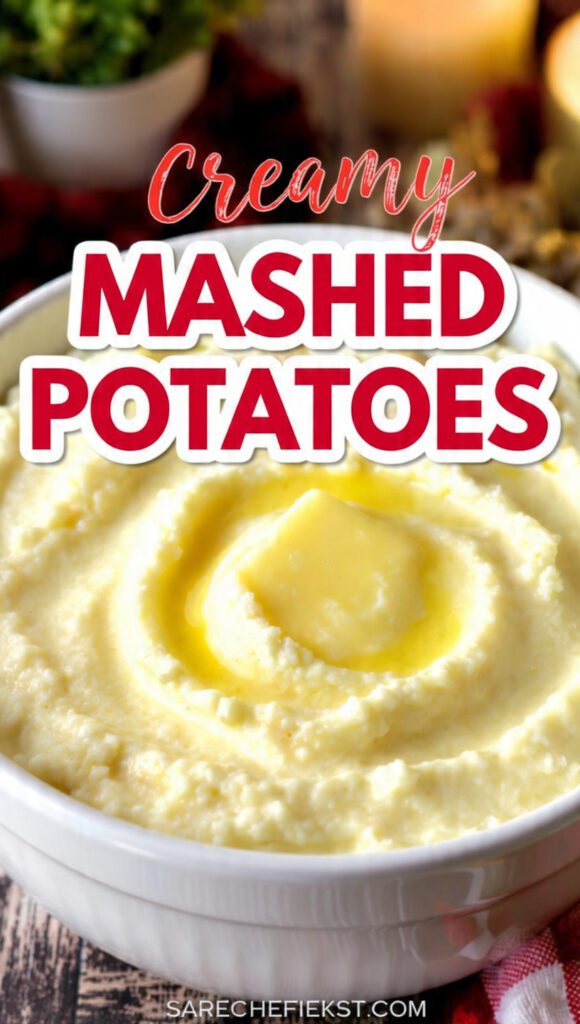
🥔 The Only Heavenly Creamy Mashed Potatoes Recipe That Truly Matters
Okay, let’s have a moment of silence for every bowl of sad, lumpy, watery mashed potatoes you’ve ever had. You know the ones—they taste vaguely of sadness and disappointment. We’ve all been victims. That ends now! We are pursuing the holy grail of side dishes: the perfect, velvety smooth, creamy mashed potatoes. This is the recipe that makes people forget the main course, the one that tastes like a cloud of butter and garlic, and the one that will make every holiday dinner better. Ready to turn boring spuds into pure, fluffy gold?
✨ Why This Recipe Deserves Your Undivided Attention
Why should you bother elevating your mashed potato game? Because they are the ultimate comfort food foundation! This recipe is awesome because it guarantees a smooth, lump-free texture and depth of flavor that a simple butter-and-milk combo can’t touch. We use two non-negotiable secrets:
- The Right Potatoes: We choose starchy heroes (Russets or Yukon Golds) that break down beautifully.
- The Warm Dairy Rule: Adding cold dairy to hot potatoes is a texture crime! Warming the butter and cream ensures maximum absorption and flavor.
Seriously, mashed potatoes are supposed to be decadent. Are you going to settle for mediocre? Didn’t think so. This dish is easy to master and will instantly impress every guest you ever host.
🧈 The All-Star Ingredients Lineup
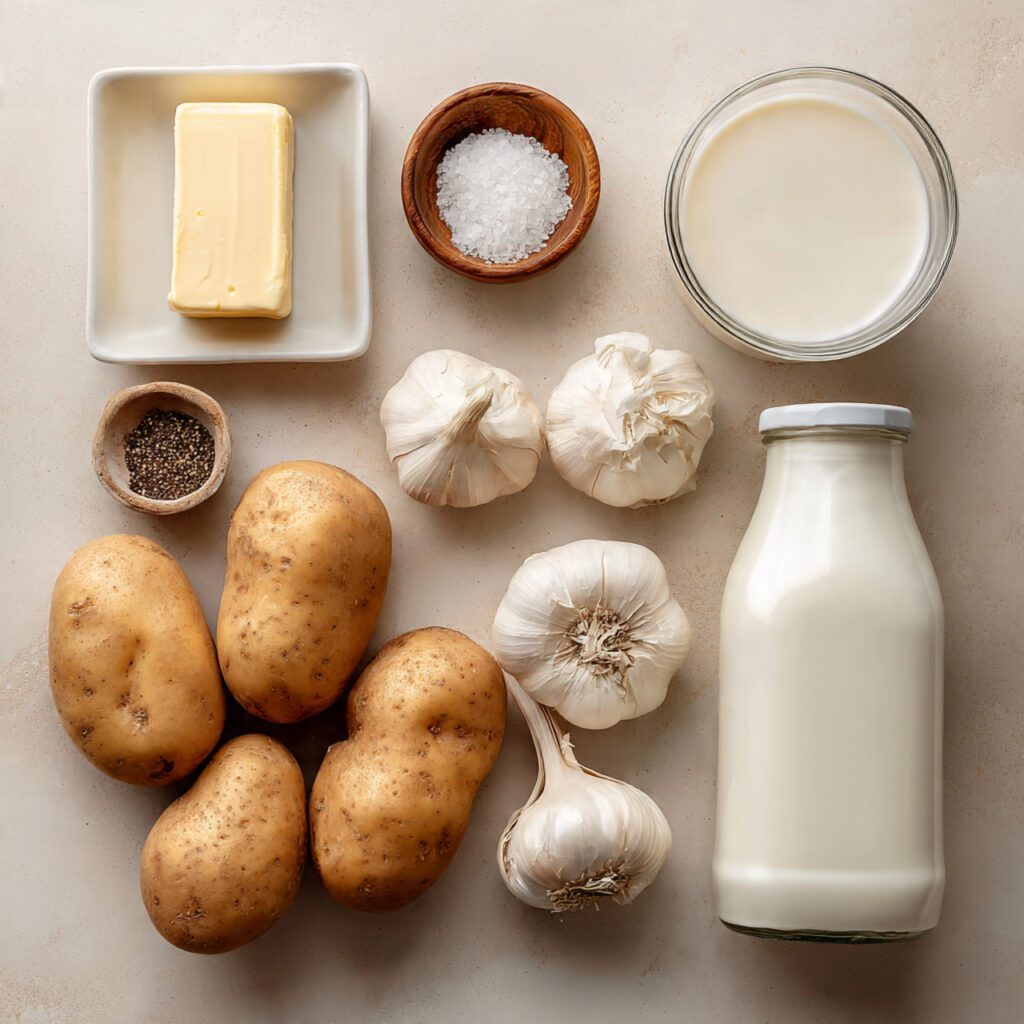
Perfection requires specific ingredients. Don’t cheap out on the dairy—it’s 50% of the magic!
H3 The Starchy Heroes
- 3 pounds Russet or Yukon Gold Potatoes: Peeled and cut into roughly equal 1.5-inch chunks. Consistency is key for even cooking.
H3 The Flavor & Creaminess Power Duo
- 1 stick (8 tablespoons) Unsalted Butter: Cut into tablespoons. This is non-negotiable!
- 1/2 cup Heavy Cream or Half-and-Half: For pure, velvety richness.
- 1/4 cup Whole Milk: For blending and moisture.
- 1-2 cloves Garlic (Optional but Recommended): Lightly smashed, for simmering with the cream.
- 1 teaspoon Salt (for the mash): Plus 1 tablespoon for the boiling water (season the water like the ocean!).
- 1/2 teaspoon Freshly Ground Black Pepper: To taste.
🛠️ Tools & Kitchen Gadgets Used
You need the right tools to achieve a smooth, creamy texture without turning your potatoes into glue.
- Large Stockpot: For boiling the potatoes.
- Small Saucepan: For warming the dairy (crucial step!).
- Colander: For draining the potatoes completely.
- Potato Masher or Potato Ricer (Highly Recommended): The ricer is the secret weapon for lump-free, fluffy potatoes. A masher works, but a ricer works miracles.
- Rubber Spatula or Wooden Spoon: For final folding and stirring.
- Measuring Cups and Spoons: Standard issue, of course.
- Electric Mixer (Avoid if Possible!): Only use an electric mixer if you like wallpaper paste. Seriously.
🚀 Step-by-Step Instructions: The Path to Velvety Smoothness
Follow these steps exactly. We are focused on texture and temperature control!
H3 Boil and Prep the Spuds
- Prep and Boil: Peel the potatoes and cut them into roughly equal chunks. Place them in the large pot and cover them with cold water by at least an inch. Add the tablespoon of salt to the water.
- Cook to Fork-Tender: Bring the water to a boil, then reduce to a simmer. Cook for 15-20 minutes, until the potatoes are easily pierced by a fork, but not falling apart. Starting in cold water ensures even cooking.
- Drain and Dry (The Moisture Enemy): Drain the potatoes thoroughly in a colander. Here’s the trick: put the drained potatoes back into the hot, empty pot. Place the pot over low heat for 1-2 minutes, stirring gently. This evaporates residual water, ensuring a drier, fluffier potato.
H3 Warm the Magic
- Warm the Dairy: While the potatoes dry out, gently combine the butter, heavy cream, milk, and lightly smashed garlic cloves in the small saucepan. Heat on low until the butter is melted and the mixture is warm (not boiling!). Remove the garlic cloves before adding the dairy.
- Mash: Use your potato ricer (seriously, buy one!) or masher to mash the potatoes right in the pot. Work quickly while they are hot. Stop when they are mostly lump-free.
H3 Final Mix and Season
- Fold in the Dairy: Slowly pour the warmed dairy mixture into the mashed potatoes. Use a rubber spatula or wooden spoon to gently fold and stir the liquid into the potatoes until just combined. Overmixing at this stage is bad news!
- Seasoning Check: Stir in the 1 teaspoon of salt and pepper. Taste them! Potatoes absorb seasoning, so you need to be bold. Do they need more salt? Cream? Go ahead and adjust!
- Serve Hot: Serve immediately with a generous pat of butter on top. The moment of truth has arrived!
📊 Calories & Nutritional Info
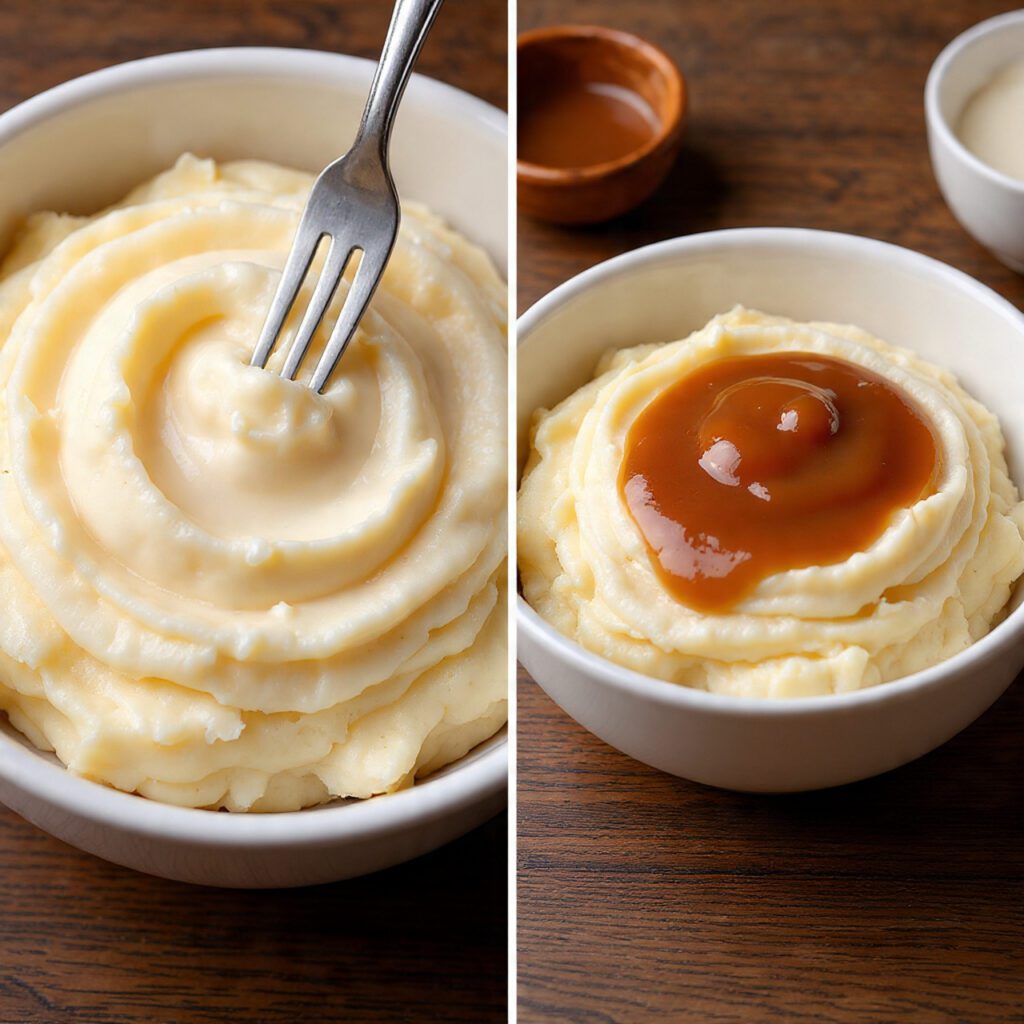
These are not your diet mashed potatoes. These are celebration mashed potatoes. These are estimated notes per serving (assuming 8 servings).
- Estimated Calories Per Serving: ~250-320 kcal (Heavy cream and butter are glorious but calorie-dense!).
- Macronutrient Notes:
- Carbohydrates: Potatoes provide satisfying complex carbs.
- High Fat: Butter and heavy cream contribute significant saturated fat, which gives them that velvety mouthfeel.
- Potassium: Potatoes are a great source of potassium.
- Note: To reduce calories, use light cream cheese or Greek yogurt instead of some of the heavy cream, but you sacrifice some richness.
🛑 Common Mistakes to Avoid (The Glue Gun Incident)
Avoid these culinary sins, or suffer the consequences of gummy potatoes!
- Using the Wrong Potato: Waxy potatoes (like red or new potatoes) don’t break down easily. They resist mashing and release too much starch, resulting in gummy, glue-like mashed potatoes. Use starchy Russets or Golds.
- Overmixing (The Glue Trap): Starch is released when potatoes are broken down. If you mash or beat them too much after adding the liquid, they become a starchy, elastic mess (read: glue). Use a ricer and mix gently.
- Adding Cold Dairy: Cold dairy lowers the temperature of the potatoes, causing the starch to seize up and resulting in a lumpy, dense texture. Always warm the butter and cream together before adding.
- Not Salting the Water: The only chance the potatoes have to absorb deep seasoning is in the boiling water. Season the water heavily—it makes a huge difference in the final flavor.
- Not Drying the Potatoes: Residual water dilutes the butter and cream, making your mash watery and sad. Returning the drained potatoes to the hot pot to steam off excess moisture is the key to fluffiness.
🌶️ Variations & Customizations: Next-Level Spuds
Want to jazz up your creamy canvas? Go bold!
H3 Roasted Garlic Parmesan Potatoes
Add roasted garlic! Roast a whole head of garlic until soft. Squeeze the cloves into the mashed potatoes with the warm dairy. Stir in 1/2 cup of freshly grated Parmesan cheese and a splash of olive oil for an incredible depth of savory flavor.
H3 Boursin and Chives Potatoes
Go herbaceous and tangy. Omit the butter/garlic simmer. Use the warm milk/cream, then fold in one 5.2 oz container of Garlic and Herb Boursin Cheese (or cream cheese) right after mashing. Finish with a generous handful of chopped fresh chives.
H3 Sweet Potato & Maple Mash (Vegetarian Swap)
Swap potatoes entirely! Substitute the white potatoes with sweet potatoes (peeled and chopped). Mash as directed. Use butter, milk, and cream, but add 1/4 cup of maple syrup and a pinch of cinnamon instead of the garlic and pepper.
❓ FAQ Section: Your Pressing Potato Ponderings
We know you have specific questions about achieving spud perfection.
H3 What kind of potato makes the creamiest mash?
Russet potatoes (high starch) give the lightest, fluffiest texture, which is great for absorbing the creamy liquid. Yukon Golds (medium starch/butter flavor) are the creamiest because of their naturally buttery flavor. Use either, but Russets are ideal for maximum fluff.
H3 How do I prevent my mashed potatoes from becoming gluey?
Do not overmix! Use a potato ricer instead of an electric mixer or food processor, and add only warm liquid gradually. Stop mixing as soon as the liquid is incorporated.
H3 Can I make mashed potatoes ahead of time?
Yes! Make them as directed, but use slightly more cream/milk than you think you need. Store them in a slow cooker or a heat-safe bowl over a pot of simmering water (a double boiler) to keep them warm. To reheat, stir in a splash of warm milk.
H3 What is the purpose of adding warm milk and butter?
Warm liquid is absorbed more quickly and evenly by the hot starch, resulting in a smoother, creamier texture. Cold liquid shocks the starch, leading to lumpiness and a dense texture.
H3 Should I peel the potatoes for mashed potatoes?
For the creamiest, smoothest texture, yes, you must peel the potatoes. If you want a more rustic texture (or the health benefits), you can leave the skin on for a chunkier mash.
H3 Why do chefs recommend using a potato ricer?
A ricer breaks the potato cells open gently and uniformly, releasing less starch than a masher or mixer. This results in the lightest, fluffiest, and most consistently lump-free texture possible—no glue!
H3 Can I use water instead of milk or cream?
You can substitute some of the milk/cream with reserved potato cooking water (it has starch and salt!), but using only water will result in a much less flavorful and less creamy mash. Use half dairy, half potato water if you must lighten it.
🎉 Final Thoughts: You Are Now a Master of the Mash
You did it. You took humble potatoes, applied the secrets of heat and starch control, and created the most decadent, velvety creamy mashed potatoes. You conquered the lump, defeated the dryness, and earned the title of Master of the Mash.
Go ahead, pour that gravy well in the center of your fluffy pile. You’ll never go back to those sad, boring spuds again, will you? Didn’t think so. Now, did you remember to buy enough gravy? 😉