
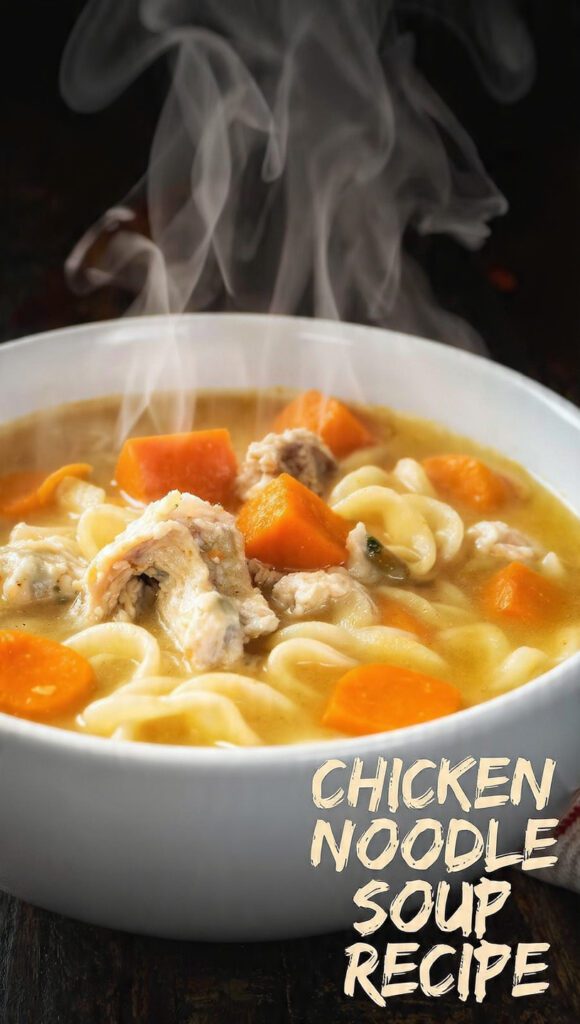
🥣 Grandma’s Secret: The Only Chicken Noodle Soup Recipe You’ll Ever Need
Let’s be real. If you’ve ever had a sniffle, a terrible breakup, or just a Tuesday, someone—probably your mother—told you to eat some chicken noodle soup. But let’s clarify: they meant the magical, restorative, deeply flavorful, homemade stuff, not that questionable sodium bomb from a can. That canned stuff is basically lukewarm sadness. You need the real deal, and this chicken noodle soup recipe delivers. It’s the ultimate comfort food, and frankly, you deserve this kind of culinary happiness. Ready to make a batch of liquid gold?
🌟 Why This Soup is the Best Medicine (and Dinner)
This recipe is awesome because it hits every single spot a classic should. We focus on building layers of flavor in the broth—no pale, watery nonsense here. The broth becomes rich and savory from simmering the vegetables, herbs, and chicken. It’s light yet satisfying.

The best part? It’s ridiculously easy. You toss the veggies in a pot, simmer, add the chicken and noodles, and boom! You’re done. You can use leftover chicken (Rotisserie is a true gift to humanity) and keep the chopping minimal. It doesn’t just soothe the soul; it makes you look like a seasoned pro. It’s truly a low-effort, high-reward meal, and IMO, that’s winning at life.
🥕 The All-Star Ingredients Lineup
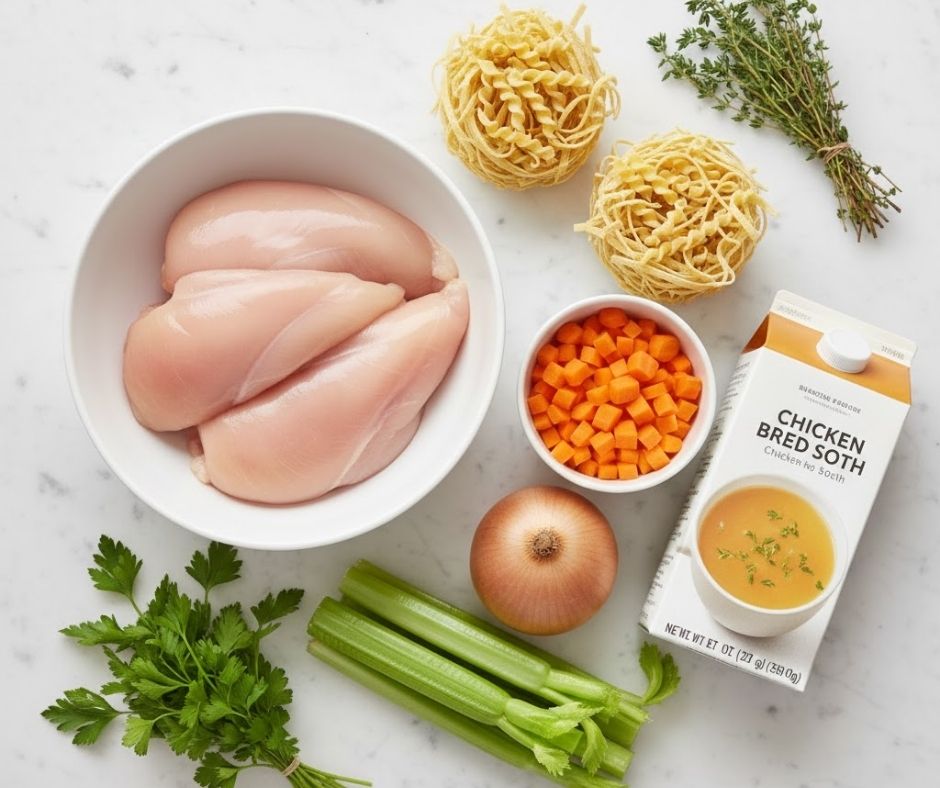
We are sticking to the classics here. The magic is in the freshness and quality of these simple ingredients.
H3 The Broth Builders
- 1 tablespoon Olive Oil or Butter: For sautéing.
- 1 cup Chopped Yellow Onion: The essential flavor base.
- 1 cup Sliced Carrots: Make sure they’re peeled!
- 1 cup Sliced Celery: The holy trinity of soup demands it.
- 4 cloves Garlic: Minced. Because the flavor police require it.
- 8 cups Low-Sodium Chicken Broth (or stock): Stock gives a richer flavor, FYI.
- 1 Bay Leaf: Don’t forget to take it out later!
- 1 teaspoon Dried Thyme: Classic, comforting flavor.
- 1/2 teaspoon Dried Rosemary: Use sparingly; a little goes a long way.
- Salt and Freshly Ground Black Pepper: Generous seasoning is the key to a non-bland soup.
H3 The Main Events
- 2 cups Cooked Chicken: Shredded or diced. Rotisserie chicken is the ultimate cheat code. (Substitution: You can simmer raw chicken breast right in the broth, then remove, shred, and return it to the pot.)
- 4 ounces Egg Noodles: Wide or medium are perfect. (Substitution: Orzo or ditalini pasta also works beautifully.)
- 1/4 cup Fresh Parsley: Chopped, for a bright green finish and freshness.
🛠️ Tools & Kitchen Gadgets Used

You only need the basics for this soup, proving simplicity is often best.
- Large Dutch Oven or Stockpot: Essential for holding all that glorious broth and allowing space for simmering.
- Cutting Board and Sharp Knife: For your basic chopping needs (onion, carrots, celery).
- Wooden Spoon or Spatula: For sautéing the vegetables.
- Ladle: For serving your beautiful creation.
- Measuring Cups and Spoons: To keep those seasonings perfect.
- Spoon or Small Tongs: For fishing out the bay leaf and possibly taste-testing.
🚀 Step-by-Step Instructions: Liquid Gold in a Pot
Follow these steps for a deep, complex flavor that tastes like you simmered it all day (even though you didn’t).
H3 Building the Flavor Base
- Sauté the Veggies (The S.O.C.): In your large pot or Dutch oven, heat the olive oil or butter over medium heat. Add the chopped onion, carrots, and celery. Cook for about 5-7 minutes until the onions are translucent and the carrots begin to soften. This is crucial for developing the foundational flavor.
- Add Garlic and Herbs: Stir in the minced garlic, dried thyme, and rosemary. Cook for another 60 seconds until fragrant. Do not let the garlic burn! Burnt garlic is bitter and ruins everything.
H3 Simmer Time
- Pour in the Broth: Pour in the chicken broth or stock. Add the bay leaf. Bring the soup to a boil, then immediately reduce the heat to a gentle simmer. Cover and let it simmer for 15 minutes. This is where the magic happens and the vegetable flavors fully infuse the liquid.
- Seasoning Check: Remove the bay leaf. Taste the broth! Does it need salt? Yes, probably. Season generously with salt and pepper. Remember, the noodles and chicken will absorb some of that seasoning, so make the broth taste slightly aggressive now.
H3 The Finishing Touch
- Add Chicken and Noodles: Stir in the shredded, cooked chicken and the egg noodles. Bring the soup back up to a simmer.
- Cook the Noodles: Cook, uncovered, according to the noodle package directions—usually 6-10 minutes. Watch the noodles closely; you want them tender but not mushy.
- Garnish and Serve: Once the noodles are cooked, turn off the heat. Stir in the freshly chopped parsley right before serving. The parsley adds a bright pop of flavor and color. Ladle it hot and serve immediately.
📊 Calories & Nutritional Info

This soup is famously light, healthy, and hydrating. These are estimated notes per serving (assuming 8 servings).
- Estimated Calories Per Serving: ~200-250 kcal (Low for a meal, high on comfort!).
- Macronutrient Notes:
- High Hydration: Mostly liquid, making it great for hydration (especially when sick!).
- Lean Protein: The chicken provides a solid source of lean protein.
- Vitamins & Minerals: Carrots deliver Vitamin A, and the broth contains essential electrolytes.
- Low Fat: It’s naturally low in fat unless you use full-fat chicken skin/bones for your broth base.
🛑 Common Mistakes to Avoid (The Fast-Track to Flavorless Soup)
Don’t let these common rookie errors sabotage your perfect comfort food!
- Not Sautéing the Veggies: Just dumping the raw veggies into the broth results in a weak, flat flavor. Sautéing the mirepoix releases their essential oils and deepens their taste. Don’t skip this step!
- Overcooking the Noodles: This is the most tragic mistake. Overcooked noodles turn mushy and absorb too much broth, leaving you with less soup and bloated pasta. Cook only until al dente and serve immediately.
- Adding Noodles Too Soon: If you plan on freezing the soup or having leftovers, do not cook the noodles in the main batch. Cook them separately and add them to individual bowls right before serving.
- Under-Seasoning the Broth: Chicken noodle soup relies entirely on a well-seasoned broth. If it tastes bland, you haven’t added enough salt. Add salt until the flavor truly pops.
- Forgetting the Bay Leaf (and the Removal): The bay leaf adds a beautiful subtle depth, but you must remove it before serving. Eating a bay leaf is the culinary equivalent of stepping on a LEGO.
🌶️ Variations & Customizations: Your Soup, Your Way
Feeling a little rebellious? Great. Here are three fun ways to tweak this classic.
H3 Spicy Ginger-Garlic Zoodle Soup
Ditch the traditional noodles! Replace the egg noodles with zucchini noodles (zoodles) or shirataki noodles for a low-carb, keto-friendly version. Add a tablespoon of freshly grated ginger and a pinch of red pepper flakes during the sauté step for an amazing spicy Asian twist.
H3 Creamy Lemon Dill Chicken Soup
Add a little velvety goodness. Stir in 1/4 cup of heavy cream or half-and-half at the very end, just before serving. Replace the dried rosemary/thyme with 1 tablespoon of fresh dill. Finish with a squeeze of fresh lemon juice for brightness.
H3 Hearty White Bean & Kale Soup (Vegetarian Swap)
Lose the chicken! Replace the chicken broth with vegetable broth. Add one can of rinsed and drained cannellini beans (white kidney beans) and a handful of chopped kale or spinach during the last 5 minutes of simmering. This boosts the fiber and iron content nicely.
❓ FAQ Section: Solving Your Soup Mysteries
We know you have pressing questions about achieving ultimate soup perfection.
H3 Is it better to use chicken broth or stock?
Chicken stock is richer because it’s typically made from bones, giving it more body and gelatin. Broth is lighter. For the absolute best flavor, use stock, but low-sodium broth works perfectly well for a quick, comforting meal.
H3 Can I freeze chicken noodle soup?
Yes, but do not include the noodles! If you freeze the noodles in the soup, they will soak up all the liquid, turn mushy, and become inedible upon thawing. Freeze the broth, chicken, and vegetables. Cook the noodles separately upon reheating.
H3 How long is homemade chicken noodle soup good for?
Store leftovers in an airtight container in the fridge for 3-4 days. After that, the quality, especially the noodles, starts to decline.
H3 What kind of chicken is best to use?
Cooked, shredded chicken (like rotisserie) is easiest. If cooking raw chicken, use boneless, skinless breasts or thighs. Thighs offer more flavor and don’t dry out as easily.
H3 Why is my chicken noodle soup cloudy?
Cloudiness usually comes from boiling the soup too vigorously (which breaks down the solids) or from washing the noodles before adding them (the starch released makes the broth murky). Simmer gently and use unwashed noodles if you are cooking them directly in the pot.
H3 What can I add for extra flavor?
A splash of fresh lemon juice at the end brightens the flavor considerably. You can also add a tablespoon of Worcestershire sauce or a sprinkle of MSG (don’t knock it ’til you try it!) for an instant umami boost.
H3 How much salt should I add to the broth?
You need to add enough salt that the broth tastes flavorful and savory, not just salty. As a rule of thumb, you need about 1 teaspoon of salt per 4 cups of low-sodium broth, but you must taste and adjust based on the specific broth you use.
🎉 Final Thoughts: Go Forth and Cure Everything
You have successfully mastered the quintessential comfort food. You made a rich, aromatic broth, tender chicken, and perfectly cooked noodles. You can now scoff at the people buying the canned stuff. Seriously, you make magic now!
Go ahead, ladle yourself a giant bowl. Get cozy. And next time someone tells you they feel under the weather, you’ll know exactly what to make them. You are officially the Soup Boss. Now, tell me, did you use wide or thin egg noodles? 😉