
Dutch Baby German Pancakes: The Ultimate Giant, Puffy, Show-Stopping Breakfast
Let’s be honest, making a towering stack of individual pancakes is tedious. You stand there flipping while your hungry family stares you down. There has to be a more dramatic, less labor-intensive way to serve breakfast. There is: the Dutch baby German pancake.
This isn’t a regular pancake; it’s a giant, puffy, oven-baked masterpiece that rises dramatically into golden, crinkled mountains. It’s light, eggy, slightly sweet, and utterly breathtaking when pulled from the oven. You simply whisk a quick batter, pour it into a screaming hot pan, and let the oven do all the work. Get ready for zero flipping and maximum awe. Seriously, why flip twenty pancakes when you can bake one glorious, giant one?
Why This Dutch Baby German Pancake Is Awesome (The Puff, The Texture, and No Flipping)
This recipe is the ultimate brunch hack, delivering restaurant-quality drama with minimal hands-on effort.
First, The Spectacular Puff. The Dutch baby is the king of presentation. The thin, crepe-like batter hits the preheated, scorching hot pan and explodes, crawling dramatically up the sides. It looks like a breakfast soufflé! Why serve flat food when you can serve towering, golden mountains?
Second, The Perfect Texture Contrast. The edges are crispy, buttery, and slightly chewy, while the bottom and center remain soft, tender, and eggy (like a thick custard). This duality is what makes it so incredibly satisfying. IMO, the crispy edge-to-soft center ratio is the measure of a perfect Dutch baby.
Third, Ultimate Set-It-and-Forget-It. The total hands-on time is about 5 minutes of whisking. The remaining 20 minutes are spent in the oven—no frantic flipping, no temperature adjustments. TBH, the hardest part is remembering to preheat the pan.
The Goods: Ingredients You Need
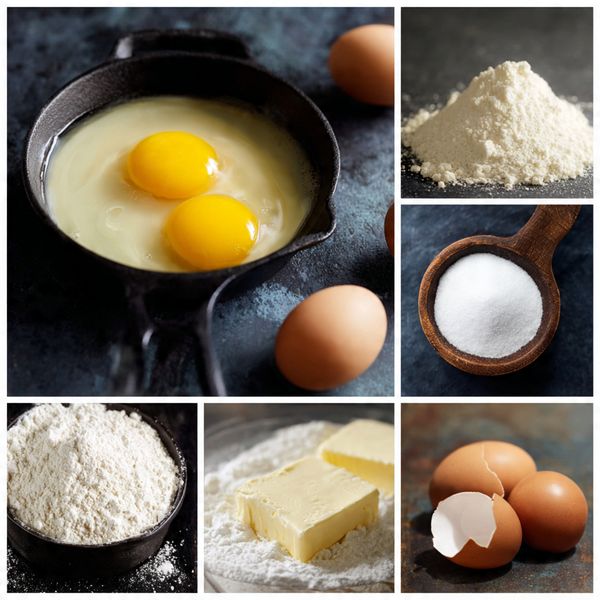
Focus on room-temperature ingredients for the best rise, and quality butter for the glorious golden crust.
- The Batter Base:
- 3 large Eggs (room temperature is mandatory!).
- 1/2 cup All-Purpose Flour.
- 1/2 cup Milk (whole milk, room temperature is best).
- 1 tablespoon Granulated Sugar.
- 1/2 teaspoon Vanilla Extract.
- Pinch of Salt.
- The Crucial Fat:
- 4 tablespoons Unsalted Butter (for melting in the hot pan!).
- The Toppings (Keep it Simple):
- Powdered Sugar (for dusting).
- Fresh Lemon Wedges (for a bright zing).
- Maple Syrup or Honey.
- Fresh Berries.
H3 Key Substitutions (The Baking Swap Guide)
- Milk Substitute: Use half-and-half or heavy cream for an even richer, more tender pancake. Nut milk works, but the rise may be slightly less dramatic.
- Flour Swap: Use a gluten-free 1:1 baking blend as a straight swap. The final texture might be slightly denser, but the rise is still spectacular.
- Sweetener Swap: Skip the granulated sugar in the batter and use liquid stevia or Monk Fruit for a low-sugar pancake.
Tools & Kitchen Gadgets Used (The Cast Iron MVP)
A sturdy, oven-safe pan that conducts heat evenly is the single most important tool here.
- Cast Iron Skillet (10-inch, oven-safe): CRUCIAL! The thick metal retains heat perfectly, which is essential for the dramatic puff.
- Blender or Whisk: For blending the batter quickly (blender is fastest!).
- Oven Mitts: Mandatory for handling the scorching hot skillet.
- Spatula: For transferring the melted butter.
- Sifter/Fine-Mesh Sieve: For the essential dusting of powdered sugar.
Step-by-Step Instructions (Preheat, Pour, and Puff!)
The secret to the Dutch baby is the temperature contrast: hot pan meets cold batter (or room temp batter).
H3 Step 1: Preheat the Pan (The Scorching Secret)
- Place the 4 tablespoons of butter in your cast iron skillet.
- Place the skillet (with the butter inside) in the oven. Preheat the oven to 425°F (220°C).
- Let the pan and butter heat up for at least 10 minutes while you prepare the batter. The butter should be fully melted and sizzling slightly.
H3 Step 2: Blend the Batter (The Fast Whisk)
- In a blender (or mixing bowl), combine the eggs, milk, flour, sugar, vanilla extract, and salt.
- Blend on high (or whisk vigorously) for 45–60 seconds until the batter is completely smooth and bubbly. The batter should be thin, like crepe batter. Do not overmix once the flour is incorporated.
H3 Step 3: Pour and Bake (The Dramatic Rise)
- Carefully remove the scorching hot skillet from the oven (use oven mitts!). Swirl the pan to ensure the melted butter completely coats the bottom and sides.
- Immediately pour the smooth batter directly into the center of the hot, sizzling pan.
- Place the skillet immediately back into the 425°F (220°C) oven.
- Bake for 18–22 minutes. DO NOT open the oven door! The disruption of heat will cause the dramatic puff to collapse. The pancake is done when the edges are tall, golden brown, and crispy.
H3 Step 4: Dust and Serve Immediately
- Remove the Dutch baby from the oven. Notice how the edges have risen dramatically high! The puff will deflate quickly (that’s normal!).
- Dust the entire surface generously with powdered sugar using a sifter/sieve.
- Serve immediately, slicing into wedges and topping with fresh lemon juice (the acidity cuts the richness beautifully) and maple syrup.
Calories & Nutritional Info (Hearty, Eggy Fuel)
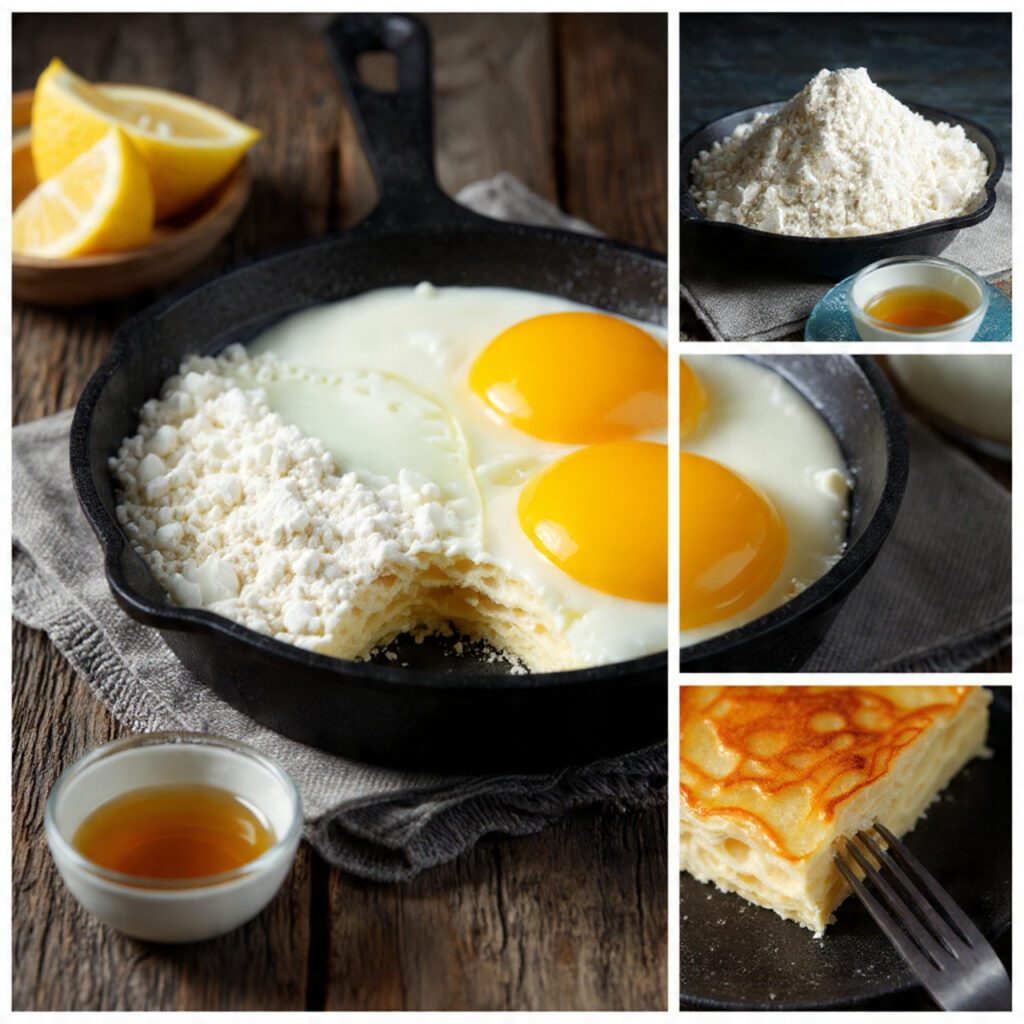
This pancake is rich in protein and fat due to the butter and eggs, making it a very filling start to the day. This estimate is for one serving (1/4 of the large pancake).
- Estimated Calories Per Serving (1/4 pancake): ~350–450 calories (without syrup or toppings).
- High in Protein: Eggs and milk provide significant protein.
- Saturated Fats: Butter contributes rich, comforting fats.
- Complex Carbohydrates: Flour provides energy.
- Customizable: Easily adaptable to be lower in sugar by using less powdered sugar/syrup.
Common Mistakes to Avoid (The Flat Pancake Fail)
The dramatic puff is easy to achieve, but it’s also easy to ruin.
- Cold Ingredients: Using cold milk or eggs prevents the batter from reacting fully when it hits the heat, resulting in a significantly flatter pancake. Use room temperature!
- Skipping the Pan Preheat: The scorching hot pan is mandatory for the dramatic, immediate rise and the crispy edges. Preheat the pan for 10-15 minutes.
- Opening the Oven Door: If you open the door, the sudden temperature drop will cause the steam keeping the puff upright to collapse prematurely. Do not peek!
- Over-Measuring the Flour: Too much flour makes the batter heavy and dense, limiting the puff. Measure the flour correctly (fluff first, then scoop and level).
Variations & Customizations (Savory and Sweet)
The Dutch baby is incredibly versatile and works with savory or sweet toppings.
- Savory Herb and Cheese: Add 1 tablespoon of chopped fresh thyme and 1/4 cup of grated Parmesan cheese to the batter before blending. Top the finished pancake with a fried egg and crumbled goat cheese.
- Apple Cinnamon Delight: Sauté thinly sliced apples with cinnamon and brown sugar in a separate pan. Spread this mixture over the bottom of the hot skillet (Step 3) before pouring the batter over it.
- Keto/Low-Carb Dutch Baby: Substitute the flour with a mix of almond flour and coconut flour (adjust liquid ratio) and replace sugar with liquid stevia/monk fruit. Serve with sugar-free syrup and heavy cream.
FAQ Section (The Puff Puzzles)
People are often curious about the physics behind this magical breakfast.
- Q: Why does the Dutch Baby puff up so much?
- A: It’s due to the high water content in the batter (like a popover or Yorkshire pudding). When the thin batter hits the scorching hot pan, the water turns instantly to steam, forcing the thin walls of the batter to rise dramatically.
- Q: Can I use a regular baking dish instead of a cast iron skillet?
- A: You can, but it won’t puff as dramatically. Cast iron retains heat better, delivering the intense, even temperature needed for the spectacular rise.
- Q: Should I pre-mix the batter the night before?
- A: No, don’t mix it fully! The batter needs to be mixed just before baking for the best result. However, you can combine the dry ingredients and store the milk/eggs separately in the fridge.
- Q: What is the ideal texture inside the pancake?
- A: The center should be soft, custard-like, and slightly tender, while the edges are crispy and deeply golden.
- Q: My Dutch Baby deflated immediately. Did I do something wrong?
- A: Deflation is normal! It begins to drop as soon as it leaves the oven. However, sudden deflation means you opened the oven door during cooking, or the oven wasn’t hot enough.
- Q: How long do leftovers last?
- A: Leftovers are tricky. They lose their crispness and volume quickly. Store slices tightly wrapped for 1–2 days, but reheat them in a toaster oven to re-crisp the edges.
- Q: Why do I rub the pan with butter instead of oil?
- A: Butter adds an essential, rich, nutty flavor that permeates the crust. Clarified butter or ghee is even better, as it won’t burn as easily as regular butter solids.
Final Thoughts (The Puffy Pioneer)
You bypassed the flipping chore, mastered the scorching pan, and created a magnificent, puffy Dutch baby German pancake. That towering, golden breakfast is proof that sometimes, the oven is better than the griddle. You are officially the Puffy Pioneer.
Go ahead, tear into that crispy edge. Did you realize breakfast could be this dramatic and delicious? I bet you’ll be buying a bigger cast iron pan next week. Now, are you adding apples or savory cheese next time?