Sourdough Pancakes: The Fluffiest, Tangiest Breakfast That Uses Your Starter Discard
Let’s be real, you own a sourdough starter. It’s sitting in your fridge, demanding attention, and likely overflowing with discard that you feel guilty about throwing away. Well, stop the sourdough shaming! We are turning that hungry, bubbly discard into the most impossibly light and flavorful sourdough pancakes you will ever eat.
This isn’t your grandma’s flat, chewy sourdough flapjack. This recipe uses the tangy discard to create incredible depth of flavor and relies on baking soda to give you a massive, fluffy lift right on the griddle. It’s the perfect blend of complex, tangy flavor and simple, weekend comfort. Get ready to finally use that starter for something other than artisan loaves. Seriously, why make boring pancakes when you can make pancakes with personality?
Why These Sourdough Pancakes Are Awesome (Flavor, Fluff, and Zero Waste)
This recipe is a must-have for any home baker—it’s efficient, delicious, and deeply satisfying.
First, The Ultimate Tangy Flavor. The slightly acidic sourdough discard adds a rich, subtle tanginess that transforms the pancake base from bland to brilliant. It tastes mature and complex, not just sweet. Why eat a plain pancake when you can eat one with flavor history?
Second, Supreme Fluffiness (The Baking Soda Hack). Since the discard is already acidic, adding baking soda creates a massive, instant reaction right before cooking. This ensures the pancakes have a beautiful rise and are incredibly tender and light. IMO, a pancake should always be taller than it is wide.
Third, Zero Waste Philosophy. You finally put that leftover, hungry starter discard to good use. No more pouring precious, bubbly flour down the drain! It’s environmentally responsible and delicious. TBH, using up the discard is the real victory here.
The Goods: Ingredients You Need
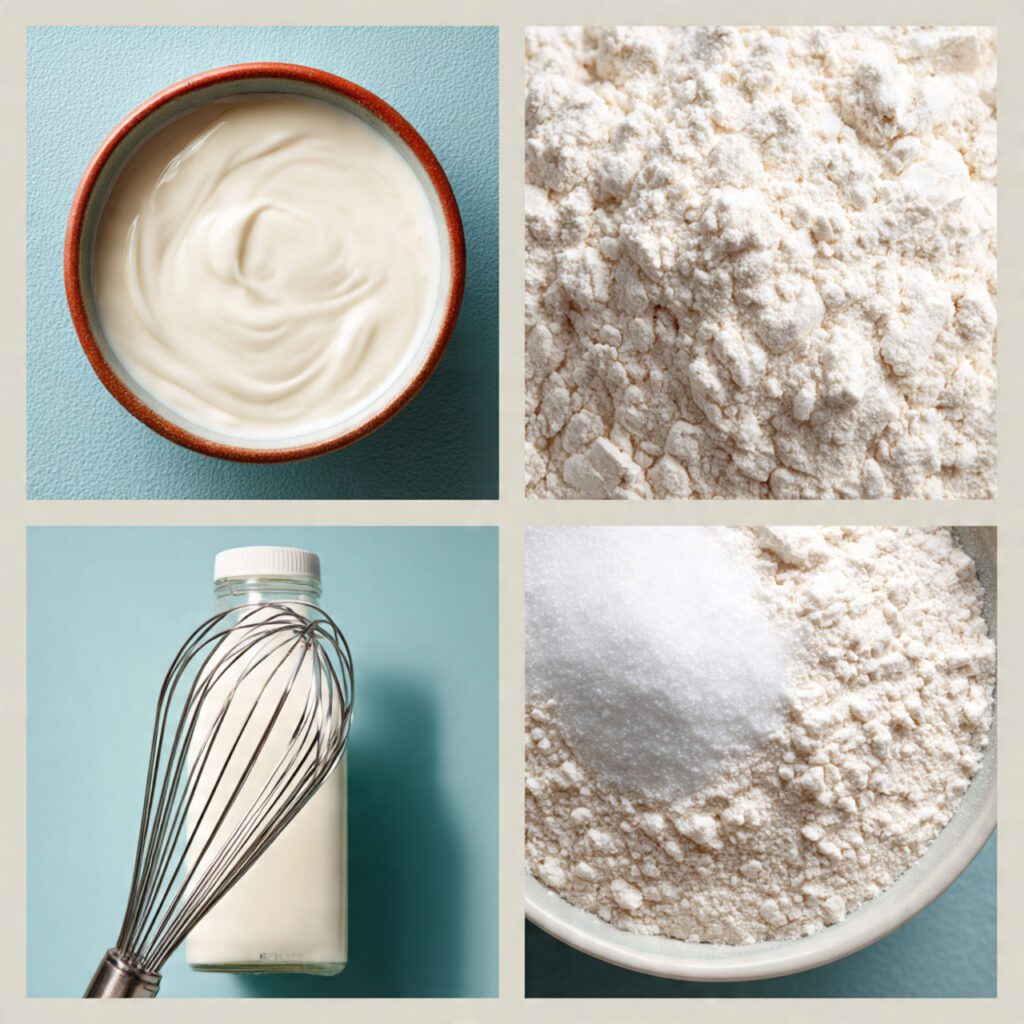
This recipe is designed to be made quickly right before serving, relying on an already active or recently fed starter discard.
- The Sourdough Base:
- 1 cup Sourdough Starter Discard (unfed, 100% hydration preferred).
- 1 cup Milk (or buttermilk, room temperature).
- The Dry Mix:
- 1 cup All-Purpose Flour.
- 2 tablespoons Granulated Sugar.
- 1 teaspoon Salt.
- The Wet Finish (The Lift):
- 1 large Egg (room temperature).
- 2 tablespoons Butter, melted and cooled.
- 1 teaspoon Baking Soda (essential for the lift!).
H3 Key Substitutions (The Mix-Up)
- Milk Swap: Use buttermilk for an extra tangy flavor and slight boost in fluffiness. Or use nut milk for a dairy-free option.
- Flour Swap: Use a gluten-free 1:1 baking blend as a straight swap, but your pancakes might spread slightly more.
- Sweetener Swap: Use brown sugar or maple syrup (2 tbsp) instead of granulated sugar for a deeper, caramel sweetness.
- Discard Substitute: If you don’t have sourdough discard, you can’t make sourdough pancakes! But you can substitute the discard and milk with 1.5 cups of buttermilk and proceed with the rest of the recipe for super fluffy pancakes.
Tools & Kitchen Gadgets Used (Griddle Glory)
You don’t need a bread oven, just the basics for quickly blending the batter and frying the pancakes.
- Large Mixing Bowl (Colossal): For combining the starter and the rest of the ingredients.
- Medium Bowl: For mixing the dry ingredients and then activating the baking soda.
- Griddle or Large Flat Non-Stick Skillet: Essential for perfectly even, golden pancakes.
- Whisk or Rubber Spatula: For mixing and gently folding.
- Wide, Flat Spatula: For easy flipping.
Step-by-Step Instructions (Mix, Rest, React, and Fry)
The key is in the timing of the baking soda addition. It needs to be the absolute last ingredient you add before cooking.
H3 Step 1: The Starter Rest (The Overnight Prep) (Optional)
- In the large mixing bowl, combine the sourdough starter discard and the milk. Whisk them together until smooth.
- Cover the bowl and let the mixture sit at room temperature for at least 30 minutes, or up to 12 hours (overnight). This is optional, but it deepens the tanginess.
H3 Step 2: Combine the Dry and Wet (The Base Batter)
- Add the flour, sugar, and salt to the starter/milk mixture. Whisk gently until just combined.
- In the medium bowl, whisk together the egg and the cooled melted butter.
- Add the egg/butter mixture to the batter. Fold gently until just combined. Lumps are okay! Do not overmix.
H3 Step 3: Activate the Lift (The Baking Soda Magic) (1 min)
- The batter should be thick. Sprinkle the baking soda directly over the batter.
- Add 1 tablespoon of water (or milk) over the baking soda to help activate it immediately.
- Fold the batter gently 3-4 times. The batter will immediately get bubbly and increase in volume slightly. STOP FOLDING. This step must happen right before cooking.
H3 Step 4: Cook to Golden Perfection
- Preheat your griddle or skillet over medium heat. Butter or oil the surface lightly.
- Pour the batter onto the hot surface (1/4 cup per pancake). The pancakes should start bubbling quickly.
- Cook for 2–3 minutes until bubbles cover the surface and the edges look set.
- Flip the sourdough pancakes and cook for another 1–2 minutes until golden brown and cooked through.
H3 Step 5: Stack, Top, and Taste the Tang
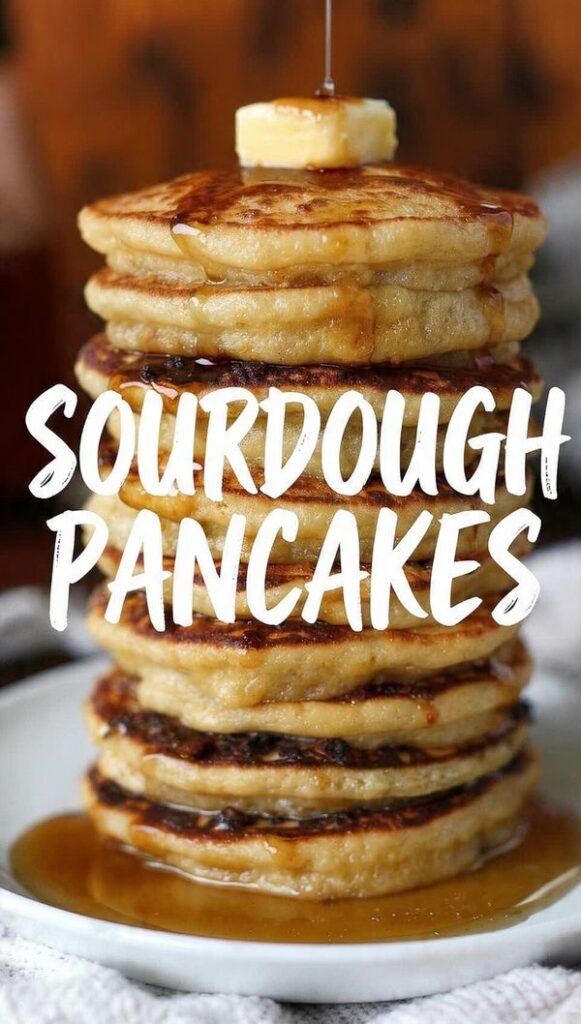
- Stack the pancakes high! Top generously with a pat of butter and a drizzle of real maple syrup.
- Serve immediately! The subtle tang is best appreciated hot.
Calories & Nutritional Info (Tangy Fuel)

Sourdough pancakes offer a great source of complex carbohydrates with the unique benefit of fermented flour. This estimate is for two medium pancakes without syrup.
- Estimated Calories Per Serving (2 medium pancakes): ~250–320 calories (without toppings).
- Complex Carbohydrates: Provides sustained energy.
- Probiotic Potential: While most bacteria die during cooking, the fermentation process makes the flour easier to digest.
- Fiber and Minerals: Whole wheat flour can be used for extra fiber.
- Low Glycemic Index (Slightly): The fermentation process may slightly reduce the glycemic index compared to standard pancakes.
Common Mistakes to Avoid (Sourdough Sabotage)
Using discard is great, but watch out for the leavening agents and mixing time.
- Overmixing After Baking Soda: The baking soda creates instant air bubbles. Overmixing crushes these bubbles, resulting in flat, tough pancakes. Fold gently!
- Cold Batter: Cold batter (straight from the fridge) slows the baking soda reaction dramatically. Use room-temperature milk and let the final batter rest briefly for the best rise.
- Using Too Much Starter: Too much starter can overpower the tanginess and make the batter too wet. Stick to the 1:1 ratio of starter to milk/water.
- Not Toasting the Griddle: A cold griddle results in pale, chewy pancakes. Always preheat the griddle to medium heat for that beautiful golden color and quick lift.
Variations & Customizations (The Flavor Remix)
The tangy base is perfect for both sweet and savory additions.
- Blueberry Ricotta Tang: Fold in 1/2 cup of fresh blueberries and 1/4 cup of ricotta cheese to the final batter. Top with lemon zest and honey.
- Spicy Cheddar Bacon: Skip the sugar. Use vegetable oil instead of butter. Fold in 1/4 cup of shredded sharp cheddar cheese and 1/4 cup of cooked, crumbled bacon into the final batter. Serve with hot sauce.
- Whole Wheat Health Boost: Substitute 1/2 cup of the all-purpose flour with whole wheat flour. You get a nuttier flavor and higher fiber content.
FAQ Section (The Sourdough Secrets)
People often ask about the safety and texture of using raw starter discard.
- Q: Is it safe to use unfed sourdough discard?
- A: Yes! The discard is just flour and water fermented by bacteria and yeast. The cooking process (heat) kills all the yeast/bacteria, making the pancakes completely safe to eat.
- Q: My pancakes taste too sour. How can I reduce the tanginess?
- A: Your starter is likely very acidic. To reduce tang, add an extra teaspoon of baking soda to the final batter (it neutralizes the acid), and ensure you use fresh milk (not buttermilk).
- Q: How long should I let the batter rest?
- A: If you skip the optional overnight rest, the batter only needs 5-10 minutes after combining the wet and dry ingredients (before adding baking soda). This helps the flour hydrate.
- Q: What is “100% hydration” starter?
- A: It means your starter is made with equal weights of flour and water. Most standard starters are 100% hydration, resulting in a thick, sticky consistency.
- Q: Can I use this batter for waffles?
- A: Yes! You may need to thin the batter slightly with a tablespoon or two of milk to achieve a good pouring consistency for the waffle iron.
- Q: Why are my sourdough pancakes flat even after adding baking soda?
- A: You likely overmixed the batter after adding the baking soda, crushing the crucial air bubbles. Or, your baking soda is old.
- Q: How long can I store leftover cooked sourdough pancakes?
- A: Store cooked pancakes in an airtight container in the refrigerator for 3–4 days. Reheat them in the toaster or a low oven for crispness.
Final Thoughts (The Tangy Titan)
You successfully recycled your starter, minimized waste, and created the fluffiest, tangiest stack of sourdough pancakes imaginable. You mastered the baking soda reaction and the gentle fold. You are officially the Tangy Titan of Brunch.
Go ahead, pour on that syrup and enjoy the complex victory. Did you realize that discard could be this delicious? I bet you’ll be making extra starter just to have pancake discard. Now, are you making the blueberry or the cheesy bacon version next?