
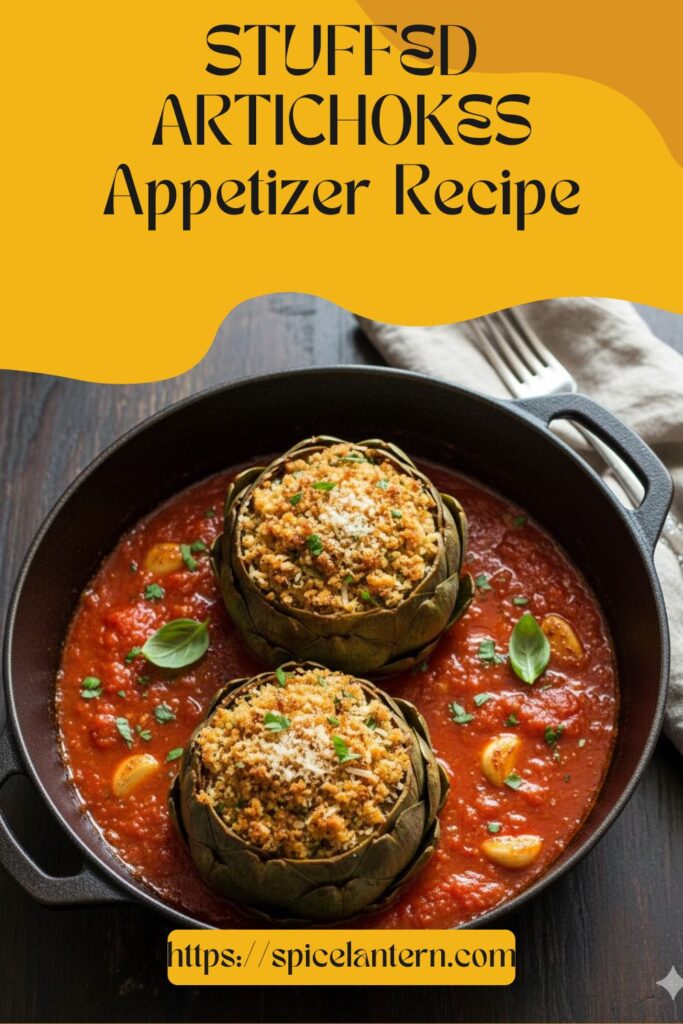
The Fail-Proof Guide to Stuffed Artichokes (That’ll Make You Look Like a Culinary Genius)
Let’s be honest, artichokes are intimidating. They look like a medieval weapon. They’re spiky, they’re tough, and they just look like a lot of work. You’ve probably walked right past them in the produce aisle, giving them a respectful nod, but ultimately grabbing a “safe” vegetable like broccoli.
But what if I told you that tackling this spiky globe of goodness is not only easy but will result in one of the most delicious and impressive appetizers on the planet?

This is the classic, old-school Italian-American Stuffed Artichokes recipe. You know, the kind your friend’s Nonna makes for Sunday dinner that you’d literally fight someone for. It’s a savory, garlicky, cheesy masterpiece, and you are about to become the person who knows how to make it. Yes, you.
Why This Recipe Is the Only One You’ll Ever Need
First of all, this isn’t just an appetizer; it’s an event. Eating a stuffed artichoke is a process. You pull off a leaf, you scrape the delicious, savory stuffing and tender meat with your teeth, and you repeat. It’s interactive, it’s a little messy, and it’s unbelievably satisfying.

The flavor is just unreal. We’re talking golden, toasty breadcrumbs, sharp Pecorino cheese, tons of garlic, fresh parsley, and rich olive oil, all steamed together until the artichoke itself is so tender you could cry.
And the “wow” factor? Off the charts. Plunk a couple of these on a platter, and your guests will think you’re some kind of culinary wizard. They don’t need to know that, TBH, the hardest part was just waiting for them to finish cooking. It’s the ultimate “I’m super fancy” dish with surprisingly little “fancy” effort.
The Ingredient Lineup
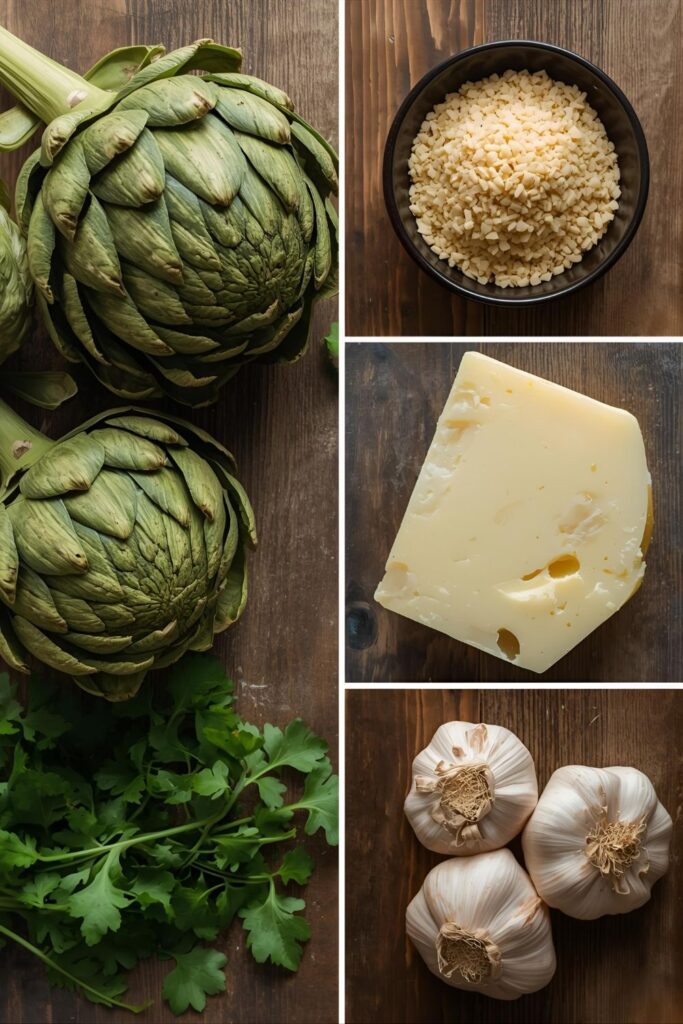
This is all about simple, classic Italian flavors. No weird stuff here.
- 4 Large Globe Artichokes: Look for ones that are heavy for their size with tight, compact leaves. Don’t get the small “baby” ones.
- 1 Lemon: This is your anti-browning secret weapon. Do not skip this.
- 2 cups Italian-style Breadcrumbs: You can use plain and add your own herbs, but the Italian style comes pre-loaded with those good, herby flavors.
- 1 cup Grated Pecorino Romano Cheese: Yes, you can use Parmesan, but Pecorino is saltier and sharper, which I think is way better here.
- 4-5 Garlic Cloves, Minced: Let’s be real, measure this with your heart. I’m telling you 4-5, but I’m using 7.
- 1/2 cup Fresh Parsley, Chopped
- 1 teaspoon Kosher Salt
- 1/2 teaspoon Black Pepper
- 1/2 cup Good Quality Olive Oil: Plus a little extra for drizzling.
- ~2 cups Chicken or Vegetable Broth: Or just water, if that’s all you’ve got.
A Note on Substitutions
- Gluten-Free? Swap the breadcrumbs for your favorite gluten-free breadcrumbs or a mix of almond flour and crushed-up pork rinds for a keto-friendly vibe.
- No Pecorino? Parmesan Reggiano is the next-best choice.
- Want more richness? Some people mix a little anchovy paste into the stuffing. Don’t knock it ’til you try it!
Your Kitchen Arsenal: Tools for the Job
Prepping an artichoke is all about having the right tools. It’s not a “tear it with your hands” situation.
- A Good Serrated Knife: For lopping off the top of the artichoke. A bread knife works perfectly.
- Kitchen Shears: This is the most important tool for snipping all those spiky leaf tips.
- A Grapefruit Spoon (or a regular teaspoon): This is your secret weapon for scooping out the fuzzy “choke.” The serrated edges of a grapefruit spoon make it 100x easier.
- A Large Cutting Board: This is going to get a little messy.
- A Large Pot or Dutch Oven: Needs to be wide and deep enough to fit all 4 artichokes standing up, with a tight-fitting lid.
- A Large Mixing Bowl: For your glorious stuffing.
- A Microplane Grater/Zester: The best way to mince garlic so it disappears into the stuffing (and to zest your lemon, if you’re feeling fancy).
- Measuring Cups and Spoons
How to Tame the Spiky Beast: Step-by-Step
Okay, deep breath. We’re going in. This is the part that scares everyone, but I promise, you’ve got this.
Step 1: Give Your ‘Choke a Haircut
First, wash your artichokes well. These things have a lot of nooks and crannies.
Now, lay one on its side on your cutting board. Using your serrated knife, slice off the top 1 inch of the artichoke. This exposes the center and gets rid of a bunch of those spiky tips all at once.
Next, slice the stem off so the artichoke has a flat bottom and can stand up straight. You can peel the tough outer layer of the stem and cook it along with the ‘chokes if you want—it’s delicious!
Now, the tedious part. Take your kitchen shears and go around the entire artichoke, leaf by leaf, snipping off the top 1/4 inch of each leaf. This removes the nasty little thorn on the end. Yes, this takes a minute. Yes, it’s worth it. Your guests (and your fingers) will thank you.
Step 2: The Lemon Rub-Down
Cut your lemon in half. As soon as you cut any part of the artichoke, it will start to turn brown (oxidize). To prevent this, aggressively rub all the cut surfaces—the top, the bottom—with the cut side of the lemon. Give it a good squeeze of juice over the top for good measure.
Step 3: Face the “Choke”
This is the most important part. You have to remove the choke.
Gently but firmly, use your thumbs to pry open the center of the artichoke. You’ll see some tightly-packed, light-green or purplish-tipped leaves. Pull these center leaves out. They’ll come out in a little cone.
Inside, you will see it: a fuzzy, hairy-looking center. This is the “choke.” It is not edible and, as the name implies, is not fun to swallow.
Take your grapefruit spoon (or teaspoon) and scrape that fuzzy monster out. Scrape all the way down to the bottom (which is the “heart”) until it’s smooth and clean. This creates a perfect little cup for our stuffing.
Rinse the artichoke one last time, upside down, to get any fuzzies out. Squeeze a little more lemon juice inside.
Step 4: Make the Magic Stuffing
In your large mixing bowl, combine the breadcrumbs, grated Pecorino, minced garlic, chopped parsley, salt, and pepper.
Slowly drizzle in the 1/2 cup of olive oil and mix it all together (your hands are the best tool here) until the mixture looks like damp sand. It should hold together when you squeeze a little clump of it.
Step 5: Get to Stuffin’
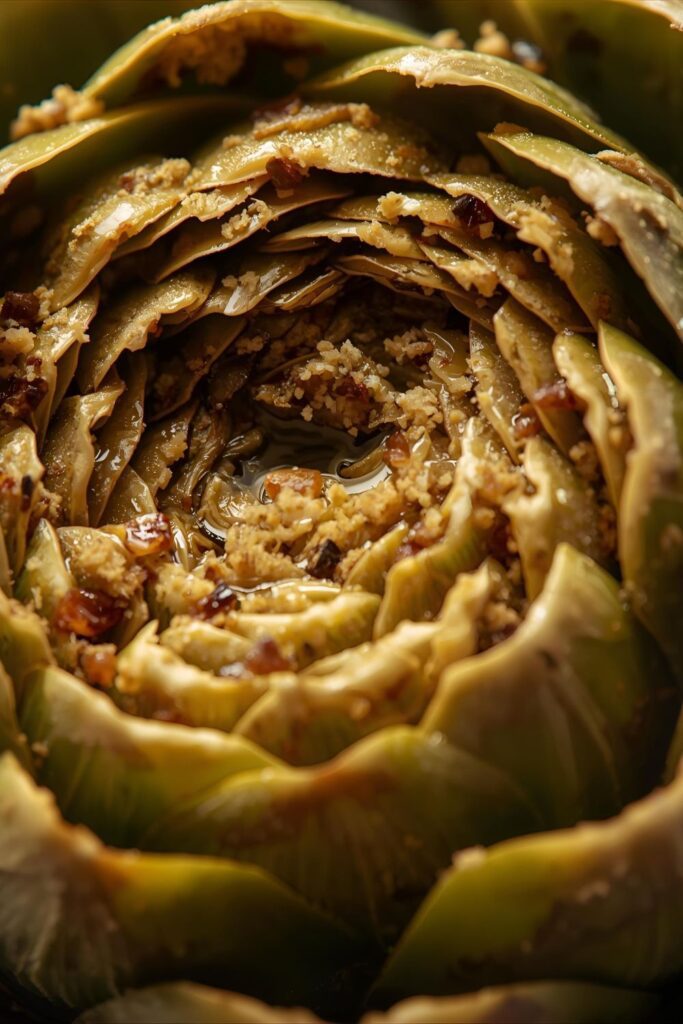
This is the fun part. Take your prepped artichoke and, starting from the outside, use your fingers to gently pull open the leaves and shove the breadcrumb mixture down into every possible crevice.
Be generous. Pack it in there. Get it between every layer. Finally, mound a big spoonful right into the center “cup” you created. Repeat with all 4 artichokes.
Step 6: The Hot Tub (AKA How to Cook Them)
Stand your four stuffed artichokes up in your large pot or Dutch oven. They should be snug but not totally squished.
Pour your broth (or water) into the bottom of the pot, around the artichokes. You want about 1-2 inches of liquid.
Now, drizzle the top of each artichoke with a little more olive oil. This is for flavor and to help the top get golden.
Bring the liquid to a boil, then reduce the heat to a low simmer, cover the pot with a tight lid, and walk away.
Let them steam-braise for 45 to 60 minutes.
Step 7: How Do You Know They’re Done?
This is easy. You’ll know they’re done when you can easily pull off an outer leaf. The base of that leaf should be tender and easy to scrape with your teeth. If it’s tough and stringy, put the lid back on and give it another 10-15 minutes. The heart should also be “fork-tender.”
Let’s Talk Nutrition (Sort of)
Look, this is not health food. But it’s not terrible either. Here’s the general idea for one large stuffed artichoke.
- Calories: Approximately 350-400 kcal
- Fat: ~20g (Mostly the good kind, from olive oil!)
- Carbohydrates: ~30g
- Fiber: A whopping 9-10g! (See? It’s basically a health food.)
- Protein: ~15g (Thanks, cheese!)
- Note: This is a fiber-rich, satisfying dish. And IMO, it’s worth every single calorie.
Common Mistakes That Will Ruin Your Day
- Forgetting to Remove the Choke. I know I’ve said it three times, but it’s the #1 mistake. Biting into that fuzz is a gag-worthy, texturally-horrifying experience. Scrape it out.
- Under-cooking. An undercooked artichoke is like chewing on a fibrous, grassy rope. It’s awful. Be patient. Do the leaf-pull test. They need to be tender.
- Letting the Pot Boil Dry. You’re simmering, not staging a bonfire. Keep the heat low. Check halfway through to make sure you still have liquid in the pot. If it’s getting low, add a splash more broth or hot water.
- Skipping the Lemon. You’ll have a sad, brown, unappetizing-looking artichoke. It’ll still taste okay, but it will look tragic. Use the lemon.
- Bland Stuffing. All the flavor is in that stuffing. Taste it before you pack it in! Does it need more salt? More garlic? More cheese? (The answer is probably yes to all three).
Variations (If You’re Feeling Wild)
You mastered the classic? Good. Now you can play.
- The Spicy Italian: Add 1 teaspoon of red pepper flakes to your breadcrumb mixture. This is my personal favorite.
- The Carnivore: Add 1/2 cup of cooked, crumbled Italian sausage (or pancetta!) to the breadcrumb mix. This makes it a meal in itself.
- The Keto-Choke: This is a big swap, but it works. Replace the breadcrumbs with 1 1/2 cups of almond flour + 1/2 cup of crushed pork rinds (pork panko). You still get the crunch and the fat, but without the carbs.
Your Burning Artichoke Questions, Answered
Q: How in the world do I EAT this thing?
A: The most important question! You pull off one leaf at a time, starting from the outside. Hold the top (thorny-snipped) end, and put the base of the leaf in your mouth. Scrape the stuffing and the soft, fleshy “meat” off with your bottom teeth. Discard the rest of the leaf. Repeat until you get to the tender center leaves (which you can eat whole) and the amazing heart at the bottom. Eat the heart with a fork and knife. It’s the best part!
Q: Can I make these stuffed artichokes ahead of time?
A: Yes! You can prep and stuff them, then store them covered in the fridge for up to 24 hours before cooking. Or, you can cook them completely, let them cool, and store them in the fridge for 2-3 days. They are amazing cold or reheated (just steam them for 10-15 minutes).
Q: How do I pick a good artichoke at the store?
A: You want one that feels heavy for its size and has tightly packed, firm leaves. If the leaves are splayed open and dry, it’s old. A little “frost-kissed” browning on the outside is fine, but avoid any that look dried out or shriveled.
Q: Why did my artichokes turn brown even though I used lemon?
A: They oxidize fast. You might not have used enough lemon, or you waited too long between cutting and rubbing. The good news? It’s purely cosmetic. They will still taste delicious.
Q: Can I use those canned artichoke hearts?
A: Absolutely not. That is a completely different recipe. This recipe is for the whole, glorious, fresh artichoke experience.
Q: My artichokes are taking forever to cook! What’s wrong?
A: Nothing is “wrong.” Some artichokes are just older, tougher, or bigger than others. Be patient. Keep the heat on low, make sure you have liquid, and just let them go until that leaf pulls out easily. It can sometimes take up to 90 minutes for extra-large ones.
Q: What do I serve with stuffed artichokes?
A: They are the perfect appetizer for a big Italian-American meal (think spaghetti and meatballs, chicken parm). You can also serve one as a light lunch, or as a side dish to a simple roasted chicken.
Final Thoughts: Go Forth and Conquer
See? That wasn’t so bad. You’ve faced the spiky orb of doom and you’ve won.
You are now officially a Stuffed Artichoke Person. This is a big deal. You’ve unlocked a new level of culinary cred. You’ve taken an intimidating, ancient vegetable and turned it into a platter of pure, garlicky, cheesy joy.
Now go make them. Impress your friends. Become a legend. And when someone asks, “Wow, this is amazing! Was it hard to make?”… just smile mysteriously and say, “You have no idea.”

