

Beyond Spaghetti: Your Guide to Chewy, Flavor-Soaking Sweet Potato Noodles
Let’s talk about texture. If you’ve dabbled in veggie noodles, you know the struggle is real: the zoodle sludge, the squash mush. It’s enough to make you give up on the low-carb life entirely. But I am here to tell you about Sweet Potato Noodles. They are the champions of the vegetable noodle world! These aren’t some flimsy stand-in; they’re the star of Korean Japchae, known for their incredible chewiness and glistening, glass-like texture. Why eat limp, watery substitutes when you can have a noodle that actually holds its own against a hearty sauce? Prepare yourself for a texture epiphany that will change your weeknight stir-fry game forever.
Why This Recipe Is Awesome (And Why It Tastes Like a Vacation)

You need this recipe because it delivers on the promise of healthy food that actually feels indulgent.
- Chewy, Springy Texture: Unlike zucchini, sweet potato noodles (or dangmyeon if you’re feeling fancy) are made from starch, which gives them a resilient, satisfyingly springy, almost rubber-band-like chew. They won’t turn to mush if you look at them sideways.
- Flavor Magnet: These noodles are bland on their own (like a good pasta should be!), meaning they absorb every single drop of the savory sauce you toss them with. They become pure, unadulterated flavor magnets.
- Naturally Gluten-Free: Yes! Because they’re made from sweet potato starch, they naturally bypass the gluten problem. You get a fantastic, allergy-friendly noodle without sacrificing texture.
Ingredients: The Starch and The Savory Sauce
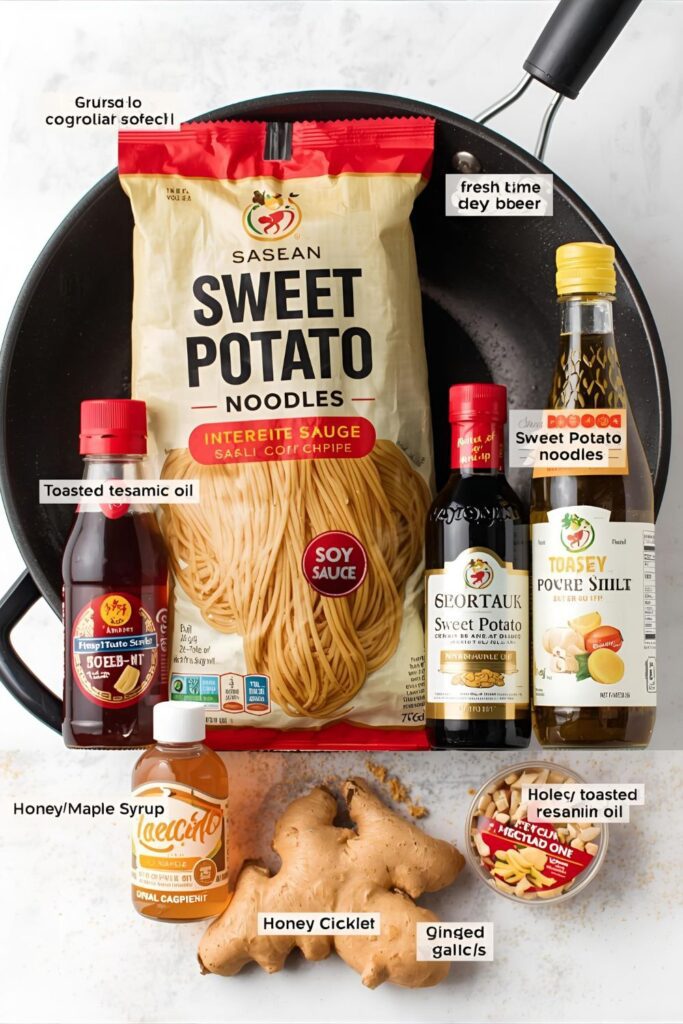
We’re skipping the spiralizer (for now) and focusing on the amazing pre-made sweet potato glass noodles found in Asian markets.
- Sweet Potato Noodles (Dangmyeon, approx. 6 oz dry weight): Look for them in the Asian aisle. They look light tan/gray and brittle when dry. Do not use spiralized fresh sweet potatoes! That’s a different, denser recipe.
- Water: For boiling (use a lot!).
- The Flavor Bomb Sauce (for 2 servings):
- 3 Tablespoons Soy Sauce (or Tamari for GF): Salty foundation.
- 1 Tablespoon Honey or Maple Syrup: Adds necessary sweetness and glaze.
- 1 Tablespoon Toasted Sesame Oil: Essential for that signature nutty aroma.
- 1 teaspoon Minced Garlic: Quick flavor.
- ½ teaspoon Ginger (grated or paste): A fresh, warming note.
- Optional: A dash of Sriracha or chili paste for heat.
- Veggies & Garnish: Thinly sliced carrots, spinach, shiitake mushrooms, and sliced scallions.
Key Substitutions:
- Sweet Potato Noodles: Use mung bean glass noodles in a pinch, but the texture won’t be quite as chewy.
- Soy Sauce: Use Coconut Aminos for a soy-free alternative, but reduce the honey slightly as coconut aminos are naturally sweeter.
- Honey/Maple Syrup: Use brown sugar dissolved in a splash of warm water.
Tools & Kitchen Gadgets Used: Streamlining the Slurp
You don’t need a lot of fuss to master this.
- Large Pot: For boiling the water and noodles.
- Colander or Strainer: For draining the noodles.
- Large Wok or Skillet: CRITICAL for stir-frying and tossing the final dish.
- Small Mixing Bowl: For whisking the sauce.
- Sharp Knife and Cutting Board: For prepping the quick-cooking veggies.
- Kitchen Scissors: The secret weapon! Use these to cut the long noodles after cooking.
- Tongs: Best for tossing the noodles and ingredients evenly.
Step-by-Step Instructions: The Chewy Transformation
We are aiming for chewy perfection, not mushy disappointment. The key is in the cook time and the cold shock.
Step 1: Prep and Sauce (5 Minutes)
- Slice thin: Cut all your veggies (carrots, mushrooms, etc.) into thin strips so they cook quickly in the wok.
- Mix the sauce: In your small bowl, whisk together the soy sauce, honey/maple syrup, sesame oil, garlic, and ginger. Set it next to the stove.
Step 2: The Boil and Chill (8 Minutes)
- Bring a large pot of water to a rolling boil.
- Add the dry sweet potato noodles. Cook for 6-8 minutes, or according to package directions. Do not undercook them—they should be tender but still very chewy. If they feel rubbery, keep going!
- Immediately drain the noodles in a colander. Rinse them thoroughly with cold water! This stops the cooking and prevents the starch from sticking.
- Use kitchen scissors to snip the long noodle strands into manageable lengths (about 6-8 inches). They are much easier to eat this way.
Step 3: Sauté and Glaze (5 Minutes)
- Heat your wok or large skillet over medium-high heat. Add a drizzle of oil (if your dish doesn’t already call for it).
- Add your sliced veggies (and any pre-cooked protein) and stir-fry for 2-3 minutes until tender-crisp. You don’t want mushy veggies.
- Add the cooked and snipped sweet potato noodles to the pan.
- Pour the entire sauce mixture over the noodles and veggies.
- Toss everything vigorously with tongs for about 1-2 minutes until the sauce reduces slightly and completely coats the glistening noodles.
Step 4: Final Flavor Check (1 Minute)
- Remove the pan from the heat.
- Toss in a handful of fresh spinach or scallions (the residual heat will wilt them perfectly).
- Taste and adjust the seasoning: need more savory? Add soy sauce. Need more zip? A splash of rice vinegar. Serve immediately!
Calories & Nutritional Info: The Healthy Truth (Estimated)
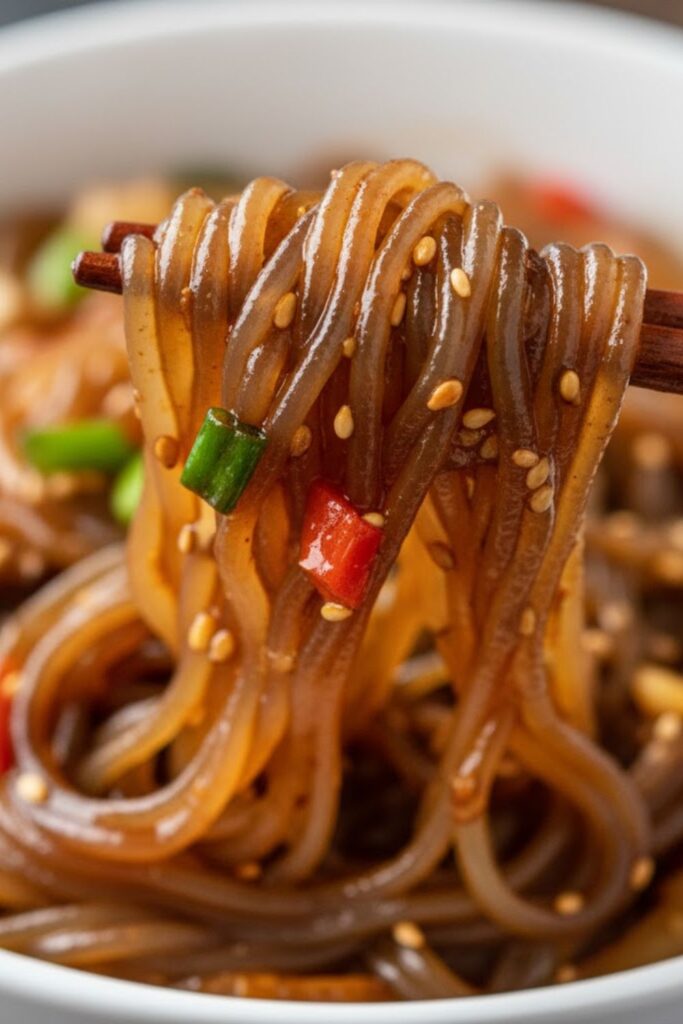
These are estimates for a side-dish serving (1/4 of the total recipe, without added protein/oil).
- Calories per serving (1/4 of recipe, without added fat/protein): ~180-220 calories
- Carbohydrates: ~40-50g (mostly starch)
- Protein: ~2-4g
- Fat: <1g
- Gluten-Free Note: Naturally gluten-free and low-fat. Their low glycemic index makes them a good alternative to wheat noodles for stable energy.
Common Mistakes to Avoid: The Chewy Catastrophes
Avoid these issues to achieve that perfect, springy texture.
- Under-Boiling (The Tough Boot): The thick, dry noodles require a surprisingly long boil. If they are still tough, keep boiling them! Ignore the package if it suggests too little time. You want them chewy, not boot leather.
- Not Rinsing the Starch: Skipping the cold rinse makes the noodles sticky and prone to clumping when you add the sauce. Rinse them well to stop the cooking and remove excess starch.
- Ignoring the Kitchen Scissors: Sweet potato noodles are notoriously long and slippery. Not cutting them into manageable lengths with kitchen scissors turns eating into a hilarious, yet messy, fight.
- Overcooking the Veggies: The noodles are already cooked; the stir-fry is about heating and flavoring. Sauté the vegetables only until tender-crisp (2 minutes max) before adding the noodles.
- Using a Wet Wok: Always ensure your wok or skillet is screaming hot before adding the oil and ingredients. A cold pan leads to steaming, which dulls the vegetables and makes the final dish bland.
Variations & Customizations: Your Noodle Fusion
These noodles can handle rich flavors from all over the world.
- Spicy Gochujang Fusion: Add 1 tablespoon of Gochujang (Korean chili paste) and ½ teaspoon of ground ginger to the sauce mixture. Top with crumbled toasted nori (seaweed) and a sprinkle of sesame seeds.
- Pesto Toss (Mediterranean Swap): Substitute the Asian sauce entirely. Toss the cooked and drained noodles with a few tablespoons of fresh pesto, cherry tomatoes, and cubed feta cheese. Serve cold or at room temperature.
- Garlic Scallop Delight: Pan-sear prawns or sliced scallops until done. Add the cooked noodles and a sauce made of lemon juice, butter, garlic, and white wine to the pan. Toss quickly and serve immediately.
FAQ Section: Your Glass Noodle Guru
You’ve got questions about these amazing glass noodles. Let’s tackle them.
Q1: Are sweet potato noodles the same as glass noodles?
A: Yes! Sweet potato noodles (Dangmyeon) are the most common type of Korean glass noodles. They are distinct from Chinese cellophane noodles, which are often made from mung bean starch.
Q2: Do sweet potato noodles have fewer carbs than wheat pasta?
A: No, not necessarily. They are a pure starch, so the carb count is similar to regular pasta. Their benefit lies in being gluten-free, low-fat, and having a lower glycemic index than wheat pasta.
Q3: Can I freeze cooked sweet potato noodles?
A: You can, but the texture degrades. They are best fresh. If you must freeze them, use them later in a soup or stew where the slight change in chewiness isn’t noticeable.
Q4: Why are my sweet potato noodles still crunchy or rubbery after boiling?
A: They are under-cooked. The package instructions often underestimate the time needed. Continue boiling until they are transparent and chewy (not hard or brittle). You may need up to 10 minutes or more.
Q5: Can I make sweet potato noodles with a spiralizer?
A: You can spiralize a raw sweet potato, but the resulting noodle is dense, not chewy and glass-like. The dried, starch-based noodle is what you want for this springy texture.
Q6: How do I store leftover cooked sweet potato noodles?
A: Store them in an airtight container in the fridge for up to 4 days. Reheat them quickly in a skillet or wok to prevent them from becoming sticky and clumping together.
Q7: Should I pre-soak the dry noodles before boiling?
A: Pre-soaking in hot water for 15 minutes is a great hack! It shortens the boiling time significantly and ensures the thick strands cook evenly, especially if you have a thicker variety.
Final Thoughts: The Chew is Real
You’ve done it. You navigated the sometimes-tricky waters of the starch-based noodle and achieved that signature, delightful chew. You are officially a master of the Sweet Potato Noodles. Go ahead and enjoy a plate of flavor-soaked, perfectly springy goodness. The soggy veggie noodle is a problem you’ll never face again.

