

Get Cheesy, Get Cozy: The Ultimate Guide to Perfect French Onion Soup (The Right Way)
Let’s be real: ordering French onion soup at a restaurant is a total flex. It arrives at the table, bubbling, golden, and aggressively cheesy, daring you to take a bite and scorch your entire palate. But then you pay $15 for a tiny bowl, right? I say no more! You deserve that deeply savory, soul-warming broth, those sweet, caramelized onions, and that thick, glorious blanket of melted cheese—all from the comfort of your own kitchen, and for a fraction of the cost. Forget the complicated, intimidating versions; this recipe cuts the fuss and delivers the exact comforting decadence you crave. Prepare to weep (from the onions, and maybe from joy).
Why This French Onion Recipe Deserves Your Full Attention

You might think French onion soup is reserved for high-end bistros and expert chefs. Wrong! This recipe is awesome because it simplifies the process without sacrificing one ounce of flavor.
The secret? Time and patience with the onions. You cannot rush true caramelization, but the actual work time is minimal. We’ll show you how to coax deep, mahogany sweetness out of those seemingly innocent bulbs, transforming them into a rich, savory base that will make your entire house smell incredible.

Plus, let’s talk about that cheese pull. Is there anything more satisfying than lifting a spoon and getting a golden, gooey string of Gruyère that stretches for miles? This is the definition of comfort food decadence. Serve this up, and your guests won’t just be impressed; they’ll be demanding the recipe. You’ll look like a culinary genius, and all you really did was slice some onions and let time do the rest. 😉
Ingredients: The Essentials for That Deep Umami
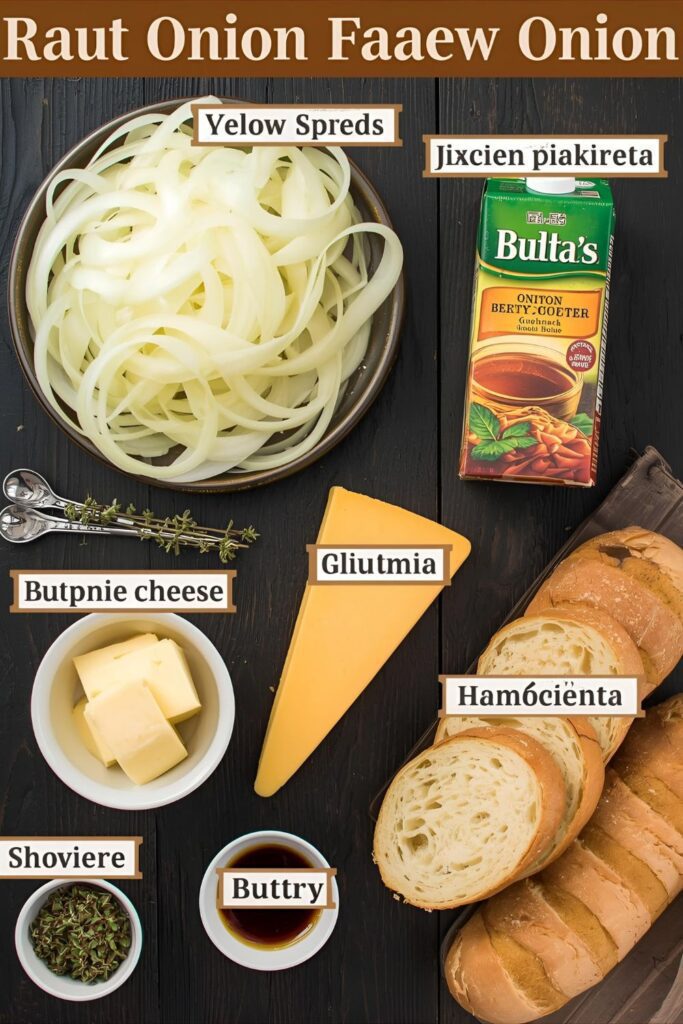
Achieving true, deep flavor in French onion soup requires quality ingredients, especially for the stock and the cheese.
- For the Caramelized Onions:
- 6 large yellow onions, thinly sliced (Don’t use sweet onions—yellow onions are best for flavor depth)
- 3 tablespoons unsalted butter
- 1 tablespoon olive oil
- 1 teaspoon granulated sugar (Optional, but accelerates the caramelization)
- 1 teaspoon kosher salt
- For the Rich Broth:
- 1/2 cup dry sherry or dry white wine (Crucial for scraping up flavor!)
- 6 cups beef broth (Low-sodium preferred, or make your own!)
- 1/2 teaspoon dried thyme
- 1 bay leaf
- 1 tablespoon Worcestershire sauce (The umami secret weapon!)
- Salt and pepper to taste
- For the Cheesy Topping:
- 4 slices French baguette, cut 1-inch thick (day-old is best)
- 1 tablespoon unsalted butter, melted
- 1/2 cup grated Gruyère cheese per serving (The only cheese that matters here, IMO)
- 1 tablespoon grated Parmesan cheese (Optional, for an extra salty crust)
Key Substitutions: If you can’t find Gruyère, a blend of Emmental and Provolone works surprisingly well for that melting quality. If you are avoiding alcohol, substitute the wine/sherry with 1/2 cup extra beef broth and 1 tablespoon of balsamic vinegar for depth. For a vegetarian version, substitute beef broth with a high-quality vegetable broth (or a mushroom broth for max umami).
Tools & Kitchen Gadgets Used
You don’t need fancy equipment, but a couple of tools are crucial for achieving that perfect, deep color and bubbly finish.
- Heavy-Bottomed Dutch Oven or Pot: Non-negotiable! This retains heat and prevents scorching during the long caramelization process.
- Sharp Chef’s Knife: For all that glorious onion slicing.
- Sturdy Wooden Spoon or Spatula: For scraping up the fond (those flavorful brown bits!).
- Oven-Safe Soup Crocks or Bowls: Essential for the final cheesy broil. Standard ceramic bowls won’t cut it—they must be broiler-safe!
- Ladle: For serving the broth.
- Baking Sheet: For broiling the finished soups.
Step-by-Step Instructions: Mastering the Caramelization
This recipe is all about developing layers of flavor, so pay attention to the caramelizing steps. Trust the process, even when you want to speed it up!
H3: Step 1: The Great Onion Slicing
Peel and slice all 6 onions very thinly and uniformly. Uniformity is key for even cooking. Yes, you will cry. This is a rite of passage. Embrace the pain, knowing the reward is pure decadence.
H3: Step 2: The Caramelization Commitment
In your Dutch oven, melt the 3 tablespoons of butter and 1 tablespoon of olive oil over medium heat. Add the sliced onions and 1 teaspoon of salt. Stir once to coat. Now, cook them low and slow. For the first 15 minutes, stir every few minutes until they soften.
H3: Step 3: Deepening the Color
Reduce the heat to medium-low. This is where the magic (and patience) comes in. Cook the onions for 45 to 60 minutes, stirring every 5-10 minutes. They will go from pale yellow to light brown, then eventually to a rich, deep mahogany color. Add the optional sugar halfway through to help the browning. The darker they get, the deeper the flavor!
H3: Step 4: Deglaze with Wine (The Flavor Bomb)
Once the onions are deeply caramelized, pour in the 1/2 cup of dry sherry or white wine. Turn the heat up to medium and scrape up all those beautiful brown bits stuck to the bottom of the pot with your wooden spoon. This is the fond, and it is pure flavor gold. Let the wine simmer and evaporate for 2 minutes.
H3: Step 5: Simmer the Rich Broth
Pour in the 6 cups of beef broth. Add the dried thyme, bay leaf, and Worcestershire sauce. Bring the soup to a gentle simmer. Cover and let it cook on low for at least 30 minutes (or longer, if you have time!) to let the flavors marry. Taste it! Add salt and pepper as needed.
H3: Step 6: The Cheesy Toast Prep
Preheat your broiler. Place the 4 slices of baguette on a baking sheet. Brush them lightly with the melted butter. Toast them in the oven for about 3 minutes until they are golden brown. Set them aside.
H3: Step 7: The Grand Broiler Finish
Remove the bay leaf from the soup. Ladle the hot soup into your oven-safe crocks (placed on a baking sheet for easier handling—FYI, they’ll be hot!). Float one slice of the toasted baguette on top of each bowl. Pile the baguette high with the grated Gruyère cheese. Broil on the top rack for 2-4 minutes. Watch them closely! Remove the soup when the cheese is melted, bubbly, and beautifully golden brown. Serve immediately and prepare to be scorched (but happy).
Calories & Nutritional Info (Estimated Per Serving)
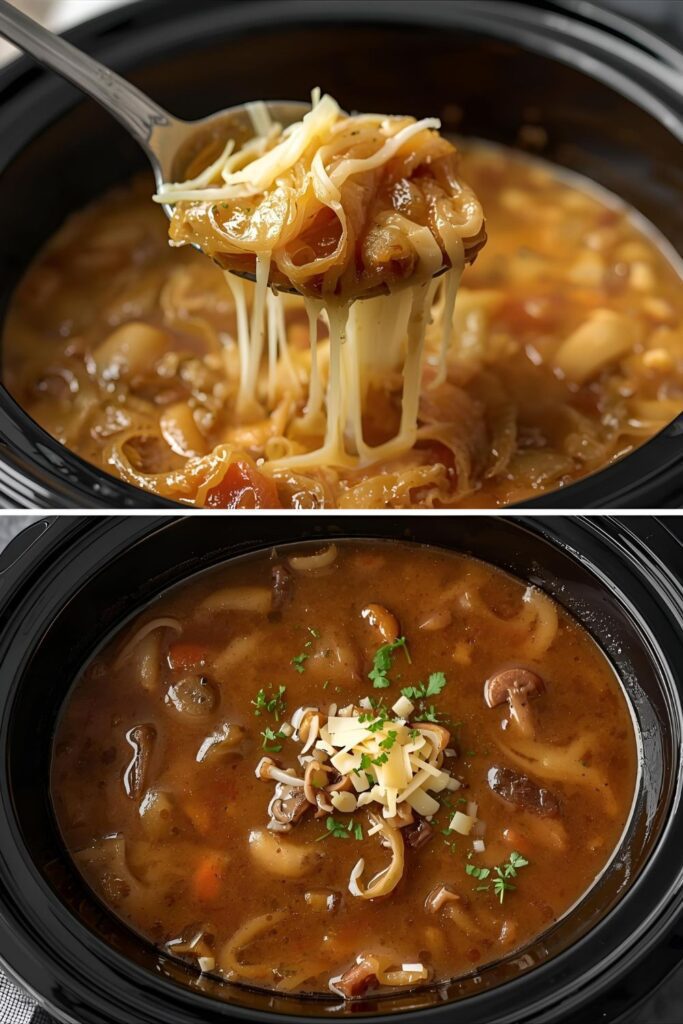
This estimate is for one serving (one bowl) with bread and cheese topping, using standard beef broth.
- Calories: ~450-550 kcal
- Protein: ~20-25g (Hello, cheese!)
- Fats: ~30-40g (From butter and cheese)
- Carbohydrates: ~25-35g (Mostly from the onions and bread)
- Sodium: High, around 900-1200mg (Use low-sodium broth to control this!)
- Nutritional Notes: Rich in Vitamin C (onions!) and Calcium. It is not low-fat, but it is supremely satisfying.
Common Mistakes to Avoid (Unless You Want a Subpar Bistro Experience)
You are striving for greatness here! Steer clear of these common pitfalls when making French onion soup.
- Rushing the Onions: This is a marathon, not a sprint. If you rush the caramelization, the onions will be soft and brown, but they won’t have that deep, complex sweetness that makes the soup magical. Commit to the full hour!
- Using Watery Broth: Weak broth equals weak soup. Use high-quality beef broth (or bone broth) for maximum depth and richness. This isn’t the place for bouillon cubes.
- Adding Cheese Too Early: The bread and cheese topping needs to be added just before broiling. If you add it too soon, the bread will sink and turn to mush. Toast the bread and top the soup right before the broiler.
- Not Scaping the Fond: Those dark bits stuck to the bottom of the pot after caramelizing? That’s where all the concentrated flavor lives! Deglaze properly with wine/vinegar and scrape it all up.
- Serving Immediately After Broiling: You will burn your tongue. Seriously. The crocks hold heat like a furnace. Warn your diners and let the bowls sit for one minute after pulling them out of the broiler.
Variations & Customizations: French Onion Remix
The classic recipe is perfect, but sometimes you need a little twist. Here are three fun ways to customize your French onion soup:
H3: The Vegetarian Umami Bomb
Swap the beef broth for high-quality mushroom broth (or a blend of veggie and mushroom). Add a teaspoon of balsamic vinegar to the broth, and finish with a pinch of smoked paprika just before serving. You won’t miss the meat, promise!
H3: Cider & Cognac Boost
For a fruity, deeper flavor, swap the dry sherry for 1/4 cup of good quality Cognac or Brandy and use 1/4 cup of apple cider in the deglazing step. The cider adds a subtle, autumnal sweetness that pairs beautifully with the caramelized onions.
H3: The Keto-Friendly Crust Hack
Ditch the baguette slices for a low-carb alternative. Bake parmesan crisps (small mounds of grated Parmesan baked on parchment until crisp) or place a small slice of keto-friendly bread on top. You still get the critical cheesy layer without the carb overload. TBH, the cheese is the star anyway!
FAQ Section: Your Cheesy, Brothy Questions
H3: How long does it take to caramelize the onions?
Expect the caramelization process to take 45 to 60 minutes over medium-low heat. It takes patience, but that slow process is what concentrates the sugars and creates the deep brown color and flavor you need.
H3: Can I make French onion soup ahead of time?
Yes! Make the soup up to the end of Step 5 (before adding bread and cheese). Refrigerate the soup for up to 3 days. Reheat on the stovetop, ladle into crocks, top, and broil right before serving. The flavor actually deepens overnight!
H3: What is the best type of cheese for French onion soup?
Gruyère is the gold standard. It has the perfect balance of savory, slightly nutty flavor and a fantastic melting quality. Emmental, Comté, or even Provolone are decent substitutes, but Gruyère provides the best result.
H3: Can I use chicken broth instead of beef broth?
You can, but the flavor will be much lighter. If you use chicken broth, add a tablespoon of tomato paste and a tablespoon of Worcestershire sauce to the broth to deepen the color and savory flavor.
H3: What if I don’t have oven-safe crocks?
You have two options: 1) Skip the final broil and just serve the soup with the cheese-covered toasted bread on the side. 2) Broil the cheese-covered baguette slices separately on a baking sheet, then carefully place the melted toast on top of the hot soup right before serving.
H3: Why did my cheese get oily when I broiled it?
This happens when the cheese is broiled at too high a heat for too long. The fat separates from the solids. Use a high setting for a short time (2-4 minutes) and position the rack just below the heat source to ensure fast melting without excessive cooking.
H3: Does the onion slice size matter?
Yes! Slicing the onions thinly and uniformly is important. If the slices are too thick or uneven, they won’t caramelize at the same rate. Some will burn while others remain pale.
Final Thoughts: You Are Now a French Bistro Owner
Congratulations! You successfully conquered the culinary Everest that is French onion soup. You mastered the art of low-and-slow caramelization and created a masterpiece of savory broth and gooey, cheesy crust. Go forth and enjoy your ridiculously delicious, comforting creation. You are officially too sophisticated for canned soup now. Seriously. Don’t even try it. Now, share a picture of that epic cheese pull with me!

