

Homemade Miso Soup: The Cozy Japanese Secret to Eternal Happiness
We have all been there. You are sitting at a Japanese restaurant, shivering because the AC is set to “arctic tundra,” and the server drops off that tiny, steaming lacquer bowl of miso soup. You take one sip and suddenly the world feels right again. Your soul stops vibrating with anxiety and starts humming a happy little tune. But then the check comes, and you realize you just paid six dollars for what is essentially cloudy water and a single cube of tofu. Why do we keep doing this to ourselves?
Honestly, making this at home is so easy it almost feels like cheating. It is the ultimate “I have my life together” meal that takes exactly ten minutes to prepare. I once convinced a roommate I was a culinary genius because I made a batch of this at midnight after a long shift. TBH, the secret is just knowing that “Dashi” isn’t a rapper—it’s the broth that changes everything. Ready to stop overpaying for fermented bean water and start living your best, coziest life? Let’s dive in. 🙂
Why This Recipe is Actually Awesome
Why should you care about a bowl of salty bean soup? First off, umami is the name of the game. Miso soup provides that deep, savory satisfaction that hits a spot regular chicken noodle just can’t reach. It’s the culinary equivalent of a warm weighted blanket.
Secondly, it is the ultimate “clean out the fridge” vessel. Have three spinach leaves and a lonely mushroom? Throw them in. Want to impress your guests with an “authentic” multi-course dinner? Serve this first and watch them assume you spent hours in the kitchen. In reality, you were probably just scrolling through TikTok while the water boiled.
Our Top Pick

Papier Herb Garden Recipe Journal - Hardback Design
Capture your culinary ideas and favorite memories with this beautifully designed recipe journal. Organized sections for breakfast, lunch, dinner, and treats make it easy to record recipes, ratings, dietary notes, and cooking tips, along with measurement and conversion guides. Extra pages let you list favorite restaurants, shops, and places to try. Crafted with a premium hardback cover, luxurious 100gsm paper, and a gold foil accent, it’s both durable and stylish. Thoughtfully designed to suit any kitchen, it makes a practical, timeless gift for family, friends, or yourself.
Finally, let’s talk health. Miso is a fermented powerhouse. You are essentially inviting billions of tiny, helpful bacteria to a party in your gut, and they are bringing probiotics as a gift. It’s high-protein, low-calorie, and makes you feel like a functional adult who makes good choices. What else do you want from a liquid?
The “Umami Squad” Shopping List
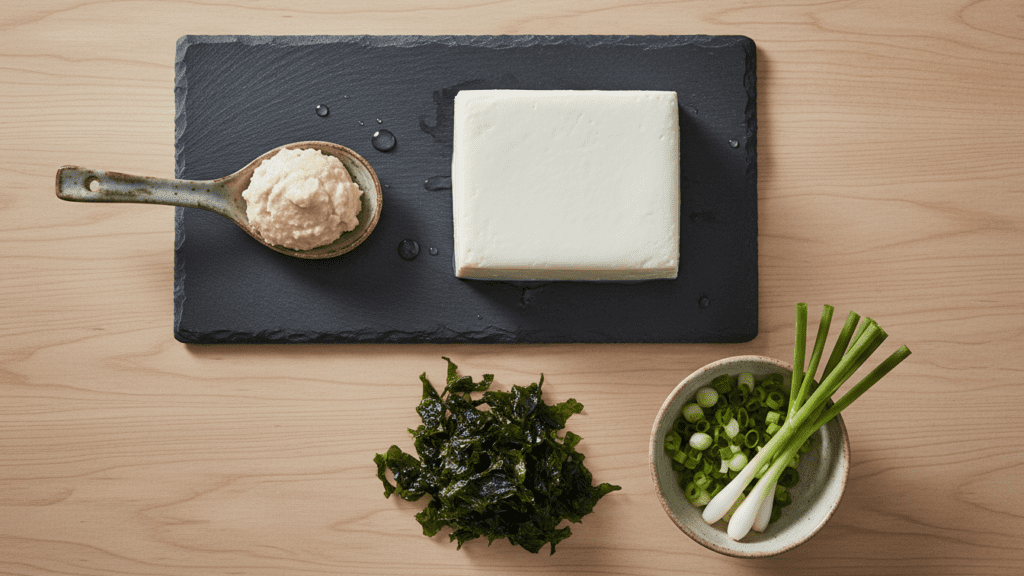
You cannot just boil some water and stir in bean paste. Well, you could, but it would taste like disappointment. Grab these essentials:
- Miso Paste: Use White Miso (Shiro) for a mellow vibe or Red Miso (Aka) for a deep, salty punch.
- Dashi Granules: This is the shortcut to heaven. It’s a soup stock made from bonito flakes and kelp.
- Tofu: Get Silken or Soft Tofu. Firm tofu in miso soup is a texture crime that I won’t be held responsible for.
- Dried Wakame (Seaweed): A little goes a long way. Seriously, don’t dump the whole bag in unless you want a kelp forest in your kitchen.
- Green Onions: For that fresh, sharp crunch at the end.
- Water: Filtered is best, but let’s not be snobby.
Tools & Kitchen Gadgets You’ll Need
To master miso soup, you don’t need a lab, but a few specific tools will keep you from making a clumpy mess.
- Small Saucepan: You aren’t feeding an army; a 2-quart pot is usually perfect.
- Whisk or Fine Mesh Strainer: This is the secret to dissolving the miso paste without those weird salty lumps.
- Chef’s Knife: To slice those green onions with precision.
- Measuring Spoons: Because eyeballing miso paste is a dangerous game for your blood pressure.
- Small Bowl: For the “slurry” technique (more on that later).
Step-by-Step Instructions
Step 1: The Dashi Dance
Bring 4 cups of water to a gentle simmer in your saucepan. Stir in 2 teaspoons of dashi granules. Don’t let it reach a violent boil; we are making a delicate soup, not a hot tub for pasta. Once it dissolves, your base is officially ready.
Step 2: The Seaweed and Tofu Plunge
Add about 2 tablespoons of dried wakame to the pot. Watch it rehydrate and expand like a magic sponge—it’s weirdly satisfying. Next, carefully slide in your tofu cubes. Treat the tofu like a delicate secret; if you stir too hard, you’ll end up with tofu mush.
Step 3: The Slurry Secret

This is the most important step! Take a ladle of the hot broth and put it in a small separate bowl. Add 3 tablespoons of miso paste to that bowl and whisk it until it’s a smooth liquid. Never dump the paste directly into the big pot. Why? Because lumps are the enemy of joy.
Step 4: Kill the Heat
Turn off the stove. I mean it. Do not boil the miso paste. High heat kills all those beautiful probiotics and changes the flavor from “sweet fermented goodness” to “burnt bean tragedy.” Stir your smooth miso slurry into the pot.
Step 5: The Garnish Glow-Up
Ladle the soup into bowls and top with a mountain of sliced green onions. If you feel fancy, add a drop of toasted sesame oil. Take a photo, realize it’s getting cold, and start sipping.
Our Top Pick

LuBudingJoy Blank Recipe Book
B5 Blank Recipe Book – Create and organize your favorite recipes in one beautiful place. This hardcover recipe book (10" × 7.3") features 150 blank pages and includes DIY category stickers. Designed with conversion charts, content tables, and a back pocket for loose notes.
Calories & Nutritional Info

Miso soup is the ultimate “guilt-free” indulgence. Here is what you are looking at per bowl:
- Calories: Approximately 45-60 kcal. You could drink a gallon and still be fine.
- Protein: About 3-4g thanks to the tofu and miso.
- Probiotics: High levels of Aspergillus oryzae for a happy gut.
- Sodium: It’s a bit high, so maybe skip the extra salt shaker today.
- Vitamins: Rich in Vitamin K, Manganese, and Copper.
Common Mistakes to Avoid
- Boiling the Miso: I said it before, and I’ll say it again. Boiling kills the flavor and the health benefits. Add miso at the very end.
- Too Much Seaweed: Dried wakame expands by about ten times its size. If you overdo it, the seaweed will literally stage a coup and take over the pot.
- Using Old Miso: Miso lasts a long time, but if it looks like it’s growing its own ecosystem or smells like a tire fire, toss it.
- Skipping the Dashi: Water plus miso is just salty water. Dashi provides the soul. IMO, without dashi, it isn’t really miso soup. 🙂
- Cutting Tofu Too Big: You want dainty little cubes that fit on a spoon, not giant blocks that require a knife and fork.
Variations & Customizations
Feeling a little adventurous? Try these three tweaks:
The Spicy Szechuan Kick
Add a teaspoon of chili crisp or Sriracha to the finished bowl. It adds a beautiful red oil sheen and a heat that clears the sinuses perfectly.
The Hearty Veggie Swap
Skip the tofu and add thinly sliced shiitake mushrooms and baby spinach. It turns the soup into a light lunch that feels much more substantial.
The Seafood Special
Add a few small peeled shrimp or clams to the dashi before you add the miso. It deepens the ocean flavor and makes the dish feel incredibly expensive for about fifty cents extra.
FAQ Section
Can I make miso soup without dashi? You can use vegetable broth, but it won’t have that traditional Japanese flavor. If you’re vegan, use kombu (dried kelp) dashi for an authentic, meat-free experience.
What is the best type of miso to use? For beginners, White Miso (Shiro) is the safest bet. It’s sweet and mild. If you want a salty, intense flavor, go for the Red Miso.

Is miso soup gluten-free? Usually, but check the label! Some miso is fermented with barley or rye. Look for miso made with rice or soy to stay safe.
How long does miso soup last in the fridge? It stays good for about 2 to 3 days. However, the flavors are best when fresh. Pro tip: don’t reheat it to a boil!
Is it okay to drink miso soup every day? Absolutely! Many people in Japan drink it every morning. Just be mindful of the sodium content if you have heart concerns.
Can I use firm tofu if that’s all I have? You can, but it won’t be as silky. Cube it very small to help it blend in with the delicate broth.
Why does my miso soup look cloudy or separated? That is actually a sign of quality! The miso particles are suspended in the broth. Just give it a little stir with your spoon and it will be perfect again.
Final Thoughts
There you have it—your roadmap to the perfect bowl of miso soup. No more sad, lukewarm takeout containers. No more paying luxury prices for bean paste. You now have the power to create instant comfort in your own kitchen.
Go ahead, brew a batch next time you feel a sniffle coming on or just need a hug in liquid form. If you manage to make it without getting a single lump of miso paste, consider yourself a master. Tag me in your cozy bowl photos, or just sit in your steam-covered bliss. Happy sipping!