
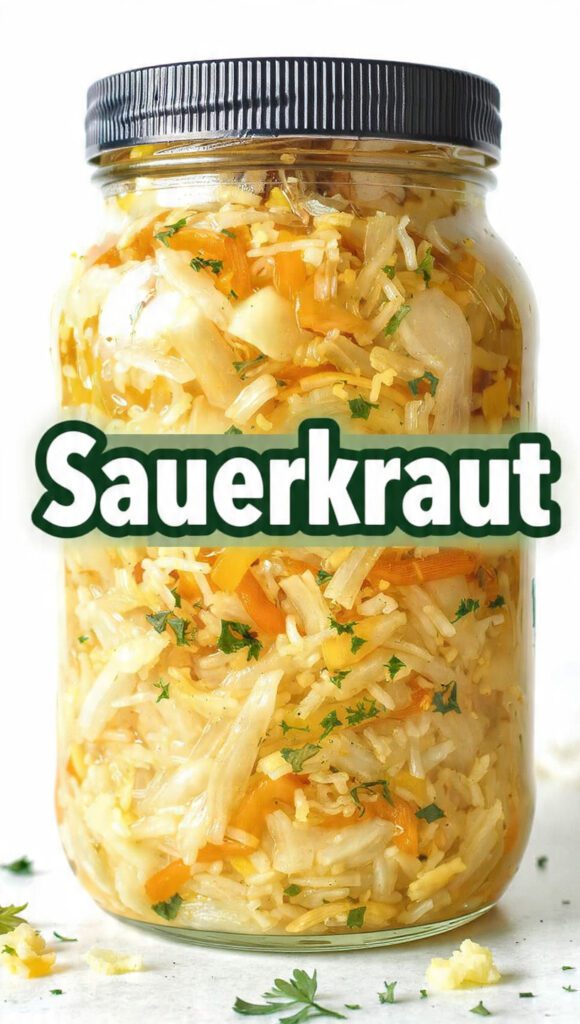
Homemade Sauerkraut: The Ultimate Guide to Fermenting Like a Pro
Imagine standing in your kitchen, staring at a head of cabbage like it’s a puzzling math equation. You want that crunchy, tangy, probiotic-packed goodness you see in those fancy glass jars at the health food store, but you don’t want to pay fifteen dollars for “artisan air.” What if I told you that you could make world-class sauerkraut using just two ingredients and a little bit of pent-up aggression?
Honestly, fermenting vegetables at home is the ultimate kitchen flex. It’s essentially controlled rotting, but we call it “culinary art” because it tastes incredible and makes your gut bacteria throw a party. I once convinced a friend that my homemade batch was a secret family heirloom recipe passed down from a Bavarian grandmother. In reality, I just massaged some cabbage while watching a sitcom. Ready to stop buying the pasteurized, dead stuff from the grocery store and start your own counter-top science experiment? 🙂
Why This Recipe is Awesome
Why should you bother making your own kraut when the canned aisle exists? First off, the flavor is incomparable. Store-bought versions often swim in vinegar and sugar, but real sauerkraut creates its own tangy “zing” through the magic of lacto-fermentation. It’s crisp, vibrant, and has a complex depth that hits every part of your palate.
TBH, the ease of cooking—or rather, “non-cooking”—is the best part. You don’t even have to turn on the stove. You just chop, salt, and wait. It’s the perfect recipe for lazy overachievers. Plus, serving a side of your own fermented greens at a dinner party instantly elevates you to “foodie guru” status. Your guests will be so impressed they won’t even notice you’re wearing the same sweatpants from yesterday.
Our Top Pick

Papier Herb Garden Recipe Journal - Hardback Design
Capture your culinary ideas and favorite memories with this beautifully designed recipe journal. Organized sections for breakfast, lunch, dinner, and treats make it easy to record recipes, ratings, dietary notes, and cooking tips, along with measurement and conversion guides. Extra pages let you list favorite restaurants, shops, and places to try. Crafted with a premium hardback cover, luxurious 100gsm paper, and a gold foil accent, it’s both durable and stylish. Thoughtfully designed to suit any kitchen, it makes a practical, timeless gift for family, friends, or yourself.
Finally, the health benefits are a massive win. One forkful of raw kraut contains more probiotics than an entire bottle of those expensive supplement pills. It’s basically a superhero cape for your digestive system. Who knew being healthy could involve so much satisfying cabbage-crunching?
The Minimalist Ingredient List
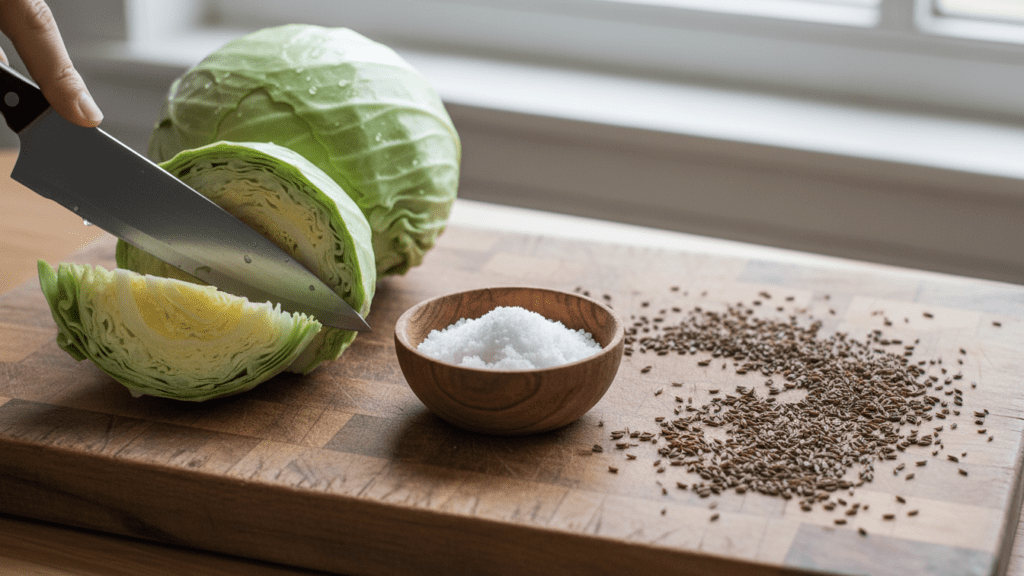
You don’t need a pantry full of exotic spices to win at fermentation. Just grab these two essentials and maybe a few optional “flair” items.
- Green Cabbage: Grab a large, heavy head of cabbage. The heavier it is, the more moisture it holds—and we need that juice!
- Sea Salt: Use high-quality sea salt or kosher salt. Avoid table salt with iodine, as iodine can turn your ferment a weird color and inhibit the good bacteria.
- Caraway Seeds (Optional): For that classic, earthy German flavor.
- Juniper Berries (Optional): If you want to feel like you’re fermenting in the Black Forest.
- Fresh Ginger (Optional): To give it a modern, spicy kick.
Tools & Kitchen Gadgets You’ll Need
To make the best sauerkraut, you need a few trusty tools to keep your cabbage submerged and your kitchen clean.
- Wide-Mouth Glass Jars: Mason jars are the gold standard here.
- Chef’s Knife: A sharp blade makes shredding that cabbage feel like therapy instead of a chore.
- Large Mixing Bowl: You need plenty of room to toss and massage your greens.
- Fermentation Weights: These keep the cabbage under the brine so it doesn’t grow “the fuzz.”
- Mandoline Slicer: If you want perfectly uniform, paper-thin shreds (just watch your fingers!).
- Cabbage Tamper: A wooden tool to pack the cabbage down tight, though a clean fist works too.
Step-by-Step Instructions
Step 1: The Great Shredding
Remove the outer leaves of your cabbage and set one large leaf aside (we’ll use it later as a “cabbage cap”). Quarter the cabbage and slice out the core. Now, shred the cabbage as thinly as possible using your knife or mandoline. You want long, elegant ribbons, not chunky blocks.
Step 2: The Salt Massage
Toss the shredded cabbage into your large bowl and sprinkle on the sea salt. Now, get your hands in there and start massaging. You’re trying to bruise the cabbage to release its natural juices. After about 10 minutes of squeezing, you should see a pool of brine at the bottom of the bowl. FYI, this is a great way to work out any workplace frustration.
Step 3: Pack It In

Add your caraway seeds or spices if you’re using them. Start packing the cabbage into your clean glass jar. Use your tamper or your fist to press down firmly after every few handfuls. You want to eliminate all air pockets and ensure the liquid rises above the level of the cabbage.
Step 4: The Submersion Act
Place that extra cabbage leaf you saved earlier on top of the shredded mix. Put your fermentation weight on top of that leaf. The brine must cover everything. If the cabbage touches the air, it will mold, and we’ll have to start this whole emotional journey over again.
Step 5: The Wait
Cover the jar with a lid (not too tight) or a cloth with a rubber band. Leave it on your counter, out of direct sunlight, for 7 to 14 days. Taste it after a week—if it’s tangy enough for you, move it to the fridge. If you want it “punch-you-in-the-face” sour, let it go longer.
Our Top Pick

LuBudingJoy Blank Recipe Book
B5 Blank Recipe Book – Create and organize your favorite recipes in one beautiful place. This hardcover recipe book (10" × 7.3") features 150 blank pages and includes DIY category stickers. Designed with conversion charts, content tables, and a back pocket for loose notes.
Calories & Nutritional Info
Sauerkraut is the ultimate low-calorie, high-impact food. Check out these stats:
- Calories: Roughly 27 kcal per cup. You can basically eat the whole jar.
- Probiotics: Billions of Lactobacillus bacteria to keep your gut happy.
- Vitamin C: A massive boost to your immune system.
- Fiber: High levels of dietary fiber to keep things moving smoothly.
- Sodium: It is a bit high due to the salt, so rinse it if you’re watching your salt intake!
Common Mistakes to Avoid
- Using Too Little Salt: Salt is the gatekeeper that keeps bad bacteria away. Don’t skimp on the salt ratio (roughly 1.5 to 2 teaspoons per pound of cabbage).
- Air Exposure: If the cabbage floats above the brine, it will grow mold. Keep it submerged at all costs!
- Using Chlorinated Water: If you need to add extra brine, use filtered water. Chlorine kills the very bacteria we are trying to grow.
- Temperature Tantrums: If your kitchen is too hot (over 75°F), the kraut will get mushy. Keep it in a cool spot.
- Patience Failure: Don’t put it in the fridge after two days. Give the bacteria time to do their job! IMO, day ten is the sweet spot. 🙂
Variations & Customizations
Feeling adventurous? Try these three spins:
The Spicy Kimchi-Lite
Add shredded carrots, green onions, and a tablespoon of red pepper flakes. It’s not traditional kimchi, but it provides a beautiful heat that pairs perfectly with grilled meats.
The Ruby Red Kraut
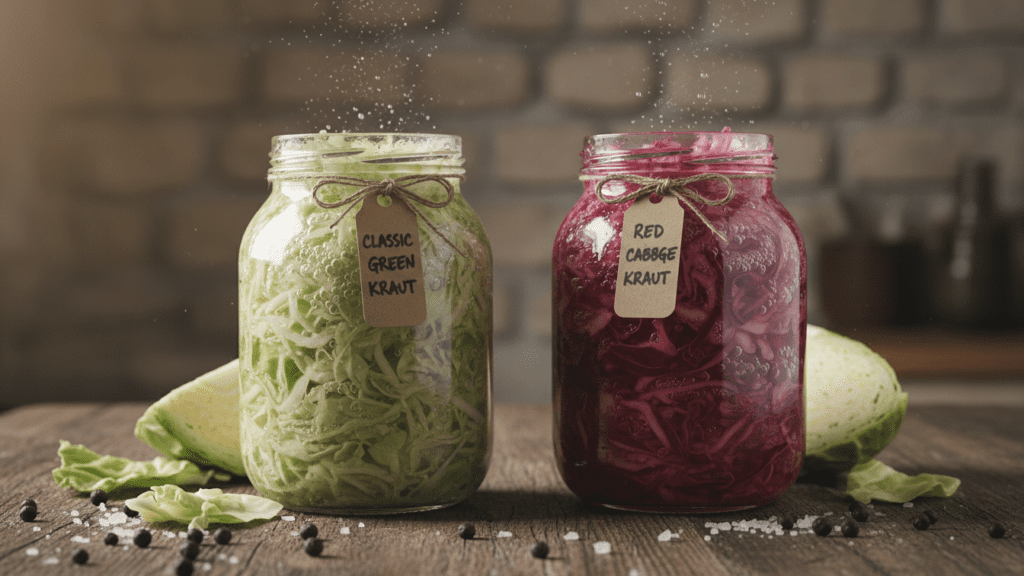
Use half green cabbage and half red cabbage. It turns the entire jar a brilliant, vibrant pink and adds a slightly earthier flavor profile. It looks stunning on a charcuterie board!
The Apple & Onion Classic
Fold in thinly sliced Granny Smith apples and yellow onions. This version is slightly sweeter and is the perfect topping for a high-quality bratwurst or pork roast.
FAQ Section
Is homemade sauerkraut better for you than store-bought? Yes! Most store-bought kraut is pasteurized, which kills the living probiotics. Homemade kraut is raw and teeming with beneficial bacteria.
Why did my sauerkraut turn brown? This usually happens due to oxidation. If the cabbage isn’t fully submerged in brine, it reacts with the air and discolors. It’s usually still safe, but it won’t taste as fresh.

How do I know if my sauerkraut has gone bad? If you see pink or black mold, or if it smells like a dumpster instead of a tangy pickle, throw it out. Trust your nose—it will tell you!
Can I make sauerkraut without salt? Not really. Salt is essential for the Lacto-fermentation process. It draws out the water and creates the environment where the good bacteria can thrive while the bad ones die.
How long does homemade sauerkraut last in the fridge? It will stay fresh and crunchy for up to 6 months (or even longer) in the refrigerator. The cold temperature slows the fermentation down almost to a halt.
Do I need to burp my jar? If you are using a tight-sealing lid, yes, burp it daily to release the carbon dioxide buildup. Otherwise, your jar might turn into a cabbage-scented grenade.
Can I use purple cabbage? Absolutely! Red or purple cabbage makes a crunchier, more colorful sauerkraut. Just be prepared for it to stain your wooden spoons pink.
Final Thoughts
There you have it—your roadmap to becoming a fermentation legend. Making sauerkraut isn’t just about food; it’s about reconnecting with an ancient tradition that doesn’t involve a microwave. It’s cheap, it’s healthy, and it makes you look way more capable than you actually are.
Go ahead, give it a try. If you end up naming your fermentation jars like I did, don’t worry—it’s a perfectly normal side effect of being a “kraut-head.” Tag me in your photos of your bubbling jars, or just sit in your kitchen and enjoy the sound of cabbage crunching. Happy fermenting!